

Enjoy Life Always
San Antonio, TX
Joined August 2019
- Tweets56
- Following65
- Followers14
- Likes297

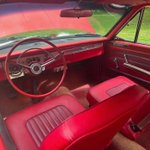
Those old Jeeps look like you could fix half of it with a wrench and a hammer

A classic Willys MB military utility vehicle (World War II-era 4x4 Jeep) painted in olive drab, equipped with a fold-down windshield, rear-mounted spare tire, and dual jerry cans...
Developed jointly by Willys-Overland, Ford (as the GPW), and American Bantam, it became a global symbol of rugged American automotive engineering.
. . .
A military tender for a “general purpose personnel or cargo carrier” in 1940 launched one of history’s most influential vehicles.
The unlikely American Bantam Car Company, originally a licensed Austin Seven builder, responded first to the U.S. Army Quartermaster Corps request, but Willys-Overland ultimately received the largest production contract for this quarter-ton 4x4, with Ford also building the MB under the GPW designation.
The 1942 model year brought a significant visual change with the introduction of a stamped nine-slot steel grille, replacing the earlier welded slat design. The compact 80-inch wheelbase and live axles front and rear with leaf-spring suspension provided the rugged simplicity that military service demanded.
Power came from a 134-cubic-inch L-head inline four-cylinder “Go-Devil” engine producing 60 horsepower, connected to a three-speed manual transmission with a two-speed transfer case for four-wheel-drive capability. Four-wheel hydraulic drum brakes completed the drivetrain.
American GIs quickly embraced the MB for its exceptional versatility and reliability in combat conditions. Its ability to serve multiple roles (from personnel transport to communications platform) made it indispensable across all theaters of World War II, establishing a reputation that would influence military vehicle design for decades.
#archaeohistories

I still need a truck that can haul the toys and get me out in the woods

I hate how tiny they print the airflow arrow on filters, gotta squint just to make sure it goes in right
I don't feel bad about keeping to myself, nobody seems to visit anyway

Honestly? Some days the only company I need is a cold beer, a fishing pole, and that hot rod parked right next to me.
Be honest… are you the “I’d rather be left alone with the car” type too?🔥😈
#HappyMotorhead


That old SS sitting under there is crazy, I gotta see what shape it's in
This quoted post is unavailable.

That little green box sounds like it makes winterizing a whole lot less of a pain


Some owners will nickel and dime everybody and then act shocked when shit goes wrong

Restaurant ownership proudly announced that kitchen staff would no longer be paid for any tasks completed after closing, "not even locking up the walk-in properly," effective immediately. Five weeks later, an entire weekend's inventory thawed and spoiled overnight because the one line cook who used to stay ten extra minutes checking the freezer seal had started clocking out at exactly 11:00, per policy.
The owner stood in front of the walk-in freezer at 7 a.m., staring at puddles forming under the door. "Why is everything warm in here?"
The kitchen manager checked the thermostat. Nothing registered properly. The maintenance guy tried resetting the compressor. Still nothing.
The sous chef checked the service log. "The freezer needs the manual recalibration code after last month's refrigeration upgrade. Only one person completed that training."…..

That liability alone would make me nervous sending a green guy out solo

Residential Electrical is a challenging trade to run. We've found it much more difficult than plumbing & HVAC to master. A few learnings over the past 3 years:
-Most resi electrical work is discretionary. The ones that aren't are typically covered by insurance. Customers are more price sensitive on electrical jobs than plumbing & HVAC.
-It's a harder trade to flat rate. There is a large variance in labor when dealing with wiring/troubleshooting.
-There aren't a ton of companies that train electricians on sales & organized systems so the labor pool is much less developed than plumbing & HVAC.
-Most of the people you are recruiting come from 2 backgrounds: large commercial outfits where they went to a job and rewired buildings for months OR 1-2 man outfits without any type of organization.
-The work can be quite dangerous & high risk. You can cause major issues in plumbing & HVAC but you are much more likely to burn someone's house down or cause major property damage with an inexperienced tech in electrical.
-Since it's harder to sell items than plumbing & HVAC, it's often challenging to compete on compensation with the large commercial outfits.
The only people I've seen really master the residential side are generator companies in extreme weather areas.


