

Current British military updates. Operations, deployments, equipment, people and defence decisions. At home and overseas. Independent reporting.
Joined August 2016
- Tweets11.7K
- Following2.6K
- Followers3.4K
- Likes11.9K







Pinned Tweet
Army honours soldier who checks on a driver twice
Private Dan Montgomery of Catterick, North Yorkshire, earns a commendation for helping a seriously ill woman and staying over two hours until ambulance crews arrive.


How do drone sorties fit around a busy F-35 flying programme?

The goal of a Hybrid Navy is another step closer thanks to two milestones on @HMSQNLZ.
A Nyan effector strike drone has been launched from a UK aircraft carrier for the first time.
The ship also landed and launched a Tekever AR5 multi-role drone.
🔗 royalnavy.mod.uk/news/2026/n…

ALT A Nyan drone awaits launch on HMS Queen Elizabeth's flight deck

ALT The Tekever AR5 drone prepares to touch down on HMS Queen Elizabeth's deck

ALT The Nyan drone leaves the launch ramp
The tanker that kept both British aircraft carriers fuelled
The Royal Fleet Auxiliary tanker Tideforce delivered more than 2.9 million litres of fuel in six weeks, supplying HMS Queen Elizabeth and HMS Prince of Wales as well as French and Dutch warships.
When Queen Elizabeth left Belfast, Tideforce met her in the Irish Sea for a fuel transfer that ran from daylight into night.
Later, after stopping in western Scotland to load cargo, the tanker sailed to refuel ships supporting Prince of Wales on Operation Firecrest.
Tideforce also served as a base at sea for a Merlin helicopter from 814 Naval Air Squadron, which flew missions to monitor Russian vessels in the English Channel and North Atlantic.
Bad weather drove Tideforce to shelter off northern Iceland, and the crew later waited out Storm Boelo off Ireland.
When the tanker needed a major repair to one of its main engines, the engineers removed a cylinder head while the ship was at anchor and kept her on task.

What £600 million buys at Britain’s submarine dock in Plymouth
Babcock has awarded KierBAM a Ministry of Defence-funded contract worth about £600 million to rebuild key parts of 10 Dock at Devonport, where the Royal Navy needs capacity for major submarine overhauls.
Until now, work on this package had focused on getting the site ready, including setting up a plant to make concrete on site.
The contract moves the redevelopment into main construction, including the installation of a multi-tonne gate called a caisson.
A submarine can enter while the dock is flooded, then the gate seals the entrance so the dock can be drained and engineers can reach parts of the boat that normally sit below the waterline.
A dock equipped for major overhauls gives the Navy more capacity to get submarines through maintenance and back into service.
Babcock has priced the main construction package, but its announcement gives no new date for when the dock will take its first submarine.

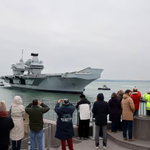
HMS Queen Elizabeth is back in Portsmouth after her first deployment as NATO command ship
The Royal Navy aircraft carrier passed Portsmouth’s Round Tower at about nine yesterday morning, with friends and family waving from the harbour walls after two months away.
Some had travelled from Newcastle to meet a weapons engineer finishing his first deployment.
During the deployment, which included visits to Belfast and Gibraltar, the staff aboard practised how they would direct a multinational naval force from the carrier if NATO called on it.
The deployment also gave the crew time to train for a return to frontline work after the carrier was re-certified at Rosyth in Fife.
The Royal Navy says that work prepares the carrier for more demanding exercises next year, including NATO’s Steadfast Defender.

The RAF’s Protector can fly through the same controlled airspace as an airliner
The RAF says its remotely piloted Protector aircraft has logged 1,000 hours on operations since its first mission in November 2025, including intelligence work that helped protect RAF personnel and allies in the Middle East.
A flight in June shows what has changed about getting the aircraft to its operating base.
A Protector flew from RAF Waddington in Lincolnshire to RAF Akrotiri in Cyprus in about 13 and a half hours.
It covered more than 2,000 nautical miles and passed through civilian airspace over France, Italy, Malta and Greece.
The RAF’s older Reaper could fly missions overseas, but it could not routinely fly through controlled civilian airspace and needed restricted routes or another way to get to its operating base.
Protector was designed to meet civilian airspace standards, so the RAF can fly it alongside crewed aircraft under normal air traffic control procedures.
That gives commanders more options for getting a remotely piloted aircraft to where it needs to spend hours gathering intelligence.

HMS Prince of Wales sails into the High North with a multinational NATO force
The British aircraft carrier left Portsmouth with the destroyer HMS Dauntless last month and is now operating in northern waters with British, French and Norwegian ships under NATO command.
The carrier sailed north for the second phase of Operation Firecrest, a deployment involving more than 1,200 British personnel across the strike group.
By 3 November the group had formed up at sea for NATO’s Neptune Strike exercise.
The British escorts included the frigate HMS St Albans, and Norway sent the frigate Fridtjof Nansen and the support ship Maud, which can resupply the force at sea.
British F-35Bs flying from Prince of Wales had already joined Norwegian F-35As to escort an American B-52 over the High North during a separate exercise.
Launching from the carrier meant the British jets could fly with the allies from a runway that moved north with the force.
Norway has announced a planned port call in Oslo, with meetings on northern European security to be held aboard.

320 Gurkhas finish the journey from selection in Nepal to British Army service
The British Army’s newest Gurkhas finished 39 weeks of training at Catterick in North Yorkshire this week.
More than 14,000 people applied from across Nepal for this intake.
After final selection in Pokhara, 323 men formally joined as trainees in February, then travelled to the UK for their training.
At Catterick, the Army builds up infantry skills from what a soldier can do alone to what they can do as part of a section and then a platoon.
For the Gurkhas, that sits alongside language lessons, training for life and service in the UK, and work to decide which Army trades they will go into.
The prizes at passing out reflected some of those different demands, with awards for both fitness and improvement in English.
The graduates can now join the units where they will serve across the Brigade of Gurkhas.

The Royal Artillery starts receiving the drones that will replace Watchkeeper
The British Army’s Royal Artillery has begun taking delivery of the Tekever AR5, a surveillance drone being built in Swindon to give commanders a longer look at what is happening on the ground.
The AR5 can carry up to 50 kg of cameras and sensors, and Forces News reports that it can stay airborne for up to 20 hours.
That endurance means crews can keep watching an area as vehicles move over a longer stretch of a single flight.
The AR5 is taking over from Watchkeeper, the surveillance drone the Army has used since 2014.
The Ministry of Defence announced the Tekever deal in July at a value of up to £400 million.
The first order was for six aircraft, with the plan allowing for up to 24 by 2029.
The delivery update leaves open when the Royal Artillery will start using them on operations.

Four Royal Navy Merlins moved from Cornwall to Scotland at short notice
The Royal Navy sent four Merlin Mk2 helicopters and about 90 sailors from its air station at Culdrose in Cornwall to Prestwick in Ayrshire, and this week disclosed that the detachment tracked a Russian intelligence ship during the deployment.
The crews operated from HMS Gannet at Prestwick as part of Operation Iceblast, which tested whether the Navy could move several submarine-hunting helicopters together and keep them flying from a different base.
From 29 September to 8 October, the Merlins monitored the Viktor Leonov in the Outer Hebrides.
The Royal Navy says the Russian ship had been watching NATO warships taking part in an exercise off Scotland.
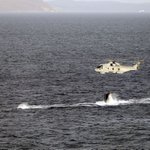
In a separate task during the deployment, the helicopter crews lowered sonar into the water to follow the Royal Navy’s own HMS Agamemnon as the submarine made her first dive at sea.

The Ministry of Defence failed to protect a soldier killed during Scimitar training Private Jethro Watson-
Pickering was killed driving a Scimitar armoured vehicle on Salisbury Plain in Wiltshire in October 2021, and this week the Ministry of Defence admitted breaching its duty

JUST IN: Rheinmetall’s gun hall in Telford, Shropshire, has begun making barrels and breeches for 120mm and 155mm weapons, supporting 100 skilled jobs.

Royal Navy reveals how it tracked a Russian spy ship watching a six-nation exercise. 🚁
Merlin helicopters were sent at short notice from Cornwall to Scotland to follow Viktor Leonov, a Russian intelligence-gathering ship monitoring NATO training.
The newly disclosed operation formed part of three Royal Navy monitoring tasks spread across 17 days, involving two British warships and two types of helicopter.
Viktor Leonov was watching allied warships taking part in Exercise Strike Warrior off Scotland, where more than 2,000 personnel from six countries were training together.
The Merlin crews moved from Royal Naval Air Station Culdrose in Cornwall to Glasgow Prestwick Airport in Scotland, taking their sensors closer to the Russian ship off Scotland’s Outer Hebrides islands.
That deployment also put a practical requirement on the helicopter force: leave its home base in strength and operate elsewhere at short notice.
Captain James Hall, who commands Culdrose, says testing that ability was part of the wider series of tasks called Operation Iceblast.
Further south, the Royal Navy had a different Russian movement to follow.
The frigate Neustrashimy was escorting sanctioned cargo ships through the English Channel, the stretch of sea between southern England and France.
Patrol ship HMS Tyne and Type 45 destroyer HMS Dauntless were tasked to report on the frigate’s movements.
The handover between the British ships mattered because Tyne had another vessel to intercept.
After passing responsibility for Neustrashimy to Dauntless, Tyne turned to the Russian landing ship Aleksandr Shabalin.
The landing ship was escorting cargo vessel Energy-2, with tug Proton accompanying them, through the Channel towards the Baltic region.
A Wildcat helicopter from 815 Naval Air Squadron joined Tyne for that task.
For Tyne’s ship’s company, that meant being activated from north-east England, moving to the Channel and taking on a second Russian escort after handing the first to Dauntless.


Belfast’s new shipbuilding hall adds 5,000 square metres of space for the Navy’s next support ships.
Navantia UK has opened Resurgent Hall at Harland & Wolff, where it will help build three vessels that carry ammunition, supplies and provisions to Royal Navy ships at sea.
The extended hall includes robotic plasma-cutting equipment, refurbished cranes and a mechanised panel line for producing ship sections.
Navantia says these tools will make that work more efficient and accurate.
A ship begins as many smaller pieces, so the ability to cut material and produce sections consistently matters long before the finished vessel reaches the water.
Appledore is building the bow sections of all three Fleet Solid Support ships.
Belfast will carry out major fabrication, final assembly, systems integration and testing.
Those later stages bring the sections and equipment together, then establish whether the assembled ship works as intended.
The ships are RFA Resurgent, RFA Reliant and RFA Resourceful, being built for the Royal Fleet Auxiliary under the £1.6 billion Fleet Solid Support programme.
An aircraft carrier needs ammunition and provisions as well as fuel, and the support ships are intended to bring those solid supplies to carrier groups and other Royal Navy vessels at sea.
Resurgent Hall is the centrepiece of almost £100 million being invested in Belfast since Navantia acquired Harland & Wolff.
That Belfast spending sits within a wider £157 million programme across the company’s four UK sites.
The three support ships are scheduled to enter service in the early 2030s, after the fabrication, assembly, integration and testing work still ahead.
The Army has accepted that its own failures contributed to a young soldier’s death.
The Ministry of Defence has received a Crown Censure over the death of Private Jethro Watson-Pickering during a training exercise on Salisbury Plain in Wiltshire.
The finding is new; the fatal incident happened in 2021.
Watson-Pickering was 23 and serving with the 1st Battalion of the Yorkshire Regiment.
He was driving an armoured fighting vehicle during Exercise Iron Storm when its gun barrel hit a tree.
The turret turned unexpectedly, bringing the rear storage bin into his head and causing fatal injuries.
The Health and Safety Executive found that the risk assessments had not identified the danger of the driver’s head being struck, so no measures had been put in place to prevent it.
Similar incidents had happened in earlier years, but the risk assessments had not been properly reviewed afterwards.
The warning existed before Watson-Pickering died; the process meant to turn that warning into protection failed.
General Sir Roly Walker, the head of the British Army, has accepted the findings and apologised on the Army’s behalf.
His admission covers three failures: assessing and controlling the risks, training and instruction, and providing a safe vehicle.
A Crown Censure is an official reprimand and the maximum sanction available to the HSE in this case.
Walker says the Army has made significant changes since the death to prevent another such tragedy.
The Army’s published response does not set out those changes or explain how their effectiveness has been checked.
For serving personnel, the unresolved question is whether the Army can show that the danger identified after earlier incidents has now been controlled.

Weapons maker FN is pitching an SA80 replacement soldiers can fire from either shoulder, with 90% UK manufacture if it wins.
Weapons maker FN is putting forward its Arka rifle for Project Grayburn, the Ministry of Defence programme to replace the SA80 across Britain's armed forces.
The proposal tackles a restriction that affects how a soldier can use cover: the SA80 is fired right-handed, from the right shoulder.
That is awkward when firing around the left side of a wall or tree, because keeping the rifle in the right shoulder makes it harder to keep the body behind cover.
The Arka is designed for either hand, with the magazine release and the safety and fire selector controls on both sides.
The difference goes beyond making life easier for a left-handed recruit; it gives the person carrying the rifle a choice of shoulder to suit the position.
FN is also combining the controls of one rifle family with the operating system of another.
The Arka uses the familiar layout of the AR-15 and M4 family, which has spread across NATO, alongside the gas-piston system from FN's SCAR rifle.
That system uses gas from a fired round to drive a piston, which moves the rifle's internal mechanism to eject the spent case and prepare for the next shot.
FN's design also leaves the recoil spring out of the tube behind the main body of the weapon, allowing the rifle to take a folding stock.
For vehicle crews and airborne troops, a rifle that can become shorter offers a practical way to save space.
The stock, handguard and pistol grip can be changed, so the parts that meet the shoulder and hands need not be fixed in one arrangement.
Arka is offered with a shorter barrel for close combat and a standard barrel, giving the proposal different sizes for different jobs.
In its current form it fires 5.56x45mm NATO ammunition, the same calibre used by the SA80, although FN can offer other chamberings.
That leaves two distinct choices for Grayburn: the design of the rifle and the ammunition the armed forces want it to fire.
The Ministry of Defence is still developing its requirements, while the National Armaments Director Group is holding an industry day to hear what suppliers can offer and how they could deliver it.
Stevie Crooks, FN UK's senior business development manager, says the Arka would be 90% made in the UK if the company wins the Grayburn contract.


HMS Spey leaves Vietnam after 50 sailors combine joint naval training with opening their warship to local children. ⚓
The Royal Navy patrol ship has left Ho Chi Minh City in Vietnam after a week in which her 50 sailors worked with the host navy and welcomed local children aboard.
Discussions and joint training with the Vietnam People’s Navy focused on search and rescue, navigation and working together at sea.
Those are practical subjects for two navies building a closer relationship: how to find people in danger, move safely and understand each other’s work on the water.
Spey’s Executive Officer, Lieutenant Commander Helen Taylor, said maritime-security links remained strong since the ship’s previous visit three years earlier.
Britain’s ambassador to Vietnam, Iain Frew, joined Vietnamese military and political leaders at a reception aboard Spey.
He described maritime cooperation as part of the countries’ growing defence partnership, linking the exchange of expertise to closer contact between their armed forces.
For one of Spey’s newest sailors, the journey into that partnership began with her first experience of being at sea.
Able Seaman Huxley, the coxswain’s assistant, made the 700-mile passage from Singapore to Ho Chi Minh City on her first naval deployment.
She arrived to military leaders, civic guests and residents waving flags, a welcome she described as overwhelming.
Her own introduction to life at sea was followed by a chance to introduce children to the work of a warship.
Young visitors from the British International School in the city and the Christina Noble Children’s Foundation toured Spey’s bridge, handled firefighting equipment and learnt about the medical kit and sick bay.
The foundation is a British charity supporting disadvantaged young people in Vietnam, and its relationship with visiting Royal Navy ships stretches back 30 years.
After the children’s visit, the sailors went to the charity’s headquarters and made a donation to support its work.
Huxley described working with the schoolchildren and the charity as her personal highlight of the visit.
Britain will lead work on new underwater equipment for three allied uncrewed fleets. 🌊
The Ministry of Defence has announced that the UK will lead development and delivery of three equipment packages intended to help uncrewed underwater vehicles watch large areas of ocean and protect underwater infrastructure.
The plan puts British technology into a shared effort with Australia and the United States through their AUKUS security partnership.
The vehicle is only part of that capability: what it carries determines the information it can gather and the work it can do underwater.
One of the three payloads is a sonar system designed to collect detailed information beneath the surface.
Another is a sensor that can be deployed to detect and classify underwater threats, helping operators establish what they are dealing with.
Getting different machines to work as part of the same force is another part of the effort.
That was a central purpose of Maritime Big Play, the recent exercise where British, Australian and American teams tested how crewed and uncrewed systems operate together.
The work covered finding submarines, resupplying forces in contested conditions, and operating around the seabed.
Britain led the submarine-hunting strand, contributing thirteen uncrewed surface vessels, two targets and four underwater gliders from six industry partners.
The usefulness of these systems also depends on the controls that let operators bring them together.
Royal Navy Captain Keith Taylor identified common control solutions as a way for diverse autonomous systems to operate and fight as one.
Four suppliers have won a share of £3 million through an AUKUS innovation challenge to develop ways of commanding, controlling and coordinating undersea systems.
The British-led underwater equipment is due to become available across all three countries’ uncrewed fleets from 2027.

1 Rifles have combined border patrols and drone defence in a NATO reserve rehearsal. 🪖
Around 225 UK military personnel have trained alongside NATO allies in Kosovo, in the Balkans, practising how to deploy quickly and work together as the alliance’s Strategic Reserve.
The British Army’s 1 Rifles carried out the drills during Operation Rehearsal, bringing ground troops, aircraft and shared information into the same exercise.
The reserve role puts a practical demand on that training: a force that can move quickly also has to work with the allies it joins.
Operation Rehearsal linked patrol activity with support from the air, while bringing drones into both sides of the problem.
Personnel practised using uncrewed aircraft and equipment intended to counter drones, covering information gathered from above as well as how to respond to aircraft without a pilot on board.
For a patrol, those are connected tasks: understanding what is around it and dealing with something that may be watching from the air.
The next connection is between gathering information and using it.
Training also covered shared data platforms, linking sensors and using artificial intelligence to support decisions.
The practical question behind those terms is straightforward: can different parts of a force use the information being gathered to decide what to do?
An aircraft’s view, a patrol’s observations and a commander’s decisions belong to the same job, even when different countries supply the people and equipment.
The work sits inside the wider NATO peacekeeping mission in Kosovo, known as KFOR.
KFOR operates under a long-standing United Nations mandate, impartially serving all the people and communities living there.
Britain’s existing commitment to that mission therefore involves both maintaining a presence and preparing forces to reinforce it.
During Operation Rehearsal, British units patrolled the Kosovan border with aerial support provided by the United States.


Tamar’s paintwork looks even better in the Australian sunshine. ⚓

Visit to the Top End 🇦🇺 🚢 🇬🇧
The @RoyalNavy's HMS Tamar visited the @Australian_Navy's HMAS Coonawarra in 📍 Darwin, NT, to conduct a crew rotation, enabling the continuation of its forward-deployed mission.
#YourADF #AusNavy #StrongerTogether


The Army’s working dogs now have surgery, recovery and training on one site 🐾
The Army’s new veterinary and kennel complex at Kendrew Barracks in Rutland brings together care that military working dogs previously received across separate locations.
For an injured dog, that means access to surgery and specialist recovery treatment close to its handler and unit.
These dogs search for explosives, check buildings and vehicles, and help guard personnel on operations in Britain and overseas.
The new complex gives the 1st Military Working Dog Regiment room for up to 150 dogs, with veterinary treatment, rehabilitation, accommodation and training brought together.
Previously, dogs needing surgery were often treated at the Defence Animal Training Regiment in Melton Mowbray, Leicestershire.
The new clinic has several surgical suites, allowing more than one procedure to take place at a time.
Recovery has its own facilities, including physiotherapy and hydrotherapy, where treatment uses water to support rehabilitation.
The kennels have larger living spaces, sound-dampening measures and screening to create a calmer environment.
Each dog has direct access to its own outdoor exercise run.
Outside, different surfaces, shade and planting give the dogs opportunities to explore, play and follow scents.
Lieutenant Colonel Ann O’Flynn, the regiment’s commanding officer, says bringing treatment, accommodation and training together helps dogs receive care faster and recover more effectively.
Her stated aim connects their welfare with keeping them ready for defence operations.
The dog compound forms part of a wider £77 million investment programme at Kendrew Barracks.
That figure covers the broader programme, which also includes improvements such as a gym, an armoury and refurbished rooms.
It is not a separately stated price for the veterinary clinic.


