

🇴🇲On-Chain privacy advocate. Tokenize everything that has value. International regulator engagement advisor. GCC Business Development Consultant. 🇴🇲
GCC
Joined January 2019
- Tweets7.9K
- Following1.8K
- Followers4.3K
- Likes15.9K









Understand user cases so you don’t follow influencers with a blind eye.
@CantonNetwork is just getting started.
The $XRPL is ill-equipped for repo. @xrpmickle clearly doesn’t understand how repos work or the current laws that govern these transactions.
Repo is short-term secured borrowing against collateral (mostly Treasuries). It moves trillions daily and requires privacy, atomic settlement, and institutional controls.
XRPL falls short for three main reasons:
1. No real privacy
XRPL is a public ledger. Positions, counterparties, and terms are visible. Banks and dealers will not put sensitive collateral or financing activity on a transparent chain. Canton uses sub-transaction privacy—parties only see what they need.
2. No production scale in repo
Broadridge’s Distributed Ledger Repo platform on Canton settles ~$7.5–7.6 trillion per month ($345B+ daily average). That is live institutional volume. XRPL has no equivalent platform or meaningful repo activity at scale.
3. Wrong design for the use case
XRPL is optimized for payments and open liquidity. Repo needs complex multi-party workflows, configurable controls, and interoperability without full transparency.
Canton was built specifically for regulated capital markets (DTCC, Broadridge, major banks). XRPL is still adding basic institutional features.
Bottom line:
XRPL is fine for payments and bridging liquidity. It is not built for—and has not proven it can handle—private, high-volume institutional repo. Canton already does it in production.

1
145
Eco chambers do not allow for growth. If the same people are constantly pushing the same ideas and will not entertain a constructive conversation around alternative theories, then chances are you are in an online cult or are part of this wave of propaganda on social media.
Be careful. Stay off the internet as much as possible. Live, touch grass, swim, surf, kite, walk, hike, dive, run, skateboard or just find an outlet that takes you to a happy place. Your problems will still be there tomorrow but it doesn’t mean you shouldn’t live today.
1❤️. Stay safe.
The Persian Gulf is one of the world’s most fragile marine environments. It is shallow, warm, highly saline, and has limited water exchange with the open ocean. Oil that enters these waters disperses slowly, remains toxic longer, and concentrates in sediments, mangroves, seagrass beds, and coral reefs.
Desalination plants that supply drinking water to coastal cities are also vulnerable.
Every year, a large share of global oil trade moves through the Strait of Hormuz on tankers.
Congestion raises the baseline risk of collisions, groundings, and operational spills. In periods of tension, the risks multiply: vessels go dark, attacks occur, and response capacity is constrained.
Recent conflict and oil spills has already produced multiple large slicks that reached Iranian mangroves (including the Hara Biosphere Reserve), Omani coasts, and UAE beaches, harming turtles, birds, fish, and other wildlife while leaving long-term contamination.
Pipelines from the major Gulf producers to Oman’s Duqm / Ras Markaz terminals on the Arabian Sea coast would move a substantial volume of crude outside the Gulf entirely. And is essential to allow environmental recovery. Oil would travel overland and load in the open ocean, reducing the number of tankers transiting the Gulf and Hormuz.
Fewer tanker movements mean lower probability of accidental or conflict-related spills inside the enclosed basin.
The environmental case is straightforward:
• Less oil traffic inside a low-flushing, ecologically sensitive sea.
• Reduced exposure of mangroves, coral reefs, seagrass, fisheries, and desalination intakes.
• Lower cumulative chronic pollution from routine tanker operations.
• Greater resilience: when maritime routes are disrupted, the volume of oil at risk in the Gulf itself declines.
Saudi Arabia is already studying a ~1,000 km line to Duqm; Iraq has discussed links from Basra; Kuwait and others have explored options. The UAE already operates a Fujairah bypass and is expanding capacity. Extending this logic regionally to Duqm creates a shared outlet that protects the common marine environment of the Gulf.
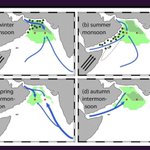
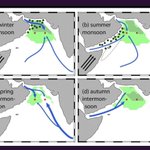
Duqm is by far a more logical environmental location due to shifting monsoon and yearly mixing of the sea in this location.
Energy security and environmental protection are aligned here. Reducing dependence on the Strait of Hormuz does not eliminate oil trade; it relocates the highest-risk segment of the journey away from the Gulf’s most vulnerable waters. For the long-term ecological stability of the region that Iraq, Saudi Arabia, the UAE, Kuwait, and Qatar share, that shift is essential.


This is the most valid point of this entire @binance hack👇.

After years of repeated CEX hacks, I still don’t understand how outgoing transfers of this size can happen without independent human review and signing.
Where are the circuit breakers? Why aren’t unusually large withdrawals automatically delayed, queued for review and subject to additional approval, especially when funds are moving to a new address?
Withdrawing $5,000 from a bank can involve questions and a manager’s approval. Yet somehow, $100 million++++ can flow out of an exchange to an unfamiliar address in seconds.
Make it make sense. Please.
1
221
All the money 😁.

.@The_DTCC, which custodies $114T in assets, has launched its Tokenization Service.
Minting digital representations of Russell 1000 constituents, major index ETFs, and US Treasuries, are now live on Canton Network, built with input from 150+ firms.
PR: businesswire.com/news/home/2…
1
1
150
I recommend you turn in to watch. Links are in the article.

. @badralbusaidi, Foreign Minister of the Sultanate of Oman, will make a major speech on Gulf security tonight.
timesofoman.com/article/1784…

2
154
@AnthropicAI publicly filed its S-1 today.
Filing: Anthropic S-1 on EDGAR (CIK 0002130357, Acc. 0001628280-26-067168).
Also Anthropic’s announcement.
Ticker: Class A common on Nasdaq as ANT. Mix of primary shares and selling stockholders.
Banks: Goldman Sachs and Morgan Stanley lead; J.P. Morgan, Citi, Barclays and others follow.
Financials: Revenue $41M (2023) → $386M (2024) → $4.6B (2025); H1 2026 revenue $16.3B.
Net losses were large, including $80.7B in H1 2026, driven in part by fair-value marks on convertibles/derivatives, plus a $1.5B Bartz settlement in 2025.
153
Honestly this is getting exhausting. This is the second oil spill this year. Please just run pipelines to Duqm where the impact from environmental calamities can be mitigated and the sea can finally recover. For anyone that doesn’t understand what this is doing to people along the UAE, Oman and Iran coastline please read the article I penned. xitter.gq/moneygcc/status/206464…

An oil spill off the UAE coast has prompted beach closures after a crude oil tanker reportedly struck an Iranian-laid naval mine in early October.
The UAE says containment efforts and environmental assessments are
2
312
My country is one of peace, poetry, art and nature. We love the sea, the mountains, the plants and the animals. We protect it. We cherish it. And have shared it with travelers for centuries. Our love is our home and our families.

❗️غـير عـادي | الملك البريطاني تشارلز الثالث يرحب بسلطان عُمان هيثم بن طارق باللغة العربية وشعر وحديث نبوي:
- "مرحباً بزائر لا يُمل."
- "لو أتيت أهل عُمان، ما سبّوك ولا ضربوك."
عن جمال الطبيعة العُمانية: ولا برِحت تلك الرِّياضُ نواضِرًا * تُضَمِّخُها طِيبَ السلام النَّسائم
1
20
972


I’m starting to think major networks are monitoring my feed. xitter.gq/moneygcc/status/210744…

The Qataris have said it would take at least three years to get Ras Laffan, the world’s largest facility for natural gas and its byproduct helium, in full operation.
60 Minutes' requests for more information went unanswered, so we turned to satellite images to try to assess the extent of the damage at the facility. cbsn.ws/4BcReof
Just so everyone knows the entire we need to slow down AI is a fake narrative made to save some of the biggest AI and data center companies from their obligations to deliver results to investors. The truth is that during the first weeks of the Iran war 33% of the worlds helium was destroyed and it will take years to replace.
You’re probably asking why is helium important to Ai and data centers. Well helium is a primary component in chip manufacturing.
It is hard to replace in chip fabrication because it is chemically inert, has the highest thermal conductivity of any noble gas, and has the smallest atoms of any element. It also cannot be synthesized.
Advanced nodes use more of it than older processes, mainly for cooling, purging, and vacuum integrity.
Wafer temperature control.
During plasma etch and deposition, a thin layer of helium is fed between the wafer and the electrostatic chuck. Its high thermal conductivity pulls heat off the wafer so the temperature stays uniform (often within about ±0.1 °C on advanced tools). Uneven heat warps patterns and kills yield at nanoscale dimensions.
Lithography purge and optics. In DUV and especially EUV scanners, ultra-high-purity helium (often 5.5N–6N) purges the optical path. It does not absorb the light the way air or moisture would, so it protects multilayer mirrors and keeps exposure stable. EUV tools also use liquid helium to hold superconducting magnets near 4 K.
Inert carrier and process gas. Helium carries reactants in chemical vapor deposition (CVD), atomic layer deposition (ALD), and some etch blends without reacting with the wafer or the process chemicals. It also purges chambers and load locks of oxygen and moisture that would oxidize silicon or copper.
Plasma control. Added to etch plasmas, it stabilizes the discharge and helps control ion energy and byproduct removal without introducing reactive contamination.
Leak detection. Its tiny atoms pass through the smallest leaks, so helium mass spectrometry is the standard way to prove ultra-high-vacuum tools and hermetic packages are sealed before production.
Cryogenic support for other tools. Liquid helium cools superconducting magnets in some ion implanters and related equipment.
Those jobs are hard to substitute: hydrogen conducts heat better but is flammable; argon is inert but a much poorer heat conductor and is not transparent at EUV wavelengths. Semiconductor fabs are a large and growing share of global helium demand for that reason

Not realizing how big this it will be a mistake. The engineers and developers are just hardening the network for what is about to come. Agent after agent from Silicon Valley will use Near. I’m not going to even try and attempt to presume how much new traffic will be on the network. This is going to be exciting.

INSIDE NEAR PROTOCOL
The settlement layer for the agent economy.
1M+ TPS in a verifiable benchmark. Dynamic resharding live. Post-quantum signing live. 5+ years of mainnet, 100% uptime.
NEAR shipped years ago what much of the industry is still planning 🧵
154

This is an absolute fabrication. Most global liquidity lies in private silos and will never be put on public chains without long term unbreakable privacy. ZK-snarks, what ripple is deploying, is not quantum resistant. Estimates put 8 years before it can be broken. Zk-starks are quantum resistant but too heavy to deploy. FHE is a good alternative but still unproven. Private chains are where most liquidity will lie, if in fact you actually know where the liquidity is. The biggest money movers on a daily are, @Shell , @exxonmobil @aramco who will never trust a private chain. And as an example @aramco is testing @avax private subnet through. They have basically deployed their own blockchain. So where is the proof? Because through the banking system the largest transaction volumes on a daily are from oil and gas companies. Even @apple cash just sits and hardly moves around. I’m baffled that this is still being pushed by @Ripple. 12 years is enough time to prove this with evidence. Where is the evidence?
Companies will end up classify transactions on how long they need to remain private and most will be long term.
For more on how this works read the below article:
xitter.gq/moneygcc/status/201715…

🇰🇷 Will the majority of tokenized volume be on Private or Public blockchains?
Monica Long - "Public"
She also mentions that the benefits of private blockchains are coming to the XRP Ledger with confidential transfer (XLS-96) and permission delegation (XLS-75).
201