
De kern van de Islam is zuiver monotheïsme en goede daden doen. Helaas focust het publieke debat zich op randzaken die juist in strijd zijn met de Islam.
Joined May 2020
- Tweets5.7K
- Following295
- Followers236
- Likes7.7K



Pinned Tweet
ISLAM – DE WARE RELIGIE
door: Mirza Ghulam Ahmad - de Beloofde Messias
Om de waarheid van een religie vast te stellen die beweert van God afkomstig te zijn, moet zij haar voortreffelijkheid op twee punten bewijzen. Ten eerste moet zij zo allesomvattend, volmaakt, volledig en vrij van elk gebrek zijn in haar leerstellingen, onderricht en geboden, dat het menselijk verstand niets beters zou kunnen voorstellen en er niets aan ontbreekt. Zij moet in dit opzicht alle andere religies overtreffen. De Heilige Koran maakt deze aanspraak met de woorden:
“Vandaag heb Ik jullie godsdienst voor jullie vervolmaakt, Mijn gunst aan jullie voltooid en de islam voor jullie als godsdienst gekozen.” (Koran 5:3)
Dit betekent dat God van ons verlangt ons te voegen naar de werkelijkheid die besloten ligt in het woord islam. Hier wordt duidelijk beweerd dat de Heilige Koran de volmaakte leer omvat en dat de tijd van de openbaring van de Heilige Koran de tijd was waarin een dergelijke volmaakte leer geopenbaard kon worden. Alleen de Koran maakt deze aanspraak. Geen enkel ander hemels boek heeft een dergelijke aanspraak naar voren gebracht. Zowel de Thora als het Evangelie onthouden zich daarvan. Integendeel, de Thora bevat Gods gebod:
“Ik zal voor hen een Profeet doen opstaan uit het midden van hun broeders, en Ik zal Mijn woorden in zijn mond leggen; en wie niet luistert naar Mijn woorden, zal Ik ter verantwoording roepen.” (Deuteronomium 18:18)
Het is daarom duidelijk dat, als de Thora voldoende was geweest om in de behoeften van latere tijden te voorzien, er geen noodzaak zou zijn geweest voor de komst van een andere profeet, naar wie luisteren verplicht werd gesteld. Op dezelfde wijze beweert het Evangelie nergens dat zijn leer volmaakt en allesomvattend is. Integendeel, het bevat de duidelijke uitspraak:
“Ik heb jullie nog veel te zeggen, maar jullie kunnen het nu niet dragen. Wanneer echter de Parakleet komt, zal hij jullie in de volle waarheid leiden.” (Johannes 16:12–13)
Zo erkende Mozes de onvolledigheid van de Thora en vestigde hij de aandacht op het onderricht van de Profeet die zou komen. Op dezelfde wijze erkende Jezus de onvolledigheid van zijn onderricht en zei hij dat de tijd voor de openbaring van de volmaakte leer nog niet was aangebroken, maar dat deze zou worden gebracht wanneer de Parakleet zou komen. De Heilige Koran daarentegen laat de zaak niet over aan een ander boek om haar te voltooien, maar verkondigt zelf de volmaaktheid van zijn leer met de woorden:
“Vandaag heb Ik jullie godsdienst voor jullie vervolmaakt, Mijn gunst aan jullie voltooid en de islam voor jullie als godsdienst gekozen.” (Koran 5:3)
Hierin ligt een krachtig argument ter ondersteuning van de islam: door de volmaaktheid van haar leer overstijgt zij iedere andere religie, en geen enkele religie kan met haar wedijveren wat betreft de volmaaktheid van haar onderricht.
Het tweede kenmerk van succes, dat eigen is aan de islam en door geen enkele andere religie wordt gedeeld, en dat volledig getuigt van haar waarheid, is dat zij levende zegeningen en wonderen openbaart, waarvan andere religies geheel verstoken zijn. De tekenen die de islam vertoont, bewijzen niet alleen haar superioriteit boven andere religies, maar trekken ook de harten van mensen aan doordat zij haar volmaakte licht laten zien.
Het eerste kenmerk van de islam, namelijk de volmaaktheid van haar leer, is op zichzelf echter niet voldoende om onweerlegbaar vast te stellen dat de islam een ware religie is die door God is geopenbaard. Een bevooroordeelde tegenstander zou kunnen aanvoeren dat een leer weliswaar volmaakt kan zijn, maar daarom nog niet noodzakelijk van God afkomstig hoeft te zijn. Dit eerste kenmerk bevrijdt een wijze zoeker naar waarheid van vele twijfels en brengt hem dichter bij zekerheid, maar het bewijst de zaak niet definitief zolang het niet wordt gecombineerd met het tweede kenmerk. Wanneer beide kenmerken samenkomen, bereikt het licht van het ware geloof zijn volmaaktheid.
Een waar geloof omvat duizenden bewijzen en lichten, maar deze twee kenmerken zijn voldoende om overtuiging te brengen in het hart van een oprechte zoeker naar waarheid en om de zaak uiteen te zetten tot tevredenheid van allen die de waarheid ontkennen.

Nederlandse Moslim 🇳🇱 retweeted

Every #Pakistani has to sign a form declaring #Ahmadis as infidels and non-Muslims to get their passport, work, or other official documentation done. You need to abuse Ahmadis to get your work done!
Millions of #Ahmadiyya Muslims are being dehumanised!
@YasMohammedxx @USCIRF 1/
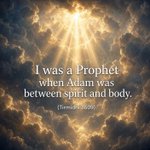
Jesus said, “I was sent only to the lost sheep of the house of Israel.” (Matthew 15:24)
Muhammad ﷺ, on the other hand, was commanded to proclaim: “O mankind! I am the Messenger of Allah to you all.” (Qur’an 7:158)
Jesus refers to Abraham, the forefather of the Israelites, to whom his mission was limited. Muhammad ﷺ refers to Adam, the forefather of all humanity, to whom his universal mission extends.
Both statements can therefore be understood figuratively: their prophetic missions were divinely ordained before the very forefathers of those they were sent to.
xitter.gq/OperHealAmerica/status…


Nederlandse Moslim 🇳🇱 retweeted
First of all, the Holy Prophet Muhammad ﷺ was so humble and had such noble manners that he taught Muslims to respect the religious sentiments of others.
When a Muslim argued with a Jew, he said: “Do not give me superiority over Moses.” (Bukhari 2411)
But since you started the challenge, the Holy Prophet Muhammad (may the peace and blessings of God be upon him said):

Nederlandse Moslim 🇳🇱 retweeted
The fruit of the trees of Moses, Jesus and Muhammad
“In the Torah, the companions of Moses are repeatedly described as a rebellious, hard-hearted people who committed sins and caused corruption. Concerning their disobedience, the Holy Quran also relates that, when the occasion arose for battle, they answered Moses:
‘Go, you and your Lord, and fight the enemies; we shall remain sitting here.’
Such was their obedience. But the hearts of the companions of the Holy Prophet were filled with such passionate love for God, and the Holy Prophet’s sacred spiritual attention had such an effect upon them, that they allowed themselves to be slaughtered like sheep and goats in the cause of God. Can anyone show us people from an earlier religious community, or point to those who displayed such sincerity and purity?
Such was the condition of the companions of Moses. Now hear about the companions of the Messiah. One of them, named Judas Iscariot, had the Messiah arrested in exchange for thirty rupees. And the disciple Peter, who had been given the keys of Paradise, cursed the Messiah in his presence. All the remaining disciples fled when they saw the time of trial approaching. Not one showed steadfastness; they failed to stand firm, and cowardice overcame them.
Yet the companions of our Prophet, peace and blessings of Allah be upon him, showed such steadfastness beneath the shadow of swords, and were so willing to die, that reading the accounts of their lives brings one to tears.
What was it, then, that breathed such a spirit of love into them? And whose hand brought about so great a transformation in them?”
Reference: Mirza Ghulam Ahmad, Haqiqat-ul-Wahi, Ruhani Khaza’in, Volume 22, pages 101–102, footnote. The corresponding published English translation appears in The Essence of Islam, Volume III, pages 134–135.
Translation note: The original Urdu says “thirty rupees”; the published English translation renders this as “thirty pieces of silver”.
Nederlandse Moslim 🇳🇱 retweeted
Yes, no tree brought forth better fruit than the tree of the Holy Prophet Muhammad (may the peace and blessings of God be upon him):
“That extraordinary event which took place in the wilderness of Arabia - when hundreds of thousands of the dead came to life within a short time, and those who had been corrupted for generations took on the colour of God; when the blind gained sight, and divine insights flowed from the tongues of the speechless; when suddenly a transformation swept through the world such as no eye had previously seen and no ear had heard of—do you know what brought it about?
It was the prayers, offered in the darkness of night, of a man wholly absorbed in God. Those prayers stirred the world and revealed wonders that had seemed impossible for that unlettered, helpless man.
O Allah, bestow blessings, peace and grace upon him and his family, in proportion to his concern, anguish and sorrow for this community, and shower upon him the lights of Your mercy forever.”
Reference: Mirza Ghulam Ahmad, Barakat-ud-Dua, Ruhani Khaza’in, Volume 6, pages 10–11. The corresponding published English translation appears in Blessings of Prayer, page 17.

Nederlandse Moslim 🇳🇱 retweeted
Amazing!! No I understand how the prophecy of Jesus is fulfilled that he will come with the clouds and every eye will see him (Revelation 1:7)
In the time of Jesus (without photoghrapy and billboards) there was no way that every eye could see him, but this way every eye can see him in the sky.
Nederlandse Moslim 🇳🇱 retweeted
The Qur’an tells the Prophet Muhammad ﷺ to share God’s message (5:67).
Yet Ahmadis are punished for listening to the Qur’an.
How can a government claim to defend Islam while punishing people for hearing, reading and practicing its holy book?
Absolute madness!!
It only shows the need of the Promised Messiah & Mahdi, Mirza Ghulam Ahmad (A.S.)
Nederlandse Moslim 🇳🇱 retweeted

Caring for orphans is among Islam’s greatest virtues (2:220).
The Quran commands kindness to orphans (4:36), condemns those who neglect them (107:2).
Giving an orphan a loving home may be one of the fastest paths to God. Islam simply asks that their lineage be preserved (33:5).

Nederlandse Moslim 🇳🇱 retweeted

The Prophet Muhammad (peace be upon him) said:
"O Allah, I seek refuge in You from disbelief and poverty."
And in another dua:
"O Allah, I seek refuge in You from poverty, need and humiliation..."
This shows poverty is something difficult that a believer should ask Allah to protect him from.
Because extreme poverty can push a person to complain against Allah, to steal, or to lose hope.
But the prophet also praised the poor who are patient:
"The poor will enter Paradise 500 years before the rich."
And:
"I looked into Paradise and saw that the majority of its people were the poor."
Bukhari & Muslim
He himself lived a simple life:
He was the leader of the Ummah but often went days without cooking in his house, living on dates and water. Aisha said months would pass without fire being lit in his house.
He taught us that the solution is work and belief in Allah, he said:
"No one ever eats better food than that earned by his own hands' work."
And he taught charity does not decrease wealth, and encouraged Zakat and Sadaqah to eliminate poverty from society.
This is a true prophet.
Nederlandse Moslim 🇳🇱 retweeted
The Quraysh came to Prophet Muhammad (SAW) and said:
"If you want money, we will make you the richest.
If you want power, we will make you our king.
If you want women, we will give you the best."
He (SAW) replied:
"By Allah, if they put the sun in my right hand and the moon in my left, I will never leave this truth."
He died with almost nothing in his house, but with the greatest legacy in history.
WHEN THEY OFFERED HIM THE WORLD, HE CHOSE TRUTH.
That's a good deal for Our leaders or scholars today.
Never sell your conscience for wealth.
The price is always too small, and the regret is always too big.
Whoever trades his values for money will one day become a slave to what he chased.
Nederlandse Moslim 🇳🇱 retweeted
Wat een kwalijke hypocrisie. Je zegt antisemitisme te bestrijden, maar zet ondertussen de hele moslimgemeenschap neer als bedreiging voor Joden. Sinds wanneer bestrijden we het zwartmaken van de ene bevolkingsgroep door een andere zwart te maken?
Ik ben moslim en ons motto is ‘Liefde voor iedereen, haat voor niemand.’ Zelf ken ik ontzettend hartelijke Joodse mensen, net als mensen met andere geloven of helemaal geen geloof. Blijkbaar hebben we allemaal de memo gemist dat we elkaars vijanden moeten zijn.
En waarom wordt Iran er steeds bij gehaald? Dat land heeft een heel eigen geschiedenis, van de revolutie tegen de onderdrukkende sjah tot het huidige sjiitische staatsbestel. Wat zegt dat over de Nederlandse moslimgemeenschap, een bonte verzameling van geloofsstromingen, culturen en mensen uit alle windstreken, waaronder ook geboren en getogen Nederlanders?
En fun fact: Iran telt tientallen synagogen die volgens de Iraanse opperrabbijn niet eens bewaking nodig hebben. Dat maakt Iran geen paradijs, maar laat wel zien dat de werkelijkheid een stuk genuanceerder is dan het beeld dat wordt geschetst.
Ik vraag me steeds vaker af wie er eigenlijk belang heeft bij al die verdeeldheid. De gewone mensen die ik ken in ieder geval niet.
Nederlandse Moslim 🇳🇱 retweeted
1. Een hoofddoek is geen reclamebord voor een geloof! Het is een kledingnorm.
Iemand dwingen zich tegen haar wil meer te ontbloten, tast haar lichamelijke integriteit aan. Hebben we na al die #MeToo-schandalen nog steeds niet geleerd dat vrouwen zélf bepalen wat ze van hun lichaam laten zien?
2. Zijn andere religieuze waarden dan ook verboden?
Eerlijkheid, vriendelijkheid en tolerantie zijn óók religieuze waarden. Mag een boa dan niet meer glimlachen als dat vanuit het geloof komt? Moet je voortaan chagrijnig kijken om neutraal te zijn?
3. Wat is eigenlijk een neutrale uitstraling?
Een overheid zonder zichtbare religie krijgt juist een atheïstische uitstraling. Waarom zou een atheïst zich meer vertegenwoordigd mogen voelen dan een gelovige? Een diverse uitstraling past toch veel beter bij een diverse samenleving?
4. Zichtbare overtuigingen zorgen juist voor transparantie!
Je ziet tenminste iets van waar iemand voor staat. Een verbod verandert niets aan die overtuigingen, maar verbergt ze alleen. Sinds wanneer word je onpartijdiger door je overtuigingen te verstoppen?
5. Als een hoofddoek dan toch ergens symbool voor staat, is het juist onpartijdigheid!
De Koran gebiedt moslims rechtvaardig te zijn, zelfs als dat tegen henzelf of hun eigen familie ingaat (4:135). Hoe kun je daarin in hemelsnaam een teken van partijdigheid zien?
Nederlandse Moslim 🇳🇱 retweeted
A lot of people come onto my timeline condemning Islam. So let me make something abundantly clear.
If by Islam you mean killing apostates, executing people for blasphemy, forcing women to wear the hijab, denying women their freedom and agency, subjugating religious minorities, or punishing people simply for holding different beliefs, I condemn every one of these practices wholeheartedly and unequivocally.
In fact, I consider them contrary to the very principles of Islam as I understand it.
But here is where I disagree: I refuse to confuse the religion itself with every cultural practice, medieval jurisprudential ruling, political ideology, or human interpretation that has been attached to it over the centuries.
Ironically, several practices people condemn in the name of Islam also have precedents in biblical scripture. The Hebrew Bible prescribes death for blasphemy (Leviticus 24:16), worshipping other gods (Deuteronomy 13:6–10), and certain sexual offenses (Leviticus 20:10). Biblical texts also contain provisions concerning slavery (Leviticus 25:44–46), women’s subordination (Ephesians 5:22–24), and head coverings during worship (1 Corinthians 11:5–6).
Yet I would never insist that every Christian or Jew must be judged by these practices simply because they appear in their scriptures or religious traditions. Nor would I presume that the harshest interpretation of Christianity or Judaism is necessarily the truest expression of either faith.
Why, then, should Muslims be held hostage to the most oppressive human interpretations of Islamic tradition?
Of course, these interpretations exist. Some Muslims defend them, and some governments even enforce them. I do not deny that reality, nor do I seek to excuse or minimize it. To the contrary, I oppose these practices unequivocally, and I will continue to challenge those who justify oppression in the name of Islam.
Those who know me know this is not a recent position, nor one I express only when convenient. I have been speaking out and writing against these injustices openly, consistently, and unapologetically for over two decades.
And to my dear fellow Muslims, I want to emphasize something equally important: Religious interpretation does not become infallible simply because it claims divine authority, even when that interpretation comes from your most beloved or respected scholar. No scholar is beyond question. No religious ruling is beyond scrutiny. And no human interpretation should be immune from examination in the light of reason, conscience, justice, and the Quran itself.
We must have the intellectual humility to recognize that our understanding of God’s will can be mistaken, and the moral courage to challenge injustice and oppression, especially when they are committed in the name of our own faith.
If we truly care about our faith, we must be willing to hold our own communities accountable, not merely point fingers at others.
To me, Islam is fundamentally about recognizing one Creator, nurturing our moral conscience, pursuing truth and justice, protecting human dignity, and serving humanity. Freedom of conscience is not a concession I make to modernity. It is a principle I find within the Quran itself: “There is no compulsion in religion” (2:256).
You are welcome to criticize Islam. You are welcome to disagree with my understanding of it. I welcome honest discussions about scripture, history, and theology.
But please do not assume that the most oppressive interpretation of a religion must necessarily be its most authentic one. I will stand with you against oppression, even when it is committed in the name of my own religion. But I will not concede that oppression is what my religion stands for. And I ask only that you extend to Muslims the same interpretive charity you would extend to followers of any other faith.
Thank you for taking the time to read this. Whatever your faith, beliefs, background, or worldview, I extend my hand in sincere friendship to you.
Nederlandse Moslim 🇳🇱 retweeted
As the Quran acknowledges (5:82), there are sincere Christians who show kindness and respect toward Muslims. Sadly, those who spread hatred often get the most attention.
Some seem more concerned with protecting their Christian identity than with finding the truth. They are so determined not to accept Muhammad ﷺ as a prophet that they keep repeating centuries-old accusations as facts, even though refutations are readily available.
They are so eager to attack Islam that they end up criticizing beliefs Muslims do not even hold and arguing against things we have never claimed.
What is most troubling is that, in their efforts to reject Muhammad ﷺ, they abandon not only basic honesty and fairness, but even basic manners and respect. They go against the very Christian values they claim to defend.
If rejecting Muhammad ﷺ matters more to them than being honest, fair and respectful, what are they really defending?
Nederlandse Moslim 🇳🇱 retweeted
Not really:
- True that Jesus was not killed. He was put on the cross, but taken off alive unconscious, so the crucifixion failed, se he could not have said to be crucified.
- False that someone else was killed looking like Jesus. Why did that other person not shout : "Stop, stop, I'm not Jesus!" On the contrary that person even said to Mary “Woman, behold thy son!”
- False that Jesus was raised to heavens. God is not at some fixed spot somewhere in the universe. God is everywhere.
xitter.gq/Moslim_NL/status/20916…

Nederlandse Moslim 🇳🇱 retweeted
There are 3 criteria for a true prophet:
1. His whole life is without sin
Muhammad ✅
Paul ❌
2. He shows miracles proving God's help is with him
Muhammad ✅
Paul ❌
3. He is prophecied by previous prophets
Muhammad ✅
Paul ❌
Nederlandse Moslim 🇳🇱 retweeted

In the Bible, God calls Israel His firstborn son (Exodus 4:22; Hosea 11:1). He says of Solomon, “I will be his father, and he will be my son” (2 Samuel 7:14). Adam is called the son of God (Luke 3:38). Angels appear as “sons of God” (Job 1:6). Believers are also called sons of God (John 1:12; Galatians 3:26).