
Co-Founder of Amped Kitchens (https://xitter.gq/t.co/6JUCIk9meW). Adjunct professor of Real Estate Dev. at @USCprice. Board chair, @InfillCouncil. Personal account.
Los Angeles
Joined December 2008
- Tweets9.7K
- Following2.8K
- Followers3.3K
- Likes61.2K





mottsmith retweeted

The greatest trick the urban left ever pulled is making the term “affordable housing” mean not “housing which is inexpensive” but rather “special, highly-regulated units which are legally mandated to be held at a below-market rate”
Total linguistic coup
mottsmith retweeted

Not sure if this landmark anti NIMBY attorneys fee win will become a published appellate court decision. How about codifying this holding into law so defending housing is legally recognized as a public benefit for atty fee awards statewide? Bat phone call to superhero @BuffyWicks

mottsmith retweeted

Any information on who is trying to kill funding single stair provisions in ROAD act after several candidates—including @jamestalarico—have run on single stair as a key housing reform and shown it to be a winning issue?


Woah. This is the moment we will remember that the tables truly turned.

mottsmith retweeted

LOS ANGELES COULD FINALLY BUILD THE SUBWAY LINE THAT CHANGES EVERYTHING.
And THANK GOD they ditched the MONORAIL.
LA Metro has selected a fully UNDERGROUND subway beneath the Sepulveda Pass, connecting the San Fernando Valley directly to the Westside.
The proposed line is MASSIVE:
• 12 miles of subway
• 7 underground stations
• A station DIRECTLY ON UCLA'S CAMPUS
• Connections to the D, E, G & future Valley rail lines
• Van Nuys to Westwood in just 10 MINUTES
• Trains as often as every 2.5 minutes
A trip that can take over an HOUR on the 405 could take less than 20 minutes by rail.
This isn't just another subway line.
It's the MISSING LINK in LA's entire transit network.
NOW FUND IT. BUILD IT. CHANGE LA FOREVER.

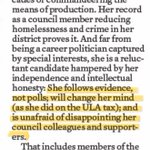
The hallmark of an intellectually honest person is this: they are willing to change their mind -- and even take heat for it -- when they follow the data.

UCLA's @ShaneDPhillips says he was wrong on Measure ULA's impact on housing - and that's led him to try to help fix its problems.
Full episode: buff.ly/GPBJT2g
mottsmith retweeted

Psyched to see @JonRegardie’s byline in the LAT!! latimes.com/california/story…

mottsmith retweeted

We’re putting together a team that can help us build a city that works. We are looking for talented, diverse, and results-driven candidates that are committed to creating a more affordable and ambitious city.
Interested in joining? Share your resume using our portal: acitythatworks.la

mottsmith retweeted

Frank Braconi, who is an actual economist, inadvertently asked me a softball question about why the operating expenses of non-profit housing owners are usually double those of for-profit owners. I also note that public housing operating expenses are usually triple those of private, for-profit owners. Amazingly, even with the orders of magnitude of additional spending, the non-profit buildings tend to have worse physical conditions and the public housing buildings are well known to be the worst of all. With apologies in advance that this post may be too technical and into the weeds for some, here we go.
As Frank surely knows, there are these standard economic concepts called Principal Agent and Moral Hazard. Let's examine these in terms of the three kinds of housing ownership.
In for-profit housing, the owner/manager is the Principal Agent and its motivation is the long term maximization of income and return on capital reinvestments. When it comes to "purchased items" this owner carefully negotiates and bids costs with suppliers, minimizes waste, avoids costly violations and fines, fears foreclosure and litigation and reserves capital to reinvest in well-planned component replacement and money saving innovations. Examples include heat timers, utility submetering and complex self-insurance structures, to key off Frank's questions below. Utility submetering, for one, reduces consumption by 2/3 in practice: a huge savings! There is very little Moral Hazard here because the Principal Agent is the direct beneficiary of the cost savings and it is not a judgment-proof entity.
In non-profit housing, we encounter our first Moral Hazard. The owner is an entity that by virtue of being the owner of last-resort, has an soft loss backstop from the public. The non-profit's manager, acting as Principal Agent, still has to do all the work of a manager but is only compensated by a salary, also a hazard. So in the non-profit scenario, the manager will do everything to maximize its salary but only impose as much careful effort as is needed to prevent the building from literally collapsing. Since this type of property doesn't have to pay real estate taxes, an amount which usually would be around half of net income, all of that money can be squandered on careless and indifferent negotiation and purchasing with suppliers. It should surprise no one that careless purchasing often comes with emoluments for the Principal Agent, another Moral Hazard. This owner is also less risk averse, because when fines and violations arrive resulting in eventual litigation judgments, there is no owner to worry about the outcome. They become just another delayable payable. Conditions naturally deteriorate but at least the building doesn't fall over.
And finally we have the public owner who truly has no "skin in the game." Perversely, the public owner cares mostly about how to MAXIMIZE the operating costs because the Principal Agent and Moral Hazard problems are here in full effect. The salary to manage public housing is a pittance, so the Principal Agent may only earn their fair compensation through emoluments. The legendary graft at agencies like NYCHA is well documented and consistent at public housing throughout the world. Moreover, prevailing wage regulations already force any operating expense that includes a service to cost at least double, even before any mischief takes place. Of recent note, the well publicized case of the NYCHA employee-plumber Jakub Markowski who allegedly earned $465k via overtime rigging. When the property earns fines and violations, develops truly dangerous conditions or employees behave with utter gross negligence, only the taxpayer is on the hook and no one ever loses their job or pension thanks to the representatiion of powerful labor syndicates. With this incentive structure, it should be no surprise at all that building conditions are atrocious and it costs $527k to renovate a single public housing unit.

mottsmith retweeted

Regular readers know I'm not particularly aligned with any political party, particularly when it comes to state and local government.
So I hope Californians reading this will believe me when I write:
Buffy is the most impressive politician I've ever met.
She combines a life-long concern with making life better for poor people (she grew up in a trailer park!) with a deepening understanding of, and appreciation for, the ability of profit-motivated business people to make life better for everyone.
Hope you will join me in supporting her work in the legislature.

CA Assemblymember Buffy Wicks: “When I looked to some of the most powerful groups for answers, I was disappointed by the often stale and self-serving ideas I found… Local governments were cowed by the few residents who had the luxury of time to show up at city council meetings.
I got to work organizing the district. After 239 house parties in 116,000 doors knocked. I stood exactly where I wanted to be in a position to speak directly to the median voter.
The voters are too busy working to pay the rent to make their voice heard anywhere other than the ballot. I didn't need any organization to mediate my relationship with the voters or my pro-housing agenda.”
#WhatsNext
mottsmith retweeted

Also needs to be said that the supplier of a good majority of these L.A.’s excellent pastrami spots is RC Provisions in Burbank.
Super cool spot owned by the Giamela family (of Giamela’s, which should also be on the list).


This 100%. Invest in the ”last mile” connections that will make our Metro system actually usable.


Last night I had dinner alone with my 16-year-old son. We don’t get that kind of one-on-one time very often, so it was a treat.
He’s usually a man of few words. Most of our conversations stay on the practical stuff--family schedule, guitars, what work around the house he can do for cash. I started with the usual questions about friends and school. He skipped all of that and just asked, “What do you think of Talarico?”
It caught me off guard. He almost never joins family conversations about politics (admittedly, it can be hard to get a word in during them).
I told him I didn’t know a lot about Talarico but was glad to see a blue wave weighted toward moderates. He said Talarico seems like a good guy who cares about people. I asked how he knew enough to have an opinion. “My friends and I talk about it. Plus Instagram.”
All his friends talk politics? “Yeah. A lot.”
Even this was interesting--he’s a normal teenager who plays guitar, runs track, and hangs out with his friends. Then I asked what he and his friends think of the Democrats coming into power.
“Good. We need to spend less on the military and foreign aid so we have more for healthcare and other things people need.”
I asked why he saw it as a zero-sum game. He acknowledged it might not be, but still thinks we spend too much on the military.
I asked what he and his friends think of socialism. He scoffed: “Socialism doesn’t work. Everyone knows that.”
“Everyone?”
“Everyone who has a brain, yes.”
It is so good to see your kids and their friends start to think about stewardship of the country in a way that isn’t mostly performative activism. And to hear them say they *know* socialism can’t work (and think it’s obvious) is honestly all a father can ask for.
(Posted with his permission)
mottsmith retweeted

LADPW's transformer regulations will genuinely radicalize any normie who learns about them.


When I saw Nithya Raman’s deep curiosity about how city bureaucracy kills restaurants and other small businesses, and her willingness to change that, I realized she needed to be the next mayor.

The Mayor-elect wants faster restaurant permitting, pop-ups in empty storefronts, and protection from predatory lawsuits. Will she deliver? la.eater.com/restaurant-news…

People would not oppose new housing nearly as much if our regulators didn't require it to look like this.
