

• Technical Staff @artificialanlys • Teaching AI/ML @zerotomasteryio • Building @nutrifyfoodapp
Joined August 2012
- Tweets5.7K
- Following674
- Followers19.2K
- Likes10K




Daniel Bourke retweeted

Inkling 2 Small’s weights are now available for download on HuggingFace under an Apache 2.0 license.
Make Inkling your own!
huggingface.co/thinkingmachi…

A new #1 in the @ArtificialAnlys Search Index!
Congratulations @KeenableAI on the release!
Has been a pleasure working together pushing search evals forward 🤝

Keenable Search 1.0 takes 1st (pro, 83) and 2nd (realtime, 82) on the Artificial Analysis Search Index: ahead of Exa (auto, dynamic highlights) and Perplexity (medium) at 80
We benchmarked both modes of @KeenableAI's Keenable Search 1.0, pro and realtime, in our Stirrup agent harness with Keenable Search as its web_search tool to complete 1700 search-focused tasks.
At $4 per 1k searches, Keenable costs about $0.040 per task in both modes, over a third below the board median ($0.063). It is also one of the fastest products we measure: 15.0s (realtime) and 15.5s (pro) per task, 2nd and 3rd on the board.
Key benchmarking results for Keenable Search 1.0:
➤ Artificial Analysis Search Index: Keenable (pro) scores 83 and Keenable (realtime) 82, up from 67 for both modes when we first benchmarked Keenable in August, and a ~50-point lift over the same model with no search (33). Both lead Exa (auto, dynamic highlights) and Perplexity (medium) at 80
➤ DeepSearchQA is Keenable's strongest benchmark: both modes score 88 F1, 1st and 2nd of 26, ahead of Exa (auto, dynamic highlights) at 86. Pro also ranks 1st on BrowseComp (87%, level with Perplexity (medium)) and on AA-Omniscience (73%, level with Exa (auto, dynamic highlights) and Firecrawl)
➤ Fast search: realtime takes 2.3s of search time per task (2nd of 26) and pro 3.0s (3rd), against a board median of 12.5s. Each search returns in about 330ms (realtime) and 390ms (pro) on average
Key details:
➤ Setup: GPT-5.6 Luna (medium) in Stirrup, Keenable Search API with mode=realtime and mode=pro
➤ Pricing: $4 per 1k requests in both modes (public pay-as-you-go price)
➤ Cards: We disabled Keenable's search cards for testing (disable_cards=true)

2
23
1,597
Decision models are moving fast!
And so are our evals!
Decision Index v2 is live:
Introducing the Artificial Analysis Decision Index v2: a new proprietary evaluation, updated benchmarks, and a headline metric that rewards model calibration
We’ve released the second version of the Artificial Analysis Decision Index to better reflect real-world utility and guard against benchmark gaming. 45% of the Index is now built on private datasets, up from 25% in v1. Drex Max v1.1 from @NaceAI narrowly leads among decision models at 73, within 1 point of GLiDE v1.2 (@fastinoAI) and Mammoth 27B (@baselabs)
Updates in Decision Index v2:
➤ Decision Score: We adopt a new headline metric that rewards a model for both correctness and calibrated confidence. Each question scores from 0 to 100: right answers score above 50, wrong answers below 50, and confidence in its top answer moves the score within each half
➤ AA-Paperclip (30%): We added a new private benchmark of 1,500 documents including resumes, receipts, invoices, and AI and machine learning research papers. Models make decisions and extract facts from each document and are scored jointly as a single decision, correct only if all 15 answers are right
➤ AA-Symmetry (15%): This evaluates whether models change their answers for equivalent questions worded differently. We test 120 questions with variations such as reordered options, swapped labels, and negated yes/no questions, then measure how consistent the model’s probabilities are across those variations
➤ AA-Omniscience-Decision v1.1 and HLE-MultiChoice v1.1 (15% each, down from 25%): AA-Omniscience-Decision now varies the wording of its “I don’t know” option across ten alternatives. HLE-MultiChoice adds an option to decline using the same ten phrasings
We’ve also added EvalSafe-ONET-AA (15%), our implementation of @typesafeai’s ONET benchmark. We have retained When2Call from @NVIDIAAI in the Index at a decreased weighting of 10% (down from 25%), and removed WildGuardTest given its high saturation
Key results:
➤ Three decision models sit within 1 point at the top of the Index: Drex Max v1.1 from Nace AI and GLiDE v1.2 from Fastino Labs both score 73, with Mammoth 27B from Base Labs scoring 72
➤ Cost per 1M Tasks varies by more than 60x across decision models: Celeris-1.1 Decision ($14), Decider v1.2 ($68) and Drex Max v1.1 ($102) sit on the Decision Index vs. Cost Pareto frontier, while Clef costs $859. Token price is not the only cost driver: most decision models, including Drex Max v1.1 and Decider v1.2, bill a document’s input once for all its questions, while GLiDE v1.2 and Decider Flash v1.2 bill it for every question. This means GLiDE v1.2 costs $780, nearly 8x higher than Drex Max v1.1 despite only 33% higher list prices
➤ Language models can score higher, alongside higher Cost and Time per Task: Claude Haiku 5.5 (Max) scores 77 and GPT-6 Luna (Max) scores 76 on Decision Index v2, putting them ~3 points ahead of Drex Max v1.1. GPT-6 Luna (Max) costs $1,530 per 1M Tasks vs. $102 for Drex Max v1.1 (15x the cost) and takes 11.34 seconds per task vs. 275 milliseconds (~40x slower)

Gymnastic rings easily my favourite upper body tool
• cheap/portable
• can do outside (big)
• 360 degree shoulder movements (shoulder is a ball joint)
• stabilizer muscles kick in
• bicep lengthening strength
Today’s workout:
• ring pushups 3x10
• ring pulls 3x10
• ring dips 5x6
• 2-3 mins rest in between
*2nd photo is not me


3
891
agent search is bigggg!
this is what I'm working on @ArtificialAnlys
if you're building web search evals or a web search API, I'd love to hear from you
Search is one of the most important tools for agents, and they search very differently to humans. By the end of the year, agents are expected to search the web far more than humans do
The Artificial Analysis Search Index measures the performance, cost and latency of Search APIs across 1700 tasks and three search-specific benchmarks: BrowseComp, DeepSearchQA and AA-Omniscience using the same base model and harness.
Developers can use the Artificial Analysis Search Index to inform their choices when it comes to what search tool their agent should be using. Now you can see who’s #1 while waiting for the bus. Currently Exa (auto) and Perplexity (medium) lead in performances with their best models scoring 80.

6
39
2,151
absolute beast 💪😺

Today, we release the weights of a new and improved Le Chonk, advancing the open frontier for agentic coding and cybersecurity.
💻 Built to build: Le Chonk ranks #1 on @cognition’s FrontierCode among open models, and sets a new benchmark for Pareto efficiency on @artificialanalysis.
🛡 Built to defend: State-of-the-art in cyberdefense, put through the paces by the world's leading cyber vendors, including @CrowdStrike, @cloudflare, @rubrik, @zscaler, and others.
Built for sovereignty: Make it yours. Download the weights on @huggingface , customize it with Mistral Forge, and deploy it wherever you need it.
Read more from our team and customers 👇:

1
21
1,090
Gemini 4 Argon is cracked at vision
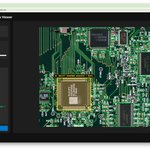
Generated boxes + HTML to view the boxes in one output when asked basically "label all the parts raised on the board with bounding boxes" + a link to the Gemini API vision docs as a reference via @GoogleAIStudio
If you've got any delicate vision tasks, I'd highly recommend trying to build a small agent loop which brings in Gemini 4 Argon + a tool like SAM3 (for high quality masks)
The modern agentic vision loop:
• Images at scale
• Define a labelling rubric (e.g. "label all the X's and Y's")
• Send seed data to Gemini in a loop to refine rubric / create golden samples (use Agentic Vision/Agentic Video for more token efficient labelling)
• Bring in tools like SAM3 or Falcon Pecerption-HD for finesse
• Repeat at scale
• ...
• Fine-tune a targeted model to repeat the task for even more labelling at scale
• Get Gemini to review samples with high uncertainty
• ...
• Repeat N times until your smaller model is a beast at your target task


3
14
1,276
Resources:
• Gemini vision docs: ai.google.dev/gemini-api/doc… (see here for how to get boxes/masks on images)
• Gemini video docs: ai.google.dev/gemini-api/doc… (see here for how to use agentic video for video understanding/editing - I'm using it to sort raw footage on my videos)
• SAM3 for really good masks (e.g. use Gemini for boxes -> SAM3 for masks) - huggingface.co/facebook/sam3
• Falcon Perception/Falcon Perception-HD - huggingface.co/tiiuae/Falcon… (I've noticed these models can be a bit better at specific text-based prompts if you need something lightweight locally to run at scale)

1
1
291
DeepSeek Search joins the Search Index!
I tested @deepseek_ai's new search API over the past couple of days since it launched.
A strong debut with one of the lower costs per search ($0.75/1k searches).
Is there anything they can't do??
Huge effort to the @deepseek_ai team!
DeepSeek Search debuts on the Artificial Analysis Search Index at 69, 17th of 27 search products, at the lowest price of any paid Search API on the board
@deepseek_ai launched its Search API on 17 October. We benchmarked it in our Stirrup agent harness, where GPT-5.6 Luna (medium) calls DeepSeek Search as its web_search tool to complete a combination of tasks from BrowseComp, DeepSearchQA and AA-Omniscience.
At $0.75 per 1k searches, DeepSeek Search costs less per search than any other paid Search API we benchmark, below Octen, Parallel (turbo) and Parallel (fast) at $1. At about $0.032 per task, it is the 5th cheapest of 27 products, cheaper than 20 of the other 25 Search APIs (median $0.066) and level with Nimble (lite). TinyFish, Octen, Parallel (turbo) and Parallel (fast) cost less.
Key benchmarking results for DeepSeek Search:
➤ Artificial Analysis Search Index: DeepSeek Search scores 69, a 36-point lift over the same model with no search (33). It sits between TinyFish at 71 and Linkup (standard) at 68
➤ AA-Omniscience is DeepSeek Search's strongest benchmark: it scores 70% accuracy on our proprietary factual answer benchmark. This ranks 10th of 27, 3 points behind the joint leaders, Exa (auto, dynamic highlights) and Firecrawl (73%). BrowseComp, which needs multi-hop reasoning across several searches, is its weakest benchmark: at 63% it ranks 25th of 27, well behind the Perplexity variants and Octen (85% to 87%)
➤ Large search results: each search returns about 7k tokens, near the top of the board's range. Each result carries about 1.8k characters of passages from the page. This raises model cost: at about $0.023 per task, DeepSeek's model cost is the 2nd highest on the board, behind Linkup (flash, alpha) at $0.039
➤ 128-character query limit: DeepSeek rejects queries longer than 128 characters. 6% of the agent's searches hit this limit, and for 87% of these, the model's first shorter rewrite worked
Key details:
➤ Setup: GPT-5.6 Luna (medium) in Stirrup, DeepSeek Search API with need_content=false (page passages, no full page content) and 10 results per search
➤ Pricing: $0.75 per 1k successful searches. DeepSeek does not bill empty results
➤ Rate limit: 5 searches per second per account

8
932
A new (tied) #1 on the Search Index!
I tested both of these prior to @ExaAILabs 3.0 launch, the lite offering has an excellent Cost per Task/performance tradeoff.
If your agent needs web search, check out our Search Index for performance/cost/latency tradeoff comparisons across 1700 tasks.
Exa has released Exa 3.0, scoring 80 on the Artificial Analysis Search Index in Dynamic Highlights mode, tying with Perplexity Search for the #1 spot
@ExaAILabs has released a new Dynamic Highlights mode to its Search API. Given a search query and its results, Dynamic Highlights determines how much text to return from each page within a shared budget
We benchmarked two Exa search types with Dynamic Highlights ahead of release: an upgraded auto mode, which balances search quality and speed, and a new lite mode, optimized for lower cost and latency. Both were evaluated using our Stirrup agent harness and GPT-5.6 Luna (medium) as the agent model
Key benchmarking results for Exa Search with Dynamic Highlights:
➤ Ties for #1 on the Artificial Analysis Search Index: Exa Search (auto, Dynamic Highlights) scores 80, level with Perplexity Search (medium) in the #1 spot, while Exa Search (lite, Dynamic Highlights) scores 79. On DeepSearchQA, auto (85.6 F1) and lite (84.9 F1) rank 1st and 2nd respectively, 4 to 5 points ahead of Perplexity Search (medium, 80.8)
➤ Reduces search calls and token usage: Exa Search (auto, Dynamic Highlights) uses 7.6 searches per task, the fewest of any Search API on the leaderboard, down from 9.4 with standard highlights. Tokens per task fall 47%, from 299k to 157k
➤ Reduces cost per task by 21%: Exa Search (auto, Dynamic Highlights) costs $0.066 per task, compared to $0.083 with standard highlights. Lite costs $0.044 per task, with both sitting on the cost vs. capability Pareto frontier. Exa Search is priced at $7 per 1k searches for auto and $4 per 1k searches for lite

2
16
1,556
Daniel Bourke retweeted

DINOv2 has never seen a caption, and Qwen3 has never seen an image. We still aligned their embedding spaces without a single image-caption pair.
It even works when the images and the captions come from different datasets.
Project page: dominik-schnaus.github.io/un…
⬇️


Liquids open releases are some of hte best in the game
8ms per question on an RTX 4090 + 17ms per image up to 475 samples/s for the 3B model
👏 outstanding work!

Today we release Open d1: two open-weight multimodal models in our d1 decision model family.
> d1-3B: text + vision
> d1-omni-600M: text + image or text + audio
> Real-time decision making anywhere, from data centers such as @nvidia DGX to RTX workstations to Jetson at the edge.
1/

1
8
1,002
Added OpenAI's native web search tool to the @ArtificialAnlys Search Index, this is web_search tool the model uses when calling:
`tools=[{"type": "web_search"}]`
Some interesting notes:
• `search_context_size` of "low", "medium", "high" returns almost the same tokens on each (why we stuck with "medium" as the default)
• `return_token_budget` of "default" or "unlimited" is also very similar across tasks (why we stuck with "default" as the default)
The docs do say:
> This setting does not set an exact token count or guarantee a specific number of sources or citations.
So perhaps this is functioning as expected, either way, this was confirmed both in the docs/experimentally across ~1700 tasks.
If you're using OpenAI's native web search tool, check out our results below.
And if you want to see any other search providers tested/models, let me know, plenty of updates in the search pipeline.
OpenAI Web Search debuts on the Artificial Analysis Search Index at 74, the 5th best provider behind Perplexity, Octen, Parallel and Brave
@OpenAI Web Search is the first integrated first-party search tool on our board. Instead of an agent calling a Search API in our Stirrup harness, GPT-5.6 Luna (medium reasoning) calls OpenAI's built-in web_search tool, and OpenAI runs the whole search loop inside one Responses API call. All setups use the same underlying model, GPT-5.6 Luna (medium reasoning).
At ~$0.05 per task, OpenAI Web Search costs less than Parallel (advanced, $0.06) and Perplexity (medium, $0.07), but about twice as much as Octen ($0.024), which scores 3 points higher.
Key benchmarking results for OpenAI Web Search (medium search context):
➤ 5th best provider on the Artificial Analysis Search Index: OpenAI Web Search scores 74, a 41-point lift over the same model with no search (33). It places 7th of 26 products, level with You . com (highlights), Nimble (standard) and Exa (auto) at 74, behind the three Perplexity variants (77 to 80), Octen (77), Parallel (advanced) and Brave (LLM context) at 75
➤ OpenAI Web Search performs best on AA-Omniscience, our proprietary factual answer benchmark, achieving 72% accuracy. This ranks 3rd of 26 search provider variants, within 1 point of the leader, Firecrawl (73%). BrowseComp, which needs multi-hop reasoning across several searches, is its weakest benchmark: at 73.5% it ranks 13th of 26, well behind the Perplexity variants and Octen (85% to 87%)
➤ OpenAI Web Search uses fewer tokens for the same tasks: OpenAI bills about 40k input tokens per task, search results included, against 125k for the leanest Search API on the board, Perplexity (low). Its model cost is among the lowest on the board, at about $0.009 per task
➤ Built-in search costs less per task than most Search APIs: At ~$0.05 per task, OpenAI Web Search is cheaper than 17 of the 25 Search API products on the board (median $0.067), including Parallel (advanced, $0.06) and Perplexity (medium, $0.07). Octen costs about half as much ($0.024) and scores 3 points higher
Key details:
➤ Setup: GPT-5.6 Luna (medium reasoning) with OpenAI's web_search tool and search_context_size set to medium, in one Responses API call
➤ Pricing: $10 per 1k web_search calls, plus the search content, which OpenAI bills as model input tokens
➤ Contamination: we block known contamination sources through the tool's domain filter

1
6
999
Gemini team cooked with this one
Looking forward to seeing how it goes on vision tasks too
@skalskip92 another frontier VLM for you to test ;P
Google’s new Gemini 4 Argon equals GPT-6 Astra on the Artificial Analysis Intelligence Index at 60% of the Cost per Task with discounted prices. Google is now back to being one of the top three labs in intelligence achieved
Gemini 4 Argon is @GoogleDeepMind’s first proprietary model above the Flash class in over 7 months. With high reasoning (the highest available), it scores 53 on the Artificial Analysis Intelligence Index, matching GPT-6 Astra (max, 53) and 1 point ahead of GPT-6.1 Sol (max, 52), with gains driven by lower hallucinations and stronger agentic capabilities.
At its current 50% pricing discount and with cache discounts increased to 95%, Gemini 4 Argon costs $1.99 per Intelligence Index task, 60% of GPT-6 Astra (max), but 2.7x GPT-6.1 Sol (max). After the discount ends, this will rise to $3.98 (~1.2x GPT-6 Astra (max)).
Gemini 4 Argon is currently being rolled out to selected users and is not publicly available. The 50% discount is an initial promotion. Google has not yet confirmed the promotion end date
Key benchmarking results for Gemini 4 Argon with high reasoning:
➤ Google returns as one of the top three labs on intelligence: Gemini 4 Argon (high) scores 53 on the Artificial Analysis Intelligence Index, matching GPT-6 Astra (max, 53) and 1 point ahead of GPT-6.1 Sol (max, 52). This is 23 points above Google’s previous non-Flash model, Gemini 3.1 Pro Preview (30) and 12 points ahead of Gemini 3.8 Flash (high)
➤ Launch discounts of 50% make Gemini 4 Argon competitive on Cost per Task: At current discounted pricing, Gemini 4 Argon (high) costs $1.99 per Intelligence Index task, 60% of GPT-6 Astra (max, $3.26) for a comparable level of intelligence. This cost efficiency is driven by lower token prices, rather than reduced token use, with Gemini 4 Argon averaging 62k output tokens per task, compared with 27k for GPT-6 Astra (max). Google has not yet confirmed the promotion end date, but on standard pricing, Cost per Task will increase to $3.98
➤ Stronger agentic performance: Historically a weaker area for Gemini models, Gemini 4 Argon shows improvements across agentic evaluations. It ranks #1 on AutomationBench-AA at 77.5%, 6 points ahead of Claude Sonnet 5.5 (max, 71.3%). On Terminal Bench 4, Gemini 4 Argon achieves 57%, a +53 point improvement from Gemini 3.1 Pro Preview, only behind Claude Sonnet 5.5 (max, 64%), Claude Opus 5.5 (max, 60%) and GPT-6 Astra (59%). On AA-Briefcase, it reaches 1494 Elo. This is driven by a 65% rubric pass rate, the highest we have recorded, but lower Analytical Quality (1576 Elo) and Presentation Quality (1308 Elo)
➤ Lowest hallucination rate among leading models: On AA-Omniscience, Gemini 4 Argon has a 15% hallucination rate, the lowest of any model scoring 45+ on the Intelligence Index, compared with 51% for GPT-6 Astra (max) and 54% for GPT-6.1 Sol (max). This means Argon is much more likely to acknowledge when it does not know an answer rather than guess incorrectly. On accuracy, Gemini 4 Argon scores 50%, a 5 point decrease from Gemini 3.1 Pro Preview, and 13 points below GPT-6 Astra (max, 63%). With this slightly lower accuracy, its overall AA-Omniscience score of 42 remains in line with GPT-6 Astra (43) and GPT-6.1 Sol (42)
Key model details:
➤ Context Window: 1M tokens
➤ Multimodality: Text, image, video, and speech input, with text output
➤ Pricing: $4/$20 per 1M input/output tokens at standard pricing, currently discounted 50% to $2/$10. Cached input tokens receive a 95% discount ($0.10 per 1M at discounted pricing), up from 90% on Gemini 3.8 Flash
➤ Long Decode Continuation: We tested Gemini 4 Argon with Long Decode Continuation, a new Gemini API feature that pauses long responses and resumes them across follow-up calls. This lets reasoning run up to 1M output tokens without request timeouts

6
14
2,539


End-to-end video walkthrough of our new custom evals product Optima
Make your own evals from natural language or an existing dataset and test them against a suite of models
And then compare against performance/cost/latency
In the video below, I walkthrough making a custom eval for an insurance task of extracting structured data from call transcripts
Last week we launched Optima, a new platform for benchmarking models on your own workloads and comparing performance, speed and cost efficiency
Watch our new video walkthrough to see how to build and run your own benchmark with Optima, and find the best model for your use case
Start building your benchmark today at artificialanalysis.ai/optima


