


youtu.be/5S_A2BNheeU?is=rKRe… @GeorgesLangRTL Mais que c’est bon ça ! Bryan Adams qui reprend Slade pour un show TV canadien qui sera diffusé début décembre. J’ai reconnu à la droite de Bryan, Greg Keelor & Jim Cuddy de Blue Rodeo, ce groupe canadien génial que tu m'as fait découvrir.
2
139

Près de 40 ans après avoir vu pour la première fois ce concert en VHS, j’ai constaté en le regardant cet après-midi que: primo, l'émotion et le plaisir sont toujours intacts, deuxio j’en suis arrivé au point où je sais à quel moment quel cri va venir du public. Rien à rajouter...

1
63
D'une soirée Parton à une soirée Parsons, il n’y a que quelques jours qui les séparent. Avec un plateau tout aussi prestigieux. Et au Troubadour, rien que l'endroit fait rêver ! @GeorgesLangRTL

1
27
youtu.be/5HV2kW93Rmk?is=soW_…
Une actu Bob Seger, si petite soit-elle, (réédition récente de FACE THE PROMISE), suffit pour me replonger avec toujours autant de plaisir dans l'œuvre de cet artiste que j'adore. Et chaque album contient toujours une pépite oubliée qui donne le frisson.

2
73
youtu.be/HixKOfoDic0?is=hW89…
@GeorgesLangRTL J’adore la fin, quand Dolly change le "We've Got Tonight, who needs tomorrow" en "who needs Sheena Easton", accompagné d’un sourire complice envers Kenny Rogers, quand on sait qu'il avait d’abord repris ce titre de Bob Seger avec Sheena...

3
77

Mr Radio retweeted

Was there anybody cooler than Dolly Parton and Carl Thomas Dean? I don't think so.
😎

Mr Radio retweeted

Sally Field's tribute to the late Dolly Parton, her Steel Magnolias co-star, was so sweet.
"If there are truly angels on earth, then we just lost one: Dolly Parton. She was genuine and humble, supportive, and blisteringly funny, with a bodied sense of humor that would send any rude guy looking for a place to hide. I couldn't see then what a real giant Dolly was, not just as an artist but as a human."
#Emmys
Mr Radio retweeted

Quand on évoque l’US Open qui vient de commencer, comment ne pas penser à l’édition de 1991, il y a 35 ans… et à Jimmy Connors qui fête aujourd’hui ses 74 ans.
En septembre 1991 donc, classé 174e mondial, âgé de 39 ans et diminué par une blessure au poignet, l’Américain se présente à New York sans grande ambition. Son objectif ? Passer un ou deux tours, saluer le public une dernière fois et quitter la scène sous les honneurs d’un tournoi qui lui a offert les plus belles émotions d’une carrière déjà exceptionnelle. Mais rien ne va se dérouler comme prévu…
Pour lui rendre hommage, les organisateurs lui accordent une wild card. Connors, pourtant, est à bout. Son corps le trahit, son mental vacille. Son premier adversaire n’est autre que Patrick McEnroe, frère de John. Le match semble plié : Connors est mené deux sets à rien, 3-0 et 0-40 sur son service. Mais au cœur de la nuit new-yorkaise, il s’accroche, renverse la situation et s’impose au bout de cinq manches, à trois heures du matin. Le public, resté nombreux, est en transe. « Jimmy a su utiliser la foule. Moi aussi, si j’avais été spectateur, je l’aurais soutenu », admet Patrick McEnroe. Son frère John résume la situation : « Patrick a réveillé la bête. »
Ce qui devait être une simple tournée d’adieu se transforme en épopée. Après McEnroe et deux autres tours, Connors dispute un 8è de finale dantesque face à Aaron Krickstein, puis un quart de finale épique contre Paul Haarhuis, ponctué d’un point entré dans la légende du tennis. « Jimbo » atteint finalement les demi-finales, où il s’incline face à Courier, en trois sets secs. Mais peu importe : Connors vient de signer l’un des plus grands come-backs de l’histoire du sport.
L’enfant terrible, souvent critiqué pour ses excès, retrouve une aura insoupçonnée. Ses renaissances successives, autant de victoires arrachées à la mort sportive, et donc à la mort symbolique, comptent désormais davantage que ses écarts de conduite. Lui-même résumera :
« Cet US Open 1991, ce sont les onze plus beaux jours de ma carrière. Plus beaux que mes titres. Il n’y a même pas photo. Je n’échangerais pas une seule seconde de ce que j’ai vécu dans ce tournoi contre tous les trophées du monde. »
A noter et au cours de l’ US Open 2026 🇺🇸 à New York City, le classement des joueurs de tennis masculins ayant remporté le plus de tournois ATP (titres en simple) pendant l’ère Open (depuis 1968) :
1. Jimmy Connors 109 titres
2. Roger Federer 103 titres
3. Novak Djokovic 100 titres
4. Ivan Lendl 94 titres
5. Rafael Nadal 92 titres
Jimmy Connors restera donc l’un des plus grands champions de tennis de tous les temps ❤️🙏

Mr Radio retweeted

This was Dolly Parton’s “farewell” video from May 2026 — and none of us realized it. Or believed it. Or wanted to believe it.
Her last words to us were: “I will always love you. Thank you.”
Mr Radio retweeted

Dolly Parton says she once went through a period so dark, she understood why people turn to drugs and alcohol.
“Yes, I went through a bad period of time back in the ’80s when I was going through the change. I was having some female problems, family problems, emotional problems, and I was overweight. I didn’t feel good about myself at all, so I got myself in a pretty bad bind.”
“I understood at that moment how people get on drugs, how people get on alcohol, and how people can commit suicide. I didn’t do that because I kept praying, holding on to God, and hanging on to my friends.”
“No business thing has ever been able to get me that depressed. It has to be something very personal, either family or something during that middle-age change of life, when your hormones and everything are different.”
“I did have a very hard time, but God, praying, friends, and just trying to hang on helped me. Being Dolly, just being me, I thought, ‘Hey, either get off your fat ass and do something about it, or go ahead and blow your head off.’ And I thought, ‘Nah, I ain’t gonna do that.’”
“I believe God meant for me to go through that so I could completely feel for other people about everything.”
Mr Radio retweeted

“He can’t even get it out to pee, much less get it up for three.”
Dolly Parton looked Jimmy Fallon in the eye and told him her husband was more excited about her working with Jennifer Aniston than the music because he fantasized about a threesome with both of them.
She delivered it completely deadpan. Jimmy collapsed.
This is one of the rare times Dolly let the unfiltered version of herself show on late-night television.
Is this the most fearless thing she ever said on camera?
Mr Radio retweeted

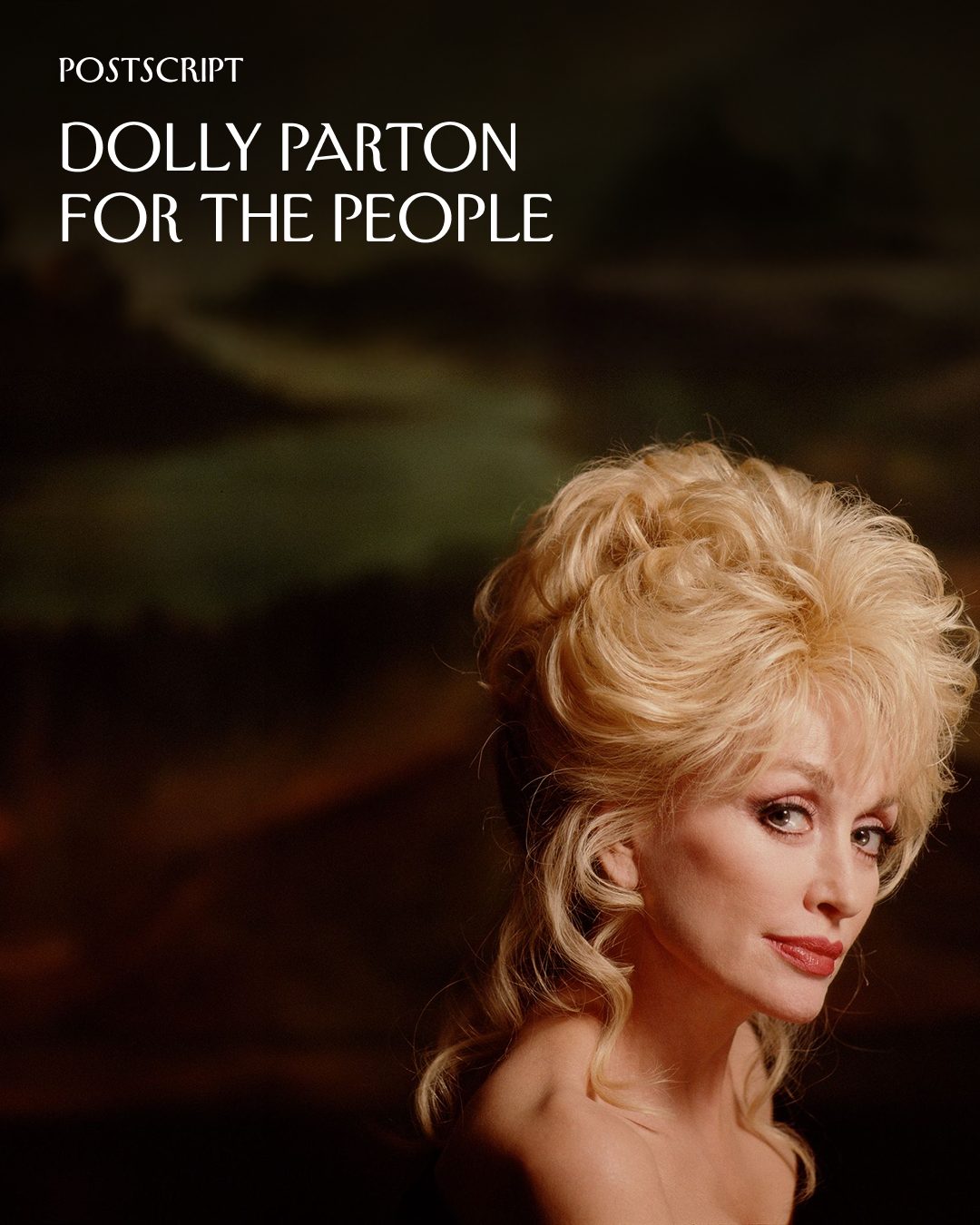
Four score and three thousand songs ago, in the middle of a whopping winter storm, a sharecropper and his wife brought forth upon this continent a baby girl named Dolly Parton. Parton, who died this week, at age 80, produced some 50 solo albums, sold somewhere north of 100 million records, starred in several movies, and wrote or co-wrote more than a dozen books. When her home county was devastated by wildfires in 2016, she sent $1,000 dollars a month for six months to every family that had lost a home. She donated a million dollars to fund the development of the coronavirus vaccine.
“Still, for all this, songs were always the heart of it,” Kathryn Schulz writes. And Dolly sang about everything—with a voice that may have been the most distinctive in the business. Schulz remembers Dolly Parton—not just as the Queen of Country music, but as the people’s President: newyorker.com/culture/postsc…

Mr Radio retweeted

La historia cuenta que Dolly Parton conducía por Brentwood, Nashville, de regreso de su oficina, cuando una voz a capella surgió en la radio. Al principio solo le sonó familiar: “If I should stay…”. Luego llegó el coro. Tuvo que detenerse al costado de la carretera, cerca de donde hoy está un Walgreens, porque el corazón le latía tan fuerte que temió estrellarse.
Era 1992, Whitney Houston acababa de convertir su pequeña canción de despedida en un himno mundial.
La historia había comenzado casi veinte años antes.
En 1973, Dolly Parton decidió separarse profesionalmente de Porter Wagoner, el hombre que la había llevado a la televisión nacional y le había abierto las puertas de Nashville. No fue un corte limpio ni un gesto de ingratitud. Fue una necesidad de crecer.
Para decirle adiós, escribió “I Will Always Love You”. Entró a su oficina, se sentó con la guitarra y se la cantó. Wagoner lloró. “Es la mejor canción que has escrito”, le dijo. “Puedes irte… siempre que yo la produzca”.
La grabó en 1974 y alcanzó el número uno en las listas country.
No era una balada de amor romántico, sino una carta de gratitud y liberación: “Te querré siempre, pero tengo que seguir mi camino”.
Poco después llegó una tentación casi imposible de rechazar. Elvis Presley quería grabarla. Dolly estaba eufórica.
Contó a todos que el Rey interpretaría su canción. La noche antes de la sesión, el coronel Tom Parker telefoneó: la condición era entregar la mitad de los derechos de autor. Dolly se negó. Lloró toda la noche.
“Mis canciones son como mis hijos”, explicaría después. “Espero que me mantengan cuando sea vieja”. Prefería conservar el copyright completo, aunque eso significara renunciar al sueño de oír a Elvis cantarla.
Aquella decisión, tomada con el corazón roto, cambió el rumbo de su vida.
En 1992, Kevin Costner y su secretaria insistieron en usar la canción para The Bodyguard. Había otra opción preparada, pero al último momento la pidieron. Dolly envió la cinta y no volvió a saber nada… hasta aquella tarde en el auto.
Whitney Houston, con la producción de David Foster, la transformó: el inicio a capella, la potencia vocal, el escalofrío que recorre el mundo.
Catorce semanas en el número uno del Billboard Hot 100. La banda sonora se convirtió en una de las más vendidas de la historia.
La versión de Whitney generó para Dolly alrededor de diez millones de dólares en regalías solo en la década de los noventa.
Dolly no guardó el dinero en silencio. Compró un complejo de oficinas, un strip mall, en un barrio históricamente afroamericano de Nashville, lejos del glamour de la Avenida 16.
“Pensé: este es el lugar perfecto, considerando que era Whitney. Voy a estar aquí con su gente, que también es mi gente”. Lo llamó “la casa que Whitney construyó”.
“Tomó mi pequeña canción y la convirtió en algo enorme”, diría Dolly más de una vez, con la voz quebrada de emoción.
Whitney le había devuelto la canción transformada, más grande y más universal.
Dolly escribió la despedida. Whitney la hizo volar. Entre las dos tejieron un puente improbable entre el country de las montañas de Tennessee y el soul que llega al alma.
Una canción nacida de la necesidad de partir se convirtió en el adiós que el mundo nunca pudo olvidar.
Hoy, cuando suenan aquellas notas a capella, todavía se escucha el eco de dos voces que se encontraron a través del tiempo y con seguridad, en la eternidad, y a la vez, se quedaron con nosotros para siempre.
Mr Radio retweeted

RIP Dolly. I did not know her well, but I do have a story that gives a little window onto what a 100% class act she was. I had the honor of singing her song “Do I Ever Cross Your Mind“ for a Dolly compilation in the 90s...


Mr Radio retweeted

When Dolly Parton spoke to 60 Minutes' Morley Safer in 2009, he described her as a singer, songwriter, and “the savviest woman in show business.”
Asked where she got her “outrageous” sense of humor, Parton answered, “It’s either laugh or cry, and I prefer to laugh.”
Parton died on Tuesday. She was 80 years old.
Mr Radio retweeted
She looks sweet… until she decides you’re about to learn why nobody crosses Dolly Parton twice.
In that legendary 1980 interview she looked Johnny Carson dead in the eye and said:
“I don’t lose my temper often.
But if I do, yeah… I can do it real good when I do.”
Then she dropped the line that still gives chills:
“I don’t lose my temper often…
but I use it sometimes.”
Soft voice. Iron spine.
She doesn’t explode.
She chooses the exact moment to make you regret testing her.
That quiet confidence hits different, doesn’t it?
Would you rather have people fear your silence or respect it?