. retweeted
The scariest finding in this paper: the subjects couldn't tell it was happening.
UPenn ran this study on 48 healthy adults. One group slept 8 hours. Another slept 6. Another slept 4. For 14 straight days. They tested cognitive performance every 2 hours from 7:30am to 11:30pm.
The 6-hour group's reaction times, working memory, and sustained attention deteriorated on a near-linear curve. By day 14 they were performing at the same level as someone who hadn't slept at all in 48 hours. The 4-hour group hit that threshold by day 6.
Here's the part that should unsettle everyone who thinks they "do fine" on 6 hours: the subjects' self-reported sleepiness flatlined after the first few days. Their brains kept getting worse. Their perception of how impaired they were stopped updating. The cognitive decline was invisible to the person experiencing it.
The researchers found a hard threshold. Any wakefulness beyond 15.84 hours in a day produces cumulative neurobiological cost. That cost compounds every single day you exceed it and does not reset with a weekend of sleeping in.
About 35% of American adults sleep less than 7 hours a night. 40% of those get 6 hours or less. In 1942 that number was 11%. We built an entire professional culture around a sleep schedule that this paper says is functionally equivalent to pulling consecutive all-nighters.
"I'm fine on 6 hours" is the most common response to sleep research. The first thing chronic sleep debt destroys is your ability to notice chronic sleep debt.
. retweeted
You can see why @MetService is taking this seriously.
So should you.
Cyclone Vaianu - Saturday update
🔴🔴The Bay of Plenty and Rotorua Strong Wind Warning has been upgraded to Red with the strongest winds expected on Sunday.
‼️All other Warnings and Watches remain in place.
Details here
bit.ly/AllWarnings
@nztamain @nztawbop @ourwaikato
Work. Work. Work. Stay hydrated. Go to the dentist. 10,000 steps. “What’s for dinner?” Insurance. Drink water. Pay a bill. Pay a bill. Smile. Credit Score. Check engine light. Go get gas. ALLERGIES! TAXES! STUDENT LOANS! Phone storage full. Email. Email. Apple $12.99. Apple $9.99. Subscriptions. Subscription. Overdraft. Laundry. Fold. Text. Text. Text. Clean the house. “I haven’t seen you in a while.” Doctors appoinment. Hair appoinment. Nail appointment. RENT. WAR! GOVERNMENT! POLITICS! THE PRESIDENT!!
. retweeted
What I’d just say to you Chris is there are reasons why you say “what I’d just say to you”. So what I’d just say to you is everyone knows why you say “what I’d just say to you”.
I’m telling you this because it’s one of my entitlements & I’m entitled.
@chrisluxonmp 👇
. retweeted
Mount Yoshino in Japan has been blooming with cherry blossoms for over a thousand years
More than 30,000 cherry trees were planted here in four groves at different altitudes so they would come into bloom at different times of the spring
. retweeted
HOW TO DEAL WITH SOMEONE WITH AN AVOIDANT ATTACHMENT STYLE:
1. Realize it's not personal: while it can deeply impact you, it's not personal. Their behavior is a reflection of their own capacity for emotional intimacy.
. retweeted
Their biggest struggle is direct communication.
When they're emotionally overwhelmed, they shut down. They spend time alone as a default stress response.
. retweeted
People with avoidant attachment feel most safe when they are alone and independent. They learned early people can't be trusted, and that no one will help them when they need it.
. retweeted
Even making children anywhere in the world *fear* that they might be suddenly destroyed is an atrocious crime against humanity.
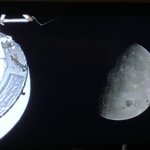
Sweet dreams, @NASAArtemis II crew.
One last look at the Moon before flight day six and your epic lunar flyby, taking you farther into space than humans have EVER traveled.
. retweeted
Most people know that New Zealand’s wholesale electricity price is set by the highest-cost generator in the network, which these days is usually the coal-and-gas-fired Huntly Power Station, providing crucial backup when hydro lakes are low or wind isn’t blowing.
What’s less well understood is that households and businesses are effectively paying a carbon premium on every unit of electricity they consume, including the 88–90% generated from emission-free sources. Not because those generators emit carbon, but because the market pays every generator the price that Huntly needs to cover its costs, including its ETS bill.
In 2024, the ETS caused New Zealand electricity consumers to pay almost $1.5 billion more for electricity. The Crown collected $223 million of that. The remaining $1.277 billion stayed in the electricity sector, captured as additional profit by generators who emit nothing and owe nothing under the ETS.
This happens because only carbon-emitting generators face ETS costs, but those same generators set the wholesale price for everyone.
Somewhat counter-intuitively, building more solar, wind, and hydro will not reduce this cost to consumers. More renewables mean more generators receiving the ETS-inclusive price.
. retweeted
This photo of Earth is EXTRA spectacular for a good reason... let me explain. Most images you see of Earth from space are the daylight side of the Earth, and it's obviously very bright (see my last image), this means stars are too dim to be seen with that bright exposure setting (low ISO, high shutter and / or stopped down aperture).
BUT this image taken by the Orion crew looks so incredible because you can see the sun is BEHIND the earth, meaning it's night time on the side of the earth facing the crew in this image.
So how do you expose a night time earth from space? Same way you do on Earth! A mixture of opening up the aperture (F4 in this case), cranking the ISO (51,200 here), and using a relatively long exposure (1/4 of a second). We can see the settings used by looking at the exif data from the camera. What this means is our camera is also sensitive enough to see stars in the background of Earth, leading to an extraordinary image!!! GREAT WORK!!! These are the kind of images I've been so excited to see!
Replying to @NASA
We see our home planet as a whole, lit up in spectacular blues and browns. A green aurora even lights up the atmosphere. That's us, together, watching as our astronauts make their journey to the Moon.

ALT A full disk image of Earth, as seen from the Orion capsule. The planet is a pale blue, swirling with white clouds and glowing slightly lighter blue in place from reflected light. From about 8 to 9 o'clock, a large brown landmass is Africa, with the Iberian peninsula twinkling with lights just where the planet curves. At the 1 o'clock spot, aurora glow in a thin green glow, just barely separated from the planet's surface. Earth is set against the black of space. Credit: NASA/Reid Weisman
. retweeted
🚨#BREAKING: Watch incredible footage captured from passengers on an airliner above Florida, showing the exact moment the Artemis II mission lifts off carrying four astronauts on its journey around the Moon as they make history