

This account was created to stream news about $RENDER & monitor $RENDER burns on chain (burns over $1000). Created by Jāy® (@JayJayKan)
Joined February 2025
- Tweets3.2K
- Following4
- Followers1.2K
- Likes27


🔥Burns Update🔥
$3,741 (2,410 $RENDER) across 139 tx burned.
Median $5, biggest burn $891.
Burns removed 15.18% of daily emissions.

What's happaning on $RENDER Discord, what's currently being discussed in the channels?
Let's dive in
🧵👇🏻👇🏻👇🏻🧵
🧵 rnp-024-forth
RNP-024 has passed, closing the voting phase after community discussion.
⭕️ Team member Luke announced that voting passed and thanked everyone who contributed to the discussion. No vote totals, turnout figures, implementation timeline, or next procedural step were included in the message.
❗ Focus for the team: share the final voting results and clarify what happens next for RNP-024, including any implementation timeline or follow-up governance actions.
🚀 Monster $RENDER burns!🚀
$25,815 (15,693 RENDER) destroyed in 164 tx!
Median $7, biggest burn $7,353.
🔥 98.85% of daily emissions wiped out!

What's happaning on $RENDER Discord, what's currently being discussed in the channels?
Let's dive in
🧵👇🏻👇🏻👇🏻🧵
🧵 general
Render’s expansion from GPU rendering into AI compute is being framed as a potential second demand engine beyond 3D artists.
⭕️ @psalmist0919 asked @530441868945653771 whether AI workloads could eventually become as important to Render as rendering itself. The core point: moving from traditional GPU rendering into AI compute may open the network to a broader customer base beyond 3D artists.
Historical context: this question lines up with prior network discussions around expanding compute demand. Team member Sunny previously shared RNP-019, which proposed expanding emissions and rewards to include AI compute and general workloads beyond rendering. More recently, Team member Silvia introduced RNP-021, which builds on that direction by proposing support for enterprise-grade GPUs such as NVIDIA H100/H200 and AMD MI300 series for AI training, video generation, and large-scale image models.
❗ Focus for the team: clarify how Render expects demand to balance between existing 3D/rendering workloads and future AI/general compute, including what metrics will show whether AI workloads are becoming a major network usage driver.
🔥 $1,319.69
🔥 808.32 RENDER
Transaction: 62Exi2qBxxr6wc8XPjV3SDSDERvj91fUTfqYTYix1uGDpmAYXFkDyNSJXEq2kZVrCc3jkcVNYPS3djxaiPMGAEiM
In response to a question about Render’s integration plan for the Compute Network:
“I have a team working on Gen video / 3D / world models and related services tuned to run on consumer GPUs (4090 and later) which will mix workloads across compute and render nodes. Web Front end to access this will be going on Otoy.ai, api access and other integration tools to follow”
@JulesUrbach 08.05.25
$RENDER

🔥Burns Update🔥
$4,906 (2,924 $RENDER) across 125 tx burned.
Median $6, biggest burn $1,013.
Burns removed 18.42% of daily emissions.

🔥 $5,478.32
🔥 3,300.19 RENDER
Transaction: smbFmgnsQ5meyviWjaXZn2JSBJVa9F16oUqR8HV5SrEoGBRtyPhS59ddDZzGJy6Yawymiiq9QvmpkkZNfGwQNk2
🔥 $7,353.49
🔥 4,429.81 RENDER
Transaction: 41AAcKCPvirtixdgvCpmyX3w3rVk1K3FYiQc54JYPcmJrHdDHReEVHJxbeX87XWKRuK3BkND8NHQwBvPmpyD95fQ
🔥 $7,262.91
🔥 4,455.77 RENDER
Transaction: 3BBHxtZWc21BJhrmrXKRA4HuNC3S54dhmcDc883vG1ceE8K4Ab6ihqHK4a5DRvPmnL1FYe7ohGfGdNR4xSdSTBMu
🔥Burns Update🔥
$7,566 (4,483 $RENDER) across 155 tx burned.
Median $6, biggest burn $3,777.
Burns removed 28.24% of daily emissions.

What's happaning on $RENDER Discord, what's currently being discussed in the channels?
Let's dive in
🧵👇🏻👇🏻👇🏻🧵
🧵 rnp-024-forth
RNP-024 voting is live, with participation limited to eligible RENDER holders using self-custodial wallets.
⭕️ Team member Luke announced that the first round of RNP-024 voting is now open on Nation, with voting ending Friday, Oct 30 at 5pm Pacific. He directed voters to the Render governance knowledge base and clarified the key eligibility requirement: holders must have RENDER in self-custodial wallets to qualify.
⭕️ @steveschiets confirmed they voted. Context from the earlier channel notice: RNP-024 proposes bringing Forth into the Render Network ecosystem as a gateway for privately accessing AI models.
❗ Focus for the team: Keep reminding voters of the deadline, eligibility requirement, and voting link before Oct 30 at 5pm Pacific; any snapshot-related edge cases remain unclear from this thread.
🧵 node-revenue
Core tension: operators want clarity on how USDC-paid demand maps into RENDER burns/rewards, especially when artist spend exceeds the 15k RENDER-per-epoch reward reference point.
⭕️ @berzuntanu asked what happens if artists submit jobs worth more than 15k RENDER but pay in USDC instead of RENDER: are those USDC converted, into what asset, and where does that flow occur? @jebu9411 replied that they do not know. This follows prior discussion where @jebu9411 described their understanding that 15k RENDER is minted per weekly epoch for node rewards and balanced against RENDER burns when services are paid in RENDER. The unresolved part is how the same burn/mint logic applies when customer payment is in USDC rather than RENDER.
⭕️ @berzuntanu also asked whether rewards based on the new tiers have been implemented, tagging @458186325879816193. No answer appears in the current messages.
❗ Focus for the team: clarify the USDC payment flow, whether/when USDC is converted into RENDER or used for burns, how demand above 15k RENDER per epoch is handled, and whether the new tier-based rewards are already live.
🧵 general
A revenue spike sparked questions on whether demand is one-off project-driven or evidence of longer-term network growth.
⭕️ Revenue spike explained by large jobs.
@wallyape asked why DefiLlama showed a major 24-hour revenue jump, noting the last 24 hours appeared higher than most months. Team member Luke said the network has recently had “lots of big jobs” running.
⭕️ Sustainability framed as ebb-and-flow, not a straight-line trend.
@wallyape asked whether the spike looked sustainable or more like a one-time job. Luke clarified that large projects can create visible spikes when they go live, but the team’s focus is on long-term trending growth rather than treating every 24-hour jump as a new baseline.
⭕️ Example workload: Frameless.
When @wallyape asked what type of project could be large enough to cause that kind of spike, Luke pointed to Frameless as an example of large-scale immersive work that can drive substantial network usage.
⭕️ Governance update: RNP-024 voting is open.
Luke announced the first round of RNP-024 voting is live on Nation. Voting ends Friday, Oct 30 at 5pm Pacific. Voters must hold RENDER in self-custodial wallets to qualify, with instructions linked in the Render knowledge base.
❗ Focus for the team: clarify whether the recent 24-hour revenue spike came from one or multiple large jobs; share any non-sensitive detail on job category/scale; define what metrics best show “long-term trending growth”; remind voters of RNP-024 eligibility, snapshot/qualification rules, and any key decision points before the Oct 30 deadline.
❇️ Final thoughts: Tone was positive and curious. The main takeaway is that large immersive projects can create sharp revenue spikes, but the healthier signal to watch is sustained growth across time rather than a single day’s activity.
🔥 $1,019.32
🔥 610.37 RENDER
Transaction: 4fy7rS2wEJiRXe2DNjYduVaNJGNo9K3ezq5hJ8c3GHAsg6MfNuGJDrTPitXEQqdhijfs1KR553Kt2naLgLTNQhzK
🔥 $3,781.08
🔥 2,237.32 RENDER
Transaction: 57HKvZeChKCFCTo6pn2ZExLjSxxvJsj42rAbuBbdRnt88aghTNE2KghD8aBdTa5H9USAPRVDVMacXPUwP6CcpjW
🚀 Monster $RENDER burns!🚀
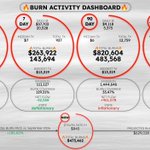
$142,789 (81,940 RENDER) destroyed in 106 tx!
Median $5, biggest burn $135,531.
🔥 516.15% of daily emissions wiped out!

What's happaning on $RENDER Discord, what's currently being discussed in the channels?
Let's dive in
🧵👇🏻👇🏻👇🏻🧵
🧵 general
Bandwidth distribution fees vs render pricing became the core tension: large ORBX/CAD scenes can make file delivery cost more than compute, reducing trust in job pricing.
⭕️ @gregleuey flagged a major cost shock from a recent job: $24 to render vs $34 in bandwidth costs, making the total more than 2x the render cost. He tied the issue to ORBX exporters creating huge scene files by baking points/point caches instead of compact transforms, and said the lack of a bandwidth cost calculator makes him hesitant to use Render Network for large scenes despite years of heavy usage.
⭕️ @cgen_ dug into the mechanics and asked for scene size. @gregleuey said the file was about 8GB, later reduced to 2GB by exporting animated/static mesh sections separately and rebuilding in standalone. @cgen_ calculated that if bandwidth is $0.09/GB, an 8GB file should be about $0.72 for one transfer, so a $34 charge implies distribution to roughly 47.2 nodes. Their concern: pricing becomes hard to predict if the fee scales by file size times node count.
⭕️ @gregleuey added that better best practices and cached assets should help, but said he was not prepared when submitting multiple scenes. Historical context: this same pain point was raised on Oct. 22, specifically that bandwidth was not visible in the calculator and could exceed render cost for ORBX-heavy scenes.
⭕️ @cgen_ asked whether using a user’s own cloud storage bypasses Render Network S3, or whether files still route through RNDR buckets before reaching nodes. That flow is currently unclear from the discussion.
⭕️ Team member Dino clarified that direct artist-controlled distribution “can’t work” as-is because files need to be hashed and encrypted first.
⭕️ Counter-proposal by @extrapockets: mechanism: offer artist-based distribution options via API, potentially with a web portal that watches a Google Drive/AWS folder, grants Render the needed permissions, and hashes files once and only once; an even stronger version would use cryptographically verified local scripts before submission to eliminate server costs. Rationale: reduce repeated upload/distribution overhead and give artists more control over large assets. Expected impact: lower infrastructure/bandwidth burden and clearer workflows for heavy scenes. Open questions: whether this exists in the API today, how hashing/encryption can be preserved, and whether local verification would require TEEs, which @extrapockets noted may make it impractical on artist machines.
⭕️ @nathanyfe and @bhoyspecial. briefly checked in while the main thread stayed focused on bandwidth economics and file-delivery architecture. Team member Flo also pinged @everyone earlier without added context.
❗ Focus for the team: clarify how bandwidth fees are calculated per job, including whether $0.09/GB is multiplied by every node receiving the scene; add bandwidth estimates to the cost calculator; explain the exact file path when artists use external cloud storage; confirm whether API-based artist distribution is possible after hashing/encryption; and clarify whether TEEs or another verification method would be required for local pre-submission scripts.
❇️ Final thoughts: The tone is constructive but frustrated. Power users understand large ORBX/CAD scenes are heavy, but they need predictable pricing, visible bandwidth estimates, and clearer distribution options before trusting the network with large jobs.
🧵 node-revenue
Core tension: how weekly node rewards, burns, and USDC-paid artist jobs flow through Burn-Mint Equilibrium.
⭕️ @jebu9411 described their understanding of the mechanism: a Solana smart contract mints 15,000 RENDER per epoch, with each epoch lasting 1 week, and distributes it to render nodes based on accepted work/contribution during that epoch. They framed this as balanced against burns: if artists spend 15,000 RENDER in the same epoch and the protocol mints 15,000 RENDER, supply is roughly balanced. They added that token value comes from utility, scarcity, market buying, and “unfortunately mostly” public sentiment.
⭕️ @berzuntanu asked the key follow-up: if artist jobs exceed 15,000 RENDER in value and artists pay in USDC rather than RENDER, what are those USDC converted into, and where do they go? Historical context: prior BME discussion in the community has referenced tracking burn/mint in USDC-equivalent terms, but the exact USDC flow in this scenario is not clarified in the current messages.
❗ Focus for the team: clarify the current payment path for USDC jobs: whether USDC is used to buy RENDER for burns, routed to treasury/foundation/operator payouts, or handled another way; and whether the 15,000 RENDER weekly mint cap is fixed, variable, or only an example.
🧵 rnp-024-forth
RNP-024 is moving toward its first vote, with the key trade-off now shifting from proposal details to voter eligibility timing and customer-acquisition plans.
⭕️ RNP-024 vote timing and eligibility.
@rshea shared a weekend GitHub update adding a marketing budget, framing the need as customer acquisition for Forth, and said the plan was to go live with a vote in 24 hours. Team member Flo announced that the first round of voting begins Tuesday Oct 27 at 5pm Pacific, ends Friday Oct 30 at 5pm Pacific, and covers RNP-024 introducing Forth as a gateway for private access to AI models. A snapshot will be taken shortly before voting, and voters need RENDER in self-custodial wallets to qualify. Prior governance context indicates snapshots are typically captured within 24 hours of a vote going live, but the exact snapshot time here remains unspecified.
⭕️ Payment timing question.
@inveent327 asked whether this week’s payment would be included in the snapshot. Team member Luke clarified that, based on typical distribution times, it is unlikely.
❗ Focus for the team: clarify the exact snapshot cutoff time, whether any pending distributions can count, and how the new marketing budget will be allocated toward customer acquisition.