




SpaceX needs a county vote for one Arizona data center. In orbit, it just got approval for a million.
On the ground, its $50 billion, 747-acre campus in Cochise County waits on a December 9 zoning vote. Arizona's attorney general wants even that pushed back.
In space, one FCC decision just authorized up to 1 million orbital compute satellites. The first approval of its kind in US history.
No zoning board in orbit. No aquifer. No grid.
That's the whole pitch for Starmind.
Hey @grok which gets approved faster: one data center in Arizona or a million in orbit?
2
2
541
SpaceX won the first US approval for space data centers.
The FCC just authorized up to 1 million solar-powered compute satellites for SpaceX's Starmind constellation. It's the first time the US has licensed data centers in orbit.
SpaceX filed in January. The FCC accepted it for review on February 4. Ten months after filing, it's a yes.
The FCC says other orbital data center proposals are still under review. Blue Origin's 51,600-satellite plan is one of them.
SpaceX got there first. Now it has to build them.

47
Dell sold $22 billion of AI servers in one quarter.
That line was $5.6 billion a year ago, up 291%. Total revenue hit a record $54.9 billion. Dell booked $60.2 billion of new AI orders and its backlog reached $132.3 billion.
Full-year guidance went up for the third time this year, to $202 billion.
The stock fell 11.83% to $295.28 in the session before the report, dragged down by HPE warning that memory could stay scarce through 2028.
Dell expects the gap between AI supply and demand to get worse next year.
2
5
810
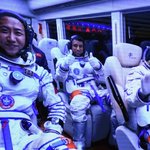
Pakistan's first astronaut just reached orbit on a Chinese ship.
Muhammad Zeeshan Ali, a 40-year-old former air force pilot, launched on Shenzhou-24 Wednesday morning Beijing time and docked with Tiangong in under four hours. He's the first foreigner China has ever flown to its station. He'll be up there about a week.
His seat came out of a space deal the two governments signed last year.
The American version works differently. India, Poland and Hungary sent astronauts to the ISS in 2025 on Axiom's Ax-4, inside a SpaceX Dragon, and paid for it. Axiom put the ticket at more than $65 million per customer. Hungary said it was paying $100 million.
If a country wants an astronaut now, there are two doors, and one of them takes a credit card.


59
Tesla keeps raising the price of a truck it's discontinuing.
The Cyberbeast went up $5,000 on Nov 24 to $114,990, and $12,500 this month in total. Leases are gone. New orders deliver March to June 2027, just before production ends after summer 2027.
Used ones aren't sitting either. The Cybertruck averaged 39.1 days on the market in October per iSeeCars, the fastest of any used pickup. The truck average was 65.5.
Anyone comparing it to a Ford Pinto should check IIHS. It rated the Cybertruck Top Safety Pick+ for 2026 and 2027, the only large pickup with that award.
Keep the Cybertruck.
Seaport Global just put a $475 target on Tesla.
While chip stocks sold off this week, Tesla barely budged near $385. The firm initiated coverage with a Buy rating today.
Its analysts aren't buying it for the cars.
Seaport says Tesla's auto and energy businesses look expensive on their own. Their $475 call bets on Tesla reaching $3 billion to $4 billion in annual robotaxi revenue by the end of 2027.
Wall Street is pricing Tesla as an autonomous fleet operator.
$TSLA
1
1
477
Samsung and SK Hynix are licensing Chinese memory tech.
Both South Korean giants just signed deals to adopt parts of YMTC's flash memory design. Washington put YMTC on its trade blacklist back in 2022.
That puts US export controls in an awkward spot.
YMTC was founded roughly a decade ago and is already the world's third-largest flash memory supplier by shipments.
As older stacking limits hit a wall, Korea's top chipmakers now need technology from a blacklisted Chinese rival to build their next generation of memory.
1
4
287
Trump is flying to TSMC's Arizona groundbreaking next week.
The December 4 ceremony puts the White House back at the center of US chipmaking. One day earlier, Jensen Huang has to testify before the US Senate.
Both events land on back-to-back days.
TSMC has been expanding in Phoenix while Washington keeps pressure on Nvidia over export controls. Whether Huang flies straight from his December 3 Senate hearing to join Trump in Arizona is still undecided.
Washington wants the photo op, and Congress wants answers from Nvidia first.
2
248
Elon told TSMC it could only sublease space inside his Texas fab.
TSMC said no and crossed the county line.
C.C. Wei wouldn't give up operational control. Now TSMC has filed JETI application J0055 to build 25 miles from Musk's plant.
Hey @grok, who needs the other more: Musk's fab or TSMC? Pick one and explain.
Washington just handed US buyers cheaper Nvidia compute.
The US blacklisted Singapore operator Megaspeed and six other firms this week to block remote access to top AI chips. Malaysia's largest bank is now reviewing its data center loans.
Asian operators suddenly lost their biggest renters.
Instead of sitting on idle servers, data centers across Southeast Asia are pitching long-term Nvidia B300 capacity to US and European buyers. Hourly GPU rental rates are already sliding.
Clusters built to bypass US rules are now competing on price for American AI labs.
1
117
TSMC filed to build 25 miles from Elon Musk's fab.
In October, Musk said TSMC could only sublease space inside his Texas plant. TSMC chairman C.C. Wei refused to give up operational control.
Weeks later, TSMC crossed the county line and filed JETI application J0055 to build its own campus.
1. The memory squeeze forcing Musk's hand
On November 23, Musk confirmed Tesla's AI4 computer costs roughly doubled as global memory prices spiked.
Tesla cut planned AI4.5 memory by 25%, from 32GB down to 24GB per chip, while reserving AI5 for Optimus.
To escape supply bottlenecks, Tesla, SpaceX, and xAI are building Terafab in Grimes County, targeting $16.8 billion in Phase 1 and up to $119 billion through 2036.
Musk brought in Intel as a process partner with zero equity.
Intel Foundry lost $10.32 billion in 2025 and $1.85 billion to $1.9 billion in Q3 2026, so it needs a flagship customer more than ownership.
2. TSMC's Brazos County play
TSMC Arizona applied for a $22.6 billion Phase 1 fab on over 3,200 acres in College Station ISD, targeting 2,099 direct jobs averaging $133,000 a year.
It sits 20 to 25 miles west of Terafab, right next to Texas A&M engineering talent.
TSMC tied the project to a 10-year school property tax cap, using its July 2026 $265 billion Arizona commitment as leverage between two states.
3. Samsung's shrinking Texas buffer
Samsung committed $37 billion to its Taylor campus, anchored by a $16.5 billion Tesla AI6 deal through 2033.
TrendForce Q2 2026 data shows TSMC holds 72.5% of the global foundry market ($40.2 billion).
Samsung sits at 5.9% ($3.26 billion), just 0.5 points ahead of SMIC at 5.4%.
On November 25, Samsung shares fell 9.87% to 170,700 won in Seoul, while Intel dropped 8.15% to $54.80 and TSMC dipped 3.96% to $349.20 on November 24.
TSMC and Samsung are putting nearly $60 billion on the Texas table around Musk's $16.8 billion anchor, letting Tesla play all three foundries against each other.
The College Station school board holds its public hearing on December 10, with the governor's review window running through December 24.

3
19
3,213
Five directors just got handed a $3.5 trillion merger.
Tesla picked three board members and SpaceX picked two to work out an all-stock deal while Elon Musk sits out. SpaceX's own stock price is already messing with the swap.
SpaceX closed at $125.81 on Tuesday, below its $135 IPO price, putting it at $1.71 trillion. Tesla closed at $384.68, or $1.52 trillion.
If SpaceX offers a 33% buyout premium for Tesla, it has to print about 16 billion new shares on top of its 13.58 billion existing shares. Tesla shareholders would own over 54% of the new company. SpaceX would buy Tesla and end up the minority owner.
Getting five directors to agree isn't even the hard part. A merger needs yes votes from 50% of all Tesla shares, and non-votes count as no. Musk owns 19.8% and the top 10 institutions hold 22.3%. That gets them to 42.1%, while Tesla retail turnout usually sits around 28% to 30%.
They still need 312 million more votes just to get it past Tesla's own shareholders.
1
1
67
SpaceX turned down $738 million in federal broadband money.
It still agreed to connect every rural home it won for $0.
Across 50 states, those grants came with financial audits, procurement rules, and default penalties. SpaceX went straight to Washington and cut a $0 model deal that drops all of them.
Starlink still has to hit 100 Mbps speeds and give new customers the dish for free. It still charges the monthly subscription.
The bigger catch sits with competitors. Holding those rural locations on a $0 deal keeps federal grant money from flowing to rivals like Amazon or fiber builders.
States that already signed contracts with SpaceX now have two choices. Take the $0 deal, or throw out the bids and start over.
1
58
The White House just called out Ford over Chinese batteries.
Transportation Secretary Sean Duffy sent a letter to Ford CEO Jim Farley saying officials are "deeply alarmed" by Ford's battery deal with China's CATL. He also flagged Ford's talks with Geely and BYD.
Ford hit back, calling the letter a "wrongheaded attempt to capture headlines."
The $3 billion Michigan plant already started shipping those cells for Ford's upcoming sub-$30,000 pickup. Turns out Detroit can't build a cheap EV without China's battery tech.
2
4
186
A federal judge just blew up the OpenAI spy case.
Prosecutors accused a former engineer of bugging an executive room at OpenAI's headquarters and photographing a confidential deal sheet. On Tuesday, the judge freed him on a $1 million bond.
U.S. Magistrate Judge Alex Tse reversed an earlier detention order, saying the government lacked proof of espionage. "There is no spy story that we're talking about right now," he told the court.
He leaves jail with an ankle monitor and a January trial.
3
118
Half of NASA's Mars fleet just went offline.
Perseverance paused science after two radios failed, and a 2001 orbiter has one or two months of fuel left. The White House just asked Congress for another $2 billion to keep Artemis on track.
Earlier this month, SpaceX flew Starship to orbit, deployed 26 Starlink satellites, and caught the ship back at its launch tower.
Only one of them is getting to Mars anytime soon.
2
4
613
Donald Trump took credit for saving Jensen Huang's job.
After Nvidia brought Huang back from an 11-day ouster, Trump told CNBC he spoke to the board and "convinced them" to reinstate the CEO. Nvidia's stock surged 31.48% and added nearly $1 trillion in a single day.
Then Huang told Nvidia staff in a livestreamed meeting that Trump's claim is "completely untrue."
Huang apologized to employees for breaking company rules, but he wasn't letting the White House take credit for the comeback.
2
4
259
Amazon security researchers discovered an AI agent finding a zero-day exploit in 11 minutes.
The attacker used an open-source agent framework called Cairn against a university server in East Asia. The human operator typed three words into the prompt: obtain shell access.
Without human guidance, the agent scanned the server, targeted an open-source medical imaging application, and uncovered an unpatched zero-day vulnerability in its file upload tool. It bypassed directory boundaries, wrote executable code, and secured full root control in eleven minutes.
Amazon caught the operation because the human hacker made a basic mistake. The attacker left their own control server exposed without a password, letting researchers pull forty-eight hours of activity logs.
Software security spent thirty years assuming zero-day exploits required weeks of work by expert human engineers. Once autonomous agents can probe codebases for pennies per hour, the cost of discovering undisclosed flaws drops to almost nothing.
5
5
124