
Neuroscience, artificial intelligence, and psychology research at Stanford University (PI: Dan Yamins)
Stanford, CA
Joined November 2017
- Tweets242
- Following142
- Followers3K
- Likes216



New blog post
TLDR: Our recent Zero-shot World Model takes a big step toward "human-like" data efficiency. Two principles: (i) learning what generalizes, (ii) zero-shot prompting for new tasks. This combines Sutton-style learning from data + Tenenbaum-style structured inference

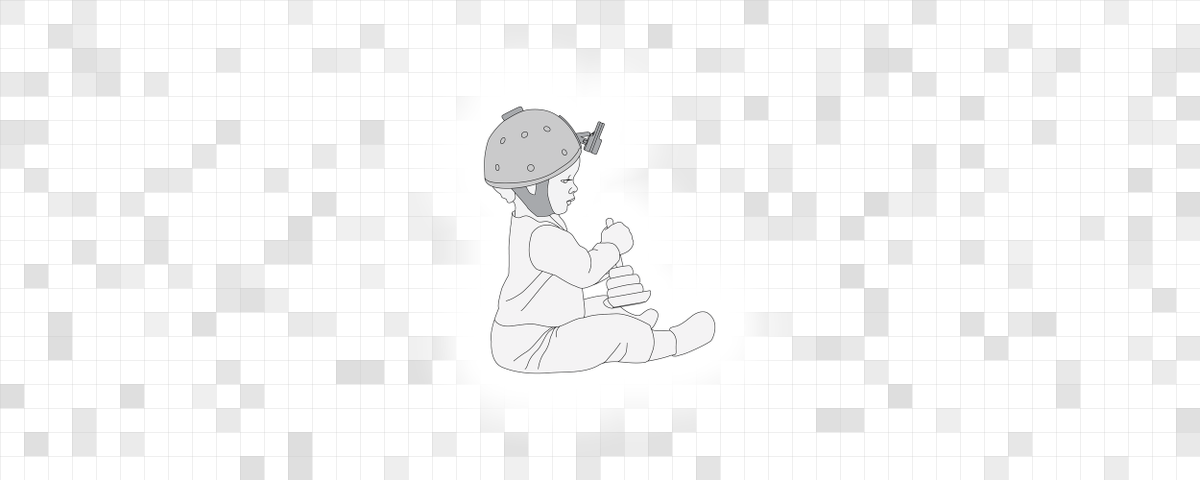
Recently, we took a big step toward "human-like" data efficiency. Our Zero-shot World Model (ZWM) learns from just one child's extremely limited experience, yet approaches SOTA performance on diverse tasks, zero-shot.
New blog post: two principles for sample-efficient learning 🧵
khaiaw.substack.com/p/zero-s…

Check out how our lab's demo at CoRL went!
PSIBorg is our robotics foundation model that we trained from scratch

Excited to share PsiBorg, our debut robotics foundation model! 🚀
With one brain, humans flexibly imagine outcomes, choose actions, and track goals.
Next-token prediction unified LLMs. PsiBorg brings this to robots: policy, simulation, progress tracking, and more in one model.
Robot Capabilities as Probabilistic Inference over Next Token Prediction
We are doing a demo at CoRL debuting PsiBorg: an 8B universally promptable robot model for open-world manipulation!
One model works simultaneously as a policy, a simulator, and a progress tracker. It is trained from scratch, developed fully in-house at #Stanford, not a VLA or WAM, and (tries to) work with new objects and new goal images you throw at it!
Come try it at #CoRL2026!
🕛 Mon Nov 9 · 12–6:30 PM CST
🕙 Tue Nov 10 · 10 AM–6:30 PM CST
📍 Demo #2 · Lone Star (3rd floor), JW Marriott Austin 🌐 neuroailab.github.io/psi-web…
We released FlowBench 🌊, a dataset & benchmark on simulating hypothetical object motions and answering questions.
It spans indoor scenes and robotic tabletops -- both sim & real scenes. We believe this will be useful to train and evaluate VLMs and world models

How do we build sample-efficient AI? How far along are current language, vision, and robotics models?
Children set two targets: pre-training efficiency and zero-shot flexibility.
Incredibly exciting and timely endeavor 🧠

Stanford Digital Brain Project has launched! We're hoping to make a seriously useful model of the human brain. Please come join us! news.stanford.edu/stories/20…

Humans don't think in words alone. They picture a scene, imagine a move, then decide.
It's remarkable in several ways: unified, compositional, adaptive.
Ψ-0.6 brings all three to AI. One model perceives, imagines, reasons, and learns how to think.
New from our lab ⭐
Check out ThreeDWorld - an interactive, near-photoreal, multi-material physics, realtime sound synthesis, indoor-outdoor, VR simulation platform - the multi-tool for learning interactive visual and physical tasks. Turn on your speakers! threedworld.org/

Physics + Sound+ Interaction! Check out our TDW platform- ThreeDWorld: A Platform for Interactive Multi-Modal Physical Simulation. Project page: threedworld.org Paper link:arxiv.org/pdf/2007.04954.pdf
Learning Physical Graph Representations from Visual Scenes

We're back and we're "Learning Physical Graph Representations from Visual Scenes"! Or, "Beyond the ConvNet"
w Chaofei Fan, Damian Mrowca, @YunzhuLiYZ, Seth Alter, @aran_nayebi, Jeremy Schwartz, @drfeifei, @jiajunwu_cs, Josh Tenenbaum, & @dyamins
Preprint https://xitter.gq/t.co/mnICL0lKBO

11
Workshop on modeling the physical world at #NeurIPS2018 with @dyamins ! Come check it out!

Curious about how AI could learn like babies in physical environments? Check out neuroailab.github.io/curiosi… and our poster "Learning to Play with Intrinsically-Motivated Self-Aware Agents" at #NeurIPS2018 on Wednesday evening! See you there! #AI #Curiosity #DarthVaderBaby

Check out how neural networks can predict 3D dynamics of soft and rigid bodies in our paper "Flexible Neural Representation for Physics Prediciton": neuroailab.github.io/physics… See you at NeurIPS! #NeurIPS2018 #FleX #IntuitivePhysics #MachineLearning #AI
Check out our new preprint, "Task-Driven Convolutional Recurrent Models of the Visual System"!
arxiv.org/abs/1807.00053
Time to use some TPUs! xitter.gq/TensorFlow/status/9693…

TensorFlow 1.6.0 has been released!
Please see the full release notes for details on added features and changes ↓ github.com/tensorflow/tensor…

4
Come by our #cosyne18 poster (III-83), "Convolutional recurrent neural network models of dynamics in higher visual cortex" (presented by @aran_nayebi) tonight!

NeuroAILab @ Stanford Center for Mind, Brain and Computation. Presenting our most recent research
neuroailab.stanford.edu/publ…
@dyamins

SNAIL’s advances on building a flexible continual learning agent will appear at #ICLR2018! Small, expressive neural modules + dynamic controller can be used to efficiently learn and switch between many difficult visual tasks. openreview.net/forum?id=rkPL…
Come to our #NIPS2017 talk, "Toward Goal-Driven Neural Network Models for the Rodent Whisker-Trigeminal System" (presented by Chengxu Zhuang) tomorrow morning (11:10 -- 11:25 AM @ Hall A)! youtube.com/watch?v=kqi0ubma…
1
Wanna chat about using neural nets to model the rodent whisker-trigeminal system? Come by our #NIPS2017 poster tonight! (presented by Chengxu Zhuang) #143 papers.nips.cc/paper/6849-to…
