

For by grace are ye saved through faith; and that not of yourselves: it is the gift of God: Not of works, lest any man should boast. Ephesians 2:8-9 - KJV
NO DMs🚫
Joined July 2019
- Tweets15.1K
- Following1.7K
- Followers2.5K
- Likes48.7K





THE CHURCH’S NEXT GREAT EVENT IS NOT THE ARRIVAL OF A WORLD LEADER, BUT THE APPEARING OF OUR SAVIOUR! 📷
The world is busy making plans for tomorrow, but those who believe the Word of God have a blessed hope that reaches beyond this present world. We are not waiting for an earthly kingdom to fulfill our deepest longing. We are waiting for the Lord Jesus Christ, who promised to receive us unto Himself. 📷
📷 Titus 2:13 (KJV)
“Looking for that blessed hope, and the glorious appearing of the great God and our Saviour Jesus Christ;”
The Rapture is not merely a subject for debate. It is a promise that gives the Church hope, comfort, and a reason to remain watchful. The Lord has not revealed the day or hour of His coming, so we must be careful not to set dates or claim certainty where Scripture has given none. Yet His promise remains sure!
📷 1 Thessalonians 4:16-17 (KJV) tells us that the Lord Himself shall descend from heaven, and the dead in Christ shall rise first. Then those who are alive and remain shall be caught up together with them in the clouds to meet the Lord in the air.
What a glorious day that will be! No more waiting, no more sorrow, and no more separation from our beloved Saviour. Our citizenship and our eternal home are with the Lord. Until He comes, let us stand firmly upon His Word and keep our eyes upon our blessed hope. 📷
📷 BUT ARE YOU READY TO MEET THE LORD?
If you have never trusted Christ, do not place your confidence in religion, good works, or your own righteousness. Your greatest need is salvation through Jesus Christ.
The Gospel of our salvation is clearly declared in 1 Corinthians 15:1-4 (KJV): Christ died for our sins according to the Scriptures, He was buried, and He rose again the third day according to the Scriptures.
Jesus Christ paid the price for our sins through His death, and His resurrection declares His victory over death. Salvation in this Church Age is by God’s grace through faith, not by our works.
📷 Ephesians 2:8-9 (KJV)
“For by grace are ye saved through faith; and that not of yourselves: it is the gift of God: Not of works, lest any man should boast.”
Put your trust in the Lord Jesus Christ and His finished work. Your hope of eternal life rests not in what you can accomplish, but in what He has already accomplished for you.
The Lord’s promise is sure. Our blessed hope is real. And the time to trust Christ is now.

JUST BECAUSE IT’S CALLED “CHRISTIAN MUSIC” DOESN’T MEAN IT’S SOUND DOCTRINE! 📷📷
(Why My Christian Music Playlist Has Changed!)
(KJV / Mid-Acts 9 / Rightly Divided)
📷📷 IT SOUNDS GOOD… BUT IS IT SOUND DOCTRINE?!
Let me tell you something that completely changed the way I listen to Christian music!
My playlist has changed DRASTICALLY since I began studying God’s word rightly divided! 📷📷
And NO, it’s not because I suddenly stopped enjoying beautiful melodies, catchy choruses, or uplifting music.
📷 IT’S BECAUSE I STARTED PAYING ATTENTION TO THE WORDS!
I began asking myself:
📷 WHO is this song actually talking about?
📷 Is this song teaching Israel’s prophetic promises as though they belong to the Body of Christ?
📷 Is it singing about being “born again,” kingdom promises, or things God never instructed the Church, the Body of Christ, to claim?
📷 Is this song actually teaching SOUND DOCTRINE according to the revelation of the mystery?
And most importantly…
📷 AM I SINGING SOMETHING I WOULDN’T EVEN TEACH FROM SCRIPTURE?!
Because if I wouldn’t teach it as doctrine, WHY am I repeatedly singing it into my mind?! 📷
📷 FIRST — GOOD MUSIC IS NOT NECESSARILY SOUND DOCTRINE! 📷
📷 2 Timothy 4:3 (KJV)
“For the time will come when they will not endure sound doctrine; but after their own lusts shall they heap to themselves teachers, having itching ears;”
Now think about that!
Just because a song gives you goosebumps, makes you cry, or has you raising your hands doesn’t mean its message is doctrinally correct!
📷THAT is how people think they are following Jesus! Like, what?!
📷 Emotional experience is NOT the standard of truth.
📷 Popularity does NOT establish sound doctrine.
📷 Calling a song “Christian” does NOT make its lyrics rightly divided.
📷 God’s word, rightly divided, is our standard!
📷 2 Timothy 2:15 (KJV)
“Study to shew thyself approved unto God, a workman that needeth not to be ashamed, rightly dividing the word of truth.”
📷 WE SHOULD BE DISCERNING WHAT WE SING, NOT JUST WHAT WE HEAR PREACHED!
📷 SECOND — ARE WE SINGING ISRAEL’S PROMISES AS THOUGH THEY BELONG TO US?! 📷📷
This is where rightly dividing changes EVERYTHING!
Think about popular Christian songs that emphasize:
📷 Walking on streets of gold.
📷 Being born again.
📷 Bringing God’s kingdom to earth.
📷 Claiming Israel’s covenant promises.
📷 Expecting miraculous healing and earthly blessings as guaranteed promises.
But have we actually asked WHO those promises were given to?!
📷 Revelation 21:21 describes the street of the New Jerusalem as pure gold.
Yet Revelation concerns the fulfillment of God’s prophetic program, including the New Jerusalem!
📷 John 3:3-10 concerns Christ speaking to Nicodemus, a ruler of the Jews, about being born again and entering the kingdom.
Compare that with Ezekiel 36:22-27, where God promises Israel cleansing, a new heart, and His Spirit.
These passages concern Israel’s promised regeneration and kingdom program.
But what does Paul teach the Body of Christ?
📷 Ephesians 2:6 (KJV)
“And hath raised us up together, and made us sit together in heavenly places in Christ Jesus:”
📷 Philippians 3:20 (KJV)
“For our conversation is in heaven; from whence also we look for the Saviour, the Lord Jesus Christ:”
📷 ISRAEL’S EARTHLY KINGDOM HOPE AND THE BODY OF CHRIST’S HEAVENLY POSITION ARE NOT THE SAME THING!
And just because something is found somewhere in the Bible does NOT mean it’s our specific instruction today!
📷 THIRD — WHAT ABOUT POPULAR ARTISTS LIKE FORREST FRANK?! 📷📷
Take the popularity of contemporary Christian artists like Forrest Frank, for example.
His music is catchy! It’s upbeat! It’s easy to listen to!
Jesus is coming back soon? Is he talking about our catching away? Or misapplying Jesus’ return at the end of the tribulation for Israel?
But here’s the question I started asking about ALL contemporary Christian artists:
Does the message agree with sound doctrine for the Body of Christ?
I’m not saying every song by every contemporary Christian artist is doctrinally false.
I’m saying that popularity, a Christian label, and a catchy melody are NOT sufficient reasons to accept what a song teaches!
A song may mention Jesus, salvation, prayer, blessings, or the Holy Spirit and still leave important dispensational distinctions completely unaddressed.
And when lyrics present an instruction or promise, we need to examine it carefully!
📷 MENTIONING JESUS IS NOT THE SAME THING AS TEACHING THE REVELATION OF THE MYSTERY!
📷 Romans 16:25 — Paul speaks of the preaching of Jesus Christ according to the revelation of the mystery.
📷 Ephesians 3:1-9 — Paul explains the dispensation of the grace of God and the mystery revealed to him.
That’s the doctrinal framework I want influencing my thinking, including the music I listen to!
📷 FOURTH — PAUL ACTUALLY TELLS US ABOUT SINGING! 📷📷
📷 Colossians 3:16 (KJV)
“Let the word of Christ dwell in you richly in all wisdom; teaching and admonishing one another in psalms and hymns and spiritual songs, singing with grace in your hearts to the Lord.”
DID YOU CATCH THAT?! 📷📷
TEACHING AND ADMONISHING!
Music isn’t merely entertainment. It can reinforce what we believe!
That’s why I want the words I’m singing to agree with the sound doctrine I’m studying!
📷 Ephesians 5:19 (KJV)
“Speaking to yourselves in psalms and hymns and spiritual songs, singing and making melody in your heart to the Lord;”
And remember:
📷 1 Corinthians 14:15 (KJV)
“I will sing with the spirit, and I will sing with the understanding also.”
📷 WITH THE UNDERSTANDING ALSO!
We’re not instructed to turn off doctrinal discernment when the music starts playing!
📷 FIFTH — YES, THERE’S MUSIC THAT SINGS PAUL’S EPISTLES! 📷📷
And THIS is something I’ve really enjoyed discovering!
On Spotify, you can find music such as “Mid Acts- Singing Paul”, which puts passages from Paul’s epistles to music! 📷📷
Think about that!
Instead of constantly wondering whether a songwriter has mixed Israel’s prophetic program with the Body of Christ, you can listen to Scripture itself being sung!
Romans through Philemon! 📷
Our doctrine!
Our instructions!
Our identity in Christ!
Our walk under grace!
Of course, even Scripture-based music should be checked for accurate KJV wording and proper context. Quoting a verse doesn’t automatically guarantee a correct interpretation.
But songs faithfully setting Paul’s words to music can be a wonderful way to reinforce the very doctrine we’re studying!
📷 1 Timothy 4:13 (KJV)
“Till I come, give attendance to reading, to exhortation, to doctrine.”
📷 I WANT MUSIC THAT HELPS MY MIND DWELL ON SOUND DOCTRINE, NOT MUSIC THAT REINFORCES CONFUSION!
📷📷 THE BOTTOM LINE 📷📷
I’m not saying every contemporary Christian song is bad.
I’m not saying every Christian artist is intentionally teaching error.
And I’m certainly not saying listening to a particular style of music determines whether someone is saved!
But I AM saying this:
📷 A SONG CAN SOUND CHRISTIAN WITHOUT BEING DOCTRINALLY SOUND!
And once you begin studying God’s word rightly divided, you start recognizing doctrinal confusion in places you never noticed before!
Including your PLAYLIST! 📷
📷 I don’t want to sing promises God never made to the Body of Christ.
📷 I don’t want emotional experiences replacing doctrinal understanding.
📷 I don’t want to spend all week studying sound doctrine and then continually reinforce contrary teaching through music.
📷 I want Christ’s word dwelling in me richly!
📷 I want to sing with understanding!
📷 I want my music to reinforce my identity and instructions in Christ according to Romans–Philemon!
📷 IF WE’RE CAREFUL ABOUT WHAT WE ALLOW INTO OUR MINDS THROUGH PREACHING, WHY WOULDN’T WE BE CAREFUL ABOUT WHAT WE ALLOW THROUGH MUSIC?!
📷📷 MY PLAYLIST CHANGED BECAUSE MY UNDERSTANDING OF SCRIPTURE CHANGED!
And that’s a GOOD thing!


A person can attend church, read the Bible, give to charity, be baptized, and participate in religious activities—and still misunderstand what saves a sinner. None of these things can replace faith in Christ’s finished work.
📷 Ephesians 2:8–9 KJV reminds us that salvation is “by grace… through faith” and “not of works.” Eternal life is God’s gift, not a reward earned through religious performance.
The question is not how religious you appear, but what are you trusting for your salvation?** Are you resting in your own efforts, or in what Jesus Christ accomplished for you? 📷
📷 1 Corinthians 15:1–4 KJV declares the Gospel: Christ died for our sins, was buried, and rose again the third day according to the scriptures.
If you have never trusted this Gospel, believe that Christ died for your sins and rose again. Place your faith in Him and His finished work, not in rituals or personal righteousness.
📷 Religion cannot replace the Saviour. Trust Christ and His finished work!

ɴɪᴄᴋ ✞ retweeted

Jesus promised the twelve apostles twelve thrones to judge Israel’s twelve tribes (Matthew 19:28).
So where does Paul fit? 🤔
Paul was chosen as the apostle of the Gentiles (Romans 11:13), revealing the mystery of the Body of Christ (Ephesians 3:2–9 KJB).
🤖 Made with AI

ɴɪᴄᴋ ✞ retweeted

🚨 Before anyone claims that pastoral authority is unbiblical, I suggest examining what the King James Bible ACTUALLY says!
This detailed chart lays out the evidence. Ephesians 4:11 establishes pastors, Titus 1:5 commands the ordination of elders, 1 Timothy 5:17 says elders “rule well,” and Hebrews 13:17 commands believers to obey those who have the rule over them. Yet 1 Peter 5:3 explicitly forbids pastors from becoming dictators, while 1 Corinthians 12 establishes the responsibility of EVERY member of Christ’s body.
Pastoral authority is biblical. Pastoral dictatorship is not. Congregational participation is biblical. Rebellion against legitimate spiritual oversight is not.
You cannot erase one side of Scripture to defend your position against the other. The answer to abusive authority is not abolishing God-given authority! Read the WHOLE Book, rightly divided!

unavailable
ɴɪᴄᴋ ✞ retweeted
❤️ Christ died for our sins, was buried, and rose again! Believe the gospel! 1 Corinthians 15:1-4 KJB.
Saved by grace through faith (Ephesians 2:8-9), made a new creature (2 Corinthians 5:17), and baptized into the Body of Christ (1 Corinthians 12:13)! ✝️
🤖 Made with AI


ɴɪᴄᴋ ✞ retweeted

✡️ DIVINE PLURALITY: DOES THE SHEMA REVEAL MORE THAN WE REALIZE?
The Oneness of God, the Mystery of His Nature, and the Jewish Messiah
“Hear, O Israel: The LORD our God, the LORD is one.” — Deuteronomy 6:4
Shema Yisrael, Adonai Eloheinu, Adonai Echad.
For thousands of years, these words have formed the heartbeat of Jewish faith. Israel's declaration is unmistakable: YHWH alone is God.
Yet an intriguing question emerges from the Hebrew Scriptures themselves.
Does God's absolute oneness exclude personal distinctions within His eternal nature?
For many Jewish readers, divine plurality appears incompatible with the Shema. The idea of the Father, Son, and Ruach HaKodesh (Holy Spirit) existing eternally as distinct Persons seems foreign to Israel's uncompromising monotheism.
Yet centuries before the New Covenant was written, the Torah, Prophets, and Writings contained extraordinary passages describing God's Spirit, His divine Messenger, His heavenly throne, and even His own words spoken in the plural.
The Tanakh declares ONE God while presenting intriguing distinctions in His presence, activity, and heavenly authority.
These passages have puzzled readers for centuries, including some of Judaism's most respected rabbis.
And Yeshua? He affirmed the Shema without qualification while making extraordinary declarations about His own identity.
The mystery begins where Scripture begins.
1. GENESIS: ONE CREATOR, AN INTRIGUING CONVERSATION
Before the Shema was proclaimed at Sinai's generation, the opening chapter of Genesis introduced something remarkable.
Genesis 1:2: The Ruach Elohim—the Spirit of God—hovers over the waters.
Then God declares:
Genesis 1:26: “Let us make mankind in our image, in our likeness.”
Let US. OUR image. OUR likeness.
Who is included in this extraordinary declaration?
Immediately afterward, Genesis 1:27 records that God created humanity in HIS image.
Plural language followed by singular action.
ONE Creator. Yet the text records a mysterious plurality in divine speech.
The pattern appears again in Genesis 3:22, where God says humanity has become like “one of us,” and Genesis 11:7, where the LORD declares, “Come, let us go down.”
These passages were not overlooked by Jewish scholars.
In Genesis Rabbah 8, ancient rabbis discussed the language of Genesis 1:26. Centuries later, Rashi (1040–1105) explained that God was consulting His heavenly court of angels, demonstrating divine humility. He appealed to the singular language of Genesis 1:27 to establish that God alone performed creation.
That interpretation has a substantial Jewish history.
But the Messianic reading recognizes another possibility: these unusual expressions may anticipate distinctions within the one divine Being, revealed more fully through Yeshua.
Consider how John opens his Gospel.
John 1:1–3: The Word was in the beginning, was with God, was God, and participated in the creation of all things.
Genesis introduces God's Spirit at creation. John reveals the divine Word through whom everything was made.
The relationship between these passages is extraordinary.
2. ECHAD AND YACHID: THE LANGUAGE OF ONENESS
The Shema uses the Hebrew word echad (אֶחָד), meaning ONE.
Throughout the Tanakh, echad describes numerical singularity and, in certain contexts, unity involving multiple elements.
Genesis 2:24: A husband and wife become basar echad—one flesh.
Ezekiel 37:17: Two sticks representing Judah and Israel become one in Ezekiel's hand.
Now consider yachid (יָחִיד), a word often expressing someone who is only, solitary, or uniquely beloved.
Genesis 22:2: Isaac is described as Abraham's yachid—his uniquely beloved son.
Judges 11:34: Jephthah's daughter is his yachid—his only child.
Why does Moses use echad rather than yachid in the Shema?
The distinction deserves careful attention. Echad does not automatically signify compound unity, and yachid is not a technical Hebrew term for an indivisible divine Person.
The words themselves cannot settle the doctrine of God's eternal nature.
The Shema unequivocally establishes God's oneness. The wider revelation of Scripture illuminates the nature of the ONE whom Israel worships.
3. THE ANGEL OF THE LORD: WHO SPOKE FROM THE BURNING BUSH?
Consider Exodus 3.
Verse 2: The Angel of the LORD appears to Moses in the burning bush.
Verse 4: God speaks from within the bush.
Verse 6: The speaker identifies Himself as the God of Abraham, Isaac, and Jacob.
The Angel appears, yet the One speaking is identified as Israel's covenant God!
Elsewhere, Exodus 33:20 emphasizes that no one can see God's face and live.
Who, then, is this mysterious Messenger who manifests God's presence and speaks with divine authority?
Jewish interpreters traditionally understand such appearances through the principle of divine representation: a messenger speaks with the authority of the One who sent him.
Many Messianic believers recognize certain appearances of the Angel of the LORD as manifestations of the preincarnate Messiah.
And consider the extraordinary language of Isaiah 63:7–10.
The prophet describes YHWH's covenant mercy, the Angel of His Presence who delivers Israel, and His Holy Spirit whom the people grieved.
YHWH. His Angel of the Presence. His Holy Spirit.
All within the same account of Israel's redemption.
Isaiah does not explicitly formulate a doctrine of three divine Persons. Nevertheless, Messianic believers see remarkable anticipations of distinctions that become clearer through the New Covenant.
4. DOES THE TANAKH SPEAK OF GOD'S SON?
The Hebrew Scriptures contain another fascinating set of passages.
Psalm 2:7: The LORD addresses His anointed king as His Son.
Psalm 110:1: YHWH invites David's Lord to sit at His right hand.
Proverbs 30:4: Agur asks who ascended to heaven, gathered the wind, established the earth, and what His son's name is.
Each passage has its own literary and historical context. Psalm 2 concerns the Davidic king, while the identity intended in Proverbs 30:4 remains debated.
Yet together they raise profound questions about divine sonship, Messianic authority, and the relationship between YHWH and His appointed ruler.
And then comes Daniel.
5. TWO THRONES IN HEAVEN? AN ANCIENT RABBINIC DEBATE
Daniel 7:9: Thrones are established as the Ancient of Days takes His seat.
Then Daniel sees someone extraordinary.
Daniel 7:13–14: One like a son of man approaches the Ancient of Days and receives an everlasting kingdom. All peoples, nations, and languages serve him.
Who is this heavenly figure?
The passage generated serious discussion among Jewish interpreters.
In the Babylonian Talmud, Chagigah 14a, Rabbi Akiva interprets the thrones of Daniel 7 as one belonging to God and another to David.
Rabbi Yosei the Galilean objects, challenging the idea of another figure seated beside the Divine Presence. He instead interprets the thrones in relation to God's judgment and righteousness.
The Talmud subsequently records additional debate over these interpretations.
Consider the significance.
Jewish sages were wrestling with the implications of Daniel's heavenly thrones centuries before modern debates about Messianic theology.
These rabbis were not affirming the Trinity. The discussion includes explicit objections to assigning another figure a place beside God.
Nevertheless, Daniel's vision raised genuine questions concerning heavenly authority and the promised Davidic ruler.
Now consider Yeshua's declaration before the high priest.
Mark 14:62: Yeshua identifies Himself with the Son of Man seated at the right hand of Power and coming with the clouds of heaven.
He brings together Daniel 7:13–14 and Psalm 110:1.
The heavenly Son of Man.
The right hand of God.
The everlasting kingdom.
The very Scriptures that generated rabbinic debate become central to Yeshua's declaration of His Messianic identity and authority.
6. YESHUA AFFIRMED THE SHEMA—AND REVEALED HIS DIVINE IDENTITY
In Mark 12:29, a Jewish Torah scholar asks Yeshua about the greatest commandment.
Yeshua answers with the Shema.
He affirms the absolute oneness of God.
Yet in the same chapter, He challenges His listeners with Psalm 110:1, asking why David calls the Messiah his Lord (Mark 12:35–37).
Later, His declarations become even more extraordinary.
John 8:58: Yeshua claims existence before Abraham.
John 10:30: He declares His unity with the Father.
John 14:16–17: He promises that the Father will send another Advocate, the Spirit of truth.
John 14:26: The Spirit teaches and reminds the disciples of Yeshua's words.
The Father sends. The Son reveals. The Spirit teaches and bears witness.
The three are personally distinguishable, yet Yeshua never abandons the monotheism of Israel.
He affirmed the Shema and revealed more fully the identity of the God it proclaims.
7. PAUL'S EXTRAORDINARY CONFESSION OF ONE GOD
Paul was a Torah-trained Jewish believer, deeply committed to Israel's Scriptures.
Yet consider 1 Corinthians 8:6.
He identifies one God, the Father, from whom everything exists, and one Lord, Yeshua HaMashiach, through whom everything exists.
Now compare Isaiah 44:24, where YHWH declares that He alone stretched out the heavens and created the earth.
Paul attributes the work of creation to Yeshua while affirming that there is only one God!
Many Messianic interpreters understand this as Paul incorporating Yeshua into the unique divine identity of Israel's Creator.
This is consistent with John 1:3, which declares that all things came into existence through the Word.
The Jewish apostles identified Yeshua with divine works and authority belonging uniquely to YHWH.
Their testimony invites us to understand the Messiah within the revelation already entrusted to Israel.
8. IF YHWH SHARES HIS GLORY WITH NO OTHER, WHY IS YESHUA WORSHIPED?
Here the biblical testimony reaches its most remarkable point.
Isaiah 42:8: YHWH declares that He will not give His glory to another.
Isaiah 45:23: YHWH declares that every knee will bow and every tongue swear allegiance to Him.
Yet Paul writes something astonishing.
Philippians 2:9–11: Every knee bows at Yeshua's name, and every tongue acknowledges Him as Lord—to the glory of God the Father.
Paul applies Isaiah's language of universal allegiance to Yeshua.
Now consider Revelation 5:13.
Every creature in heaven and on earth offers praise, honor, glory, and power to the One seated upon the throne AND to the Lamb.
The heavenly vision presents the Lamb receiving divine honor alongside the Father.
And when Thomas encounters the risen Messiah, he declares:
“My Lord and my God!” — John 20:28
Yeshua accepts his confession.
How can these passages be reconciled with YHWH's exclusive claim to divine glory?
The Messianic answer is profound.
Yeshua is no rival deity. He shares the eternal divine identity of the ONE God of Israel.
THE SHEMA STILL STANDS
Divine plurality does not mean three gods.
The Father, Son, and Ruach HaKodesh are eternally distinct Persons, sharing one undivided divine essence.
The Father is God.
The Son is God.
The Holy Spirit is God.
Yet there is only ONE God.
The Tanakh establishes the uncompromising oneness of YHWH while revealing extraordinary distinctions in His speech, presence, Spirit, and heavenly authority.
The New Covenant illuminates these mysteries through Yeshua HaMashiach, who affirmed the Shema, claimed divine authority, and received the worship belonging to Israel's God.
From the Spirit hovering over creation to the heavenly throne of Daniel, from the burning bush to the resurrected Messiah, the testimony of Scripture deserves careful examination.
And one question remains especially compelling:
If YHWH alone is Creator, if He alone deserves worship, and if He will never surrender His glory to another, why do the Jewish apostles identify Yeshua with creation, divine glory, and universal worship?
Perhaps the answer has been unfolding throughout the Scriptures of Israel.
The God who revealed Himself to Abraham, Isaac, and Jacob has revealed the fullness of His divine nature through Israel's promised Messiah.
The Shema remains.
The God of Israel remains.
His promises remain.
“Hear, O Israel: The LORD our God, the LORD is one.” — Deuteronomy 6:4
Shema Yisrael. Adonai Echad.
ONE GOD. ETERNALLY. WITHOUT RIVAL.
🤖 Made with AI

ɴɪᴄᴋ ✞ retweeted
❤️ If you died today, where would you spend eternity?
Christ died for OUR sins, was buried, and rose again! ✝️
Believe the gospel! 1 Corinthians 15:1-4 KJB.
Saved by grace through faith (Ephesians 2:8-9) and sealed when we believe (Ephesians 1:13)! ❤️
🤖 Made with AI

ɴɪᴄᴋ ✞ retweeted
Is it wrong to desire comfort and security?
Key Passage: “Charge them that are rich in this world, that they be not highminded, nor trust in uncertain riches, but in the living God, who giveth us richly all things to enjoy.” (1 Timothy 6:17)
No, it is not wrong to desire comfort and security. The Bible does not require Christians to sleep on rocks, refuse medicine, empty their refrigerators, cancel insurance, throw away savings, and deliberately make life miserable in order to prove they love God. First Timothy 6:17 says plainly that the living God “giveth us richly all things to enjoy.” Enjoyment is not the enemy. The problem appears in the same verse: “nor trust in uncertain riches.” God permits enjoyment while forbidding misplaced trust. There is a world of difference between thanking God for a comfortable home and believing the home makes you safe, between saving money wisely and imagining money can guarantee tomorrow, between appreciating peace and refusing obedience whenever peace is threatened. Comfort makes a good gift and a terrible god. Security is useful until you begin asking temporary things to perform God’s job.
The desire for security is natural because human beings understand vulnerability. We lock doors because thieves exist. We save money because bills come. We buy insurance because bodies, houses, cars, and businesses can suffer loss. Proverbs repeatedly commends wisdom, foresight, diligence, and preparation. The ant in Proverbs 6 prepares food in season rather than sitting beneath a leaf singing about faith while winter approaches. There is nothing spiritual about preventable foolishness. Yet Scripture also warns that preparations can quietly become idols. Proverbs 18:11 says, “The rich man’s wealth is his strong city, and as an high wall in his own conceit.” Notice the final words. The wall exists partly in his imagination. Planning can reduce risk; it cannot create sovereignty. The moment your safety requires God never to disturb your arrangements, your arrangements have become more than arrangements.
The saved Church Age believer has a security far deeper than circumstances can provide. Ephesians 1:13 says believers are “sealed with that holy Spirit of promise,” and Ephesians 4:30 says that sealing continues “unto the day of redemption.” Eternal security is not found in a retirement account, guarded neighborhood, strong economy, healthy body, stable government, favorable diagnosis, or predictable schedule. It is found in Jesus Christ. Colossians 3:3 says, “your life is hid with Christ in God.” That does not mean nothing painful can happen. Paul was secure in Christ while imprisoned, beaten, hungry, and opposed. Biblical security is not the promise that nothing around you can be shaken; it is the certainty that nothing can shake you out of Christ. Once that distinction is understood, earthly comfort can be enjoyed without being worshipped.
1. God Is Not Against Enjoyment
Some Christians have inherited the strange idea that if something feels pleasant, God must be suspicious of it. Yet 1 Timothy 6:17 says He “giveth us richly all things to enjoy.” That is not prosperity preaching. Paul is not promising every believer a mansion, a luxury car, and a vacation home overlooking Galilee. He is acknowledging that God is the giver of legitimate blessings and that those blessings may be enjoyed. Ecclesiastes likewise recognizes food, work, and ordinary earthly enjoyments as gifts under God’s hand. A good meal is not carnality because it tastes good. A comfortable chair is not apostasy because your back appreciates it. God is not glorified by your pretending His gifts are unpleasant. Gratitude enjoys the gift without confusing it with the Giver.

ɴɪᴄᴋ ✞ retweeted
🚨‼️This detailed Bible-study chart explains the biblical balance between enjoying comfort and security without turning them into idols. It shows that God allows His people to enjoy good things, plan wisely, save responsibly, and provide for their families, while warning against trusting money, possessions, ease, or earthly stability more than God.
The central message is simple: comfort and security are good gifts when received with thanksgiving, but they become dangerous when they replace obedience, contentment, and trust in Jesus Christ.


“I marvel that ye are so soon removed from him that called you into the grace of Christ unto another gospel: 7 Which is not another; but there be some that trouble you, and would pervert the gospel of Christ. 8 But though we, or an angel from heaven, preach any other gospel unto you than that which we have preached unto you, let him be accursed. 9 As we said before, so say I now again, If any man preach any other gospel unto you than that ye have received, let him be accursed.”
📷Galatians 1:6-9 KJB

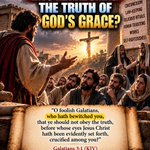
HOW CAN BELIEVERS BE SO EASILY DECEIVED INTO ABANDONING THE TRUTH OF GOD’S GRACE?
Galatians 3:1
“O foolish Galatians, who hath bewitched you, that ye should not obey the truth, before whose eyes Jesus Christ hath been evidently set forth, crucified among you?”
Imagine hearing the truth of the gospel, believing it, and beginning your Christian life by faith—only to be persuaded that Christ's finished work is not enough.
Imagine being saved by grace, but then being told that you must place yourself under religious rules and requirements to maintain God's acceptance.
How does that happen?
How can believers who have heard the truth become confused about the very foundation of their faith?
Paul faced this problem among the Galatians.
His response was not gentle indifference.
It was a direct and penetrating question:
“WHO HATH BEWITCHED YOU?”
Paul was not talking about literal witchcraft in this passage. He was confronting the spiritual deception that had drawn the Galatians away from the truth they had received.
Let's open the Bible!
And let's rightly divide the Word of truth!
📷THE GALATIANS HAD BEGUN BY GRACE—WHY TURN BACK TO WORKS?
Paul asked a question that exposed their confusion.
Galatians 3:2
“This only would I learn of you, Received ye the Spirit by the works of the law, or by the hearing of faith?”
Think about it!
Did they receive the Spirit because they kept the Law?
Did they earn their salvation through religious performance?
No!
They had received the Spirit by the hearing of faith.
Yet false teaching was influencing them to believe that something beyond faith in Christ's finished work was necessary for their standing before God.
Paul continued:
Galatians 3:3
“Are ye so foolish? having begun in the Spirit, are ye now made perfect by the flesh?”
Here is the problem.
They began by faith.
But they were being persuaded to rely on the flesh.
They began with grace.
But they were being drawn toward a system of religious performance.
They were saved by believing God's provision, yet they were being tempted to depend on their own performance!
And the same confusion can happen today whenever believers begin measuring their acceptance before God by religious rituals, human traditions, or requirements God has not placed upon the Body of Christ.
📷THE GOSPEL OF GRACE IS NOT A STARTING POINT YOU MUST OUTGROW!
Some people treat grace as the message that gets a person saved, but then suggest that spiritual maturity requires returning to a system of law-keeping.
But Paul does not teach that we begin with grace and graduate into earning God's acceptance.
Ephesians 2:8–9
“For by grace are ye saved through faith; and that not of yourselves: it is the gift of God:
Not of works, lest any man should boast.”
Salvation is God's gift.
It is not a paycheck for religious effort.
It is not a reward for keeping enough rules.
It is not something we earn by making ourselves worthy.
Christ accomplished what we could never accomplish for ourselves!
Does this mean good works are unimportant?
Absolutely not!
The very next verse says:
Ephesians 2:10
“For we are his workmanship, created in Christ Jesus unto good works, which God hath before ordained that we should walk in them.”
Notice the order!
We are not saved BY good works.
We are saved UNTO good works.
Good works are the fruit of God's saving grace—not the price we pay to obtain it.
📷LAW AND GRACE MUST NOT BE MIXED!
This is where we must rightly divide the Word of truth.
God gave Israel the Law as part of His covenant dealings with that nation.
But Paul declares concerning believers today:
Romans 6:14
“For sin shall not have dominion over you: for ye are not under the law, but under grace.”
Read those words carefully!
NOT UNDER THE LAW—BUT UNDER GRACE!
The Law had a specific place in God's dealings with Israel.
But the Body of Christ is not placed under Israel's Law as the basis of its standing before God.
We are accepted in Christ.
We are justified by faith.
We are saved by grace.
And we are called to walk in accordance with the truth God has revealed to us.
Grace does not mean we can live carelessly.
Grace means we no longer seek to establish our righteousness by our own works.
The Law cannot become the foundation of our acceptance when Christ is the foundation of our salvation!
📷PROPHECY AND MYSTERY—WHY DOES RIGHT DIVISION MATTER?
Many believers become confused because they read the Bible without recognizing the distinctions God has placed within it.
Acts 3:21 speaks of things God “hath spoken by the mouth of all his holy prophets since the world began.”
But Paul describes the Mystery in Romans 16:25 as something “kept secret since the world began.”
These are not identical descriptions.
God's prophetic program concerns His purposes made known through the prophets, including His promises concerning Israel's kingdom.
The Mystery concerning the Body of Christ was kept secret and later revealed through the ministry of the Apostle Paul.
Ephesians 3:6 explains that the Gentiles should be:
“Fellowheirs, and of the same body, and partakers of his promise in Christ by the gospel:”
The Body of Christ is not simply Israel under another name.
God's promises to Israel concerning the earth must not be confused with the heavenly position and blessings given to the Body of Christ.
Ephesians 1:3 declares that God “hath blessed us with all spiritual blessings in heavenly places in Christ.”
Why does this matter?
Because when we fail to distinguish God's prophetic program from the Mystery revealed through Paul, we can misapply Scripture and place believers under expectations that do not belong to their calling.
We must believe all Scripture—but we must also rightly divide it!
📷HOW DOES SPIRITUAL DECEPTION WORK TODAY?
It does not always begin by openly denying Christ.
Sometimes it begins by adding something to His finished work.
Someone says Christ saved you—but you must also perform certain works to secure God's acceptance.
Someone says you are saved by grace—but you must place yourself under Israel's covenant requirements to become spiritually complete.
Someone says you have trusted Christ—but your standing before God still depends on your religious performance.
The result?
Believers begin to focus more on their own efforts than on Christ's finished work.
They become occupied with measuring themselves against rules rather than growing in the knowledge of God's grace.
They lose sight of the sufficiency of Christ.
Paul confronted this very kind of confusion in Galatia.
Galatians 5:1
“Stand fast therefore in the liberty wherewith Christ hath made us free, and be not entangled again with the yoke of bondage.”
Paul was not encouraging careless living.
He was warning believers not to surrender their liberty in Christ by returning to a system of bondage.
Never allow human tradition to replace the truth God has revealed in His Word!
📷GRACE DOES NOT PRODUCE CARELESSNESS—IT TEACHES US HOW TO LIVE!
If we are not under the Law, does that mean we have no responsibility to live godly lives?
No!
Paul answers this clearly.
Titus 2:11–12
“For the grace of God that bringeth salvation hath appeared to all men,
Teaching us that, denying ungodliness and worldly lusts, we should live soberly, righteously, and godly, in this present world;”
Notice what grace does!
It teaches us to deny ungodliness.
It teaches us to reject worldly lusts.
It teaches us to live soberly, righteously, and godly.
Grace is not permission to sin. Grace is God's provision for salvation and His instruction for our walk!
We do not obey to earn God's love.
We learn to obey because we have received His grace.
We do not serve to purchase our acceptance.
We serve because we are accepted in Christ.
We do not forgive to earn God's forgiveness.
We forgive because God has forgiven us for Christ's sake (Ephesians 4:32).
That is the difference between legalism and grace.
Legalism says, “Perform so that you may be accepted.”
Grace says, “In Christ, you have received God's gift; now walk in the truth of who you are in Him.”
📷HOW DO WE GUARD OURSELVES AGAINST DECEPTION?
We must return to the Word of God.
Not merely to traditions.
Not merely to what we have always heard.
Not merely to what sounds religious.
We must study the Scriptures carefully and understand the doctrine God has given us through the Apostle Paul for the Body of Christ.
2 Timothy 2:15
“Study to shew thyself approved unto God, a workman that needeth not to be ashamed, rightly dividing the word of truth.”
Study the Word.
Examine what you hear.
Test religious claims against Scripture.
Understand your identity in Christ.
Know the difference between salvation by grace and the good works that follow salvation.
And never allow anyone to make your own performance the foundation of your acceptance before God.
The answer to deception is not ignorance. It is a growing knowledge of the truth!
HERE IS THE BOTTOM LINE!
The Galatians had heard the truth.
They had begun by faith.
But they were being drawn away from the sufficiency of Christ toward confidence in the flesh.
That is why Paul's question still challenges every believer who wants to understand the Word of God:
“WHO HATH BEWITCHED YOU?”
Are you resting in Christ's finished work?
Or are you allowing religious traditions and human requirements to obscure the riches of God's grace?
Remember:
GRACE SAVES US.
GRACE ESTABLISHES OUR STANDING IN CHRIST.
GRACE TEACHES US HOW TO LIVE.
We must never confuse godly living with trying to earn the salvation God has freely given us.
Galatians 3:3
“Are ye so foolish? having begun in the Spirit, are ye now made perfect by the flesh?”
Dear believer, do not abandon the truth of God's grace.
Stand fast in the liberty Christ has given you.
Grow in the knowledge of His Word.
And let your life reflect the grace you have received.
