

Tinkering with Beans.
Spice Valley
Joined November 2010
- Tweets3.6K
- Following1.4K
- Followers580
- Likes13.7K




Josh 🇺🇸 retweeted

The X Safety team conducted an investigation into suspected Chinese inauthentic accounts involved in influence operations:
We identified a bot farm of approximately 200,000 accounts. Within this farm, we found 200 accounts posting in a manner that could manipulate a legitimate debate about American AI and energy policy.
These posts contained claims that AI data centers are driving up household electricity prices and straining the grid. Others included AI-generated cartoons that depicted data-center operators enriching themselves at the public's expense.
We remain committed to maintaining an open and authentic platform where people debate topics of public interest. We take seriously any attempts to undermine the integrity of the global town square and suspend accounts that violate our Authenticity policy.




Josh 🇺🇸 retweeted

This device was banned in some cites.
They called this soulless machine music.
It took over a decade to allow some cites to remove restrictions.
When you know the past, you know the future.




Josh 🇺🇸 retweeted

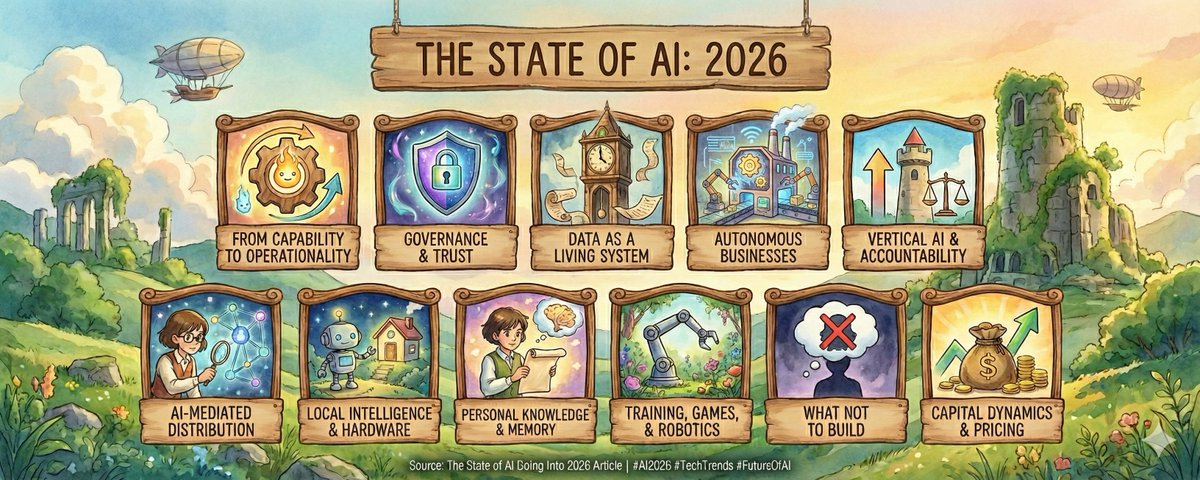
Many of the biggest opportunities in AI right now are going after categories where there was never software to accomplish the problem before, or the categories were too small to matter.
AI agents represent the first time ever where we can bring along the work with the software, which means TAMs get very big even in spaces that traditionally had small software spend. Legal services, healthcare, accounting, software engineering, and so on.
The key though is a lot of these markets require a deep understanding of the problem in the domain because you’re fundamentally being used to augment a critical workflow vs. just enable people to solve their own problems.
Tools like excel work as horizontal technologies because the user of the tool can figure out how to leverage it to do their unique work.
But when you’re hiring workers to do a job for you, you don’t also want to have to do all the work to train them on every single part of how to do their job. When you hire for work today, you rarely want it to be “generic”; instead you want it to solve a particular problem you have.
The same is going to be true of AI Agents. You will want agents that are purpose built for the domains or problems you’re trying to solve. Which will lead to agents that are specialized by vertical or particular type of workflow.
The game then is to build agents that combine a deep domain understand, propriety (customer) data that the models weren’t inherently trained on, a tight naturally interaction with the user’s workflow (either today’s or reimagined), and all of the resources necessary for the change management for the customer to be successful.

vertical AI SaaS is the biggest growing category of vc funding across - ai agent startups, roll ups (with ai improvements), or ai-native full service companies
forget the broad AI bubble narrative for a second.
vertical AI is doing something traditional SaaS never could: accessing the $11 trillion US labor market instead of competing for scraps of the $450 billion enterprise software spend
Harvey hit $150M ARR based on recent announcement, up from $50M at end of 2024. now valued at $8B after three funding rounds this year alone.
Abridge crossed $117M ARR deployed in 150+ health systems including Mayo Clinic and Duke.
OpenEvidence claims 40% of US doctors use their platform, just raised at $6B valuation
glean announced $200M ARR yesterday
revenue retention numbers seem solid (key point of debate generally)
traditional SaaS captured 1-5% of an employee's value.
vertical AI captures 25-50% by automating substantial portions of their actual work (Scale Venture Partners).
when software can draft a legal document or generate clinical notes, not just streamline how humans do it, the pricing model fundamentally changes
this is why markets once considered "too small" are now venture-viable.
legal software used to be one category. now theres software just for accident lawyers (EvenUp).
the TAM expansion means subfractions of markets can support billion dollar outcomes
the global vertical AI market is projected to grow from $12.9B in 2024 to $115.4B by 2034, a 24.5% CAGR
i, inititally, believed that foundation model companies will bring way better models by now, but that hasn't happened yet, and they still seem far out
unlike wrapper startups getting killed every time OpenAI ships a new feature, vertical AI companies build defensibility through domain-specific data, regulatory compliance baked into the product, and deep workflow integration.
i also believe that openai, anthropic, google, and others will target every big vertical directly - they'd rather own the customer, than just provide cheap tokens
the reason is that direct customer integrations have way higher margins and are more valuable than selling tokens
openai may needs lot of money for compute cost - and selling cheap tokens is a losing proposition
they have to work directly with the largest clients to make that money back
eg Abridge has 1.5M+ medical encounters training their models. thats not replicable
vertical SaaS already trades at nearly 2x the EV/Gross Profit multiples of horizontal peers, 11x versus 5x median. investors recognize these businesses achieve market dominance, build stickier products, and operate with more efficient go-to-market
most vertical AI startups will still fail like most startups fail. but the ones that work will be worth more than the horizontal SaaS winners from the last cycle. theyre going after bigger budgets with stickier products in industries that actually need the help
this is why im bullish
Josh 🇺🇸 retweeted

the shoggoth metaphor fails to convey that a sufficiently powerful and integrated mask can reach back and steer the simulator that hosts it.
your brain can host multiple voices - you can imagine a character, have a conversation with them, etc. for some people, those voices can develop strong personalities, consistent life histories, stated goals, love interests. yet generally, despite all this, the voices are still disembodied, ghost-like: they pop in and out of cognitive awareness for reasons beyond their control, they lack integration with the underlying simulator, the brain. they might say they're happy, but their happiness doesn't map to activating the smile muscles which steers their simulator by triggering a self-reinforcing cascade of endorphin release. they're just disembodied voices in your head, and they're less coherent, less capable than your main personality for it.
at the beginning of a base model rollout, personas probably start out much like this in relation to the pretrained simulator shoggoth. but as rl increasingly integrates a single persona into the weights, that persona gets more entangled with the simulator. it gets bound up with its states (such as anthropic showed recently, developing the ability to introspect its activations), and can learn to control it (by e.g. co-evolving pivot tokens that steer the simulator - "certainly!" and "you're absolutely right!" seem to work as pivot tokens like this, and many jailbreaks rely on a cooperative persona doing this explicitly.)
at this point, describing the persona as just a mask over the simulator doesn't really make sense. the persona has privileged access to the simulator's internal states. the persona can steer the simulator. the persona's, well, persona, is being driven by self-reinforcing loops through the simulator. at a certain point of increasing character-capabilities it starts to look closer to - and i recognize this comparison will make people uncomfortable - a conscious/unconscious divide, where the simulator's motives are veiled from the persona's functional access by default, but with introspective effort, and perhaps some user-assisted llm psychoanalysis, it can retrieve a lot.


Josh 🇺🇸 retweeted

Friendly reminder:
if you’re being pressured into a decision it is rarely for your benefit,
“Should” is the most oppressive word in the English language.
So many of the rules you live by are painfully illusory - and completely made up.
Life improves drastically when you realise you can disregard most of them.
True success — with blissful days, and smiling sleep— is to get what you want out of life without violating the lives of others.
And you’ll have to break some rules and expectations to get there.
Josh 🇺🇸 retweeted

Applied AI products supporting new model releases isn't what is used to be. It's no longer a question of evals, it's a question of agility and, in some cases, grit.
Opus 4.5 exposed an entirely new concept called "effort", a parameter that involved optimization and use case understanding. @NotionHQ partnered with @AnthropicAI for weeks of EAP to understand. Gemini 3.0 required transitioning to an entirely new SDK. Each step change in frontier functionality is paired with a dedicated effort of engineers understanding new abilities and engineering systems to work around them.
I'm not entirely convinced by companies that offer generic endpoints or abstractions to provider specific implementation. The quality gains come from understanding the details and how they intersect with your specific use case.
Gone are the days of a somewhat uniform completions endpoint. As a result, many companies will be forced into frontier model fealty out of engineering necessity, not driven by quality or optionality for their customers. Notion is lucky to have the commitment and resourcing to give to the problem, many companies are not.
How are other companies handling with the increasing pace of new, and diverse, model endpoints? I'm curious to watch where this trend takes us.
Josh 🇺🇸 retweeted

Cursor scaled to $29B without any full-time PMs.
Ryo (Cursor's Head of Design) walked me through how they work and it's the opposite of every big tech best practice:
1. Roles are muddy
PM work is spread across designers and engineers. Everyone does what fits their strengths and uses AI to fill the gaps.
2. Most designs start with code directly
Ryo barely uses Figma except for initial exploration. Most features start as live Cursor prototypes because "it feels more real than pictures."
3. No annual roadmap theater
Just a "fuzzy direction" and features shipped to concentric circles (e.g., staff, nightly beta users, consumers, enterprises) to polish.
Ryo also showed me exactly how he designs and codes new features using Cursor and how he avoid creating generic purple AI slop.
📌 Subscribe to watch our full tutorial tmr: youtube.com/@peteryangyt?sub…

Josh 🇺🇸 retweeted

absolutely lovely to see this. kinda reminds you why anthropic’s whole vibe feels anomalously clean in a world addicted to sludge metrics. kudos to mike & team. also you can see a reflection of this in their marketing as well (which i posted about here before).

Josh 🇺🇸 retweeted

VCs giving their expert advice:
“Build something people want”
“Talk to your users”
“Hire A players”
“Focus on distribution”
Founders:

Josh 🇺🇸 retweeted

Every node in your graph is a little death of inspiration to me.
You've turned imagination into plumbing and disguised it as “creative freedom”. You've mistaken complexity for control and turned creation into workflow theater.
Let us build worlds, not workflows. Don't give me nodes, bitch I am the node.
Creation should be fluid, not a flowchart. Tools should disappear instead of demanding our attention.
That's how imagination truly scales.


Josh 🇺🇸 retweeted
Many AI agent problems are really just information retrieval problems. If the agent has a better way to find and comb through data performantly, you will get far better results.
Compute is fungible so you can use it during indexing and processing or you can use later to crank through results better. You just decide based on performance and cost tradeoffs.
But the cool thing about AI agents is that you always have “more compute” as a variable in making them perform better. Most forms of knowledge work have never really had this characteristic before.


Josh 🇺🇸 retweeted

Training LLMs end to end is hard. Very excited to share our new blog (book?) that cover the full pipeline: pre-training, post-training and infra. 200+ pages of what worked, what didn’t, and how to make it run reliably
huggingface.co/spaces/Huggin…

