

Official Twitter for the Office of The Presidential Library, Museum and Exhibitions, Kenya.
Joined May 2021
- Tweets913
- Following50
- Followers23.1K
- Likes72




From the Archives |
Some messages outlive the moment in which they were delivered. In Gatundu, Kiambu, President Daniel arap Moi speaks candidly about alcohol and its destructive toll on individuals, families and society.
Memories Monday | 21 March 1966
Before the performances, there was the discipline behind the rhythm. Minister for Labour, Julius Gikonyo Kiano, pictured inspecting the band at Starehe Boys Centre — a glimpse into the institution’s early years and its emphasis on discipline, character and all-round development.

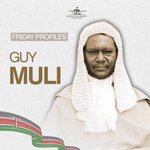
THE ATTORNEY GENERAL WHO 'SACKED' HIMSELF
Some careers are defined by achievement. Others by controversy. Mathew Guy Muli's place in Kenya's history rests on the uneasy intersection of both.
A distinguished lawyer who rose to become the country's chief legal adviser, Muli helped shape Kenya's legal landscape during a turbulent political era. Yet one decision would earn him an extraordinary distinction: he became known as the man who sacked himself.
But how did a man who built his career in the law become associated with a move that weakened the security of tenure of the very judges charged with upholding it?
Born in 1929 in Sengani, Kangundo, in present-day Machakos County, Muli's journey began at Sengani Primary School before taking him to Machakos Boys High School, Alliance High School and Makerere University College, where he graduated with a law degree in 1952.
He returned to Kenya and worked as a High Court interpreter, librarian and court clerk before resigning in 1956 to pursue further studies at Lincoln's Inn in the United Kingdom, graduating in 1961.
As Kenya approached independence, Muli returned home and joined the East African Community as a legal adviser in 1962, later rising to deputy secretary.
From the courtroom to the corridors of power
In 1979, a year after the death of founding President Jomo Kenyatta, President Daniel arap Moi appointed Muli a High Court judge. Four years later, in January 1983, he became Kenya's fourth Attorney General, succeeding Joseph Kamere.
His appointment came as underground calls for multiparty democracy and greater political freedom were gaining momentum.
Serving as Attorney General from 1983 to 1991, Muli oversaw initiatives that improved aspects of the justice system and public service. Inheritance cases were processed faster, access to birth and death certificates improved, and measures were introduced to ease prison congestion and improve access to facilities for persons with physical disabilities. The establishment of the Council for Higher Education also helped facilitate the growth of private universities.
Yet his legacy would be shaped by a far more controversial chapter.
The decision that made history
As President Daniel arap Moi's chief legal adviser, Attorney General Matthew Guy Muli stood at the centre of a series of contentious constitutional changes in the 1980s. The first came in 1986, with Act No. 14, which stripped the Attorney General's office of its security of tenure. From then on, the government's own lawyer held his job only as long as the President was content to keep him.
Two years later, the same logic reached the bench. A further amendment in 1988 removed the security of tenure that judges had enjoyed. This protection exists so that a judge can rule against the powerful without worrying about the consequences. Without it, judicial independence became far harder to sustain, and the courts were left open to the very pressure the safeguard was meant to hold back.
The timing sharpened the effect. Kenya was in the grip of mounting demands for democratic reform, and the state responded with arrests and detentions. The law became the ground on which state authority and civil liberties collided.
Then came the twist. Muli, who had helped weaken the protections of the judiciary, was later appointed a Judge of the Court of Appeal. He now sat on the bench whose independence his own government had loosened. From that irony came the line that has followed him ever since: The Attorney General who sacked himself.
A legacy under scrutiny
Muli's tenure was dogged by accusations that he used the law to suppress political dissent. During the 1989 trials involving the Mwakenya movement, whose members the Government accused of plotting to overthrow it, many faced sedition and treason charges, while others were detained without trial.
Critics questioned whether Muli prioritised loyalty to the Government over the impartial administration of justice. His involvement in high-profile prosecutions and the handling of controversial cases, including those surrounding the deaths of Foreign Affairs Minister Robert Ouko and Anglican Bishop Alexander Muge, further fuelled public scrutiny.
These controversies overshadowed parts of his reform record and placed his tenure at the heart of a wider debate about judicial independence, human rights and state accountability.
Mathew Guy Muli's story is ultimately one of contrasts: a legal mind associated with reforms that improved public services, yet a public officer whose decisions raised enduring questions about the independence of the institutions he was entrusted to serve.
His legacy remains a compelling chapter in Kenya's legal history, a reminder that public service is measured not only by the reforms one introduces, but also by the principles one upholds when they are tested.
He died on July 17, 2004.

Still in the Mashujaa Day spirit. Presidential Voices takes us back to 1964 as Mzee Jomo Kenyatta speaks on the true weight of self-rule, nation-building, and responsibility. Decades later, his call to action still echoes.
Listen in and drop your thoughts below!
Mashujaa Thematic Week: A Look Back
A week of celebrating our heroes, exploring our history and connecting generations through Kenya’s rich heritage.
Here are some highlights from the Presidential Library & Archives at Eldoret Polytechnic.
Our history. Our heroes. Our shared future.


Presidential Library & Archives retweeted

Our Group Chairman, @KipronoKittony , and Ag. Group MD & CEO, Habil Waswani, reflect on Raila Odinga’s belief in Kenya Airways as a strategic national asset as we mark the first anniversary of his passing. @OPLMKe
#ThePrideOfAfrica #RAO001
Another day of history, discovery and engagement at the Presidential Library & Archives tent during the Mashujaa Day thematic week at Eldoret Polytechnic.
We were pleased to welcome Treasury Cabinet Secretary Hon. John Mbadi and Principal Secretary Dr. Chris Kiptoo, who toured the exhibition and interacted with the stories, memories and milestones that have shaped Kenya’s journey.


RAILA ODINGA — Part III
THE MAN WHO NEVER STOPPED
Do you remember the historic handshake between Raila Odinga and Uhuru Kenyatta on the steps of Harambee House on 9 March 2018?
This healing political truce didn't come out of nowhere. A long road and a chain of events led us to that moment.
By 2013, Raila Amolo Odinga had been many things: Detained activist. Opposition politician. Cabinet minister. Coalition builder. Roads minister. Prime Minister.
But one title still eluded him.
President.
And now, after years of helping shape governments, Raila sought the presidency.
In 2013, he ran under the Coalition for Reform and Democracy, or CORD.
It was a closely watched election, and when the results were announced, Uhuru Kenyatta was declared the winner.
Raila challenged the result at the Supreme Court.
The petition was dismissed.
For the first time in his long political career, the man who had spent decades fighting the system had taken his fight all the way to its highest judicial institution.
He lost.
But Raila did what Raila had always seemed to do.
He came back.
In 2017, he returned to the presidential race, this time under the National Super Alliance (NASA).
The contest with Uhuru Kenyatta was even more dramatic.
Kenyatta was declared the winner.
Raila challenged the result again.
This time, the Supreme Court made history.
It annulled the presidential election and ordered a fresh one.
It was an extraordinary moment. Kenya had become one of the few countries in the world where a presidential election had been overturned by a court.
But Raila withdrew from the scheduled October 26 rerun of the 2017 presidential election, arguing that the electoral system had not been sufficiently reformed.
Kenyatta went on to win the rerun.
And then came one of the most unexpected turns in Raila’s political story.
The handshake.
On 9 March 2018, Raila and Uhuru Kenyatta appeared together on the steps of Harambee House and publicly shook hands.
It was a moment that seemed almost impossible only months earlier.
The two men had been bitter political rivals.
Now they were talking about reconciliation, national unity and the need to address the deeper problems behind Kenya’s recurring electoral crises.
The handshake would eventually lead to the Building Bridges Initiative.
Once again, Raila had moved from opposition to the centre of a national political conversation.
But the presidency remained elusive.
In 2022, at the age of 77, Raila made perhaps his most formidable presidential attempt yet.
This time, he ran under Azimio la Umoja and was backed by Uhuru Kenyatta, his former adversary turned political ally.
His principal opponent was William Ruto, once his ally during the Kibaki years and later one of his fiercest political opponents.
The election was close.
Raila lost.
He challenged the result before the Supreme Court.
The petition was dismissed.
Five presidential attempts had now produced five different chapters of the same unfinished story.
But politics was never the only stage on which Raila operated.
After the 2022 election, he turned his attention increasingly to the continental arena, seeking the chairmanship of the African Union Commission.
It was another chapter in a political life that had long refused to follow a predictable script.
Then came the end.
On 15 October 2025, Raila Amolo Odinga died.
He had spent more than four decades at the centre of Kenya’s political story.
He had been imprisoned by the state he later helped govern.
He had opposed presidents, served presidents and competed to become one.
He had helped build coalitions, broken them, rebuilt them and sometimes found himself on the opposite side of men with whom he had once stood shoulder to shoulder.
He could be stubborn.
He could be theatrical.
He could be fiercely political.
He could also be remarkably resilient.
Perhaps that is why the many names followed him for so long — Agwambo, Tinga, Nyundo, Mtu wa Vitendawili.
Each seemed to capture only a piece of the man.
Because Raila Odinga was never easy to place in one political box.
He was a dissident who became a minister.
An opposition leader who became Prime Minister.
A man who helped defeat governments, served in government and then spent years trying to become the government.
And perhaps the simplest way to understand the enigma is also the most difficult to argue with:
He never became President.
But presidents had to deal with him.

Eldoret, we’re here!
Join the Presidential Library & Archives at The Eldoret National Polytechnic for the Mashujaa Day Thematic Week. Step into Kenya’s history, discover the stories of our heroes, and experience the moments that shaped our nation.
Visit our tent. History awaits!
At Kisumu State Lodge on 30 July 1998, Raila Odinga shares one of his characteristic parables, offering a glimpse of the storytelling tradition through which he often conveyed his thoughts
Minister G.G. Kariuki pictured entering a Toyota 1000 KP30 at Westlands Motors, Nairobi, after winning the vehicle in a Round Table auction held in support of the blind. The photograph, captured on 27 December 1973, documents an initiative that brought together public figures, philanthropy and community service in Kenya’s history.

Friday Profiles:
Part II — The Promise
There are politicians who spend their careers outside government, criticising it from the other side of the fence.
Raila Amolo Odinga had already done that.
Now, after helping deliver the opposition’s biggest electoral victory in decades, he was about to discover that changing government from within could be just as complicated.
In 2003, President Mwai Kibaki appointed Raila Minister for Roads, Public Works and Housing.
It was, on paper, a powerful ministry. In Raila’s hands, it became something more.
He arrived with an engineer's skill and a politician's instinct, the kind that understood a road was never just a road. It connected people, opened markets, and carried the visible promise of a government that had campaigned on change.
Roads began receiving attention. Road reserves were reclaimed. Bypasses were pushed. The machinery of infrastructure became one of the most visible faces of the new administration.
Raila was becoming, once again, a man difficult to ignore.
But beneath the public works was an unresolved political question.
What had actually been promised in 2002?
Raila and his LDP allies believed the agreement that had brought them into NARC had envisaged a powerful premiership and a different sharing of executive authority.
Kibaki’s administration took a different view.
The disagreement slowly became impossible to contain.
Then came the 2005 constitutional referendum.
Raila campaigned on the “No” side. The proposed Constitution was rejected, and on 23 November, President Kibaki dismissed the entire Cabinet.
The NARC marriage was effectively over.
For Raila, however, political defeat often had a curious habit of becoming reinvention.
The Orange Democratic Movement emerged from the referendum campaign.
And when the country returned to the polls in 2007, Raila was no longer Kibaki’s ally.
He was his principal challenger.
The election that followed would become one of the darkest chapters in Kenya’s post-independence history.
The dispute over the presidential results spiralled into violence. Lives were lost. Families were displaced. The country that had gone to the ballot hoping to choose a president found itself confronting a national crisis- the Post-Election Violence or PEV.
For 41 days, Kenya stood on the edge.
Then came Kofi Annan.
Behind closed doors, the competing sides were pushed towards an agreement neither had managed to achieve through the ballot.
On 28 February 2008, Kibaki and Raila signed the National Accord.
Kibaki remained President.
Raila became Prime Minister.
The two men who had begun the decade as allies, fallen out, competed against each other and presided over one of Kenya’s most contested elections were now expected to govern together.
It was an unlikely arrangement.
It was also necessary.
The new coalition government was not easy.
It brought together politicians who had spent years opposing one another and ministries whose responsibilities had to be redistributed and coordinated. Raila’s office itself had to be built almost from scratch.
Yet, amid the political complexity, there were areas where the partnership produced tangible results.
One was performance contracting.
The system, introduced in government earlier in the Kibaki administration, was expanded and institutionalised as a way of making public institutions more accountable for what they promised to deliver.
Another was the Mau Forest.
In 2009, Raila was tasked with helping lead efforts to reclaim and protect the forest, an issue that quickly became politically explosive.
He faced resistance, including from within the coalition itself.
But he held his ground.
For once, the story was not simply about Raila the opposition politician.
He was now Raila the government man.
And perhaps the most consequential chapter of the Kibaki-Raila partnership was still to come.
The 2010 Constitution.
For decades, Kenya’s political battles had repeatedly returned to the question of how much power should sit in the hands of the presidency.
The new Constitution sought to redraw that architecture.
It strengthened institutions, introduced devolution and placed new limits on presidential power.
Kibaki and Raila campaigned for its passage.
On 27 August 2010, they stood together as Kenya promulgated the new Constitution.
It was another of Raila’s great political contradictions.
The man who had spent much of his life challenging the architecture of power was now helping redesign it from inside government.
And yet, even as Kenya entered a new constitutional era, one question remained.
The presidency.
Raila had come close before.
Now he would spend the next chapter of his life trying to reach the one office that, somehow, had continued to elude him.
And this time, there would be no Kibaki Tosha.
There would be Raila himself.
To be continued in the third and final part next Friday.

From the Archives | Vision 2030
A week before the launch of Kenya’s Vision 2030, President Mwai Kibaki reflects on the ambitious blueprint for the country’s long-term development. A vision built on economic growth, social transformation and a more prosperous future for all Kenyans.
MEMORIES MONDAY
President Jomo Kenyatta and Tanzania’s President Julius Nyerere congratulate Kenyan athlete Kipchoge Keino at State House, Mombasa, on 6 September 1965, following his world-record performance in the 3,000 metres in Helsingborg, Sweden.
On 27 August, Keino had clocked 7:39.6, cutting more than six seconds off the previous world record and marking an early milestone in Kenya’s emergence as an athletics powerhouse.

PART ONE: THE MAKING OF AN ENIGMA
There are politicians whose careers follow a straight line. Raila Amolo Odinga's did not.
His journey through Kenya's political history was a sequence of unexpected turns, improbable alliances and sudden reversals, which kept even his opponents guessing his next move. Perhaps that is why one of his names was Agwambo, the mysterious one.
But before he became Baba, the opposition chief, presidential candidate and Prime Minister, a man whose name could turn an ordinary rally into an event, there was a boy born into politics who first became an engineer.
Raila was born on 7 January 1945 to Mary Juma and Jaramogi Oginga Odinga, a towering figure of the independence struggle and Kenya's first Vice President. He went to Kisumu Union Primary, then Maranda Primary and Maranda High School in Bondo, Siaya County.
Around 1962 he left for East Germany, studying German at the Herder Institute in Leipzig before moving to Magdeburg for technical studies. In 1970 he graduated with a Master's-equivalent diploma in Mechanical Engineering and returned to Kenya. Raila taught at the University of Nairobi and worked at the Kenya Bureau of Standards (KEBS)s before politics took over his life.
His political path would break away from his father's, slipping out of that long shadow, like a river that knows its source but chooses its own course.
By the 1970s and early 1980s, Raila was deeply involved in political activism, at a time when Kenya's political space was narrowing.
Then came 1 August 1982.
A section of the Kenya Air Force attempted to overthrow President Daniel arap Moi's government. The coup failed. In its aftermath, Raila was accused of involvement, charged with treason and detained. The accusation would remain one of the most contested chapters of his early political life; what is beyond dispute is that the failed coup changed the course of his life.
For the next several years, the engineer disappeared into detention.
He would not emerge the same man.
Raila spent years behind bars, much of it in solitary confinement. Released in 1988, he was soon detained again, caught up in the turbulent struggle to bring back multiparty politics. In July 1990, during the Saba Saba pro-democracy agitation, he was detained once more. Freed the following year, he slipped into exile in Norway, fearing for his safety.
But exile did not end the journey.
In February 1992, Raila came home to a Kenya preparing for its first multiparty elections in decades. He joined FORD-Kenya, the party his father lead, and later that year won the Lang'ata parliamentary seat, a position that would make him one of the most recognisable faces in Kenyan politics.
Then, in 1994, Jaramogi died. Raila lost the battle for FORD-Kenya's leadership to Michael Wamalwa Kijana, and as the rift in the party deepened, he walked away. He took the reins of the National Development Party and carried it into the 1997 election, where he ran for president and finished third, behind Daniel arap Moi and Mwai Kibaki, while holding on to the Lang'ata seat.
For many politicians, that might have been the end of the road. For Raila, it was merely another turn.
From Moi's jail to Moi's Cabinet
Then came one of the great paradoxes of Raila Odinga's political life.
In 2001, Raila’s National Development Party joined forces with Moi's KANU, and Moi named him Minister for Energy. It was an extraordinary reversal. The man who had spent years fighting the Moi establishment now sat inside it.
But the arrangement was never simply about a Cabinet seat. As the 2002 succession battle gathered pace, Raila and other senior KANU figures expected Moi to choose one of them. Instead, he chose Uhuru Kenyatta, son of Kenya's first President, Jomo Kenyatta.
“Kibaki Tosha”
On 22 September 2002, Raila and the other disgruntled KANU ministers, now calling themselves the Rainbow Alliance, gathered at the Serena Hotel before heading to a huge opposition rally at Uhuru Park. It was open rebellion, yet they were still inside the government.
There, Raila asked a deceptively simple question:
"Si ata Mzee Kibaki anatosha?"
Wasn't Mzee Kibaki enough?
The question birthed the ‘Kibaki Tosha’ declaration.
It was one of those moments in politics when a few words can alter the direction of a campaign.
The opposition had a problem. It had many hopefuls, many parties and plenty of ambition, but no single candidate around whom the factions could unite. Raila threw his weight behind Mwai Kibaki, and the forces that came together would form the National Rainbow Coalition.
On 13 October 2002, Raila resigned from the Cabinet and walked out of KANU, with Kalonzo Musyoka, Joseph Kamotho and George Saitoti beside him. The political landscape was rearranging itself fast.
And Raila stood right in the middle of it.
The man who had wanted to succeed Moi had instead decided to help another man defeat Moi's chosen successor.
And then, just weeks before the election, the campaign nearly collapsed.
On 3 December, Kibaki was returning to Nairobi from a rally in Machakos when his vehicle crashed. He was seriously injured and flown to London for specialised treatment.
The Opposition was suddenly without its candidate on the campaign trail.
Raila stepped into the gap.
A football enthusiast, he reached instinctively for a football metaphor.
“Our captain is injured but the game will go on.”
The campaign continued.
Kibaki returned, but the final stretch of the election was carried largely by the NARC team, with Raila among its most prominent campaigners.
On 27 December 2002, Kenyans went to the polls.
NARC won.
After 39 years of KANU rule, Kenya was about to witness a new political era.
Mwai Kibaki was headed for State House.
And Raila Odinga had played a decisive role in getting him there.
For Raila, however, the victory contained another unanswered question.
What exactly was his place in the new Kenya he had helped create?
The answer would produce another twist.
And perhaps another Raila altogether.
But one Friday is hardly enough for a life this consequential. Join us next Friday for Part II.

Memories Monday | 27 June 1973
A moment of celebration, heritage and history.
At Molo, Mzee Jomo Kenyatta joins members of the Nakuru District Ex-Freedom Fighters Organization (NDEFFO) in a spirited traditional dance as he hands over Langwenda Farm to landless Kenyans.
A day when land, freedom and culture met in one frame.

Some careers are built one rung at a time. Simeon Nyandusi Nyachae’s was built by climbing the whole ladder.
Born in Nyaribari, Kisii, Nyachae began his working life far from the Cabinet rooms and corridors of power that would later become familiar territory. After attending Nyanchwa Seventh Day Adventist School, Kereri Intermediate School and Kisii Government School, he left school before completing his O-Level studies and took up a clerical job at a chief’s camp.
But his father, Senior Chief Musa Nyandusi, had other plans for him.
In 1957, Nyachae was sent to London to study public administration. He returned to Kenya in 1960 and joined the provincial administration as a district officer in Kangundo, a post he held for only three months before heading back to Britain, this time for a Diploma in Public Administration at Churchill College, Cambridge. He came home in 1963 to become District Commissioner, his elevation all assured by his education and his father's goodwill.
The ascent continued.
Nyachae rose through the provincial administration to become a Provincial Commissioner, serving in Central Kenya until 1979, when President Daniel arap Moi appointed him Permanent Secretary in the Office of the President. He would eventually become Head of Public Service and Secretary to the Cabinet, a position that gave its occupant extraordinary influence over government.
Nyachae was a commanding figure. He was known for his authority, fiery speeches and an uncompromising style. Supporters saw a decisive administrator who got things done. Critics saw a man who could be overbearing and wielded too much power. Either way, he was rarely ignored.
Even outside government, Nyachae was building an empire of his own. His Sansora Group developed interests ranging from garment manufacturing and milling to baked goods, animal feeds, metalworks and finance.
Politics, however, did not welcome him with open arms.
His first attempt to enter electoral politics was blocked when the KANU National Governing Council denied him clearance to contest a parliamentary seat in 1988. Some local politicians also resisted his entry into Kisii politics, fearing the influence of a man who already had considerable wealth, connections and national stature.
But Nyachae was not easily turned away.
In 1992, he finally won the Nyaribari Chache parliamentary seat.
The former administrator who had spent decades inside government was now an elected politician.
He remained in KANU and became one of President Moi’s most influential ministers. Between 1993 and 1997, he headed the Ministry of Agriculture, Livestock and Marketing, overseeing institutions at the heart of Kenya’s agricultural economy, including the National Cereals and Produce Board, Kenya Tea Development Authority, Kenya Seed Company, KPCU and the Coffee Board of Kenya.
It was a difficult brief.
Nyachae pushed changes in agriculture and marketing, wrestled with disputes in the coffee and tea sectors and took on issues surrounding maize and sugar. His approach was often controversial, particularly where liberalisation, farmers’ interests and the role of State institutions collided.
Then came the Treasury.
After the 1997 General Election, Nyachae was appointed Minister for Finance.
He arrived promising to confront corruption, reduce waste and bring discipline to public finances. His budget was austere. He proposed cuts in public expenditure, a leaner civil service and measures aimed at improving revenue collection and investment. The measures provoked resistance from sections of the public service and professional groups.
But Nyachae was also becoming increasingly outspoken.
At one point, he famously described Kenya's economy as being broke and in intensive care.
It was a blunt assessment from a Cabinet minister, and one that did not sit comfortably with his political masters.
Soon afterwards, Moi transferred him from Finance to Industrial Development.
Nyachae declined the new posting.
In 1998, he walked out of government.
It was not the end of his political career. In many ways, it was the beginning of its most ambitious chapter.
Nyachae joined FORD-People and, after years of serving inside government, set his sights on the highest office in the land.
In December 2002, the veteran administrator, businessman, Cabinet minister and former Head of Public Service became a presidential candidate.
He did not win the presidency. He finished third, securing 5.8 per cent of the vote, while FORD-People won 14 parliamentary seats, most of them in the Kisii region.
And so ended one of the more remarkable journeys in Kenya’s public life.
From a young clerk at a chief’s camp to District Commissioner. From Provincial Commissioner to Permanent Secretary. From Head of Public Service and Secretary to the Cabinet to Cabinet minister. From businessman to MP. And finally, presidential candidate.
Nyachae’s career was marked by power, controversy, ambition and an unmistakable belief in his own way of doing things.
He was, above all, a product of an era when Kenya’s provincial administration was one of the principal routes to the centre of power, and he travelled that route further than most.
Simeon Nyachae died in Nairobi in February 2021, aged 88.
But the name remains attached to a particular kind of Kenyan public servant: formidable, outspoken, sometimes controversial, and never quite willing to be a passenger in the room.
