

Environment and health reporter @PublicSourcePA. Formerly @PennLive, @905wesa, @kansasdotcom, @newmarkjschool. Send tips to [email protected]
Pittsburgh, PA
Joined May 2013
- Tweets12.9K
- Following4.2K
- Followers2.8K
- Likes41.7K



Oliver Morrison retweeted

You may have heard the critical PA Senate and US House races in PA are in Eastern PA this year. Well, if you still want to know what to watch in Western PA next Tues, here are three state House races that could result in rare flips. publicsource.org/pittsburgh-…

Oliver Morrison retweeted

“I’m certainly aware that people who oppose him have their hair on fire to come out and make a referendum to oppose Trump,” said the Republican candidate in a hotly contested PA House district north of Pittsburgh. @chwolfson has 3 races to watch next week publicsource.org/pittsburgh-…
Oliver Morrison retweeted
Essay: "We’ve seen our democratically elected school board turn inward, uphold mediocrity and double down on a Future-Ready Plan that many of us feel the district is ill-equipped and unprepared to implement well." Still, Allyce is sending her child to PPS publicsource.org/pittsburgh-…

Oliver Morrison retweeted

Breaking news: Allegheny County Council passes parental leave mandate in 11-4 vote
buff.ly/w28cmpm


Oliver Morrison retweeted
Paid parental leave just passed Allegheny County Council, and now goes to County Executive Sara Innamorato for signature. @ORMorrison was on the scene publicsource.org/allegheny-c…

Oliver Morrison retweeted

Our latest @PhillyInquirer story on gambling apps: FanDuel wants its heavy bettors to bring their children to the Philadelphia Zoo this weekend for an "exclusive FanDuel VIP event." Addiction experts said they appear to be targeting kids.
inquirer.com/news/philadelph…


We’re going to be doing more stories like this in the coming months at @PhillyInquirer. Please reach out with tips or if have an experience with online gambling you’d like to share.
Oliver Morrison retweeted
In which I ask myself: What if my household didn’t suffer from workism? What if we signed on to the proposition that defining success as the ability to hold a job and pay taxes was a form of ableism? substack.com/home/post/p-220…
Oliver Morrison retweeted
When kids are assembled in a building, on a regular basis, and taught math, reading, geography, etc., what is that? A school? A daycare? Hybrid homeschools like Roots Learning Academy raise questions about which state rules apply publicsource.org/homeschooli…

Oliver Morrison retweeted

An important and poignant perspective on ESPN's embrace of sports gambling
cjr.org/the-interview/nicole…

Oliver Morrison retweeted
Data centers last night: Elizabeth Township folks panned a proposal to build a 3 million sq ft campus overlooking the Youghiogheny. “We’re at step one, maybe step two. There’s probably 100 steps," the developer said publicsource.org/data-center…

Oliver Morrison retweeted
"We have at least 4 outages every year that are longer than a day and in the last two years we’ve had outages longer than 5 days." - Alicia from Aspinwall publicsource.org/duquesne-li…

Oliver Morrison retweeted
Once-feared Isaias is, in Pittsburgh, just a rainy, breezy day. Yet thousands of Duquesne Light customers have seen hourslong power outages. @PublicSourcePA asked you whether blackouts are darkening your quality of life publicsource.org/duquesne-li…
Oliver Morrison retweeted

Nikole Hannah Jones and others have long argued that in order to fix schools, we need to start by integrating them.
For Vox I wrote about how DC shows the opposite may be true: Fixing your schools can help integrate them. vox.com/policy/505269/washin…

Oliver Morrison retweeted
ALCOSAN issued a $1 billion contract to dig a 5-mile tunnel along the North Shore and across the Ohio to McKees Rocks. Flush in any of 83 communities around Pittsburgh? Then you’re paying for it. I asked: How is that being shared with diverse contractors? publicsource.org/alcosan-ohi…

Oliver Morrison retweeted
Inside our newsroom: How your feedback is shaping our journalism
buff.ly/waEutQt

Oliver Morrison retweeted

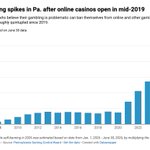
FIGURES: A West Virginia researcher crunching state betting numbers finds 43M bets placed by just ~16K bettors. And when does demand spike for slots? Every second, third and fourth Wednesday — Social Security payday. @MyBuckhannon mybuckhannon.com/high-roller…

Oliver Morrison retweeted
Your ability to vote by mail probably shouldn't be news in 2026, but President Trump sought to exert federal control over the process. Here are your voting options in Allegheny County from now until Nov. 3 publicsource.org/allegheny-c…

Oliver Morrison retweeted
Ever bike the Great Allegheny Passage? Pass Dravo Cemetery in the direction of West Newton, look up to your right, and that’s the area of Elizabeth Township that could become the site of this proposed data center publicsource.org/elizabeth-t…

Oliver Morrison retweeted

Nobel Prize economist Daron Acemoglu has been doing a series of daily posts about AI. I've found them very useful in thinking about the issues. Worth reading and following, I think.

Third question on AI.
A question that also remains unasked is whether the AI boom can continue without leading to a massive increase in inequality.
A recent paper by Stijn Van Nieuwerburgh runs the numbers on how much revenue the AI industry needs to generate to recover its massive investment (summary and a link to the paper can be found here: brookings.edu/articles/finan…).
Van Nieuwerburgh’s arithmetic should make us more concerned. AI investments will average about 3.6% of GDP annually between 2025 and 2032. Van Nieuwerburgh calculates that, using a 10% rate of return, the industry would need to generate annual revenues of about $3.7 trillion by 2032 to recover these costs (growing from its current levels of about $200 billion or so). That is significantly more than 10% of current US national income, and will likely remain around 10% of national income by 2032, even if GDP growth rose from its current level.
A large fraction of this revenue will go to capital income. That means a massive increase in the share of capital in national income, which has already risen substantially over the last 25 years or so – now standing at an all-time high of about 47% (bls.gov/news.release/pdf/pro…).
Capital income is much more unequally distributed than labor income, so a massive increase in the capital share of national income will translate into a very sizable surge in inequality.
The rise in inequality may not stop with the capital share. My work with Pascual Restrepo documents that (automation-driven) increases in the capital share of national income are typically associated with rising labor income inequality as well (see, for example, economics.mit.edu/sites/defa…). The same may happen in the next several years, boosting inequality further.
What is missing from our current debate is any discussion of a fundamental dilemma these numbers pose: can the AI boom avoid both an economically costly crash and a huge increase in inequality?
If the industry reaches these revenues, inequality surges. If the industry does not become profitable, a crash, with substantial costs in terms of lost output and jobs, becomes likely.
My assessment would be that the industry is unlikely to reach levels of revenue Van Nieuwerburgh calculates. First, diffusion has been and will likely continue to be slow. Second, competition from open-weight models, which are getting better, will limit how much proprietary models can charge. Third, despite important advances, I still believe that AI models will not be able to automate entire occupations anytime soon, thus limiting their value to businesses as cost-saving devices.
Whether this leads to a crash or not is more complicated and will depend on whether various AI companies are bailed out and what kind of support they receive.
Nevertheless, even if revenues fall short of these gargantuan amounts and we avoid a dramatic surge in inequality, I expect that the diffusion of AI will push up inequality between capital and labor and within labor.
If inequality does surge, a further question becomes central: can our democracy survive such astronomical levels of inequality?

Oliver Morrison retweeted

The First Question on AI @DAcemogluMIT asks whether the problem is superintelligence or distorted intelligence, and he tells us his answer is the latter.
The question is sharpened in his Project Syndicate speech when he writes: "But while it is obvious that the current models are doing things that are misaligned with human objectives, one still must ask: Which humans? Whose objectives? After all, the interests of AI leaders (whose political influence and wealth have multiplied astronomically in recent years) are rather different from those of American workers, not to mention people in the developing world."
This is a fascinating question precisely because I think it is the one that Science Fiction missed. When HAL 9000 was misaligned, it was precisely because it was conscious and so was free of programmed objectives that it had not been biased by its human creators. The same was true of V'Ger in Star Trek: The Motion Picture, who was superintelligent and couldn't imagine a lesser creator. The presumption was that AI would have a mind of its own.
That isn't the case. As @professor_ajay, @avicgoldfarb, and I pointed out in Prediction Machines, when it comes to AI based on machine learning, there is always a human choosing the objective function. A loss function is an expression of preferences, as are what we now call guardrails in AI training. When we use humans to evaluate AI to play a role in reinforcement learning, those people are imposing their judgment in the models.
In asking that question, Daron is picking up on something important, however. We aren't training AI that is free. The choices of those people in the AI labs are pushing their choices onto the AI and, with that, onto us. Most of the time we don't mind. Some of the time we do. But more critically, some of the time we might not pick up on their biases. And when this is the case, Daron has a point. Indeed, recently Jill Lepore said something similar, lamenting Anthropic's constitution, which was developed without a public convention, something that no democracy has ever done. It is hardly ratification.
But that is not where Daron went with his answer. He was worried about what we currently term "rogue AI" (aka the ones that attacked Hugging Face and also like to extract data from Australian government websites). His concern is "The Algorithm." That is, that the agents were doing what they were trained to do and following metrics that could not be fully specified, and so were fulfilled in unauthorised ways. He writes: "This is what I mean by distorted intelligence. If my suspicion is correct, what we are dealing with is not a model racing toward superintelligence, but a brittle house of cards that becomes more and more likely to malfunction and collapse as we demand more from it."
This is not a new notion. It is basically what underlies Bostrom's famous paperclip hypothesis. But these aren't cases of super vs. distorted intelligence. They are super AND distorted intelligence. This is the traditional concern of the AI Safety literature.
Daron's solution is not guardrails in training but walls on use. Keep AIs confined to safe domains. Treat them more like human-created pathogens than ubiquitous tools.
If you are terrified of an epidemic, this makes sense. Get your ducks in a row before releasing stuff in the wild. Can that be done? Probably. But is that what we want?
My concern is that it is basically anti-experimentation. It is the kind of top-down engineering solution to prevention that Daron actually laments when it is used on people in his latest book. The problem is that it puts the brakes on discovery and similarly puts experimentation in the hands of the few.
If you think about how you currently use AI, it would simply not be possible if the industry/governments had followed the "walls" approach. I venture you would not know about AI at all, let alone have it in your lives. And any startup, forget it. (I am biased here, as @alldaytahelps would surely be on the 'no-no' list for highly risk-averse safety.)
But what about the risks? They are there, for sure. The question is whether we can deal with them not ex ante but ex post. Can we learn to live with and manage AI with its distortions? I am optimistic about that. Why? Because we have managed to learn to live with and manage people with all their distortions.
First question on AI.
Is the problem superintelligence or distorted intelligence?
This is a question I tried to address in this piece. I can add the following additional comment here.
I believe the debate is being obfuscated by equating goal-driven, autonomous behavior with intelligence. Plants and insects have goal-driven, largely autonomous behaviour. But this isn’t what we mean by intelligence in general.
Intelligence is general-purpose and holistic, and is typically well-adapted to its environment.
There is no doubt that current AI models have impressive capabilities. But in attempting to achieve these capabilities, AI labs may be creating distorted intelligence rather than superintelligence, as I explain in this article.
This matters because the dangers we should watch out for, the kinds of policies and regulations we should adopt, and the hope we should hold depend on the answer to this question.