

Data Analyst & Business intelligence Consultant Data & Ai Consulting firm @frivikhq 📩[email protected]
Nigeria
Joined November 2021
- Tweets11.5K
- Following445
- Followers6.5K
- Likes40.3K



Pinned Tweet
Hiring? Recommend me 🙏
Data Analyst & BI Consultant · 3+ years
· open to corporate roles and job opportunities
📩 [email protected]
Pls share and repost ❤️
#OpenToWork #DataAnalyst – at Ikeja, Nigeria
For the data people: the full project is open on GitHub.
🔹 20 years of CBN rates and credit data, pulled
🔹 Loan app rates, each with its source and date
🔹 Real rates, lag analysis with statsmodels
Python · pandas · Matplotlib · Jupyter
Explore 👇
github.com/Freedom15dev/nige…


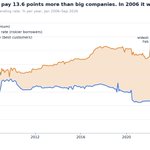
Banks charge small borrowers up to 13.6 points more than big companies.
Loan apps charge per month, which hides the yearly cost.
And missing one due date can turn ₦100k into ₦363k.
I broke it all down, with 10 things to check before you borrow 👇
linkedin.com/pulse/who-gets-…

In Nigeria, the same loan doesn’t cost everyone the same.
Big companies borrow from banks at about 19%.
Riskier borrowers can be charged up to 32.6%.
In 2006, the gap was 1.5 points. Today it’s 13.6.
I followed two everyday borrowers through 20 years of CBN data 🧵


Who Gets to Borrow in Nigeria? I Followed Two Borrowers to Find Out.
This is the fourth project in my Nigerian economic data series.
Full Article out tomorrow 7am on LinkedIn – at Ikeja, Nigeria


For the next 15 days, @365datascience is opening its full AI & data platform for free. No credit card.
134+ courses, free certificates, real projects. Copilot in Excel, AI agents, Claude Code and more.
Pick one and finish it before Nov 20 👇


Explore the project
The full project, including the Python code, datasets, notebooks and visualisations, is available on GitHub:
github.com/Freedom15dev/nair… – at Ikeja, Nigeria

How much worse can the naira get?
I decided to investigate.
Rather than join the usual predictions about where the dollar might reach, I went back to historical CBN data to see what the numbers could tell us about the next four years.
Here's what I found. 🧵

4
379
The biggest lesson: a forecast is more useful when you understand its uncertainty.
Read the full article: [lnkd.in/p/dufsV8xt]

How much worse can the naira get?
I decided to investigate.
Rather than join the usual predictions about where the dollar might reach, I went back to historical CBN data to see what the numbers could tell us about the next four years.
Here's what I found. 🧵
1
7
332
How much worse can the naira get?
I decided to investigate.
Rather than join the usual predictions about where the dollar might reach, I went back to historical CBN data to see what the numbers could tell us about the next four years.
Here's what I found. 🧵

EXCEL101 REGISTRATION IS ON GOING
nestuge.com/novemberexcel101 – at Ikeja, Nigeria

18
844
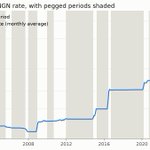
For about 15 months (Mar 2015 – Jun 2016), Nigeria’s official rate sat at ₦197 to the dollar.
On a chart, it looks like stability.
But was the naira stable, or was the rate just being held in place?


TINUBUUUUU 👀
2027 is an election year.
If your vote had to be based on data, would you re-elect Tinubu?
I was forecasting the naira for the next 4 years when I decided to look at its history under each president.
Here's what I found 🧵

If your company is Hiring, Recommend me to your Bosses ! – at Ikeja, Nigeria
Hiring? Recommend me 🙏
Data Analyst & BI Consultant · 3+ years
· open to corporate roles and job opportunities
📩 [email protected]
Pls share and repost ❤️
#OpenToWork #DataAnalyst
I'm supposed to be applying for jobs, but here I am working on projects nobody asked for. 🤣
You people should put me inside your company – at Ikeja, Nigeria
The naira went from ₦128 to ₦1,327 per dollar from 2006 to 2026 10x weaker
Major Jumps not drift....16 jump month, without those 16 months, the rate today would be about ₦133, almost we're it started – at Ikeja, Nigeria

The Terminal List Season 2!
The Agency is bringing back most wanted fugitive James Reece to help them find terrorists 😂😂🫠
1
5
660
I wrote up the full story behind this thread: how ₦100,000 shrank to ₦6,460 in buying power, what happened in each way of saving, and what 20 years of data suggests.
📝 Read the article: [linkedin.com/pulse/i-followe…]

In January 2006, imagine you put ₦100,000 in a drawer. Twenty years later it's still ₦100,000, but it now buys what about ₦6,460 did back then.
I used Python and 20 years of CBN data to see if any common way of saving kept up 🧵


