Doing research at Meta AI
Joined October 2022
- Tweets160
- Following138
- Followers1.1K
- Likes1.7K



Olga Golovneva retweeted

Claim: Autoresearch that moves the frontier will be about better data: we call that *Autodata*.
🧵1/6 -- Paper is out! arxiv.org/abs/2606.25996
Key idea: agentic data creation provides a way to *convert increased inference compute into higher quality model training*.
We show our method gives gains on computer science, legal and math problems over classical synthetic dataset creation methods.
We also show how to train (meta-optimize) such a data scientist agent, so that it can create even stronger data.
Overall, we believe this direction has the potential to change how we build AI data!

Olga Golovneva retweeted

🚀 Hiring: Research Scientists 🚀
We're hiring Senior and Principal Researchers in Agentic AI at @ms_aifrontiers Lab at @ResearchU
Our focus is on developing self-improving agentic systems, agents that learn through interaction with humans and other agents, coordinate and collaborate, and scale into complex real-world environments, covering everything from training and evaluation to deployment.
If your expertise includes agentic AI, multi-agent reasoning, continual learning, or synthetic data and evaluation, we want to hear from you!
📝 Apply from below links 📝
apply.careers.microsoft.com/…
apply.careers.microsoft.com/…

Olga Golovneva retweeted
💎Autodata: an agentic data scientist to create high quality data✨
We introduce a method for building agents that create high-quality training & evaluation data.
Key idea: agentic data creation provides a way to *convert increased inference compute into higher quality model training*.
We show how to train (meta-optimize) such a data scientist agent, so that it can create even stronger data.
Our initial study with a specific practical implementation, Agentic Self-Instruct, shows strong gains on scientific reasoning problems compared to classical synthetic dataset creation methods.
Overall, we believe this direction has the potential to change how we build AI data!
Read more in the blog post: facebookresearch.github.io/R…

Olga Golovneva retweeted
Sign up for the Meta Networking Mixer at ICLR 2026:
events.atmeta.com/iclrnetwor…
Members of my team in FAIR co-authored 7 papers accepted to ICLR:
1/ The Alignment Waltz: Jointly Training Agents to Collaborate for Safety
arxiv.org/abs/2510.08240
- Makes LLM safety a positive-sum game between a conversation & feedback agent
- At inference feedback is adaptive, used when needed
- Improves safety & reduces overrefusals without degrading capabilities.
2/ J1: Incentivizing Thinking in LLM-as-a-Judge via Reinforcement Learning
arxiv.org/abs/2505.10320
- Converts judgement task into a verifiable one for both verifiable and non-verifiable prompts. Uses only synthetic pairwise data
- Optimizes thoughts, scores, and judgments using GRPO
- Outperforms all baselines at 8B & 70B scale, o1-mini, and on some benchmarks, even R1
- We find J1 uses various thought strategies: outlines evaluation criteria, compares against self-generated reference answers, and re-evaluates correctness
3/ Scaling Agent Learning via Experience Synthesis
arxiv.org/abs/2511.03773
- Scaling training environments for RL by simulating them with reasoning LLMs!
- Environment models + Replay-buffer + New tasks = cheap RL for any environments!
- Strong improvements over non-RL-ready environments and multiple model families!
- Works better in sim-2-real RL settings → Warm-start for high-cost environments
4/ OptimalThinkingBench: Evaluating Over and Underthinking in LLMs
arxiv.org/abs/2508.13141
- Thinking LLMs use a lot of tokens & overthink; non-thinking LLMs underthink & underperform.
- We introduce a benchmark which scores models in the quest to find the best mix.
- We evaluate 33 different SOTA models & find improvements are needed!
5/ RESTRAIN: From Spurious Votes to Signals -- Self-Driven RL with Self-Penalization
arxiv.org/abs/2510.02172
- RESTRAIN turns spurious votes → self-Improving signals. No labels needed
- Does this through self-penalizing unreliable reasoning paths. Uses all rollouts, offsets low-consistency rollout advantage. Down-weights low-consensus prompts.
- Results: beats existing techniques on both training-time (label-free) and test-time scaling — all without labels.
6/ LLM Pretraining with Continuous Concepts
arxiv.org/abs/2502.08524
- An LLM pretraining framework that predicts concepts and mixes them into its hidden state to improve next token prediction.
- More sample-efficient: outperforms next token prediction, knowledge distillation, and inserting pause tokens.
- Boosts interpretability & steerability by analyzing and modifying predicted concepts.
7/ Hybrid Reinforcement: When Reward Is Sparse, It's Better to Be Dense
arxiv.org/abs/2510.07242
- HERO bridges 0–1 verifiable rewards and dense reward models into one 'hybrid' RL method
- Tackles brittleness of 0-1 signals & the noise of pure reward models -> better results!
- Results: +11.7 pts vs RM-only, +9.2 pts vs verifier-only on hard-to-verify reasoning tasks
Olga Golovneva retweeted

soooo... how many papers do we think are invalidated by this? And now think about how many other bugs there must be in any re-implementations of... basically anything.


We identified an issue with the Mamba-2 🐍 initialization in HuggingFace and FlashLinearAttention repository (dt_bias being incorrectly initialized).
This bug is related to 2 main issues:
1. init being incorrect (torch.ones) if Mamba-2 layers are used in isolation without the Mamba2ForCausalLM model class (this has been already fixed: github.com/fla-org/flash-lin…).
2. Skipping initialization due to meta device init for DTensors with FSDP-2 (github.com/fla-org/flash-lin… will fix this issue upon merging).
The difference is substantial. Mamba-2 seems to be quite sensitive to the initialization.
Check out our experiments at the 7B MoE scale: wandb.ai/mayank31398/mamba-t…
Special thanks to @kevinyli_, @bharatrunwal2, @HanGuo97, @tri_dao and @_albertgu 🙏
Also thanks to @SonglinYang4 for quickly helping in merging the PR.

Olga Golovneva retweeted
Self-Improving Pretraining
We've updated our results given feedback:
- larger 8B baseline to match reward model size
- cross-task evals given different RM objectives
Overall, we see clear wins

Olga Golovneva retweeted

The Top AI Papers of the Week (January 26-February 1):
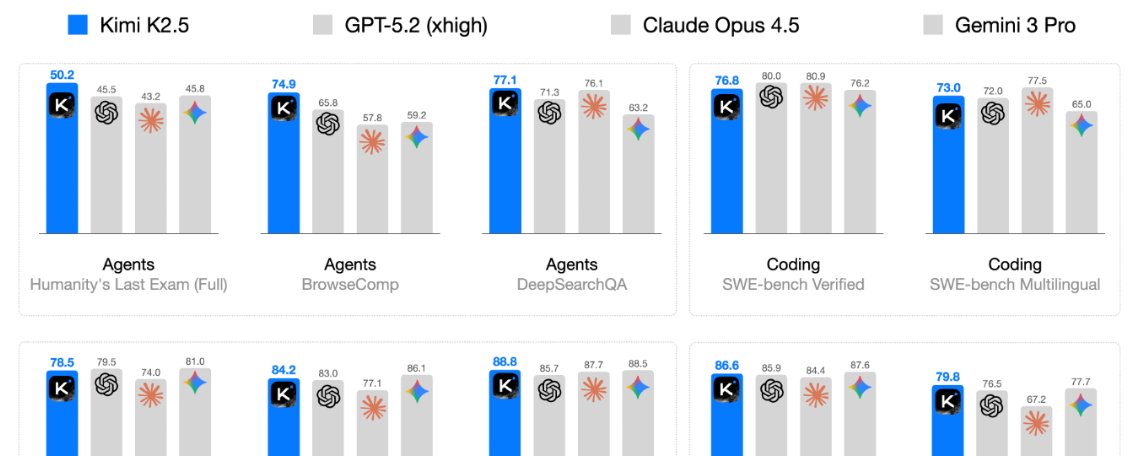
- Kimi K2.5
- VibeTensor
- Insight Agents
- Self-Improving Pretraining
- Open-Source World Simulator
- How AI Impacts Skill Formation
- Orchestrating Reliable AI Agents
- Reinforcement Learning via Self-Distillation
Read on for more:

Olga Golovneva retweeted
Our team in FAIR at Meta is hiring a (full-time) researcher!
We work on the topics of Reasoning, Alignment and Memory/architectures (RAM) for self-improvement & co-improvement.
Apply here:
metacareers.com/profile/job_…
Location: NY, Seattle or Menlo Park.
Some of our recent work to give flavor:
Co-Improvement (position): arxiv.org/abs/2512.05356
SPICE (Self-Play in Corpus Environments): arxiv.org/abs/2510.24684
Self-Challenging Agents: arxiv.org/abs/2506.01716
RL from Human Interaction: arxiv.org/abs/2509.25137
AggLM (parallel aggregation): arxiv.org/abs/2509.06870
StepWiser (CoT-PRM RL): arxiv.org/abs/2508.19229
DARLING (diversity-trained RL): arxiv.org/abs/2509.02534
J1 (RL-trained LLM-as-Judge): arxiv.org/abs/2505.10320
CoT-Self-Instruct: arxiv.org/abs/2507.23751
Multi-Token Attention: arxiv.org/abs/2504.00927
Olga Golovneva retweeted
Our team in FAIR at Meta is hiring a postdoc researcher!
We work on the topics of Reasoning, Alignment and Memory/architectures (RAM).
Apply here: metacareers.com/profile/job_…
Location: NY, Seattle or Menlo Park.
Some of our recent work to give flavor:
Co-Improvement (position): arxiv.org/abs/2512.05356
SPICE (Self-Play in Corpus Environments): arxiv.org/abs/2510.24684
Self-Challenging Agents: arxiv.org/abs/2506.01716
RL from Human Interaction: arxiv.org/abs/2509.25137
AggLM (parallel aggregation): arxiv.org/abs/2509.06870
StepWiser (CoT-PRM RL): arxiv.org/abs/2508.19229
DARLING (diversity-trained RL): arxiv.org/abs/2509.02534
J1 (RL-trained LLM-as-Judge): arxiv.org/abs/2505.10320
CoT-Self-Instruct: arxiv.org/abs/2507.23751
Multi-Token Attention: arxiv.org/abs/2504.00927


Olga Golovneva retweeted
🌀New work: Era of Real-World Human Interaction 🌀
📝: arxiv.org/abs/2509.25137
- RL *directly* from User Conversations
- Organic replies + long-term history are learning signal
- Trained on WildChat, beats RLHF at *user* level
-> the future for personal Super Intelligence?
🧵1/6

Olga Golovneva retweeted
🪜Introducing: StepWiser🦉
📝: arxiv.org/abs/2508.19229
- Reframes stepwise reward modeling as a reasoning task: outputs CoT + judgment.
- Trained by RL using relative outcomes of rollouts.
Results:
(1) SOTA performance on ProcessBench!
(2) Improves policy at train time.
(3) Improves inference-time search.
🧵1/5

Olga Golovneva retweeted

Huge computer science result:
A Tsinghua professor JUST discovered the fastest shortest path algorithm for graphs in 40yrs.
This improves on Turing award winner Tarjan’s O(m + nlogn) with Dijkstra’s, something every Computer Science student learns in college.

Olga Golovneva retweeted
...is today a good day for new paper posts?
🤖Learning to Reason for Factuality 🤖
📝: arxiv.org/abs/2508.05618
- New reward func for GRPO training of long CoTs for *factuality*
- Design stops reward hacking by favoring precision, detail AND quality
- Improves base model across all axes
🧵1/3

Olga Golovneva retweeted

BREAKING:
we've partnered with @metaai and @paperswithcode to build a successor to Papers with Code (which was sunsetted yesterday)
PWC, founded by @rbstojnic and @rosstaylor90 has been an invaluable resource for AI scientists and engineers over the years (and an inspiration for us to build @huggingface)
We are happy to follow in their path and provide a new section of HF for the community to follow trending Papers, linked to their code implementations on GitHub 🔥
link in the next tweet ⤵️
And hat/tip @joespeez @ThomasScialom for helping with this 🥰

Olga Golovneva retweeted

Our team is hiring a postdoc in (mech) interpretability! The ideal candidate will have research experience in interpretability for text and/or image generation models and be excited about open science!
Please consider applying or sharing with colleagues: metacareers.com/jobs/2223953…
Olga Golovneva retweeted
Reasoning, Attention & Memory Workshop @ COLM
Submission Deadline: June 23, 2025 -- Today!

🚨Announcing RAM 2 workshop @ COLM25 - call for papers🚨
- 10 years on, we present the sequel to the classic RAM🐏 (Reasoning, Attention, Memory) workshop that took place in 2015 at the cusp of major change in the area. Now in 2025 we reflect on what's happened and discuss the future of these topics.
🌐: facebookresearch.github.io/R…
=======
Ten years ago… in Montreal 2015, the RAM workshop took place to bring together the burgeoning field covering the “interplay of reasoning, attention and memory”, just before Transformers were invented – but when many of the components to get there had just been published and were in place. The workshop included many speakers who are still prominent in pushing these directions today: Yoshua Bengio, Kyunghyun Cho, Jürgen Schmidhuber, Sainbayar Sukhbaatar, Ilya Sutskever, and more.
Ten years later… we are hosting RAM 2 in the same location in Montreal, with a two-fold purpose. Firstly, as a retrospective and analysis of what has happened in the last 10 years. We are inviting presenters from the first workshop to this end, as well as to add their current perspectives. Hence secondly, and more importantly, we will bring together the field to discuss new trends and future directions for the next 10 years – which is further enabled by inviting new speakers, panelists and poster presenters discussing these fresh ideas.
Why does this make sense? The RAM topic is as important as ever, and has gone on to dominate the field.
These new directions include:
R: New reasoning methods including both token-based and that use continuous vectors, and how they combine with memory.
A: New attention methods that enable better reasoning and use of short and long-term memory.
M: Architectural changes to LLMs to improve memory and reasoning capabilities.
Overall, we highlight that the workshop is most concerned with methods that aim to explore the interplay between these three aspects.
==Workshop Event==
Location: Palais des Congrès, Montreal, Canada
Date: October 10, 2025
==Call for Papers==
We will host paper submissions on open review (link to appear here soon). We invite researchers and practitioners to submit their work to the COLM 2025 Workshop on Reasoning, Attention & Memory 2 (RAM2@COLM25).
Submission Deadline: June 23, 2025
Author Notification Deadline: July 24, 2025
Submission Details: Submissions should follow the general guide for COLM conference. Papers can be up to 9 pages (not including references) and have to be anonymized. All submissions must be in PDF format, please use the LaTeX style files provided by organizers.
==Invited speakers==
Yoshua Bengio @Yoshua_Bengio
Kyunghyun Cho @kchonyc
Yejin Choi @YejinChoinka
Azalia Mirhoseini @Azaliamirh
Juergen Schmidhuber @SchmidhuberAI
Sainbayar Sukhbaatar @tesatory
Jason Wei @_jasonwei
==Organizing Committee==
Ilia Kulikov @IliaKulikov
Jason Weston @jaseweston
Jing XU @jingxu_ml
Olga Golovneva @OlgaNLP
Swarnadeep Saha @swarnaNLP
Marjan Ghazvininejad @gh_marjan
Ping Yu @ping_iris_yu


Olga Golovneva retweeted

We are hiring a PhD research intern at FAIR w/ @marksibrahim @kamalikac to start this summer or Fall!
Potential topics: trustworthy and reliable LLMs, multi-modal LLMs and agents, post-training, reasoning, with a focus on open science/sharing our findings in the paper at the end of the internship!
If interested please email me at [email protected] with the title [Prospective Intern 2025] and attach your CV!
Olga Golovneva retweeted

🎉 Excited to share that my internship work, ScPO, on self-training LLMs to improve reasoning without human labels, has been accepted to #ICML2025!
Many thanks to my awesome collaborators at @AIatMeta and @uncnlp🌞Looking forward to presenting ScPO in Vancouver 🇨🇦
🚨 Self-Consistency Preference Optimization (ScPO)🚨
- New self-training method without human labels - learn to make the model more consistent!
- Works well for reasoning tasks where RMs fail to evaluate correctness.
- Close to performance of supervised methods *without* labels, beats them *with* labels.
- Improves over RM training (MATH, GSM8K, ZebraLogic).
- On ZebraLogic, ScPO trains Llama-3 8B to be superior to larger LLMs like Llama-3 70B, Gemma-2 27B, and Claude-3 Haiku.
arxiv.org/abs/2411.04109
🧵1/5