

AI, semiconductors & global markets | Tracking primary sources, industry shifts and key data | Filtering noise, sharing what truly matters
Hong Kong
Joined April 2017
- Tweets4.4K
- Following865
- Followers2.7K
- Likes16
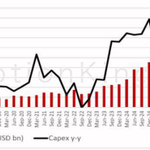

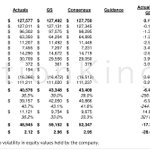


Microsoft ($MSFT) trimmed its calendar year 2026 capital expenditure guidance by USD5bn to USD170bn due to third-party capacity delivery delays, while management expects quarterly capex to surpass USD50bn in 2QFY27. For 1QFY27, capex including financial leases expanded 30% YoY and 10% QoQ to USD45.2bn, driven by relentless demand for cloud and AI infrastructure. Roughly two-thirds of this quarterly outlay was allocated directly to short-lived assets, primarily GPUs and CPUs. Although third-party facility handover bottlenecks have pushed certain capacity deliveries into the first half of calendar 2027, management projects capex to accelerate further in 2HFY27 as delayed deliveries arrive and memory and storage costs rise alongside CPU and GPU purchases.
Azure AI compute demand continues to outpace available infrastructure supply, forcing Microsoft to balance near-term delivery constraints against accelerating procurement plans. Management expects the business to remain free-cash-flow positive through FY27, projecting that infrastructure efficiency gains will generate higher returns on deployed capital. This aggressive spending trajectory aligns with broader hardware manufacturing peers, where analysts note supply-chain leaders project FY27 revenue to reach USD40bn with 90% YoY growth on ramping AI infrastructure programs. Investors must track whether third-party data center delivery timelines normalize by early 2027, as prolonged site handover delays could defer revenue realization despite robust underlying cloud demand.
#AI #Microsoft #NVIDIA #AMD
Report date: 2026-10-29

CCL gross margin at TUC (6274.TWO) rose 720bps q/q to 36.9% in 3Q26, beating the analyst estimate by 520bps and consensus by 440bps.
TUC is preferred over EMC for greater CCL pricing upside over the next 12 months, given higher mid/low-end exposure. New M7/8 CCL pricing starts in November; M6 and below hikes pass through raw-material costs. HVLP4 copper foil, E-glass and LDK2 glass cloth remain especially tight into 2027.
For 4Q26, CCL revenue is estimated at NT$20.6bn, up 15% q/q, with gross margin at 37.4%. Thailand capacity adds 100K SPM in 4Q after 200K SPM in 3Q; flooding is a risk.
The ASIC concern is customer multi-sourcing; M8+ CCL sampling with other major hyperscaler(s) targets next-gen AI. OW is maintained, but the target falls from NT$2,700 to NT$2,550 versus a NT$1,375 close, implying ~85% upside. CCL pricing upside comes with a lower target.
#CCL #PCB #AIChips #DataCenter
ABF substrate CCL capacity at EMC (2383.TW) is set to rise from 300K to 1.2M SPM by end-2027, with 900K SPM added in 2H27.
Supply-chain checks point to a US hyperscaler as the first key customer for EMC's ABF substrate CCL for an eighth-generation ASIC. That gives the AI infrastructure expansion a specific customer and product anchor, while keeping the distinction clear: these are CCL materials for ABF substrates.
The broader CCL capacity plan reaches 11.95mn SPM in 2029 and 15.25mn in 2030, up 14% and 28% YoY, respectively. For the AI server and data center supply chain, the question is how that capacity converts into qualified demand.
Growing CCL LTAs average at least three years and secure volume, not price. There are no prepayments, and failure to pull committed volume still carries penalties. The ASIC opportunity has volume visibility; CCL pricing remains a separate variable.
#CCL #PCB #AIChips #DataCenter
CCL sales at EMC (2383.TW) jumped 142% YoY in 3Q26, with gross margin reaching 37.7%, up 380bps q/q.
The CCL margin beat was 170bps versus the analyst estimate and 160bps versus consensus; sales also rose 29% q/q to NT$60,885mn. Infrastructure accounted for 75–80% of the mix, anchoring the AI infrastructure materials case.
For 4Q26, CCL revenue is estimated to rise ~19% q/q to NT$72.4bn, up 190% YoY, with gross margin at 39.9%, another 220bps higher q/q. That puts the focus on whether the CCL margin step-up can hold as AI server and data center demand scales.
The OW rating is maintained, with the price target raised from NT$8,400 to NT$8,800 versus a NT$5,025 close: ~75% upside. The caveat for this CCL expansion story: capacity assumptions for 2026/2027/2028 were trimmed 5%/5%/7% versus the prior plan.
#CCL #PCB #DataCenter #Semiconductors
For Yageo (2327.TW), 2026E EPS rises 79.1% to NT$20.62 as AI infrastructure demand supports MLCC growth and tighter effective capacity.
The 4Q26 outlook pairs slight revenue growth with slightly better margins, while AI infrastructure demand keeps commodity and specialty UTR above 95%, versus about 95% in 3Q26.
For data center passives, BB near 2 reflects a higher billing base, not weaker bookings; MLCC is outgrowing other product lines on AI server pull.
Planned 2027 capacity expansion sits alongside this data center effective-capacity squeeze: the near-term signal is high utilization, not spare headroom.
Stronger margins drive 3–6% upgrades to 2026E–28E earnings, with EPS at NT$36.25 in 2027E and NT$50.92 in 2028E.
The AI infrastructure test into 4Q26: whether slight sales growth and still-tight capacity translate into the next step up in margins.
#MLCC #AIChips #DataCenter #Semiconductors #AI
For Yageo (2327.TW), 3Q26 net profit jumped 88% YoY and 27% QoQ to NT$12.0bn as AI infrastructure mix reached 20%, up from 16% in 2Q26.
The AI infrastructure mix shift came with a margin beat: GPM hit a cycle-high 41.0%, up 2.5ppt QoQ and 4.8ppt YoY, with price hikes feeding through.
Net profit beat house/consensus estimates by 8%/10%, while MLCC outgrew other lines on AI server pull.
Buy reiterated, but the target fell from NT$1,450 to NT$1,000 versus NT$543: the valuation multiple dropped from 35x to 23x average 2027E–28E EPS amid peer multiple compression on data center capex concerns.
That leaves roughly 84.2% price upside; the AI infrastructure question is whether stronger mix and margins can outweigh the sector's valuation reset.
#MLCC #AIChips #DataCenter #Semiconductors #AI
For AI infrastructure, Delta (2308.TW) HVDC shipments start in 4Q26, but revenue contribution stays low at least through 1H27: deployment precedes material sales.
Predominantly ±400VDC, HVDC targets AI clusters; a next-generation GPU server power-delivery reference design is scheduled for 2H27, a key milestone for penetration.
DC/DC modules offer another route into AI server power delivery through existing and potential new customers. The approved Malaysia production and R&D base adds capacity to the broader business.
The AI infrastructure runway comes with lower EPS estimates: 2026e NT$37.77 from NT$39.77; 2027e NT$60.77 from NT$64.77; 2028e NT$92.77 from NT$100.77.
For AI server investors, the timing matters: initial HVDC shipments arrive ahead of the GPU reference design, while the earnings model already reflects slower near-term revenue growth.
#AIInfrastructure #DataCenter #Semiconductors
AI server power/cooling is the 4Q26 growth driver for Delta (2308.TW), with total revenue modeled +10% QoQ and GM rising 1.4ppt to 35.5%.
The AI infrastructure thesis rests on a comprehensive power/cooling portfolio as AI cluster power consumption climbs. For the data center supplier, 3Q26 EPS of NT$9.04 was a modest miss: -7% QoQ and +26% YoY, versus the analyst estimate of NT$9.84 and consensus NT$10.40.
The AI server outlook still supports Overweight, although the PT falls to NT$2,300 from NT$2,500 on slower near-term revenue growth amid component supply tightness. Against the 29 Oct close of NT$1,480, the revised PT implies about 55% upside.
The data center checkpoint: whether stronger power/cooling demand delivers the modeled 4Q26 revenue acceleration and margin expansion despite those supply constraints.
#AIInfrastructure #DataCenter #AIChips
Singapore led September MLCC destination growth at +89.7% y/y, a demand signal for AI infrastructure and data center builds.
For Rubin GPU systems, MLCC flows to Thailand rose +78.2% y/y, Vietnam +56.0%, Hong Kong +45.8% and China +35.6%, extending the AI infrastructure signal across destinations.
In Thailand, AI server power supplies saw MLCC mix and volume rise, while Al electrolytic shipments fell y/y, putting TDK (6762) Al-cap share in AI server power supplies in focus.
The AI infrastructure passives backdrop: inductors +10.7% y/y in JPY, fixed resistors +27.2% and Al electrolytic capacitors +9.7%.
For data center demand, these MLCC flows are a signal to track alongside Rubin GPU system builds; they do not establish end-use allocation.
#MLCC #AIChips #DataCenter #Semiconductors #AI
MLCC exports to Taiwan accelerated +70.9% y/y in September while aluminum electrolytic capacitor exports to Taiwan peaked, pointing to a Rubin GPU bill-of-materials shift. The thesis is that MLCCs are displacing SP-caps, the aluminum multilayer capacitors used heavily through GB300, as Rubin GPU system shipments get under way. This makes the divergence between the two capacitor categories a useful AI infrastructure mix indicator. Singapore adds another passive components signal: strong inductor and MLCC shipments point to Japanese parts in 1.6Tbps optical transceivers. Compact, high-frequency thin-film inductors fit that optical transceiver application. The AI infrastructure read-through spans both GPU systems and optical links: MLCC content is shifting with Rubin, while inductor and capacitor demand supports the faster interconnect buildout. #MLCC #AIChips #DataCenter #Semiconductors
MLCC exports from Japan rebounded +34.6% y/y in yen and +29.1% in USD in September, with the AI server mix pushing average value-added to a record $1.22/g. That compares with $1.13/g in August and $1.03/g in September 2025: the MLCC signal is richer mix alongside renewed growth after August's typhoon-related logistics disruption. MLCC exports to Taiwan jumped +70.9% y/y, reaching 18.2% of total exports and a record $3.70/g in average value-added. The Taiwan MLCC mix is consistent with Rubin GPU system shipments getting under way in September. For AI infrastructure, the read-through is a shift toward higher-value passive components as Rubin systems enter the shipment mix. The MLCC rebound therefore carries both a recovery in export momentum and a record product-mix signal for data center hardware. #MLCC #AIChips #DataCenter #Semiconductors
Celestica ($CLS) raised its FY27 revenue guidance by 90% YoY to $40B, driven by accelerating custom compute ramps and upcoming OpenAI Jalapeno rack deployments. Management indicated that customer demand forecasts for FY28 are already meaningfully above the $40B baseline, though formal FY28 guidance was withheld due to supply chain visibility. Growth is led by the Compute and Storage segment, which surged 242% YoY in FQ3 against sell-side expectations of 190%, propelled by robust Google TPU orders and expanding storage programs. Furthermore, 1.6T optical networking revenue is projected by management to surpass 800G in 2027 even as 800G volumes continue to expand strongly.
Across independent research reports, analysts previously projected FQ3 revenue between $5.36B and $5.44B and adjusted EPS between $2.85 and $2.97, before Celestica outperformed with $5.83B in revenue and $3.30 in adjusted EPS. For FY27, sell-side models now project adjusted EPS reaching $21.50 to $21.98 alongside an operating margin guide of 9.0%. However, management identified component availability as the decisive operating bottleneck, with average lead times stretching to 30 weeks and specialized silicon exceeding 90 weeks. Investors must monitor whether silicon delivery bottlenecks defer planned 2H27 Jalapeno assembly timelines into subsequent quarters.
#Celestica #OpenAI #AIServers
Report date: 2026-10-28
Japan's optical fiber export value rose 65% YoY in September as export prices surged 91% YoY, demonstrating robust AI data center demand across physical optical infrastructure. Across the optical sector, sell-side tracking shows strong consensus that AI infrastructure buildouts are accelerating optical hardware demand. House A highlights that Japan's optical cable export value gained 43% YoY, supported by a 19% YoY rise in US-bound cable exports and a 4,305% YoY surge to Taiwan on submarine cable deployment. Concurrently, House J notes that Corning posted Q3 optical communications revenue of $2.4B, beating the $2.22B consensus and its own $2.18B estimate, while House E projects Coherent's data center and communications revenue expanded 16% QoQ in the September quarter.
However, views diverge on near-term earnings breadth and product cycle durability. House E models 3% revenue and 5% EPS upside risk to Street estimates for Coherent in the December quarter, driven by rapid 1.6T transceiver adoption and higher optical ratios per accelerator. In contrast, House J keeps a Market-Perform rating on Corning after management guided Q4 2026 revenue to $5.2–5.3B without providing 2027 targets, citing slowing non-optical end markets. For Japanese suppliers, House A expects solid 2Q earnings as Sumitomo Electric recovers from 1Q maintenance downtime at a 16x multiple. The key variables to watch are Sumitomo Electric's October 30 earnings and its competitive moat against Lumentum ($LITE) in co-packaged optics (CPO).
#OpticalNetworking #SumitomoElectric

Google ($GOOGL) Cloud revenue surged 102.6% YoY to $30,709mn in Q3'26, while segment operating margin expanded 1250 bps YoY to 36.2% on accelerating enterprise AI adoption. Operating income reached $11,121mn, outpacing consensus expectations of $9,675mn by 14.9%, driven by aggressive enterprise deployment of proprietary custom silicon. Management disclosed that nearly 100 customers are now actively using TPU systems, with TPU sales serving as a significant revenue contributor that will ramp further through 2027. Commercial momentum also expanded the multi-year cloud backlog to $561bn, representing a 256% YoY surge, with roughly 55% scheduled to convert into recognized revenue over the next 24 months.
Despite triple-digit growth, management identified compute availability as the primary gating factor constraining even faster Cloud expansion. The company faces an acute operational tension in balancing internal silicon allocations for frontier models such as Genie 4 and Gemini C4 Carbon against surging external enterprise demand for TPU clusters. Across sell-side reviews, analysts uniformly raise 2027 Cloud segment revenue and EBIT estimates by 3% to 6%, yet lower 12-month target prices to a range between $375 and $385 from $435 due to broader cash generation pressures. The central operating variable to monitor is whether custom silicon delivery can resolve cluster shortages before enterprise workloads encounter extended provisioning delays.
#Google #DataCenters
Report date: 2026-10-29

Oracle ($ORCL) holds an analyst price target estimate of $300.00 against its recent $130.53 share price, supported by expanded hardware offerings on Oracle Cloud Infrastructure (OCI) designed to cement its role as an agnostic AI and cloud provider. Management discussions at Day 2 of Oracle AI World indicate that enterprise AI integration is spreading beyond external software products into internal corporate culture, workflows, and operational structure. More critically, leadership in mission-critical enterprise database architecture and ERP applications provides a structural moat. As enterprise AI workloads transition from initial model training toward widespread inference activity, the company expects its core transactional data footprint to translate directly into enduring competitive advantages, insulating core database revenue and driving sustained cloud migration.
Across broader sell-side research, analyst price target estimates range widely from $206.00 to $325.00, reflecting differing expectations on capital intensity and datacenter delivery. Bullish projections highlight Oracle entering an aggressive investment cycle to emerge as a major hyperscaler, backed by four consecutive quarters of strong remaining performance obligation (RPO) growth. Meanwhile, operational trackers show accelerated deployment, with Oracle delivering over 1.2GW of capacity in FY26 followed by 850MW in 1QFY27. However, analysts emphasize that realizing the $300.00 target estimate hinges on resolving severe datacenter bottlenecks and achieving an anticipated OCI gross profit inflection over the next 12 months, particularly as power availability and political scrutiny test management's ambitious capacity roadmap.
#Oracle #AI
Report date: 2026-10-28
UMC ($UMC) is committing US$8.2bn in total capital expenditure to expand advanced packaging and optical capacity, aiming to increase AI revenue from ~US$300mn to over 25% of total sales by 2029. Backed by a newly approved US$3.2bn budget, the company plans to install 18k wafers per month for silicon photonics (SiPh), 22k for deep trench capacitors (DTC), and 20k for thin-film lithium niobate (TFLN) modulators. Management points to mobile DTC entering mass production this quarter and silicon photonics meeting qualification milestones with multiple hyperscalers as early validation for this aggressive technology transition.
However, analysts estimate that commercial payoff will face a multi-year delay, as equipment installation begins in late 2028 and full capacity is not reached until 2030. While other sell-side models project AI revenue crossing US$1bn by 2028, current report estimates caution that reaching 25% of sales requires sustained hyperscaler capital spending through the decade's end. With competition from Chinese foundries likely mitigated by geopolitical trade barriers, the decisive observable is whether hyperscaler AI cluster investments remain robust enough in 2029 to absorb this newly installed capacity.
#UMC #AI
Report date: 2026-10-28
UMC ($UMC) expects AI-related revenue to exceed 25% of total sales by 2029, scaling up from roughly USD300mn in 2026, as management targets dedicated capacity build-ups of 18kwpm in SiPh, 22kwpm in DTC, and 20kwpm in TFLN modulator capacity slated for initial installation in late 2028. Both House I and House E maintain Buy ratings on UMC, agreeing that AI peripheral expansion and a pricing inflection will drive earnings growth, superseding prior guidance of >USD1bn in AI revenue within three years. Management also projects 2027 to mark a turning point in blended ASP trajectory, guiding for a 10% YoY blended ASP increase from 1Q27. House I models even greater pricing leverage, projecting a 10%+ price lift across the board as mature-node pricing from TSMC ($TSM) strengthens tier-two foundry bargaining power, while 3Q26 utilization reached 92% with multiple 12-inch fabs fully loaded.
Disagreement centers on valuation upside and the speed of margin realization. House E on 2026-10-28 raised its target price to TWD 143.00 (from TWD 125.00), taking a measured stance after earlier 2Q26 earnings were weighed down by non-operating losses. Conversely, House I on 2026-10-29 projects a higher target price of TWD 176.00 based on 20x average 2027-28F EPS of TWD 8.8, arguing UMC currently trades at an attractive 16x 2027F basic EPS. House I estimates UMC will generate ~USD1bn in sales from SiPh and silicon capacitors by 2028F and over USD2bn from AI peripherals by 2029F, backed by an approved USD3.2bn additional capex budget. Observables that will test these forecasts include contract execution on the 10% ASP hike in 1Q27 against rising raw material costs, low-single-digit depreciation growth in 2027, and hyperscaler qualification timelines for 1.6T optical transceivers and DTC interposers.
#UMC #TSMC #AI
ServiceNow ($NOW) guided 4th quarter constant-currency cRPO growth down to 18.5%, triggering a 17% after-hours decline as elevated valuation collided with deceleration fears despite 3rd quarter subscription revenue rising 20.5%. The sell-off followed a 60%+ share price advance since 2nd quarter earnings, leaving investors hypersensitive to any signal that 2027 top-line momentum could moderate. Third-quarter subscription revenue reached $3,988mn, beating guidance by 50 bps, while 3rd quarter cRPO rose 21% constant currency to $13,650mn, topping guidance by 100 bps. However, management kept full-year 2026 subscription revenue guidance unchanged at 21.0% year-over-year in constant currency, focusing market attention entirely on the decelerating forward contract trajectory.
Behind the headline 4th quarter deceleration lie two discrete structural factors: a ~25 bp headwind from higher on-premise mix driven by federal public sector demand, and ~50 bps of subscription backlog excluded from cRPO due to termination-for-convenience terms that will convert into recognized revenue. Adjusting for both factors lifts normalized 4th quarter cRPO growth to 19.0%–19.25%. Pre-earnings industry previews had pointed to organic cRPO stabilizing near 19% after adjusting for ~100 bps of 2nd quarter early renewals. Sell-side models maintain a 12-month price target of $154 based on an unchanged 27x forward price-to-earnings multiple, emphasizing that durable multiple expansion requires verifiable organic acceleration rather than contract timing adjustments.
#ServiceNow #AI
Report date: 2026-10-28
Vertiv ($VRT) expanded organic orders by more than 100% YoY in 3Q26 across hyperscale and colocation accounts, while keeping order delivery timelines stable at 12 to 18 months.
The order acceleration drove 3Q26 net sales to $4,313mn, up 55% organically year over year and beating management's guidance midpoint by ~$563mn. Operational throughput cleared earlier delivery bottlenecks following delayed shipments of $100mn to $150mn from 2Q, led by Americas organic revenue growth accelerating to 66%. Strong execution prompted management to raise full-year 2026 net sales guidance by $650mn to $14.65bn, while lifting adjusted operating margin guidance by 20 bps to 24.0%. Manufacturing capacity expanded across EMEA and India as Vertiv brought its Malaysia facility online to support 2H26 production ramps, alongside appointing Michael Resha as EVP of Manufacturing, Logistics & Operational Excellence. Adjusted operating margin reached 25.2% in 3Q26, up ~290 bps YoY, driven by 29.4% margins in the Americas and 28.0% in EMEA. Analysts estimate full-year 2026 adjusted diluted EPS will reach $7.15, matching the raised company guidance range of $7.10 to $7.20. While another sell-side report from October 28 projected a $362 price target based on Vertiv's footprint of 19 manufacturing sites and 270+ service centers, current analyst models raise their target to $376 on rolling forward EBITDA. A key observable to monitor is whether component availability and supply-chain execution keep pace as capex runs at ~4% of sales.
#Vertiv #DataCenters
Report date: 2026-10-29

Samsung Electronics expanded memory revenue by 427% YoY in 3Q26, propelling record group revenue to W195tr as HBM4 sales tripled to capture approximately 60% of total HBM revenue. Market share gains in DRAM and HBM drove group revenue growth of 127% YoY and 14% QoQ, with HBM4 already completely sold out for 2027. Management projects ongoing AI server demand across server DRAM, HBM4, and QLC SSDs to sustain operating expansion into 4Q26 and 2027, positioning HBM mix and contract pricing resets as the company's largest earnings swing factor.
This memory acceleration offset significant operational drag, including W10tr in foreign exchange losses alongside margin compression in mobile devices and consumer appliances. While analysts project memory price increases to moderate as the broader cycle enters its later phase, expanding high-bandwidth shipments provide structural margin support. The critical metric to track across 2027 will be contract pricing resets on next-generation HBM architectures and whether enterprise server DRAM demand sustains strength against soft consumer hardware volumes.
#Samsung #Memory
Report date: 2026-10-29