

Рентгенолог людских душ
Луганская Народная Республика
Joined January 2026
- Tweets10.6K
- Following354
- Followers485
- Likes5K







В лето 2026, месяца ноября в 14 день.
Бысть смятение великое в земле заморской: птицы железные не взлетели, стояли тысячи их на земле, аки скованные. Люди металися, скорбели.
И Microsoft, ратник цифровой, пал во тьму на часы долгие, аки меч сломанный.
Грядут же три князя — Трамп, Си и Путин — на совет великий в Китайских землях, глаголить о мире ядерном.
А на Руси ПВО сбиша двадцать девять бесов летающих, и помилова государь блогершу Лерчек.
Таковы вести.
11
Топотун Луганский retweeted

А для пришибленных чубатых повторяю:
7 апреля 2014 года. Назначенный и.о.президента вместо свергнутого Януковича Турчинов объявляет антитеррористическую операцию против восставшего Донбасса. До прихода туда Стрелкова остаётся ещё 5 дней,против кого послал танки кровавый пастор?
Топотун Луганский retweeted

Il n’y a aucune panique chez les Russes. La panique,elle est chez vous tous,les propagandistes de Goebbels qui se présentent comme des commentateurs. La Russie a levé le moratoire sur l’élimination de Zelensky et de sa bande de nazis.Le front est en train de s’effondrer du côté


Топотун Луганский retweeted

🇷🇺 L'élite delle forze armate britanniche rappresenta una solida barriera contro le orde dell'est.

Топотун Луганский retweeted

🇺🇸🇺🇦🇩🇪The CIA ran Ukraine Nationalists since 1948!
This is the entire article from the Kyiv Post.
But this was the organization that overlapped with Reinhard Gehlen, "Hitler's Super Spy" who was in charge of German military intelligence on the Eastern Front during World War II and later was a founder of the Bundeswehr.
Scratch a....get a...
"Which Ukrainian Political Formation Was Supported by CIA During Cold War"
[Editor’s Note] The Ukrainian Supreme Liberation Council (UHVR) was formed in July 1944 in war-torn Ukraine uniting the Organization of Ukrainian Nationalists (OUN), Ukrainian Insurgent Army (UPA) and other Ukrainian patriots resisting the Nazis and Soviets. After a split in exile in the late 1940s within the OUN, the more liberal wing known as the “Dviykari” split from the followers of Stepan Bandera and retained the Extern Representation (ZP) of the UHVR. It drew support from many emigre Ukrainian intellectuals and was linked with the CIA-backed Prolog Corporation, based in New York, which published the influential pan-ideological magazine “Suchasnist.”]
In 1948, the CIA’s Office of Policy Coordination (OPC) selected the émigré organization Ukrainian Supreme Liberation Council (ZP/UHVR) as the “most reliable, best organized and operationally most experienced group for use in exploiting anti-Communist activity of the Ukrainian resistance group then active in Ukraine.” The CIA used various cryptonyms for its projects using ZP/UHVR, including QRDYNAMIC.
Below are excerpts from an August 1971 the CIA’s Covert Action division: “Memorandum for the Record.”
“SUBJECT: CIA Support of ZP/UHVR (Foreign Representation, Ukrainian Supreme Liberation Council)
“During the 1971 (CIA) headquarters review of Project QRDYNAMIC, which supports the ZP/UHVR, the logical question was raised whether the CIA is in fact supporting the "right group" of Ukrainian emigres in its efforts to encourage dissidence in Soviet Ukraine. The undersigned officer has attempted to examine the present status of the world Ukrainian emigre community, with the aid of QRDYNAMIC principal agents, in order to reach a conclusion in this respect.
“The political spectrum of the profusion of Ukrainian emigre political parties in the period following World War II is broad. The Ukrainian, for historical reasons, is a political animal and a compulsive organizer with very definite and vocal political views. His arch enemy is, as it has been for centuries, Russia, whether Tsarist or Soviet. The Ukrainian emigration is nationalistic and distinctive because it has traditionally maintained close contact with the homeland. The post-war Ukrainian emigration represented a virtual government in exile whose aim was to liberate Ukraine from Russian domination and establish an independent Ukrainian state. At present, most of the former influential military and civilian emigre leaders are dead or inactively retired. Some of the numerous political parties have become little more than social groups whose members nostalgically recall more vigorous and active days. The emigres also have many social, civic, and fraternal organizations which are of no interest
to us.
“The ZP/UHVR, in common with all emigre groups, had its share of internal strife in the 1940s and 1950s, but has stabilized remarkably since that time. From the days when it was an elite political advisory body to the Ukrainian underground movement fighting first the German Wehrmacht, and later the Soviet Army, its leaders have developed a political maturity that distinguishes it from other emigre political groups. Despite its title of "Ukrainian Supreme Liberation Council" the officers of the ZP/UHVR realistically have no illusions about promoting an internal revolt which could only result in senseless slaughter and extreme repression.
“Although supporting nationalist aims, they do so by promoting political liberalization and encouraging the cultural independence of Ukraine through free literary expression in Ukrainian, a highly developed Slavic language of which they are fiercely proud. The Soviets give lip service to the development of national languages such as Ukrainian, Byelorussian, Lithuanian, and Uzbek, but information from ZP/UHVR contacts inside Ukraine, and confirmed in part by other sources, indicates that in actual practice the Soviets are discouraging the use and spread of non-Russian languages. This fact challenges the ZP/UHVR to exfiltrate self-published dissident Ukrainian samvydav (Russian samizdat)
“It seems clear that if the CIA is interested in continued support of a political group that is energetically fighting Soviet repression of national minorities in the Soviet Union, the ZP/UHVR is our most effective vehicle.
“This serious and dedicated group of intellectuals has shown its appreciation for CIA support over the past twenty years by rendering the type of cooperation that has contributed
to our covert action as well as a positive intelligence mission against the Soviet Union.”
The CIA would continue its operational activities with ZP/UHVR until it terminated the project on 30 September 1990.
Richard Cummings
Richard H. Cummings was Director of Security, RFE/RL 1980-1995.
#Russia #Ukraine #CIA #RussiaUkraineWar #Germany
kyivpost.com/post/20541


Who believes the lie that Ukraine was going to be a new France?
Stephen Kinzer:
There’s one word we constantly hear about the Russian invasion, and it was that word, really, that set me off after about the 200th time I heard it, and that word, of course, is “unprovoked.”
We always read about that not just the February invasion, or the Russian invasion, or the military invasion, but the unprovoked invasion.
The book traces 75 years of uninterrupted American plans to turn Ukraine into a battering ram against Russia. This began with the dropping of armed commandos into Ukraine back in the late 1940s, and it continued through a whole series of covert actions leading up to Ukrainian independence in 1991; then the project went into overdrive.
[The US] spent huge amounts of money promoting anti-government groups in Ukraine and groups that would support the idea of confrontation with Russia.
That finally exploded. You might make an argument that we did the right thing to provoke Russia and to promote all this nationalist feeling in Ukraine. And I’m okay with that. But before you make any judgment on the justice or nature of the Ukraine war, you should know what happened before.
If you look at a snapshot of… February 24, 2022, you will see what happened. Russia invaded a peaceful country, Ukraine. But that picture should really be seen as just one frame in a very long movie that unfolded over 75 years.
Ukraine was never going to be some model of liberty and fraternity


Топотун Луганский retweeted

Да , у нас принято дарить цветы. Цветочные магазины на каждом шагу. И не разоряются, а ведь это довольно рискованный бизнес. Такого количества цветочных я за границей не видела.
Наши мужчины лучше!🥰
youtu.be/W1L1j-Pjs0M?is=U0ma…

Топотун Луганский retweeted

En Russie, il est tout à fait courant de croiser des hommes dans la rue portant un magnifique bouquet de fleurs 💐 Pas besoin d'anniversaire ou d'occasion spéciale : ils offrent des fleurs simplement pour faire plaisir au quotidien. Une vraie élégance à la russe ! #Russie 🤍💙❤️
Топотун Луганский retweeted

Привет, Паша 🍻
Хорошего дня, и отличного настроения 🍻
У нас свет есть, а вот интернета нет. Только мобильный
В покоищи Твоем, Господи, идеже вси святии Твои упокоеваются, упокой и душу раба Твоего Герасима, яко Един еси Человеколюбец.

В ночь на 10 ноября при исполнении пастырского долга в зоне проведения специальной военной операции погиб клирик Магаданской и Синегорской епархии иеромонах Герасим (Преображенский).

2
36


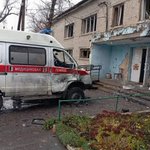
В Новой Астрахани под удар попала станция скорой помощи. Повреждены здание и автомобили, медики не пострадали


21
На автодорогах республики в Старобельском, Станично-Луганском и Перевальском муниципальных округах атакованы грузовые автомобили. Они перевозили гражданские товары – зерно, хлеб, стройматериалы. Ранения получили трое водителей. Им оказана необходимая медицинская помощь.

16
В Рубежном укросвинскй БПЛА ударил вблизи магазина, погиб 37-летний мужчина. Выражаю глубокие соболезнования родным и близким погибшего.

24
Топотун Луганский retweeted

Калининград, говорите? Ну что ж, если кому-то хочется вскрыть ящик Пандоры и начать пересматривать итоги Второй мировой войны, давайте попробуем подискутировать на эту тему. Во что превратилась бы карта Европы, не подари СССР тысячи километров территорий тем самым странам, что сейчас называют Советский союз оккупантами?
Вроцлав - один из самых туристических городов Польши. Всё бы ничего, однако ещё в мае 1945 г. Вроцлав звался Бреслау и до этого 600 лет подряд Польше не принадлежал. День Победы, именуемый сейчас в Варшаве не иначе как «начало коммунистической тирании», добавил в состав Польши немецкую Силезию, Померанию, а также 80% Восточной Пруссии. Об этом теперь никто не заикается: В 1945 г. Польша получила города:
Данциг (Гданьск)
Grünberg in Schlesien (Зелёна-Гура)
Liegnitz (Легница)
Stettin (Щецин)
При посредничестве Сталина поляки обрели спорный с Чехословакией город Kladsko (Клодзко). Тем не менее у них считают: раздел Польши по пакту Молотова - Риббентропа, когда СССР забрал Западную Белоруссию и Западную Украину, несправедливым, а вот передачу Сталиным полякам Силезии и Померании как раз справедливой, оспаривать это нельзя. Сейчас модно говорить, что русские поляков не освободили, а захватили. Однако интересная получается оккупация - Польша бесплатно получила четверть Германии: причём за эту землю пролили кровь 600 тысяч советских солдат. Даже ГДР упиралась, не желая отдавать полякам Щецин - вопрос с городом был окончательно решён только в 1956 г. под нажимом СССР. Кроме поляков «оккупацией» сильно возмущается и Прибалтика. Что ж, стоит вспомнить: нынешнюю столицу Литвы Вильнюс (Wilno) - Литве тоже «подарил» СССР; между прочим, литовское население Вильнюса тогда составляло… еле-еле 1%, а польское - большинство. СССР вернул в состав республики город Клайпеду - прусский Мемель, принадлежавший литовцам в 1923-1939 гг. и аннексированный Третьим рейхом. Руководство Литвы ещё в 1991 г. осудило пакт Молотова - Риббентропа, однако как Вильнюс Польше, так и Клайпеду ФРГ никто не вернул. Украина, объявившая себя «жертвой советской агрессии наравне с Германией», вряд ли отдаст полякам свою западную часть со Львовом (Lemberg, Lwów), Ивано-Франковском (Станиславов). Тернополем (Тарнополь) - (эти города были включены «агрессорами» в состав УССР в 1939 г.)
Румынии - Черновицкую область (отошла к УССР 2 августа 1940 г.), а Венгрии или Словакии - Закарпатье, полученное 29 июня 1945 г. Румынские политики не прекращают дискуссий насчёт справедливости «аннексии» Молдавии Советским Союзом в 1940 г. Разумеется, давным-давно забыто: после войны именно благодаря СССР румыны получили назад провинцию Трансильванию, которую Гитлер забрал в пользу Венгрии. Болгария же при посредничестве Сталина оставила себе Южную Добруджу (ранее владение той самой Румынии), что подтвердилось договором от 1947 г. Зато сейчас об этом в румынских и болгарских газетах не говорится ни единого слова. Чехия после 1991 г. убрала памятники советским солдатам, а также объявила, что День Победы знаменует замену одной диктатуры другой. Однако как раз по настоянию СССР Чехословакии вернули Судетскую область с городами Карловы Вары и Либерец, где 92% населения составляли немцы. Напомним, западные державы на Мюнхенской конференции в 1938 г. поддержали аннексию Германией Судет - протестовал только Советский Союз. Тогда же поляки отторгли от Чехословакии Тешинскую область и после войны не хотели её отдавать, настаивая на референдуме. После давления СССР на Польшу и поддержки чехословацкой позиции был подписан договор - Тешин возвратили чехам, закрепив договором от 1958 г. ). Давайте начистоту. Если последствия 9 мая 1945 г. - это так плохо, незаконно и ужасно, то и все другие действия СССР в тот период ничем не лучше. Сталина кроют на чём свет стоит, обвиняют во всех смертных грехах, однако в его «подарки» вцепились мёртвой хваткой. Готовы расстаться со Сталинскими подарками?