

🇨🇦| MD, MSc || CV Risk Reduction, IM, Clin Pharm. Co-Founder of CHeSS (Canadian Hypertension Specialists Society).
Edmonton/Vancouver
Joined February 2013
- Tweets2.3K
- Following1.1K
- Followers934
- Likes49.6K




Raj Padwal retweeted
Remembrance is a promise: that what our brave women and men in uniform defended, we will defend. That what they won, we will keep, forever cherish, and pass on.
Lest we forget.

ALT Prime Minister Carney attends the National Remembrance Day Ceremony in Ottawa, Ontario.

ALT Prime Minister Carney attends the National Remembrance Day Ceremony in Ottawa, Ontario.

ALT Prime Minister Carney attends the National Remembrance Day Ceremony in Ottawa, Ontario.
Raj Padwal retweeted

⏰ Last chance to register!
Secure your spot and hear from leading Canadian experts on resistant hypertension.
📅 Monday, Oct. 5, 2026
🕗 8:00–9:00 p.m. ET
🔗 Register: imedicus.ca/HTN

Raj Padwal retweeted

This is a lesson in how guidelines can get ahead of evidence
ACC/AHA recommendations might need revision already
Even if OCEAN(a) is positive, unclear if *everyone* needs a measurement even in primary prevention
Our study in CARDIA showed the effect size for this was small
jci.org/articles/view/204287

Raj Padwal retweeted

After a certain age, your parents slowly become your children.
They ask simple questions, repeat stories, and depend on your patience the way you once depended on theirs. Very few understand this role reversal. What looks like innocence or inconvenience is really time coming full circle. Don’t correct them harshly. Don’t rush them. Care for them the way they once protected you. This is not a burden. It is repayment, quietly wrapped as love.
Raj Padwal retweeted

A quiet but huge announcement from the FDA signalling a strategic deregulatory shift in digital health!
The FDA now treats certain non-invasive physiological monitoring from blood pressure and oxygen saturation to blood glucose and sleep as general wellness, not medical devices, provided they do not make claims related to disease diagnosis or treatment!
"𝑇ℎ𝑒 𝑜𝑛𝑙𝑦 𝑠𝑡𝑖𝑝𝑢𝑙𝑎𝑡𝑖𝑜𝑛 𝑖𝑠 𝑖𝑓 𝑡ℎ𝑒𝑦 𝑚𝑎𝑘𝑒 𝑐𝑙𝑎𝑖𝑚𝑠 𝑜𝑓 𝑠𝑜𝑚𝑒𝑡ℎ𝑖𝑛𝑔 𝑏𝑒𝑖𝑛𝑔 𝑚𝑒𝑑𝑖𝑐𝑎𝑙 𝑔𝑟𝑎𝑑𝑒 ... 𝑙𝑖𝑘𝑒 𝑏𝑙𝑜𝑜𝑑 𝑝𝑟𝑒𝑠𝑠𝑢𝑟𝑒 𝑚𝑒𝑎𝑠𝑢𝑟𝑒𝑚𝑒𝑛𝑡. 𝑊𝑒 𝑑𝑜𝑛'𝑡 𝑤𝑎𝑛𝑡 𝑝𝑒𝑜𝑝𝑙𝑒 𝑐ℎ𝑎𝑛𝑔𝑖𝑛𝑔 𝑡ℎ𝑒𝑖𝑟 𝑚𝑒𝑑𝑖𝑐𝑖𝑛𝑒𝑠 𝑏𝑎𝑠𝑒𝑑 𝑜𝑛 𝑠𝑜𝑚𝑒𝑡ℎ𝑖𝑛𝑔 𝑡ℎ𝑎𝑡'𝑠 𝑗𝑢𝑠𝑡 𝑎 𝑠𝑐𝑟𝑒𝑒𝑛𝑖𝑛𝑔 𝑡𝑜𝑜𝑙 𝑜𝑟 𝑎𝑛 𝑒𝑠𝑡𝑖𝑚𝑎𝑡𝑒 𝑜𝑓 𝑎 𝑝ℎ𝑦𝑠𝑖𝑜𝑙𝑜𝑔𝑖𝑐 𝑝𝑎𝑟𝑎𝑚𝑒𝑡𝑒𝑟."
It feels like digital health regulation shifts from “gatekeeping” to “damage control”. And it's not bad for the industry, especially for innovation.
It might also mean that health is officially moving out of clinics and into everyday life, with measuring continuous physiological data becoming normal.
Source: reuters.com/business/healthc…

Raj Padwal retweeted

Taking the Wegovy pill exactly as directed is extremely important. If patients shortcut the instructions, they dramatically blunt absorption and lose the benefit of the drug. When the tablet is taken after an overnight fast with only a small volume of plain water and no other meds, it fully disintegrates in the stomach, allowing #SNAC to create a brief higher‑pH microenvironment that keeps #semaglutide intact and in monomeric form adjacent to the gastric surface. SNAC then partitions into nearby gastric cell membranes, transiently increasing transcellular permeability allowing semaglutide to cross into the circulation; food, larger water volumes, or other medications disrupt this delicate microenvironment, slow tablet erosion, and can reduce exposure to almost zero.
pmc.ncbi.nlm.nih.gov/article…


Raj Padwal retweeted

As we look towards the future of #obesity care, novel pharmacotherapy is teaching us "backwards" so to speak, informing potential physiology of #weight and pathophysiology of obesity...
Did you know, the upcoming "triple G gaonist" retatrutide is a bit of a misnomer:
- Its GLP-1R activity is 2.5-fold LESS potent than native GLP-1
- Its glucagon receptor activity is 2.9-fold LESS potent than native glucagon
⭐️GIP receptor activity is 8.9-fold MORE potent than native GIP
🤔Should the #GLP1 focus be shifting to #GIP?
Ref: sciencedirect.com/science/ar…
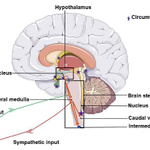
I thought this 2023 open access paper by Lamptey and colleagues summarizing neurogenic hypertension and the potential role of targeted nanotherapeutics was well written. It also has some nice figures, in case you are making a presentation on this topic.
proquest.com/scholarly-journ…
@IJMS_MDPI

It also discusses the role of angiotensin II in stimulating sympathetic nervous system activity and how lipid nanotherapeutics may help improve penetration into the CNS and enable more favourable pharmacokinetics for antihypertensive drugs (such as long duration of effect).

1
4
69
We need therapies that effectively counteract elevated SNS activity while minimizing adverse effects because we see this very often in clinical practice (central adiposity, OSA, CKD, metabolic syndrome, younger patients on ADHD medications, PTSD):
1. Exercise and central weight loss central adiposity work wonders if patients can successfully adopt these highly effective treatments.
2. In Canada, we have alpha-2 blockers (clonidine, methyldopa, guanfacine). Clonidine causes sedation, constipation, rebound HTN if stopped abruptly, and dry eyes/mouth. Methyldopa is not very effective and is mostly used as add-on therapy in pregnancy. Guanfacine is expensive and used primarily as an ADHD treatment.
3. Clonidine also has imidazoline I1 receptor agonist activity. Pure agonists are moxonidine and rilmenidine but they are not available here (unfortunately). They have less adverse effects than clonidine.
4. Renal denervation, as discussed in a prior post, is an intervention to reduce SNS activity through renal afferent and efferent nerve ablation. Not super effective and not yet widely available here, but is done at our centre.
5. This is an area of huge need - or perhaps the GLP-agonists will eliminate obesity and most of high SNS hypertension!
My understanding from Grok is that no lipid nanotherapeutics for HTN targeting the brain are in human clinical trials currently.
Raj Padwal retweeted

In patients with type 2 diabetes and atherosclerotic cardiovascular disease, tirzepatide was noninferior to dulaglutide with respect to major cardiovascular events. Full SURPASS-CVOT trial results: nej.md/4qd5rLx

ALT A figure showing the cumulative incidence of a composite of death from cardiovascular causes, myocardial infarction, or stroke (the primary efficacy end point).
Raj Padwal retweeted

💊🫀 Lipidology in 2025: from “lower LDL” to precision prevention
This expert discussion in the Journal of Clinical Lipidology (2025) offers a rare, insider view on how lipid-lowering drugs are actually conceived, developed, and translated into practice—and where the field is heading next .
🧠 A mature field facing new challenges
LDL-C remains a causal driver of ASCVD, but lipidology has moved far beyond statin monotherapy. The discussion highlights a central tension: we have more effective drugs than ever, yet treatment inertia remains profound, with many high-risk patients still undertreated.
🔬 How new lipid drugs are born
Successful development now hinges on:
Genetic validation (Mendelian randomization) to de-risk targets
Surrogate endpoints with regulatory credibility (LDL-C remains king)
Cost-effectiveness, safety, and tolerability, often more important for uptake than maximal efficacy
PCSK9 inhibitors are used as a cautionary tale: biologically sound, outcome-proven—but initially underutilized due to pricing, complexity, and unrealistic expectations.
💊 What’s coming next?
The future is multi-target:
Lp(a) therapies are poised to reshape prevention 🧬
CETP inhibition (e.g. obicetrapib) aims for “LDL-lowering plus” effects, including Lp(a) reduction and metabolic benefits
Remnant cholesterol, ApoC3, and inflammation (IL-6, NLRP3) emerge as key residual-risk targets
Imaging endpoints (non-calcified plaque volume) may help de-risk and accelerate drug development
⏳ The most important message
Prevention must start earlier and longer. Modest LDL reductions in low-risk individuals may yield greater lifetime benefit than aggressive treatment late in disease.
🔮 Bottom line
We already have the tools to prevent ASCVD. The real challenge is using them earlier, smarter, and together—moving lipidology from reactive treatment to precision cardiovascular prevention 🚀

Raj Padwal retweeted

To accompany the new ACC/AHA BP guidelines, a practical guide on how to test for Primary Aldosteronism: now recommended for most people with hypertension.
jacc.org/doi/10.1016/j.jacc.…

Why use low-dose combination therapy for hypertension and what should be the expectation for BP reduction?
Prompted by his cardiologist, I had a patient ask me why he was on two agents at low dose rather than simply using the full strength of one agent...a good question!
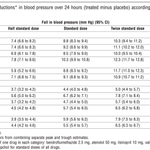
1. While taking only one drug has its appeal, it is important to remember that 80% of the efficacy of a given antihypertensive agent is achieved by half-strength dosing. Doubling the dose adds only 20% further efficacy (40% with CCBs) whereas adding a second agent at half-strength reduces BP much more effectively (5x more, in fact). Using a single pill combo can effectively combine two agents and half-strength yet retain the desired effect of requiring only a single pill to be ingested.
This was shown in the seminal meta-analysis by Wald and Law, which is a must-read for anyone interested in the field (amjmed.com/article/S0002-934…).

2. Also, in a separate but equally important paper, these authors showed that adverse effects are much more common when full-strength versus half-strength antihypertensive Rx is used (bmj.com/content/326/7404/142…). ARBs are the exception here - the dose-adverse effect profile is flat as they are generally well tolerated at any dose.

1
3
59
3. Patients often remark that they stopped their medication because 'it wasn't working', not understanding that each drug lowers BP by nearly 10% of the baseline BP (i.e., if the initial BP is 200 mmHg systolic, one drug is unlikely to normalize the BP but will reduce it to about 180 mmHg systolic; reviewing this concepts with our patients is important to help them understand and manage expectations).
In general, one should expect that one agent at full strength should reduce systolic BP by about 10% (adding in a 5 mmHg placebo effect, as the numbers below are placebo-subtracted). So, a patient with an initial BP of 200 systolic will very likely need at least three agents to achieve full control (although there is certainly some individual variation observed here). FYI, the mean pretreatment BP in the meta-analysis below, applicable to the table below, was 154/97 mmHg.

1
2
90
RENAL DENERVATION
A writing group consisting of hypertension specialists from the Canadian Hypertension Specialists Society (@CHESSHTN) recently published a case-based discussion on renal denervation in @amjhypertension. Important points:
1. The procedure is efficacious and safe. Mean efficacy roughly equivalent to half-dose of an antihypertensive drug but there is variability in response, as illustrated in the two cases discussed.
2. We unfortunately cannot confidently predict who will respond best.
3. In particular, one can consider renal denervation in patients with resistant hypertension and in those with multiple drug intolerance syndrome (MDIS).
4. Funding mechanisms are needed in Canada. We suggest that, at least initially, deployment should be limited to specialist centres, with hypertension specialists working with interventionalists, and effectiveness should be documented before procedure volume expansion.
Thanks to the writing team for all their great work and also to the Editors and Reviewers at AJH. We hope to publish more case-based discussions to share our thoughts on controversies and challenges in clinical hypertension. If you are interested in attending our q2monthly case conferences, please DM me. We strive to ensure that the art and science of clinical hypertension is passed on to the next gen of physicians.
@ESchiffrin @nadiakhan_ubc
academic.oup.com/ajh/advance…


Best 4th line option for uncontrolled HTN (resistant HTN)?
Background:
1. The standard foundational pharmacoRx treatment regimen in HTN are the A/C/D classes (ARB or ACE inhibitors/dihydropyridine CCBs/thiazide diuretics). All have robust 'hard' outcome data supporting their use.
2. I will generally start with CCB (amlodipine) or ARB (telmisartan). I like these specific agents because they are long acting and a single pill combo is available. Amlodipine is notable because no lab monitoring is required (this was very useful during the COVID-19 pandemic). I use ARB over ACE to avoid cough and angioedema. Thiazide-like diuretics are third because they, uncommonly, can cause serious electrolyte disturbances and are overall less well tolerated.
3. If BP remains uncontrolled after optimally-dosed, maximally-tolerated, long-acting drugs are on board and a fourth agent is needed, which one should be used?
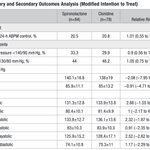
The 187 subjects with rHTN were then randomized to spironolactone 25-50 mg daily versus clonidine 0.2-0.3 mg BID in open-label fashion for 12 weeks. The primary endpoint was the proportion of subjects with controlled BP on both automated office AND 24-hour ambulatory BP, shown in the Figure below (no statistically significant difference). Spironolactone did reduce AOBP more than clonidine (11.8/6.3 mmHg vs. 7.3/3.9 mmHg; p=0.03 for SBP and 0.045 for DBP).

1
1
77
BOTTOM LINE
1. Multiple options exist for fourth line therapy in patients with resistant HTN.
2. Spironolactone is generally the default option, especially in low-renin states. Newer alternatives (nonsteroidal MRAs and aldosterone synthase inhibitors) could also be used if affordable and accessible (although head-to-head data are lacking). I use it first, except:
a. I use beta-blockers if the HR is high, which is often seen in younger patients (with anxiety states or those on sympathomimetics for ADHD).
b. I use alpha-blockers if contraindications to spironolactone exist and baseline HR is low and, therefore, a beta-blocker is not useful.
3. I use clonidine after all-of-the-above have been tried. Perhaps I should use it more. Adverse effects are worse than the other classes (sedation, dry mouth, dry eyes, constipation, rebound HTN if stopped abruptly).
Both clonidine and alpha-blockers are useful in PTSD. When prescribing clonidine with a beta-blocker - take care to have the patient monitor for bradycardia.
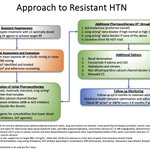
The figure below provides a summary of an approach to resistant HTN. Hope this was helpful.

3
123