

Studying reef resilience through restoration. Fighting for the future of our coral reefs. @CoralNurture Postdoc @FutureReefsLab @uts_c3 She/Her (own views)
Joined October 2019
- Tweets826
- Following349
- Followers739
- Likes2.8K






Paige Strudwick retweeted

Restoring a reef is a lot like renovating a house—you need a skilled team and the right tools.
@PaigeStrudwick , a dedicated member of #TeamCoral and a researcher at the @CoralNurture Program on the Great Barrier Reef, explains the essential tools needed for successful coral restoration.
Just as you wouldn’t use a hammer to paint a wall, restoring a coral reef requires a variety of techniques and tools tailored to different challenges.
(Keep in mind that not all tools are covered here—a comprehensive "unboxing" would take at least an hour. Techniques like assisted evolution and the use of probiotics, for example, are also crucial and should be on the list.)
Before we start planting corals with the hope of restoring the reef, we need to ask ourselves: Can we restore *that* reef? What are the right techniques and tools to do so? Understanding when, where, and how to implement coral restoration methods is essential—no single technique works everywhere.
The Kunming-Montreal Global Biodiversity Framework (GBF) aims to protect and restore at least 30% of the ocean, a goal that can't be achieved without including corals and coral reefs. Protecting these ecosystems is vital to safeguarding marine life and ensuring the well-being of over half a billion people who rely on them.
Visit cordap.org and coralnurtureprogram.org to learn how we are working to secure a safe future for corals.
Paige Strudwick retweeted
We share Paige’s enthusiasm: corals are incredible organisms, known to exhibit fascinating traits. Their multiple reproductive strategies are but an example.
This August, CORDAP teams up with #TeamCoral member @PaigeStrudwick and the @CoralNurture Program at the Great Barrier Reef to bring you a short series on coral reproduction and restoration.
Scientists have only studied the seasonality, fecundity, and overall reproductive strategy of a very small amount of coral species. Despite the immense lack of information, one thing is clear: corals can reproduce both sexually and asexually.
In less than 90 seconds, we'll explain you how corals reproduce. Stay tuned until the end for a special surprise: a glimpse of Paige cloning herself!
Understanding how corals reproduce is crucial for designing effective restoration and conservation programs, as it maximizes restoration efforts, maintains genetic diversity, informs targeted techniques, enhances adaptive potential, predicts population dynamics, and builds reef resilience. The Kunming-Montreal Global Biodiversity Framework (GBF) aims to protect and restore at least 30% of the ocean. These targets can’t be achieved without including corals and coral reefs in the plan. By protecting coral ecosystems, we ensure that at least half a billion people around the world are positively impacted by them.
Visit cordap.org and coralnurtureprogram.org to learn how we are working to secure a safe future for corals.
Paige Strudwick retweeted

Be sure to tune in today at 4pm AEST 🎙️ @emmafcamp @SDGwarriors @SDG2030 @UTSEngage @UTS_Science @uts_c3 #WomenInSTEM

🎉Releasing today!
🎙Join us LIVE for E26 #STEM - The @SDGwarriors Podcast
🏀From Basketball to Breakthrough, A "Super Coral" Hero Dr. @emmafcamp 🪸🦸♀️
📅31 July '24
⏰11:30am IST | 4pm AEST
🔗 youtube.com/watch?v=1KapQ6mv…
🌏💡#BeTheChange #StayCurious #GirlsInSTEM #SDG5 #SDG13 #SDG14

Paige Strudwick retweeted
All around the world, July 20 is celebrated as International Moon Day. This day marks the anniversary of the first humans landing on the Moon as part of the Apollo 11 lunar mission.
We would like to propose another significant reason to set a special day on our calendar just for our natural satellite.
@PaigeStrudwick , a #TeamCoral member and a researcher at the @CoralNurture Program at the Great Barrier Reef dedicated to ensuring a better future for corals, explains how the moon influences coral reefs worldwide.
In ways that scientists still do not fully understand, the moon is responsible for triggering mass coral spawning in many parts of the planet.
Once a year, based on cues from water temperature and the lunar cycle, massive coral spawning events occur as entire colonies of mature corals simultaneously release their gametes (eggs and sperm) into the water. Underwater, this phenomenon looks like a blizzard made of billions of colorful flakes. This synchrony is crucial to guarantee fertilization success, as the gametes of most coral species are viable for only a few hours.
Tonight, if you look up and gaze at the moon, remember this: even from hundreds of thousands of kilometers away, the moon influences corals. In turn, corals play a crucial role in shaping life on Earth. Let's ensure we do our best to protect them so they can flourish for generations to come.
Visit cordap.org and coralnurtureprogram.org to learn how we are working to secure a safe future for corals.
Paige Strudwick retweeted

To save corals we need three equally important pillars of action: 1) mitigate global greenhouse gas emissions; 2) mitigate local stressors; and 3) conduct active restoration to retain corals, i.e., buy time, while pillars 1 and 2 are achieved:
link.springer.com/article/10… – at Los Angeles, CA

Paige Strudwick retweeted
Around the world series: discover the Southwestern Pacific
Dive into the tiny world of Ecsenius stictus (Springer, 1988), also known as the Striped Blenny or Great Barrier Reef Blenny.
With its camouflaged yellow body, distinctive black markings, and googly eyes, this species is a joy to behold. Known for their curious nature and playful antics, they can be found surveying their coral reef kingdoms atop boulder corals, sandy crevices, and within branching corals.
🔎 Hide and Seek:
The Great Barrier Reef Blenny will often observe you from a distance and zip away just at the moment you pull your camera out.
🌏 Distribution & Habitat: Reef flats and lagoons to 11 meters depth on the Great Barrier Reef and the Coral Sea.
⚠️Status: Least Concern
👫Population Trend: Stable
📸 &✏️By #TeamCoral @PaigeStrudwick
Ready to explore the vibrant underwater world of the Southwestern Pacific? Keep your eyes peeled for these charismatic Striped Blennies as you dive into the Great Barrier Reef and beyond!
#coralreefs #blenny #greatbarrierreef #forcoral #marinebiology #oceanconservation #corals #pacificocean

Paige Strudwick retweeted
Around the world series: discover the Southwestern Pacific
Meet Paguritta harmsi (Gordon, 1935), the ultimate tiny tenant of the sea – it can be the size of two grains of rice! This unique hermit crab calls the discarded tubes of polychaete worms home, showcasing nature's creativity in recycling and adaptation. Don’t expect to find them walking around the neighborhood; they prefer to remain in their cozy homes, filtering nutrients from the water using their feathered antennae.
🌏 Distribution & Habitat:
You can find them hiding in hard corals or worm holes within corals in the Indo-Pacific Ocean
📸 &✏️By #TeamCoral @PaigeStrudwick
Do you want to find this hermit crab on your next dive? Make sure to stop by a Porites and spend a little longer looking over all the bumps and holes!
#coralreefs #hermitcrab #greatbarrierreef #forcoral #marinebiology #oceanconservation #corals #pacificocean #porites
Paige Strudwick retweeted
Around the World series: discover the Southwestern Pacific
Introducing Coralliocaris viridis (Bruce, 1974), the stunning green-colored shrimp that shimmer in the shallows when caught glimpses within a branching Acropora coral. As a symbiotic cleaner, it not only adds a splash of color but also plays a crucial role in reef health by cleaning and maintaining the well-being of its coral hosts.
💙 The love show:
For the romantics among us, these shrimp engage in pre-mating courtship rituals involving scents and tactile cues!
🌏 Distribution & Habitat:
You can find them in coral reefs of the Indo-Pacific, particularly on Acropora species, at depths of 0-17 meters.
📸 &✏️By #TeamCoral @pstrud123
Make sure to take a closer look inside an Acropora next time you're out diving and see if you can spot one of these fabulous little green shrimps!
#coralreefs #shrimps #greatbarrierreef #forcoral #marinebiology #oceanconservation #corals #pacificocean #acropora
Paige Strudwick retweeted

Discover how to distinguish between the 7 marine turtle species! 🐢
Dive into @PaigeStrudwick's infographic to learn more! 🌊 #TurtleSpecies #marinelife
@ICRSreefstudent
@ICRSCoralReefs

Paige Strudwick retweeted
Meet @PaigeStrudwick, a proud #TeamCoral member!
Paige is a postdoctoral researcher with the Coral Nurture Program (CNP) and Future Reefs research group at the University of Technology Sydney, based in Far North Queensland (Australia).
During her PhD, Paige investigated coral-associated bacterial communities and their role in facilitating propagation and out-planting corals on the Great Barrier Reef. Currently, she coordinates with local reef stakeholders to implement coral propagation and out-planting at high-value reef sites. Additionally, she is focused on increasing the sustainability of reef restoration approaches and the resilience of coral reefs by developing methods to select more naturally tolerant coral "parents".
Paige is an enthusiastic science communicator, tasked with conveying and sharing CNP research and activities via social media channels.
During April, Paige is taking over our weekly #AroundTheWorld series to showcase the incredible marine life awaiting those who dive in the Great Barrier Reef.
Paige is challenging you to be part of #TeamCoral! Are you in?
Paige Strudwick retweeted

The same reef from a drone shot in 2023 and just a few days ago (2024) - the bleaching on the northern GBR is next level. The world is on fire (even under the water). Photos from Mar Inn


Paige Strudwick retweeted

Devastating pictures shared by our collaborators in the Northern Territory of mass coral bleaching. Already a lot of mortality observed. Most of these reefs are undocumented, meaning we may never know the extent of the loss 💔 @FutureReefslab #Australia #Coral pic credit A.Doheny


Paige Strudwick retweeted
📣We are hiring a Postdoc to support our @CORDAP_ project. Please check out the job here: seek.com.au/job/73516351
Any questions please DM or email me. @FutureReefslab @UTS_Science @uts_c3 @tinyscientist 🪸🪸🪸

Paige Strudwick retweeted

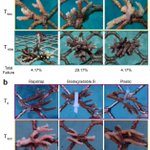
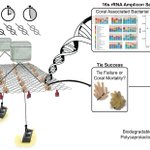
Impacts of plastic-free materials on coral-associated bacterial communities during reef restoration
@envmicrorep by @PaigeStrudwick et al
ami-journals.onlinelibrary.w…

Paige Strudwick retweeted

The last of my PhD fieldwork done this week, big thanks to @WavelengthReef & @PaigeStrudwick! Intrigued to see the response of reef-transplanted mangrove corals over the coming months, with high temperatures projected for the GBR. Now on to labwork @uts_c3 & @FutureReefslab


Paige Strudwick retweeted
@FutureReefslab & @CoralNurture team members have been out this week rapidly assaying coral thermal tolerance to support choice selection in coral restoration. Great work @PaigeStrudwick @england_hadley @ChristineDRoper @HowlettLorna @WavelengthReef 🪸🪸🪸


Paige Strudwick retweeted

We are thrilled and grateful to be awarded the Society for Ecological Restoration 2023 Australian Regional Award in recognition of our outstanding community & research based approach to advancing coral reef restoration and facilitating meaningful site stewardship.
#SER2023

Paige Strudwick retweeted

Find what you love. Never lose sight of keeping a strong passion in your life for something you really care about.

Paige Strudwick retweeted

Did you know corals have a microbiome just like humans do?🐙🦠🔍
Learn from the latest review of coral microbiome dynamics, functions and design in @NaturePortfolio
by @spectacularia & Linda L. Blackall.
nature.com/articles/s41579-0…
@PaigeStrudwick

Paige Strudwick retweeted
I have been asked a lot over the last week if restoration has failed based on what is happening in Florida. The 🧵 by @phmontoya sums it up perfectly! If we didn’t have restoration then local extinction would have been likely, but we undoubtably need climate action now! 🪸🪸🪸

Coral reef restoration has not failed.
Thanks to all the efforts that for decades, several restoration practitioners and management agencies have undertaken to propagate these two species, we may have saved these species from local extinction!
@coralcrf