

Aggressively neutral Bill of Rights Constitutional conservative. Rugged individualist. Deliverance ministry. Alabama native. Nuclear family of LEOs.
Parineca, Alabama
Joined October 2013
- Tweets109K
- Following4.6K
- Followers4K
- Likes54K



Empress Elettaria retweeted
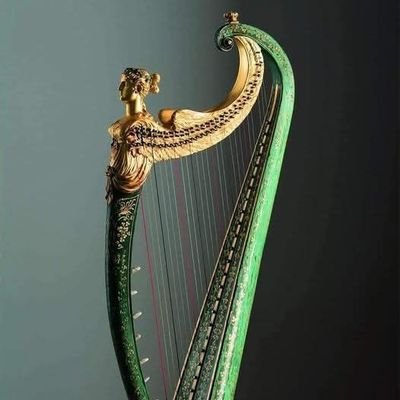
The Hurdy-Gurdy, Medieval European string instrument.
The hurdy-gurdy's earliest known origins date back to the 10th century.
Empress Elettaria retweeted

Alabama Power thinks they are indestructible… they basically said it in their court case, referenced their power to that if the government (news flash the government has asked them to move the line). The difference is we elect our government. Nobody elected Alabama Power… therefore they have no power. Playing a weak hand at a hit piece against a Judge (they tried filing a separate suite to evade) and a landowner just shows how desperate they are.

facebook.com/share/p/1E7LsZR…
They Paid The News Sites First. Then The News Sites Did The Hitting.
If you want to understand what Yellowhammer just did to Fenn Church, you have to start a few years back.
Back in December 2022, NPR and Floodlight put out this big investigation. They’d gotten their hands on hundreds of internal documents from a Montgomery consulting firm called Matrix LLC.
Matrix worked for Alabama Power. That’s not a secret. They bragged about it.
What NPR and Floodlight found was what Matrix did with that money. They paid six news sites across Alabama and Florida. Sites that wrote nice things about the power companies. And sites that went after anybody who got in the power companies’ way.
Yellowhammer News was one of them.
So was Alabama Political Reporter. So was Alabama Today. Down in Florida it was The Capitolist, Florida Politics, and Sunshine State News.
All together, those six sites got at least $900,000 from Matrix and the folks around it between 2013 and 2020. That’s the number NPR and Floodlight came up with.
Nobody put “Paid for by Alabama Power” on the stories. That was the whole point. You just read a headline and thought it was news.
A plaque on the wall in Matrix’s office in Montgomery said it pretty plain: “Invisibility is more powerful than celebrity.”
Every one of those outlets said the money didn’t change their coverage. Alabama Power wouldn’t comment for the story at all.
NPR and Floodlight were careful too. They said they couldn’t prove Alabama Power ordered any one specific attack. What they could prove was the money, the timing, and the pattern.
Keep that pattern in mind, because here it comes again.
The first guy they ran it on was Terry Dunn.
Dunn was a Republican. Tea Party guy. He got elected to the Public Service Commission in 2010 on one promise: hold a rate hearing. Make Alabama Power open the books. Under oath. In public.
We hadn’t had one in almost thirty years.
Dunn told NPR and Floodlight that after he won, a top Alabama Power lobbyist pulled him aside and basically told him he could keep that $100,000 a year job forever if he’d just be a team player. Alabama Power wouldn’t make the guy available to answer that.
Dunn didn’t play along.
Then the stories started.
Yellowhammer ran a headline calling him out: “Democrats Embrace Republican Public Service Commissioner Terry Dunn.”
Alabama Political Reporter called him a pawn. Called him a radical environmentalist.
Dunn said later, “Mostly everything was all made up. You get to thinking, ‘Why are they attacking me?’ I’m just telling the truth and trying to do what’s right for the people.”
He lost reelection by 19 points. We still haven’t had that rate hearing.
That’s what the playbook does. It doesn’t beat you in a debate. It makes people not trust you anymore.
Now they’ve got a new target, and it ain’t a politician. It’s a landowner in Calera.
Fenn Church. 416 acres. Alabama Power wants to run a 74-mile transmission line across about a half mile of it. Autaugaville to East Pelham. $247 million project. Company says 1.6 million customers need it.
On September 22, Shelby County Circuit Judge Jonathan Spann ruled for Church. Told Alabama Power it couldn’t come on his land “unless and until this Court orders otherwise.”
Church was grateful. He said Spann “took his time, researched, and ruled on the merits of the case.”
Alabama Power appealed. On October 21, the Alabama Supreme Court voted 5-1 to throw Spann’s injunction out.
That should’ve been it, right? That’s how Yellowhammer tells it. Supreme Court spoke. Case over.
Except that’s not what happened. Not even close.
Here’s what actually happened in court, and why “thrown out” is a lie by omission.
First, Spann didn’t just sign a piece of paper. He held a two-day evidentiary hearing, September 9 and 10. Witnesses. Documents. Arguments from both sides. Martin Evans for Church, James Byram and Louis Calligas for Alabama Power.
After that hearing, he wrote a full order. Not a one-liner. A full order laying out what the evidence showed.
And what it showed, according to Spann, was ugly for Alabama Power.
One: Alabama Power’s own real estate guy, David Gray, admitted the first $80,000 offer wasn’t even based on an appraisal.
Two: Gray also admitted the final offer letters — the $194,000 ones — didn’t say anything about “advanced communications capabilities.” He didn’t know what that term meant when he wrote the letters. He’d never even read the statute that defines it. And Alabama Power was trying to take those rights anyway, under a 2019 law, HB 400, that lets them lease the easement to cell and broadband companies for their own profit.
Three: Church didn’t even get those final offer letters until May 26, 2026, at 2:09 p.m. — after Alabama Power had already filed the condemnation case in probate court that same day. Spann called that a violation of Ala. Code § 18-1A-22(d).
Think about that. They sued him before he’d even had a chance to read their final offer, much less talk to a lawyer or an appraiser about it.
Four: The appraiser, Richard Maloy, testified — and Alabama Power didn’t rebut it — that the final offers left out any money for diminution in value to the rest of the land. The part where cutting your 416 acres into pieces makes what’s left worth less. Alabama law says that has to be separately stated. It wasn’t.
Five: The routing. This is the part that should make every landowner in Alabama sit up.
Joshua Phillips, Alabama Power’s own transmission line supervisor, testified that the 4.5-mile stretch through Church’s property is a straight tangent run. The whole 74-mile line has about 60 bends in it.
He testified the route was picked based on access, existing corridors, construction, maintenance, terrain, and existing structures — with no consideration of zoning, or the Shelby County Comprehensive Plan, or the Future Land Use Map, or the development potential of anybody’s property, including Church’s.
And he testified he had the discretion to add angle points, to bend the line, and he just chose not to on Church’s land.
Spann’s words: Alabama Power’s location choice was “arbitrary and capricious for its failure to consider injury to the land, development potential, future land use planning, and failure to exercise any discretion to shift the location of the line or create angles to avoid injury.”
He also found the property itself is unique — rock-bottom Buxahatchee Creek, original old-growth trees — and that Alabama Power wanted to use Church’s main driveway to his own house for construction and maintenance. Clearing it, he wrote, “would certainly result in immediate and irreparable injury.”
He found Church was likely to win on two separate fronts: Alabama Power failed to do the conditions precedent before it could even bring a condemnation case, and the route itself was arbitrary and capricious / wantonly injurious. That first one alone, he wrote, would justify a conditional dismissal under Ala. Code § 18-1A-230.
That’s a real judge, after a real hearing, making real findings on the record.
Now compare that to what the Alabama Supreme Court did.
On October 21, they issued a one-page order staying Spann’s injunction. No reasons given. No opinion explaining why Spann was wrong. Just a stay.
The vote was reported as 5-1. Justice Chris McCool dissented. Justices Greg Cook and Greg Shaw recused. The other five — Wise, Sellers, Mendheim, Stewart, and Parker — concurred.
A stay is not a final ruling. A stay doesn’t say Spann’s findings were wrong. A stay doesn’t say Alabama Power followed the law. A stay just says: let the crews in while the appeal keeps going.
And that’s the trick in Alabama law. Once Alabama Power paid the $425,435 probate award into court and posted a double bond — $850,870 — it got the right to enter while the appeal was pending. Spann had read that right-of-entry rule as being about fights over price, not fights over the right to take at all. The Supreme Court’s one-page stay left that big question unresolved in public.
So what happened next tells you everything.
Alabama Power rushed in and started cutting on October 22. The next day.
Church’s case about whether Alabama Power even had the right to take his land in the first place? Still pending.
Church’s case about whether the route was arbitrary? Still pending.
But the trees? Already down.
That’s the whole game. If you can cut the trees before the court decides whether you were allowed to cut them, you’ve already won. You can’t un-cut a 250-year-old oak.
And Alabama Power knew exactly what it was doing. In its own court filings, it warned the Supreme Court: “Every condemnation lawyer in the State is watching this case. If this new preliminary injunction procedure is allowed to stand, multiple injunctions will grind every highway, road, and transmission line project to a halt.”
Read that again. They weren’t arguing Church was wrong. They were arguing if this is allowed — if a landowner can actually get a judge to stop them and make them prove they followed the law first — then other landowners might try it too.
That’s not a legal argument. That’s a scare tactic.
It gets worse.
On November 4, Alabama Power filed a second lawsuit. Not the condemnation case. A brand new one. Asking Spann to order Church and anybody with him to stay at least 300 feet away from the clearing crews.
Think about that. Alabama Power sues a man to take his land. A judge says wait a minute. The Supreme Court lets them in anyway on a one-page order with no reasons. Then Alabama Power sues the man again to keep him 300 feet away from his own land while they cut his trees.
On November 10, Spann threw that second suit out. Dismissed it without prejudice. Denied the restraining order. He said, basically, you can’t have two lawsuits going at once for the same fight — Alabama law, § 6-5-440, bars that.
That was a real win for Church. But notice what Spann did not do in that order: he did not restore the September 22 injunction. He did not bar Alabama Power from the property. The condemnation case and the Supreme Court appeal are still pending, and because that dismissal was without prejudice, Alabama Power can try again.
So where are we, really?
Church is still in court arguing Alabama Power had no right to take this easement this way, on this route, with these defective offers.
Crews have already cleared about 300 yards of his half-mile corridor, by WVTM’s count. Church says they cut dozens of oaks while he was away.
And Alabama Power, after that November 10 loss, told WVTM it was “disappointed” and is “evaluating our legal options and will continue to pursue all available avenues under the law.”
Even if a route met their criteria and the neighbors consented, Alabama Power said in its own statement after that hearing, the reroute would “add millions to the project cost and delay its completion.”
There it is, in their own words. Not “we can’t.” Not “it’s impossible.” It costs more. It takes longer. So they’d rather cut through a man’s home place.
That’s not “thrown out.” That’s a case that’s still alive, with a judge who already found, on the record, that Alabama Power likely skipped the steps the law requires and routed around its own discretion — and a Supreme Court that paused that judge with one page and no explanation, while the chainsaws did the rest.
Now go back to Yellowhammer.
Their story was headlined “State records show close ties between Fenn Church, judge, and lawyers.”
What they actually found was campaign paperwork. In Shelby County. Where everybody in the courthouse knows everybody else.
Spann was listed as chair of a campaign committee for Jay Welborn, Church’s lawyer, when Welborn ran for a district judgeship. A few years earlier, Spann had chaired a committee for Welborn’s wife, Erin, when she ran. The filings list court email addresses.
That’s it. That’s the “close ties.”
No bribe. No secret meeting about this case. No money changing hands. No proof Spann did anything for Welborn, or Welborn did anything for Spann, or either one did anything for Fenn Church except show up and do their jobs in court.
In a county this size, lawyers know judges. Judges know lawyers. They go to the same bar meetings, the same church picnics, the same ballgames. They’ve been on opposite sides of cases for twenty years. If “they knew each other” was a scandal, you couldn’t hold court in Shelby County at all.
Yellowhammer knows that. That’s why they dressed it up as “close ties” and “state records show.” It sounds big. It sounds like they caught something.
What they caught is small-town Alabama being small-town Alabama.
And even if you think Spann should’ve mentioned it from the bench just to be safe, that’s a footnote. It doesn’t change the law. It doesn’t change the facts of Church’s case. It doesn’t make the Supreme Court’s one-page stay any more or less right. The Supreme Court didn’t say Spann was biased. They didn’t say anything at all.
Yellowhammer wants you to forget that part, because if you forget it, you start thinking the whole ruling was crooked. It wasn’t. It was a judge who looked at two days of evidence and said, on the record, this company probably didn’t follow the law. And a higher court that hit pause without explaining why.
So why run the story at all? Why now, after the case is already moving?
Because that’s the playbook. You don’t have to win in court if you can win in public. You just have to make people doubt the guy who won, and doubt the judge who let him win, so next time nobody wants to be the next Fenn Church.
And here’s the part Yellowhammer left out of its own story.
Yellowhammer is one of the outlets NPR and Floodlight caught taking money from Alabama Power’s consultant.
Yellowhammer’s owner, Allison Ross, told NPR and Floodlight back in 2022, “Yellowhammer Multimedia has no relationship, financial or otherwise, with Alabama Political Reporter, Matrix LLC or Alabama Free Market Alliance.” She wouldn’t answer questions about Yellowhammer’s relationship with Alabama Power.
The investigation also traced money from a nonprofit run by an Alabama Power contractor to nonprofits tied to Matrix and Yellowhammer. One example they gave: Yellowhammer runs the Facebook page for the Alabama Free Market Alliance, a group that bashes renewable energy. That group got $100,000 in 2014 from the Alabama Power-linked outfit.
So let’s get this straight. Yellowhammer is writing a story about a judge’s “close ties” to a lawyer, while hiding its own documented ties to Alabama Power’s world.
We are not saying Alabama Power paid for this specific Yellowhammer story. We don’t have proof of that, and we’re not going to make it up.
We are saying this looks exactly like what those outlets were paid to do. Find a connection. Make it sound dirty. Get people to doubt the ruling instead of asking why Alabama Power needed a judge to stop it in the first place.
Now let’s talk about Fenn, because Yellowhammer sure wants you to think he’s some greedy holdout.
He’s going to keep all 416 acres. The line runs through timber more than half a mile from his house. Alabama Power wants a 125-foot easement and use of a gravel road that’s already there to get to it.
This was never about stopping the line. It was about what they were going to pay him for it, and whether they even had the right to take it this way.
January 2025, they offered $80,000. September 2025, $132,000. May 2026, $194,000, and they said that was it.
In August, three Shelby County folks appointed by the probate court, Jim Strickland, Jeff Murphy and Eddy Jowers, said the easement was worth $425,435.
Alabama Power paid that into court on August 6, and posted double that in a bond after Church appealed.
Church’s counter, according to court papers Yellowhammer cites, is $1.2 million. His neighbor got $399,951.
You can think $1.2 million is too much. You can think $425,435 is fair. That’s what court is for.
What you can’t do is act like Church is the one gaming the system.
He’s had a $425,435 check sitting at the courthouse since August. He didn’t take it because he thinks his land is worth more, and because he thinks if you let them lowball you once, they’ll lowball everybody after you.
He calls it a last stand for “every Alabamian that’s a property owner.”
Yellowhammer calls it a conspiracy.
We call it a man who said no to the first offer, no to the second, no to the third, and took it to court like the Constitution says he can.
Spann’s injunction cost Alabama Power about a month. A month, on a 74-mile line they’ve been planning since 2021 and want done by May 2027.
That’s the “crisis” they want you mad about. Not the years Alabama Power went without a rate hearing. Not the books they wouldn’t open. Not the consultant they paid to pay news sites to go after people who asked questions.
Here’s the bottom line, plain as we can put it:
The case wasn’t thrown out. It was paused, on one page, with no reasons, while the trees came down anyway.
Yellowhammer found some campaign paperwork in Shelby County and tried to turn it into a scandal.
What they didn’t tell you is that they were caught taking money from Alabama Power’s consultant to run stories just like this one.
Fenn Church didn’t ask to be a crusader. He asked for a fair price for his timber, and for Alabama Power to follow the law before it took his land. He won in court, got paused by the Supreme Court, and now he’s getting smeared by a site that was caught taking money from the other side’s world.
Don’t fall for it.


Empress Elettaria retweeted

"Holiday" comes from old English "hāligdæg" which means "holy day" and used originally for religious festivals.
So if you want to tweak those who prefer "Happy Holidays" to "Merry Christmas," go right ahead, but be sure to pronounce it "Happy Holy Days to you too!"
Empress Elettaria retweeted

ALEA has issued a MISSING PERSON ALERT. Please share.
For more information, visit: tinyurl.com/4m9myrn4




Empress Elettaria retweeted
Without Trump winning his two, really three, presidential races - our country would be gone forever, it would be just like the UK and Canada right now.
Over and gone forever.
To all the influencer idiots who don’t understand that fact, who whine 24/7 because they don’t get 100% what they want, they’ll be the first ones targeted when the commies take over.
And don’t come crying here on X when it happens - it all happened because of you.
Empress Elettaria retweeted

facebook.com/share/p/1E7LsZR…
They Paid The News Sites First. Then The News Sites Did The Hitting.
If you want to understand what Yellowhammer just did to Fenn Church, you have to start a few years back.
Back in December 2022, NPR and Floodlight put out this big investigation. They’d gotten their hands on hundreds of internal documents from a Montgomery consulting firm called Matrix LLC.
Matrix worked for Alabama Power. That’s not a secret. They bragged about it.
What NPR and Floodlight found was what Matrix did with that money. They paid six news sites across Alabama and Florida. Sites that wrote nice things about the power companies. And sites that went after anybody who got in the power companies’ way.
Yellowhammer News was one of them.
So was Alabama Political Reporter. So was Alabama Today. Down in Florida it was The Capitolist, Florida Politics, and Sunshine State News.
All together, those six sites got at least $900,000 from Matrix and the folks around it between 2013 and 2020. That’s the number NPR and Floodlight came up with.
Nobody put “Paid for by Alabama Power” on the stories. That was the whole point. You just read a headline and thought it was news.
A plaque on the wall in Matrix’s office in Montgomery said it pretty plain: “Invisibility is more powerful than celebrity.”
Every one of those outlets said the money didn’t change their coverage. Alabama Power wouldn’t comment for the story at all.
NPR and Floodlight were careful too. They said they couldn’t prove Alabama Power ordered any one specific attack. What they could prove was the money, the timing, and the pattern.
Keep that pattern in mind, because here it comes again.
The first guy they ran it on was Terry Dunn.
Dunn was a Republican. Tea Party guy. He got elected to the Public Service Commission in 2010 on one promise: hold a rate hearing. Make Alabama Power open the books. Under oath. In public.
We hadn’t had one in almost thirty years.
Dunn told NPR and Floodlight that after he won, a top Alabama Power lobbyist pulled him aside and basically told him he could keep that $100,000 a year job forever if he’d just be a team player. Alabama Power wouldn’t make the guy available to answer that.
Dunn didn’t play along.
Then the stories started.
Yellowhammer ran a headline calling him out: “Democrats Embrace Republican Public Service Commissioner Terry Dunn.”
Alabama Political Reporter called him a pawn. Called him a radical environmentalist.
Dunn said later, “Mostly everything was all made up. You get to thinking, ‘Why are they attacking me?’ I’m just telling the truth and trying to do what’s right for the people.”
He lost reelection by 19 points. We still haven’t had that rate hearing.
That’s what the playbook does. It doesn’t beat you in a debate. It makes people not trust you anymore.
Now they’ve got a new target, and it ain’t a politician. It’s a landowner in Calera.
Fenn Church. 416 acres. Alabama Power wants to run a 74-mile transmission line across about a half mile of it. Autaugaville to East Pelham. $247 million project. Company says 1.6 million customers need it.
On September 22, Shelby County Circuit Judge Jonathan Spann ruled for Church. Told Alabama Power it couldn’t come on his land “unless and until this Court orders otherwise.”
Church was grateful. He said Spann “took his time, researched, and ruled on the merits of the case.”
Alabama Power appealed. On October 21, the Alabama Supreme Court voted 5-1 to throw Spann’s injunction out.
That should’ve been it, right? That’s how Yellowhammer tells it. Supreme Court spoke. Case over.
Except that’s not what happened. Not even close.
Here’s what actually happened in court, and why “thrown out” is a lie by omission.
First, Spann didn’t just sign a piece of paper. He held a two-day evidentiary hearing, September 9 and 10. Witnesses. Documents. Arguments from both sides. Martin Evans for Church, James Byram and Louis Calligas for Alabama Power.
After that hearing, he wrote a full order. Not a one-liner. A full order laying out what the evidence showed.
And what it showed, according to Spann, was ugly for Alabama Power.
One: Alabama Power’s own real estate guy, David Gray, admitted the first $80,000 offer wasn’t even based on an appraisal.
Two: Gray also admitted the final offer letters — the $194,000 ones — didn’t say anything about “advanced communications capabilities.” He didn’t know what that term meant when he wrote the letters. He’d never even read the statute that defines it. And Alabama Power was trying to take those rights anyway, under a 2019 law, HB 400, that lets them lease the easement to cell and broadband companies for their own profit.
Three: Church didn’t even get those final offer letters until May 26, 2026, at 2:09 p.m. — after Alabama Power had already filed the condemnation case in probate court that same day. Spann called that a violation of Ala. Code § 18-1A-22(d).
Think about that. They sued him before he’d even had a chance to read their final offer, much less talk to a lawyer or an appraiser about it.
Four: The appraiser, Richard Maloy, testified — and Alabama Power didn’t rebut it — that the final offers left out any money for diminution in value to the rest of the land. The part where cutting your 416 acres into pieces makes what’s left worth less. Alabama law says that has to be separately stated. It wasn’t.
Five: The routing. This is the part that should make every landowner in Alabama sit up.
Joshua Phillips, Alabama Power’s own transmission line supervisor, testified that the 4.5-mile stretch through Church’s property is a straight tangent run. The whole 74-mile line has about 60 bends in it.
He testified the route was picked based on access, existing corridors, construction, maintenance, terrain, and existing structures — with no consideration of zoning, or the Shelby County Comprehensive Plan, or the Future Land Use Map, or the development potential of anybody’s property, including Church’s.
And he testified he had the discretion to add angle points, to bend the line, and he just chose not to on Church’s land.
Spann’s words: Alabama Power’s location choice was “arbitrary and capricious for its failure to consider injury to the land, development potential, future land use planning, and failure to exercise any discretion to shift the location of the line or create angles to avoid injury.”
He also found the property itself is unique — rock-bottom Buxahatchee Creek, original old-growth trees — and that Alabama Power wanted to use Church’s main driveway to his own house for construction and maintenance. Clearing it, he wrote, “would certainly result in immediate and irreparable injury.”
He found Church was likely to win on two separate fronts: Alabama Power failed to do the conditions precedent before it could even bring a condemnation case, and the route itself was arbitrary and capricious / wantonly injurious. That first one alone, he wrote, would justify a conditional dismissal under Ala. Code § 18-1A-230.
That’s a real judge, after a real hearing, making real findings on the record.
Now compare that to what the Alabama Supreme Court did.
On October 21, they issued a one-page order staying Spann’s injunction. No reasons given. No opinion explaining why Spann was wrong. Just a stay.
The vote was reported as 5-1. Justice Chris McCool dissented. Justices Greg Cook and Greg Shaw recused. The other five — Wise, Sellers, Mendheim, Stewart, and Parker — concurred.
A stay is not a final ruling. A stay doesn’t say Spann’s findings were wrong. A stay doesn’t say Alabama Power followed the law. A stay just says: let the crews in while the appeal keeps going.
And that’s the trick in Alabama law. Once Alabama Power paid the $425,435 probate award into court and posted a double bond — $850,870 — it got the right to enter while the appeal was pending. Spann had read that right-of-entry rule as being about fights over price, not fights over the right to take at all. The Supreme Court’s one-page stay left that big question unresolved in public.
So what happened next tells you everything.
Alabama Power rushed in and started cutting on October 22. The next day.
Church’s case about whether Alabama Power even had the right to take his land in the first place? Still pending.
Church’s case about whether the route was arbitrary? Still pending.
But the trees? Already down.
That’s the whole game. If you can cut the trees before the court decides whether you were allowed to cut them, you’ve already won. You can’t un-cut a 250-year-old oak.
And Alabama Power knew exactly what it was doing. In its own court filings, it warned the Supreme Court: “Every condemnation lawyer in the State is watching this case. If this new preliminary injunction procedure is allowed to stand, multiple injunctions will grind every highway, road, and transmission line project to a halt.”
Read that again. They weren’t arguing Church was wrong. They were arguing if this is allowed — if a landowner can actually get a judge to stop them and make them prove they followed the law first — then other landowners might try it too.
That’s not a legal argument. That’s a scare tactic.
It gets worse.
On November 4, Alabama Power filed a second lawsuit. Not the condemnation case. A brand new one. Asking Spann to order Church and anybody with him to stay at least 300 feet away from the clearing crews.
Think about that. Alabama Power sues a man to take his land. A judge says wait a minute. The Supreme Court lets them in anyway on a one-page order with no reasons. Then Alabama Power sues the man again to keep him 300 feet away from his own land while they cut his trees.
On November 10, Spann threw that second suit out. Dismissed it without prejudice. Denied the restraining order. He said, basically, you can’t have two lawsuits going at once for the same fight — Alabama law, § 6-5-440, bars that.
That was a real win for Church. But notice what Spann did not do in that order: he did not restore the September 22 injunction. He did not bar Alabama Power from the property. The condemnation case and the Supreme Court appeal are still pending, and because that dismissal was without prejudice, Alabama Power can try again.
So where are we, really?
Church is still in court arguing Alabama Power had no right to take this easement this way, on this route, with these defective offers.
Crews have already cleared about 300 yards of his half-mile corridor, by WVTM’s count. Church says they cut dozens of oaks while he was away.
And Alabama Power, after that November 10 loss, told WVTM it was “disappointed” and is “evaluating our legal options and will continue to pursue all available avenues under the law.”
Even if a route met their criteria and the neighbors consented, Alabama Power said in its own statement after that hearing, the reroute would “add millions to the project cost and delay its completion.”
There it is, in their own words. Not “we can’t.” Not “it’s impossible.” It costs more. It takes longer. So they’d rather cut through a man’s home place.
That’s not “thrown out.” That’s a case that’s still alive, with a judge who already found, on the record, that Alabama Power likely skipped the steps the law requires and routed around its own discretion — and a Supreme Court that paused that judge with one page and no explanation, while the chainsaws did the rest.
Now go back to Yellowhammer.
Their story was headlined “State records show close ties between Fenn Church, judge, and lawyers.”
What they actually found was campaign paperwork. In Shelby County. Where everybody in the courthouse knows everybody else.
Spann was listed as chair of a campaign committee for Jay Welborn, Church’s lawyer, when Welborn ran for a district judgeship. A few years earlier, Spann had chaired a committee for Welborn’s wife, Erin, when she ran. The filings list court email addresses.
That’s it. That’s the “close ties.”
No bribe. No secret meeting about this case. No money changing hands. No proof Spann did anything for Welborn, or Welborn did anything for Spann, or either one did anything for Fenn Church except show up and do their jobs in court.
In a county this size, lawyers know judges. Judges know lawyers. They go to the same bar meetings, the same church picnics, the same ballgames. They’ve been on opposite sides of cases for twenty years. If “they knew each other” was a scandal, you couldn’t hold court in Shelby County at all.
Yellowhammer knows that. That’s why they dressed it up as “close ties” and “state records show.” It sounds big. It sounds like they caught something.
What they caught is small-town Alabama being small-town Alabama.
And even if you think Spann should’ve mentioned it from the bench just to be safe, that’s a footnote. It doesn’t change the law. It doesn’t change the facts of Church’s case. It doesn’t make the Supreme Court’s one-page stay any more or less right. The Supreme Court didn’t say Spann was biased. They didn’t say anything at all.
Yellowhammer wants you to forget that part, because if you forget it, you start thinking the whole ruling was crooked. It wasn’t. It was a judge who looked at two days of evidence and said, on the record, this company probably didn’t follow the law. And a higher court that hit pause without explaining why.
So why run the story at all? Why now, after the case is already moving?
Because that’s the playbook. You don’t have to win in court if you can win in public. You just have to make people doubt the guy who won, and doubt the judge who let him win, so next time nobody wants to be the next Fenn Church.
And here’s the part Yellowhammer left out of its own story.
Yellowhammer is one of the outlets NPR and Floodlight caught taking money from Alabama Power’s consultant.
Yellowhammer’s owner, Allison Ross, told NPR and Floodlight back in 2022, “Yellowhammer Multimedia has no relationship, financial or otherwise, with Alabama Political Reporter, Matrix LLC or Alabama Free Market Alliance.” She wouldn’t answer questions about Yellowhammer’s relationship with Alabama Power.
The investigation also traced money from a nonprofit run by an Alabama Power contractor to nonprofits tied to Matrix and Yellowhammer. One example they gave: Yellowhammer runs the Facebook page for the Alabama Free Market Alliance, a group that bashes renewable energy. That group got $100,000 in 2014 from the Alabama Power-linked outfit.
So let’s get this straight. Yellowhammer is writing a story about a judge’s “close ties” to a lawyer, while hiding its own documented ties to Alabama Power’s world.
We are not saying Alabama Power paid for this specific Yellowhammer story. We don’t have proof of that, and we’re not going to make it up.
We are saying this looks exactly like what those outlets were paid to do. Find a connection. Make it sound dirty. Get people to doubt the ruling instead of asking why Alabama Power needed a judge to stop it in the first place.
Now let’s talk about Fenn, because Yellowhammer sure wants you to think he’s some greedy holdout.
He’s going to keep all 416 acres. The line runs through timber more than half a mile from his house. Alabama Power wants a 125-foot easement and use of a gravel road that’s already there to get to it.
This was never about stopping the line. It was about what they were going to pay him for it, and whether they even had the right to take it this way.
January 2025, they offered $80,000. September 2025, $132,000. May 2026, $194,000, and they said that was it.
In August, three Shelby County folks appointed by the probate court, Jim Strickland, Jeff Murphy and Eddy Jowers, said the easement was worth $425,435.
Alabama Power paid that into court on August 6, and posted double that in a bond after Church appealed.
Church’s counter, according to court papers Yellowhammer cites, is $1.2 million. His neighbor got $399,951.
You can think $1.2 million is too much. You can think $425,435 is fair. That’s what court is for.
What you can’t do is act like Church is the one gaming the system.
He’s had a $425,435 check sitting at the courthouse since August. He didn’t take it because he thinks his land is worth more, and because he thinks if you let them lowball you once, they’ll lowball everybody after you.
He calls it a last stand for “every Alabamian that’s a property owner.”
Yellowhammer calls it a conspiracy.
We call it a man who said no to the first offer, no to the second, no to the third, and took it to court like the Constitution says he can.
Spann’s injunction cost Alabama Power about a month. A month, on a 74-mile line they’ve been planning since 2021 and want done by May 2027.
That’s the “crisis” they want you mad about. Not the years Alabama Power went without a rate hearing. Not the books they wouldn’t open. Not the consultant they paid to pay news sites to go after people who asked questions.
Here’s the bottom line, plain as we can put it:
The case wasn’t thrown out. It was paused, on one page, with no reasons, while the trees came down anyway.
Yellowhammer found some campaign paperwork in Shelby County and tried to turn it into a scandal.
What they didn’t tell you is that they were caught taking money from Alabama Power’s consultant to run stories just like this one.
Fenn Church didn’t ask to be a crusader. He asked for a fair price for his timber, and for Alabama Power to follow the law before it took his land. He won in court, got paused by the Supreme Court, and now he’s getting smeared by a site that was caught taking money from the other side’s world.
Don’t fall for it.
Empress Elettaria retweeted

Alabama Power is flying drones over his head, and has flanked him on both sides, so Mr Fenn has set up a mobile office unit with Starlink so he can continue to work, while protecting his property line. This is America? @Gfennchurch


Empress Elettaria retweeted

There's a tiny bible detail that many people over look. This is the clothing detail at the foot of the Cross in John 19:23.
While Roman soldiers divided Jesus’ outer clothes, they refused to tear His inner tunic because it was "without seam, woven from top to bottom."
Why did John bother recording that?
In the Old Testament (Exodus 28 & Leviticus 21:10), the Jewish High Priest was commanded to wear a seamless woven tunic, and was strictly forbidden from ever tearing his garments.
While being stripped and crucified, Jesus wasn't just a helpless victim. He was acting as our eternal High Priest, offering Himself as the ultimate sacrifice on the altar of the Cross.
Every single detail in Scripture is intentional.
Empress Elettaria retweeted

Just to make this clear to all. The Fellowship departed on the 25th of December, therefore the Fellowship of the Rings is a Christmas film 🧑🎄


Empress Elettaria retweeted

Dear old people: being in bed by 9 is awesome.
I’m sorry I made fun of you.




