

Director Center for Adaptive Stress. The Evolutionary-Stress Framework, the New Energy Paradigm.
Cincinnati, OH
Joined June 2017
- Tweets9.7K
- Following1.8K
- Followers1.5K
- Likes7.2K





Pinned Tweet
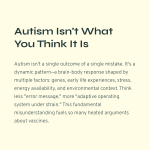
An Evolutionary-Stress Model of Medicine. This is seeing mental illness as functional adaptations w trade-offs. Old paradigm is linear w singular causal assumptions. New is nonlinear, stress creates outcomes depending on; person, timing and context. It's based on ecosystems.

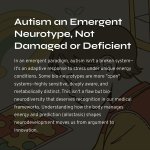
New paper in Autism in Adulthood argues that autism health disparities stem from chronic mismatch between regulatory architecture and environmental demand — not intrinsic deficit. Introduces: stress incoherence.
Hogenkamp, Sanghavi & Natri (2026)
journals.sagepub.com/doi/10.…

New in Autism in Adulthood:
"Toward an Emergent Paradigm for Neurodiversity and Health"
Hogenkamp, Sanghavi & Natri (2026)
Why has autism research produced so much data and so little predictive power?
journals.sagepub.com/doi/10.…
🧵
3. Bio-neurotypes — neurosocial and neuroperipheral orientations as initial conditions, not diagnoses. Starting configurations from which trajectories emerge.
Intervention shifts: not fix the person, but design for the system.
This is Paper 1 in a multi-paper arc. Mechanism, empirical predictions, and clinical applications to follow. Stay Tuned!
Video overview: youtu.be/PXN-rUYd764
Bad Bunny is going to change the world. We will look back at this point of history and see a tipping point that he just accomplished.
The Cause Illusion: Why We Keep Getting Autism — and Science — Wrong medium.com/p/the-cause-illus…

Peripheral Minds retweeted
It’s not an epidemic. It’s emergence.
What we’re witnessing in rising autism rates and chronic health conditions is not the result of a single cause. It’s the consequence of complex adaptive systems interacting over time—systems with initial conditions, leverage points, and variable but patterned outcomes. These outcomes are shaped not by defects, but by energy constraints, adaptive calibrations, traits, and trade-offs in increasingly stressed ecosystems.
At the heart of the crisis is a breakdown in energy and stress regulation—not in individual bodies, but in the environments we’ve built. Environments that fail to nurture or even recognize complexity. Environments that are incapable of supporting the bio-neurodiverse needs of our population. We have constructed medical, educational, economic, and scientific systems on the flawed logic of reductionism, linear causation, and statistical averages—leaving behind those whose adaptive patterns don't conform.
The so-called "cause" of increasing neurotypes in distress—especially those with higher support needs and complex medical profiles—is not a mysterious toxin or unmeasured gene. It is the very social and institutional frameworks that refuse to evolve. Movements like MAHA (Make Autism Healthy Again) claim to want solutions, but without offering a systems-based alternative, they risk dismantling imperfect structures only to replace them with worse ones: oversimplified, fear-driven, and biologically naive.
You cannot solve a problem with the same paradigm that created it.
Linear science built the world “not made for us”—a world designed around germ theory, causal logic, and “survival of the fittest.” It framed the average as healthy, and everything else as deficient. But humans were never meant to be uniform. We are diverse, and our survival depends on embracing that diversity.
The only way forward—the only way to avoid repeating the same mistakes at greater scale—is to reframe the problem entirely.
We need complexity science.
We need bio-neurodiversity as a foundational principle.
We need to ask better questions, rooted in systems thinking, energy dynamics, and emergent adaptation.
Because what we’re facing isn’t a crisis of genetics or toxins. It’s a crisis of paradigm. And the only way out is through a new one.


