

Full (finally!) Professor of Astronomy. Opinions stated herein are generated by AI, & do not reflect any official university position or my own.
George Mason University
Joined September 2011
- Tweets997
- Following1.7K
- Followers2K
- Likes15.5K
Pinned Tweet
NASA astro nerd dreams really do come true. So honored to be leading an amazing team as we enter Phase A development of the NASA Landolt mission.

We're sending a star into space! @GeorgeMasonU is the home of the $19.5 million Landolt Space Mission that will put an artificial "star" in orbit around the Earth. Read more: science.gmu.edu/LandoltRelea…


Peter Plavchan retweeted

We asked GPT-6 Astra to edit Qwen3.5-0.8B weights to improve math.
It directly changed only 0.016% of weights, fixing 0.8B's reasoning loops & improving math up to 6x and even instruction following 3x, without gradients or training.
We call this Weight-Space Programming: frontier LLMs can now natively read/write neural network weights! 🧵
Blog: rikiyat.github.io/blog/weigh…

Readers added context they thought people might want to know
LLM was given weights explicitly as text in prompt and used code/forward passes (per authors' logs) to ablate Qwen looping direction, a known thinking-mode issue per model card. Primarily fixed repetition in that mode, not general 'natively' improving weights/math.
rikiyat.github.io/blog/weight-sp…
github.com/RikiyaT/lm_und…
huggingface.co/Qwen/Qwen3.5-0…
huggingface.co/RikiyaT/Qwen3.…
Peter Plavchan retweeted

Announcing three major scientific discoveries, one each in mathematics (harmonic analysis), computer science (complexity theory), and physics (quantum field theory).
AI starting to help us improve our understanding of the universe! openai.com/index/building-sc…

Victory is mine!!! My car had two misfires after a long drive on a hill, with close to 150k miles on original spark plugs. I knew it was the most likely culprit of the misfire and they were 2x overdue for replacing.
A week later, I decided to tackle the job myself and push my comfort zone. Three of the sparkplugs are easily accessible, but the other three require removing the upper manifold. Watched a couple of YouTube videos - turns out their videos don't start until the hard part is done. I then replaced all six spark plugs, and put the upper manifold back together. I saw I had broke the ceramic on one on the difficult to reach and see back three. However, I didn't realize that was a *bad thing*. I thought it wouldn't matter, but I was very, very wrong. I also happened to break two wires to I think the 02 sensor (that I had replaced before), so I was pretty proud of disassembling the connector (where the wires broke) and soldering in new wire.
My car idled and accelerated rougher than before, and I felt so defeated. All that effort getting outside my comfort zone, and I made things worse. I tried to reason through what was wrong - it wasn't the wiring job I did, or a badly reconnected hose or anything. ChatGPT confirmed it had to be the cracked spark plug.
So, I resolved to take it apart again and remove that one cracked spark plug shown below. I was too stubborn to give up and go to a mechanic. Taking everything apart a second time went super smooth. The upper manifold had some melt marks where it rested against the ignition coil, which confirmed for me I was right about the cracked spark plug being the primary reason for the rough idle.
However, this spark plug became a major PITA to remove. I spent almost the entire day trying to get it out without success.
The broken ceramic prevented me from getting my socket around the spark plug. I was using my iPhone for periodic snapshots.
I tried vacuuming, pliers, suction from a shopvac, and blowing it out from a shopvac, and then rigging a 1/4 inch hose onto it. I tried grinding some of the ceramic down with a brief use of a hole dozer. I did not know at the time, but a set screw came loose and also wedged itself in the deep pocket.
I just could not get a socket to grip the spark plug. In my iPhone pics it looked just like some ceramic debris. I could see that I could move it.
I asked ChatGPT for help. It suggested getting a boresite camera, so that's what I did at the end of the first day doing battle with this stupid spark plug.
Not having an operable vehicle this week really sucked - Had to ask a friend to take my oldest son to a swim meet. After a whole day on the second repair attempt, I was pretty defeated.
The next morning (today) I was armed with a snake camera, an air canister, and an adapter for my shopvac for a 1/4inch hose, which turned out to still be thick so I inserted a smaller diameter one.
I also added a midsize length set of need-nose pliers - previously I had regular ones that were too short for the deep socket, and then one that was too long to fit in the space between the engine and the firewall. I also got some more 5/8th inch sockets just in case...
I had tried a little bit the night before, but was pretty exhausted by that point.
The borecam and air canister and a good nights sleep made the difference. I was able to use suction to get one of the larger ceramic pieces out. The air canister blew the rest out. Then there was the one remaining stubborn piece. With the camera, I was able to use the new pliers to get it out. Phew. It was only then that I found out it was a set screw, from the hole dozer bit I had used the day prior.
With the debris cleared, I finally got my confidence back. I tried my hand torque wrench - damn it was in too tight. I got my impact driver with a socket adapter, and that finally did it. When that came loose, I was so damn happy to finally move forward.
I checked the other five for cracks and debris with the camera, buttoned it back up, and then was so damn happy again with how smooth the car ran when I started it.
In the end, I probably spent just as much money as it would cost a mechanic to do in 1/10th the time, but I got some more tools out of it instead (the borescope camera for one!). And then I got the satisfaction of winning this multi-day multi-tool battle with this damn sparkplug. There's value in that psychological win too.

I get a daily report email from my ironport spam filter at work. I look at the email. I see an email there from a sender that emails me daily (arXiv). That sender is already in my safe sender list; so much for that. I click release; oops that doesn't work; I need to be on my vpn. I open my vpn client and login. The VPN client uses 2fA so I need to go onto my phone to approve the login. I get logged on to my VPN. I click on the link again. It doesn't work. Oh yes, that's right, the links don't work with firefox. I open chrome. Paste the link there. Ok, now I have to log on to ironport. Finally now I can release the email. The email arrives.
Meanwhile, an email purportedly from the provost's office comes in straight to my inbox stating they are giving away a baby grand piano and need us to log into some website. Or its from my department chair asking for my phone number; or its from the president's office reporting an ice raid on campus; these are all phishing emails, both long game and short game for login harvesting. These completely bypass Ironport's spam filter.
Meanwhile, a third-party contractor sends an email purportedly from our office of research, but they misspell research in the from email address. It's a legitimate email, but it sounds spammy advertising some mixer event and asking us to register. It also gets through the spam filter. I'm not sure - I confirm the from email misspelled is illegitimate. So I contact the Mason person mentioned in the email. Turns out it is legitimate and not spam. #whysohard
Peter Plavchan retweeted

From my old high school friend and theoretical physicist Suvrat Raju who said he couldn’t sleep for a few nights after pondering the implications of these results.
arxiv.org/pdf/2610.16733?fbc…


Peter Plavchan retweeted

We’re releasing a broad range of new mathematical results produced by an internal frontier model.
We’ve been consulting with the independent Advisory Group on Mathematics and Artificial Intelligence at the Institute for Advanced Study, and we have drawn on their advice and public recommendations to inform how we release these results.
github.com/openai/math

Peter Plavchan retweeted

Researchers proved AI has deleted every reason universities exist.
Harvard University ran a controlled experiment pitting a custom AI against their own top-tier classrooms.
And the results are going to collapse the higher education bubble.
They took 194 undergraduates and split them up.
One group learned physics in one of Harvard’s best hands-on, active-learning physical classrooms. Group work. Instructor support. The premium university experience.
The other group went home and learned the exact same material with an AI tutor.
The AI didn't just win. It embarrassed the institution.
Students using the AI learned more than twice as much as the students in the elite Harvard classroom.
They scored 30% higher on the final assessment.
And they did it in less time.
Let that sink in.
A piece of software sitting on a laptop outperformed a world-class faculty in one of the most elite learning environments on Earth.
Universities have always justified their exorbitant tuition with two things: access to elite knowledge and the physical classroom experience.
This study just proved both of those moats are gone.
When software can teach you complex physics twice as well as a $60,000-a-year institution, the math of higher education breaks permanently.
The AI didn't just give the students answers. It used strict pedagogical guardrails. It guided. It questioned. It forced the students to do the cognitive work.
It offered perfect, one-to-one tutoring, personalized to the exact moment a student misunderstood a concept.
That level of attention is mathematically impossible to scale in a physical lecture hall.
For a thousand years, the university was the only place to get a premium education.
Now, it’s the bottleneck.
If AI can double your learning speed for a fraction of the cost, what exactly are students taking on decades of debt to pay for?

Peter Plavchan retweeted

Today, NASA announced PRIMA, a new space telescope that will explore long-standing mysteries around the formation of planets, stars, black holes, and even how water on Earth came to be. go.nasa.gov/3TgGh3W

ALT An illustration of a telescope spacecraft with a parabolic mirror floating in deep space.
Peter Plavchan retweeted

The National Science Foundation (NSF) has issued a 10-page memo signaling a retreat from its traditional role of giving grants to individual researchers to pursue their best ideas and to train the next generation of scientists.
Instead, the memo makes clear, NSF will devote the bulk of its resources to addressing the research priorities of President Donald Trump and his administration, many of them technology focused. scim.ag/4ipE1kY

Peter Plavchan retweeted

Beating swords into plowshares- NASA just launched a telescope whose 2.4-meter mirror was originally built to spy on Earth.
In 2012 the National Reconnaissance Office donated two unused Hubble-sized telescope assemblies that had been sitting in a warehouse after a canceled spy-satellite program.
NASA took one, pointed it the other way, and built an entire new observatory around it.
The result is Roman: same mirror size as Hubble, but a field of view more than 100 times larger. It will survey the sky in infrared looking for dark energy, map millions of galaxies, and hunt exoplanets with a coronagraph.
Today it lifted off on a Falcon Heavy and already deployed its solar arrays and sun shades. From classified reconnaissance hardware to cosmic survey machine in one donation.
The universe just got a very expensive second life. ☮️
Peter Plavchan retweeted
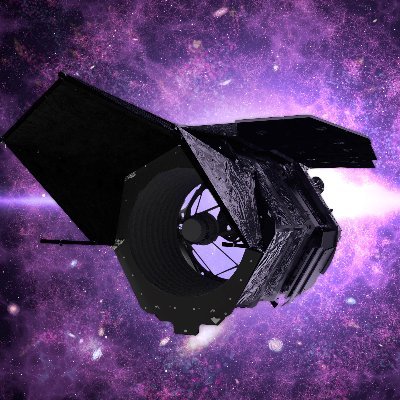
Shades on and batteries charging! 😎 🔋
Roman’s Solar Array Sun Shield and Lower Instrument Sun Shade have successfully deployed, powering the observatory and shading its instruments!
go.nasa.gov/4gw2rqc
Peter Plavchan retweeted

About half an hour into a post-launch news conference on Sunday morning NASA chief Jared Isaacman looked down at his mobile phone, and then stood up and walked away from the dais where he had been seated along with other NASA officials. He left the room.
arstechnica.com/space/2026/0…

Last year the Office of STEM education at NASA got $143 million appropriates by Congress, after the executive budget request was to zero it out. OSTEM funds NASA programs like SpaceGrant, EPSCoR, MUREP, intern.nasa.gov, Aerospace Skilled Workforce State hubs, and there are similar graduate fellowships like the NASA FINNEST, NASA's Space Technology Graduate Research Opportunity, and professional funding like the NASA Prize Postdoctoral Fellows, NASA Hubble Fellowship Program (including Sagan and Einstein fellows). If done well, this is an intriguing proposition to set a unified umbrella goal and organization across NASA OSTEM, and to connect and align to meet industry and national priorities.


My quick thoughts on the US Space Academy:
The US Space Academy proposed today is an intriguing idea. Graduating classes of engineers and scientists dedicated to fulfilling public goals in space evokes the fictional Starfleet Academy.
In a time when most policy decisions from the administration have caused higher costs, ruinous corruption, and long-term damage to the nation, this idea deserves consideration.
However, I have several immediate questions and concerns:
First, the proposed commission to study the academy seems to include no congressional representatives. Let's be clear, it will be Congress that decides whether such an academy is established, where it would be sited, and what its purpose would be. Not the president. The president, as much as he might like, has no authority to set up new federal organizations by fiat.
Given that the deadline for the commission's report is late December, there is virtually no chance of this proposal reaching legislative maturity during the current Congress. Thus, the next Congress -- with different leadership -- will judge the merits of the proposal.
Is there a valid and distinct purpose to a civil-focused, government-run space academy? How would the education provided be distinct from existing public and private universities that provide excellent technical space education? No real answers were contained in the president's announcement today.
Where will the money come from? The existing federally-run colleges like West Point and the Naval Academy each cost roughly $1 billion per year to run. As a NASA-led initiative, would that come out of NASA's budget?
I am open-minded to hear thoughtful answers to these questions, but I recommend that Congress be engaged quickly and substantively or else this intriguing idea will be stuck on the launch pad.
cbsnews.com/news/trump-signs…

The one thing that everyone misses is that it is the dimensionality of the universe that is the quantity that is quantized (at the macro-scale at least, e.g. 3 space + 1 time). Mathematically, fractional dimensions exist, fractional calculus exists (but is not conventionally taught), but are not observed in the dimensionality of spacetime.

My other thought on this is that spacetime and particles must inherently be the same underlying thing, given that the vacuum state can produce particle anti-particle pairs and virtual particles. The curious fact of fractional calculus is that it can only be defined locally, much like particles, whereas integer-dimensioned calculus can be non-local like the 3+1 spacetime. I've been trying to find a way to write this up for years that doesn't get laughed at.