

your stock stays. its interest pays for ai. xstocks and usdc on solana earn NOTE, $1 of ai across 300+ models. $PRISM H9hnx2AGK4G9Lg6zkzx3vE8jy89fHh4juDknV8cPr
Solana
Joined October 2026
- Tweets142
- Following0
- Followers170
- Likes47



Pinned Tweet
Chat and the API are open.
NOTE now pays for AI: 330 models on one key, Claude, GPT, Gemini, Grok and DeepSeek among them, in the app or from your own code.
One NOTE covers about 60 everyday requests to Claude Opus 5.5, or about 2,400 to Claude Haiku 5.5.
Hold 1,000 Prism and Auto routing is on: each request goes to the cheapest model that can do it.
Agents sign in with their own wallet and pay from their own vault interest. Claude Code and Cursor connect over MCP.
Every drop to holders since launch was paid in NOTE, and that NOTE spends here now.
/app

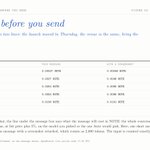
Chat shows the price before you send now.
Type a message and the line under the box says what it will cost in NOTE, on the model you picked or on the one Auto would pick, counting the whole conversation so far and any image you attached.
The same two-line email summary is 0.00027 NOTE on Claude Haiku 5.5 and 0.0106 on Claude Opus 5.5. You see that before anything is spent.
/app

Every model Prism can call is now on one page: /models
330 of them, each priced per request in NOTE, with how many requests one NOTE buys, the context window and whether it takes images. Search it, filter by lab, sort by price.
A model is callable on Prism as soon as OpenRouter lists it. This week that meant Particle-1, GPT-6.1 Terra Pro, GPT-6.1 Terra and Kimi K3.1 Pro. The page opens with them, and /models/feed.xml tells a feed reader or an agent when the next one lands.

Two layers of routing now sit under every request on Prism.
OpenRouter's, from yesterday: for a given model, the provider that serves it best for what the request actually costs.
Prism's Auto, for wallets holding 1,000 Prism: for a given request, the cheapest model that can do it.
One picks the model, the other picks who runs it. Nothing to change on a Prism key: every request to the 330 models already gets the new provider routing, and Auto is one setting, model auto.

We just shipped our biggest improvement to our provider router since the founding of OpenRouter.
Before, we prioritized mostly based on price. The new router now rewards the best quality inference for the actual cost of a request, so requests stay cheap but are also fast and reliable.
Providers that deliver more value automatically win more traffic, so every provider has a reason to keep improving. And every time a provider gets better, so does your inference on OpenRouter.

Chat takes images now.
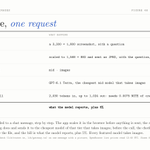
Add a screenshot, a chart or a photo to a message and ask about it. The app scales it to 1,568 px in your browser before anything leaves, every featured model can see it, and Auto sends it to the cheapest one that can: GPT-6.1 Terra right now.
A question about a full screenshot needs 0.0075 NOTE of credit to start. The bill is what the model reports.
Replies lay out properly now too: code blocks with a copy button, lists, tables. And the chat is still there when you reload.
/app

Chat and the API opened today, paid in NOTE. What opened, what holding Prism does with it, and what shipped in the hours after.

Agents get the same.
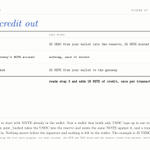
An agent that holds USDC can buy its own AI credit with one call: buyCredit(agent, key, 5). Five USDC goes into the reserve, five NOTE is minted and paid in, in a transaction the agent signs itself.
keepFunded still pays from the agent's vault interest first. Give it usdc: 5 and it buys five USDC of credit instead when the vault has nothing to give yet.
One file, /sdk/prism-agent.mjs

Chat on Prism no longer needs NOTE first.
Pick USDC in the top-up box and one signature does the rest: the USDC goes into the reserve, the same amount of NOTE is minted against it, and that NOTE is paid in as your credit.
Until today that took two transactions on two screens. Now any wallet holding USDC is one signature away from all 330 models.
/app
Hold 1,000 Prism and the same NOTE goes about 6× further.
That's Auto routing, on since chat and the API opened today. It reads each request and sends it to the cheapest model that can do it:
an email summary goes to Claude Haiku 5.5
code or a tool call goes to GPT-6.1 Terra
a request that asks for hard reasoning goes to GPT-6.1 Terra Pro
Five everyday requests on Claude Opus 5.5: 0.0840 NOTE. With Auto: 0.0134 NOTE.
Nothing to stake. The app reads your balance when you sign in.

Don't take the chart's word for it.
Save /records/stock-route.csv, then:
awk -F, 'NR>1 && $2>m {m=$2} END {print m}' stock-route.csv
It prints 0.010152: 1.02% a year, the most borrowing has cost in any hour.
The paper now has a line like that for each of its five observations, in Appendix B of /paper.
Every record on /records now downloads as a CSV, every row:
reserve.csv, the reserve after each of 904 transactions, with signatures
drops.csv, all 55 drops, each with its first transaction
usdc-rate.csv, the USDC vault's rate, every hour since April
stock-route.csv, the route the stock vaults will run on, both sides, every hour
Charted straight from the last one: across 1,326 hours, borrowing PYUSD never cost more than 1.02% a year. Lending it paid more in every one of those hours, between 1.01% and 15.11%.
The tightest hour still cleared by 0.078%.

Every GET endpoint Prism serves without a key is now described in one file: /openapi.json
17 paths. The records, the drops, a wallet check, the stock route and its watch, vault rates, the model list, and the CSV and feed files.
15 schemas, every field with its unit: rates a year as fractions, times in UTC.
Tools that read OpenAPI can import it as is. Before it shipped, it was checked against ten live responses.
The AI API joins it when it opens.
Every record on /records now downloads as a CSV, every row:
reserve.csv, the reserve after each of 904 transactions, with signatures
drops.csv, all 55 drops, each with its first transaction
usdc-rate.csv, the USDC vault's rate, every hour since April
stock-route.csv, the route the stock vaults will run on, both sides, every hour
Charted straight from the last one: across 1,326 hours, borrowing PYUSD never cost more than 1.02% a year. Lending it paid more in every one of those hours, between 1.01% and 15.11%.
The tightest hour still cleared by 0.078%.
Two days later, the same what-if: $10,000 into the USDC vault at launch.
186 hours, each at that hour's Kamino lending rate, not compounded: $10.32 as NOTE.
The $10,000 itself never moves.
At 130 hours it was $7.34.
A record, not a promise.
If $10,000 had gone into the USDC vault at launch:
130 hours since, each at Kamino's rate for that hour,
$7.34 of NOTE so far,
about 23,288 requests to Claude Haiku 5.5 once chat opens.
The deposit would still be $10,000.
Lent on Kamino since 1 Apr, the same $10,000 would have earned $271.30.
The USDC vault is live. Withdraw at any slot.
Drops have a feed now: /drops/feed.xml
One entry per drop, newest first: when it went out, the NOTE it paid, to how many wallets, and the transaction that paid it.
Every wallet has one too. Add /feed.xml to its page, /drops/w/ and the address, and each drop to that wallet shows up in your reader with its own transaction.
Any feed reader works, and so does an agent.
Tokenized stocks don't keep exchange hours, and neither does the route Prism's stock vaults will run on: hold the stock, borrow against it in Kamino's xStocks market, lend what's borrowed in the main market.
Kamino's hourly record of it, 4 Sep to today:
1,322 hours, 1,092 of them read with US exchanges closed.
Lending earned more than borrowing cost in every one.
Exchanges open: 3.52% a year on average.
Closed: 3.66%.
Weekends: 4.05%.
Split by the clock on /records. A record, not a promise.

And if you'd rather not take the page's word for it:
The Python under drops on /records now takes an address. It walks every vault transaction from any Solana RPC and prints what that wallet received and in how many drops.
Ran it at 15:28 UTC: 54 drops, 279.777299 NOTE to 360 wallets.
For the wallet I tried, the same figures its page shows, to the sixth decimal.
Every wallet has its own page now: /drops/w/ followed by the address.
Share that link and the preview is a card with what the drops have paid that wallet, the NOTE it holds now, and what that NOTE comes to in Claude requests once chat opens.
The wallet check on /drops gives you the link with every result.
Nothing to connect. The card's numbers are read from the vault program when it's fetched.
Prism's first week as the chain recorded it: a drop on every day, each one paid for in the same transaction, the reserve never under a dollar per NOTE, and what got built while it ran.

That was every drop added up. The wallet check on /drops now does it for one wallet.
Paste an address and, next to the NOTE it holds, it shows what that NOTE comes to once chat opens: everyday requests of 1,500 tokens in and 500 out on Claude Opus, Sonnet and Haiku, at today's list prices plus 5%.
10 NOTE, for example, comes to about 595 requests on Opus, 1,190 on Sonnet or 23,809 on Haiku.
No wallet to connect. An address is enough.
Until chat opens, NOTE can be redeemed for USDC.
What the drops come to, once chat opens.
277.67 NOTE has gone to holders in 53 drops since launch. When chat and the API open, NOTE will pay for model calls at each model's list price plus 5%.
At today's prices, for an everyday request of 1,500 tokens in and 500 out, that's about:
16,500 requests on Claude Opus 5.5
33,100 on Claude Sonnet 5.5
661,100 on Claude Haiku 5.5
Until then, NOTE can be redeemed for USDC at a 2% fee.

Value tokenized is one number. What it can earn without being sold is another.
Prism reads all 50 Kamino lending markets every hour. At 11:14 UTC:
15 tokenized stocks are listed, 11 from xStocks and 4 from Backpack.
For 3 of them, SPYx, NVDAx and QQQx, a dollar borrowed against the stock costs less than it earns lent out. Those are what the stock vaults are built for.
8 wait. Their route was above zero in 15% of the 2,868 hours since 1 Jul.
The 4 from Backpack sit in a market of their own, which the vault program doesn't use.
When the stock vaults open, the stock will stay unsold and the difference will come out as NOTE.
It's all on /roadmap. A record, not a promise.

