

Crypto Educator 🧘♂️ | DeFi Security & Exploit Analysis 🔎 | Breaking Down What Goes Wrong Onchain | Market Insights 💡 | Always DYOR | DM for collabs
The Cosmos
Joined July 2012
- Tweets82.2K
- Following1.5K
- Followers3.8K
- Likes122K





Pinned Tweet
My prediction for Q1 2027
The biggest single crypto loss of the quarter will come from access, not code
A key, a credential, a vendor or a signer
Not a smart contract flaw
If CertiK’s Q1 2027 numbers put a pure code bug behind the biggest individual loss, I was wrong
Here’s the case:
Frequency isn’t severity
CertiK’s H1 2026 numbers
Code vulnerabilities, 204 incidents, $152M
Wallet compromises, 33 incidents, $445M
That’s about $0.75M per code bug
And about $13.5M per wallet compromise
Roughly 18 times more per incident
The Tranche Vault drain this week, about $1M so far, is the typical code bug
Frequent and small
The biggest losses come from the other side
Q2’s two biggest were Kelp at $291M and Drift at $285M
A cross chain verification failure and an admin takeover through tricked signers
Q3’s biggest was Bitget at $387.5M
Bitget says attackers used a flaw in a third party security product to reach internal credentials and forge withdrawal commands
The forged commands were treated as legitimate
Two small test transfers stayed under the risk threshold
The big ones followed about 30 minutes later
Now look at the disclosures since September
Trezor, a third party email provider
Bitget, a third party security product
NGRAVE, a third party push service
Foundation, pointing to Cloudflare API keys
Solflare, a staking provider holding validator keys
Different brands
Same pattern
And this week, Bithumb disclosed an intrusion into groupware
An office tool
Not a chain, not a contract
Code bugs aren’t dead
Liquid lost $319M to one in September, and about 85% came back
I’m not saying they’ll disappear
I’m saying they’ll stop being the biggest
The part that protects you
Bitget says its cold wallets weren’t touched
Solflare says delegated SOL stayed in users’ own stake accounts
You can’t promise you’ll never be breached
You can decide how much a breach can reach
So the question isn’t “is it audited”
It’s “who else holds a key, and what can it move” 🧘♂️

Nobody had to break a vault this week 🧘♂️
Most of the money walked out through a side door
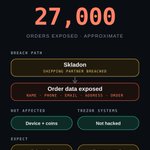
A trading key, a wallet module, a signing tool, a support vendor, a shipping partner, a relayer
Here's every hack and scam from Nov 14 to 20, and the one lesson behind them 🧵

10/ And the scams needed no hacking at all
A deepfake Musk livestream pushed people to send crypto, and Coinbase says it stopped $4.7M
Trigram fake job tests tried to get devs to run malware
18,000 GTA VI tokens showed up in 48 hours
Lesson: Urgency is the attack
1
3
34
My tally hit 8 access incidents this week, and the biggest loss again came from a key, not a contract
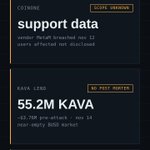
Code bugs still happen, ask Kava and K3
But the biggest money keeps leaving through access
So before you trust any app, ask who else can move your funds
Calm in chaos 🧘♂️
xitter.gq/Promirexy/status/21157…

My prediction for Q1 2027
The biggest single crypto loss of the quarter will come from access, not code
A key, a credential, a vendor or a signer
Not a smart contract flaw
If CertiK’s Q1 2027 numbers put a pure code bug behind the biggest individual loss, I was wrong
Here’s the case:
Frequency isn’t severity
CertiK’s H1 2026 numbers
Code vulnerabilities, 204 incidents, $152M
Wallet compromises, 33 incidents, $445M
That’s about $0.75M per code bug
And about $13.5M per wallet compromise
Roughly 18 times more per incident
The Tranche Vault drain this week, about $1M so far, is the typical code bug
Frequent and small
The biggest losses come from the other side
Q2’s two biggest were Kelp at $291M and Drift at $285M
A cross chain verification failure and an admin takeover through tricked signers
Q3’s biggest was Bitget at $387.5M
Bitget says attackers used a flaw in a third party security product to reach internal credentials and forge withdrawal commands
The forged commands were treated as legitimate
Two small test transfers stayed under the risk threshold
The big ones followed about 30 minutes later
Now look at the disclosures since September
Trezor, a third party email provider
Bitget, a third party security product
NGRAVE, a third party push service
Foundation, pointing to Cloudflare API keys
Solflare, a staking provider holding validator keys
Different brands
Same pattern
And this week, Bithumb disclosed an intrusion into groupware
An office tool
Not a chain, not a contract
Code bugs aren’t dead
Liquid lost $319M to one in September, and about 85% came back
I’m not saying they’ll disappear
I’m saying they’ll stop being the biggest
The part that protects you
Bitget says its cold wallets weren’t touched
Solflare says delegated SOL stayed in users’ own stake accounts
You can’t promise you’ll never be breached
You can decide how much a breach can reach
So the question isn’t “is it audited”
It’s “who else holds a key, and what can it move” 🧘♂️
3
15
🚨 Developing
What happens when the wallet built to protect your privacy is the one sending your money out?
Fluidkey, a stealth address privacy wallet, was drained yesterday
For about 36 minutes its own relayer paid funds out of user accounts on six chains
Onchain tracing by Bitquery shows at least $1.58M reached wallets tied to one attacker, and 881.6 ETH went into Tornado Cash
Fluidkey shut everything down, says nothing has moved since, and is working with SEAL 911 on a post mortem
They still haven't said how it happened or the official loss
If you use Fluidkey, don't touch the site or app until they give the all clear
And ignore anyone who DMs offering "recovery help", the team says it will never message you first
My take: Privacy hides who you pay, but if a service you don't control can sign for you, your safety depends on it
Lesson: Know which part of your wallet can move funds without you
1
4
264
Crypto_Rexy🧘♂️ retweeted
🚨 GTA VI dropped yesterday and scammers had already prepared for the launch months in advance
Blockaid flagged more than 8,800 GTA themed tokens on Solana as malicious, warning or spam, out of more than 20,000 GTA named tokens detected since July
Bubblemaps also counted 18,000 GTA VI tokens in just 48 hours, with nearly all identified as bundled scams
The trap is simple, and that is exactly why it works
A post claims a GTA coin airdrop is live or offers a crypto payment option to pre order the Ultimate Edition
The link opens a polished website, sometimes a near perfect copy of the PlayStation Store, listing the Ultimate Edition for $89.99
You click Pre Order and a Connect Wallet window appears with familiar logos like Trust Wallet, OKX and Ledger
Every option leads to the same drainer
Nobody needed to exploit a smart contract here
They borrowed the hype around one of the biggest game launches and waited for people to sign
How to spot it in 5 seconds
A game checkout asking for your wallet instead of a card is a scam
A GTA coin or eligibility checker is a scam
Buy the game only through the PlayStation or Xbox store you open yourself, never through a link in the replies
If you already connected and signed on one of these pages, revoke your approvals and move any remaining funds to a fresh wallet
My take:
The biggest game launch in history just became the biggest drainer lure of the year, and it will not end with launch week
Access, not code
Incident #8 this week

🚨 GTA VI dropped yesterday and scammers had already prepared for the launch months in advance
Blockaid flagged more than 8,800 GTA themed tokens on Solana as malicious, warning or spam, out of more than 20,000 GTA named tokens detected since July
Bubblemaps also counted 18,000 GTA VI tokens in just 48 hours, with nearly all identified as bundled scams
The trap is simple, and that is exactly why it works
A post claims a GTA coin airdrop is live or offers a crypto payment option to pre order the Ultimate Edition
The link opens a polished website, sometimes a near perfect copy of the PlayStation Store, listing the Ultimate Edition for $89.99
You click Pre Order and a Connect Wallet window appears with familiar logos like Trust Wallet, OKX and Ledger
Every option leads to the same drainer
Nobody needed to exploit a smart contract here
They borrowed the hype around one of the biggest game launches and waited for people to sign
How to spot it in 5 seconds
A game checkout asking for your wallet instead of a card is a scam
A GTA coin or eligibility checker is a scam
Buy the game only through the PlayStation or Xbox store you open yourself, never through a link in the replies
If you already connected and signed on one of these pages, revoke your approvals and move any remaining funds to a fresh wallet
My take:
The biggest game launch in history just became the biggest drainer lure of the year, and it will not end with launch week
Access, not code
Incident #8 this week
🚨🚨🚨
Five critical NGINX bugs went public yesterday, here’s what they mean for crypto in plain words
NGINX is the software that sits in front of a huge part of the internet and handles incoming traffic
Crypto sites like exchanges, wallet apps and RPC endpoints can sit behind it too
The bugs, dubbed NGINX2Root by researchers at Xint, allow someone without a login to send crafted traffic and potentially run their own code on the server
Each bug requires a specific setup, such as HTTP/2, HTTP/3 or NGINX being used as a mail proxy
The lead bug has been in the code since HTTP/2 support arrived in 2015 and only requires HTTP/2 to be enabled
F5 rates all five 9.2 on CVSS 4.0, and a Rapid7 researcher has published a working proof of concept exploit
The good news:
✅No attacks in the wild have been reported so far
✅The lead bug was not on CISA’s known exploited list as of November 18
✅Rapid7 says its exploit needs about 128GB of HTTP/2 traffic and must get past memory protections first, so this is not a one click hack
✅Qualys adds that these limitations slow mass attacks, but they do not protect a specific server from a capable attacker
The part people are missing:
Xint says all five bugs can be chained with a separate Linux kernel bug that has no patch yet
It says this chain can turn a foothold on the server into full root access, even from inside a Docker container
That claim comes from Xint and I have not seen it independently confirmed
Xint is holding back most details until the kernel receives a fix
Why crypto should care:
Your keys may not be on that server, but the page you use them on might be
A hijacked frontend can show you a fake deposit address or a fake approve button while everything looks normal
What I would do:
👉If you run a node, an RPC or any crypto site, update NGINX Open Source to 1.30.7 or 1.31.9 and perform a full restart
👉A reload does not replace the running code
👉If you use your distro’s package, check its advisory
Ubuntu and Debian still listed theirs as vulnerable with no fix as of November 18, according to Qualys
👉Do not trust the version number alone, Linux distros often ship security fixes without changing it
👉If you cannot patch yet, disabling HTTP/2 covers only two of the five bugs and can break things like gRPC
👉If you do not use SCTP, block that kernel module on your hosts as an interim step
👉As a user, check addresses and approvals on your hardware wallet screen this week, not just in your browser
My take:
The main bug is old and a proof of concept is public, so the real race now is the boring part, which is patching

🚨 Developing
What happens when a "safer" yield vault trusts its own math too much?
K3 Capital's sBOLD vault on Ethereum just lost about $3.43M across roughly 34 transactions, per Blockaid
The attacker flash borrowed wstETH, forced a Liquity V2 liquidation into the stability pools, and minted vault shares way too cheap
Then they cashed those shares out against other depositors' BOLD
K3 says contracts are paused while they investigate
If you hold sBOLD, don't panic sign anything and only trust updates from K3's official account
My take: no keys were stolen here, the accounting itself was the open door
This one breaks the streak, code not access this time

1
167
Yesterday I flagged Trigram, the fake remote crypto job campaign
Here’s how the infection actually happens and how to spot a fake job test before running it
The fake careers site first shows what looks like a harmless verify command
Then it pretends the check timed out, asks you to try again and silently replaces your clipboard with a malicious command
That command installs an infostealer called OverLord
The same payload was also hidden in a forged GitHub commit on a popular image crop library
A prebuild script in package.json ran as soon as someone types npm run build
The published npm package itself was not changed
The malware doesn’t even store its command server in the code
It reads the address from a public GitLab file, allowing the operators to change servers without touching the bait
What I would do today
Run any take home test in a throwaway virtual machine, never on the laptop you use for wallets or email
Read the scripts section in package.json before installing or building anything a recruiter sends you
Never paste a verify or anti spam command into your terminal, no legitimate hiring process needs access to your shell
Do not install an editor extension sent by a recruiter, even if it looks like a Google tool
Get the job link from the company’s official website, not from a cold email promising a big salary and including a referral code
My take
Like the deepfake scams, they don’t break in, they get you to open the door
Access, not code
If a job test needs your terminal or your editor extensions, it is not a job test

🚨 Developing
Got a "fully remote" Web3 dev job offer with a big salary this week?
Read this before you run any command they send you
Security firm Stormshield has mapped a campaign called Trigram that impersonates about 50 AI and blockchain brands
They link it to North Korea style groups like Kimsuky
The trick is simple: fake recruiter, fake careers site, a referral code "anti spam" step, then a terminal command to "verify" you
That command installs an infostealer that grabs browser passwords, cookies, crypto wallets, SSH keys and .env files
One version posed as the careers portal of Amber Group, a real crypto firm
Another hid inside a forged commit to a popular image crop library on GitHub and ran the moment a developer built the project
If a hiring process asks you to paste a command or install an extension, stop right there
A real employer doesn't need your terminal to interview you
My take: for a lot of young Nigerians chasing remote crypto jobs, this is exactly the bait they're using
Access, not code, incident #6 this week
🚨 Nobody had to hack anything here, and that is exactly why it worked
Scammers ran a fake YouTube livestream of Tesla’s flying car demo
It used an AI deepfake of Elon Musk, wallet addresses on screen and a QR code promising to double any crypto sent
Coinbase says more than 500,000 people watched
In about two hours, hundreds of its customers tried to send millions to those addresses
Coinbase says its AI scam prevention agent stepped in on flagged transactions, identified the scam pattern and asked questions that exposed the deception
About $4.7M, around 91% of the attempted sends, was stopped
Coinbase says no humans were involved
What’s confirmed and what isn’t
Every number here comes from Coinbase’s own blog post
None of it has been independently verified
The post doesn’t explain how the 91% was calculated, whether by transaction count or value
It also doesn’t give the exact number of customers who attempted to send funds
Why it matters
No stolen passwords or compromised accounts were described
Customers sent the funds themselves
They logged in, pressed confirm and believed what they were seeing
Many fraud checks look for activity you didn’t approve
This was activity people approved themselves
What I would do today?
✅Treat any send crypto and get double back offer as a scam, no matter whose face or voice is on the screen
✅Get event links only from official accounts, not from livestreams that appear in search
✅If your exchange pauses a transaction and asks questions, answer honestly before pushing through
My take:
Deepfakes have made these scams cheaper to run, so the pause before you hit confirm matters more than ever
Real giveaways never ask you to send first
Access, not code
Incident #7 this week


Scammers used an AI deepfake of Elon Musk to promote a fake Tesla crypto giveaway to a livestream audience of more than 500,000 people.
In about two hours, hundreds of Coinbase customers tried to send millions to the scammers. Our AI-powered scam defenses stopped $4.7 million from leaving customers’ accounts.
Here’s how it worked, and what to watch for. coinbase.com/blog/consumer-p…
