

Venturing into the world of psychedelic drug development, research, investing, and more. Sharing insights and interviewing leading figures in the field.
Joined November 2021
- Tweets3.3K
- Following947
- Followers2.1K
- Likes15.5K




Pinned Tweet
New Frontiers in Psychedelic Research: Iboga Microdosing with Dr. @burtontabaac & Teresa Yung
youtube.com/watch?v=CAuwS8cB…

Definium Therapeutics to Report Third Quarter 2026 Financial Results on November 9, 2026
$DFTX
ir.definiumtx.com/news-event…

Compass Pathways to Highlight Scientific Research and TRD Disease State Education Efforts at the 2026 Neuroscience Education Institute Fall Congress
$CMPS
ir.compasspathways.com/News-…
Psychedelic Vantage retweeted

🚨 [BREAKING] Billion Dollar Toad Venom
The Phase 2b results for Intranasal 5-MeO-DMT for depression were JUST published in @JAMA
Mebufotenin produced rapid, durable symptom reduction, with patients ready to go home in under 2 hours.
For context: $LLY bought Atai for 3 BILLION dollars this summer on this readout.
The era of the "short trip" psychedelic is here. 🧵

Helus Pharma Announces Co-Founders’ Transition from Executive Leadership as Company Advances Toward Next Stage of Development
$HELP
ir.helus.com/news-releases/n…
Compass Pathways to Announce Third Quarter 2026 Financial Results on November 3, 2026
$CMPS
ir.compasspathways.com/News-…
Psychedelic Vantage retweeted

WOW!!
Single Intranasal Administration of the Psychedelic Mebufotenin for Treatment-Resistant Depression jamanetwork.com/journals/jam…

Psychedelic Vantage retweeted

$CMPS $DFTX $HELP $STIM
COMP360 will have an ICER review.
Why it matters for adoption: The Institute for Clinical and Economic Review (ICER) is an independent nonprofit. It's separate from the FDA and has no say in whether a drug gets approved, but its review can shape what payers think a drug is worth paying for, and that affects how easily patients can access it.
Today, ICER published a draft scope for Compass's psilocybin 25 mg (COMP360) in treatment-resistant depression [1].
It will compare COMP360 to Spravato, rTMS, and IV ketamine. The patients are adults with depression who haven't responded to two or more antidepressants in their current episode.
What we know about the analysis so far:
- A five-year time horizon, because it's still unclear how long the effect lasts. A lifetime analysis only if the evidence supports it
- A health care system view (direct medical costs), plus a separate analysis adding patient and caregiver productivity and time spent in treatment
- Results as cost per quality-adjusted life year (QALY), along with response, remission, relapse, retreatment, side effects, and costs
The model's structure, inputs, and assumptions come in the analysis plan in January.
Full Timeline:
- Comments open through Nov 10, 2026
- Revised scope on Nov 18
- Analysis plan on Jan 22, 2027
- Draft evidence report on Mar 16, 2027 (comments through Apr 12)
- Public meeting of ICER's New England Comparative Effectiveness Public Advisory Council (CEPAC) panel on May 20, 2027
- Final report on Jun 18, 2027
As a reference, ICER reviewed Spravato in 2019 and MDMA in 2024, both in the same year as FDA decisions.
For Spravato:
FDA came first, then ICER:
- FDA advisory committee (Feb 12, 2019)
- FDA approval (Mar 5, 2019)
- ICER draft evidence report (Mar 21, 2019)
- ICER's public meeting (May 23, 2019)
- Final report (Jun 20, 2019)
FDA's advisory committees voted 14-2 (1 abstain) that benefits outweighed risks, despite only one positive short-term trial, and FDA required strict supervised dosing [2]. One panelist, Walter Dunn, called it a potential "game-changer" but said "the issues of cost and patient accessibility need to be addressed" [2].
Separately, ICER's panel voted 0-17 that the evidence wasn't adequate to show Spravato was better than IV ketamine, and 0-17 versus TMS, ECT, or antipsychotic add-on therapy [3]. ICER put a fair price at $17,700 to $25,200 a year against a $32,400 list price, a 25-52% discount, and rated it low value for money [4].
ICER also issued an affordability alert, warning that at list price only about 16% of eligible patients could be treated before added spending exceeded its national budget limit, well below the roughly half experts expected to be offered it [3][4].
Major commercial plans still cover it, though with step-therapy and prior-authorization rules that vary widely.
For MDMA:
Timing ran in the opposite order of Spravato. ICER weighed in before the FDA did:
- ICER draft evidence report (Mar 2024)
- ICER's public meeting (May 30, 2024)
- FDA advisory committee (Jun 4, 2024)
- ICER final report (Jun 27, 2024)
- Lykos announced the FDA rejection (Aug 9, 2024)
ICER’s draft rated the evidence for Lykos’ MDMA-assisted therapy for PTSD as insufficient. It pointed to functional unblinding (nearly everyone on MDMA could tell they got it) and to concerns about how the trials were run.
ICER's panel voted 14-1 that the evidence wasn't strong enough to show the therapy did more good than harm compared with usual care. With the evidence that uncertain, ICER didn't estimate a fair price [5].
FDA's advisory committee then voted 9-2 that the trial data didn't show MDMA-assisted therapy was effective for PTSD, and 10-1 that its benefits didn't outweigh its risks [6]. In August, Lykos announced that the FDA had declined to approve it and asked for another Phase 3 trial [7].
Looking ahead, ICER's COMP360 review will give an outside read on cost-effectiveness that could shape reimbursement and payer rules.
In a 2022 survey of 51 US payers, 79% said ICER's recommendations had at least occasionally influenced their coverage decisions over the prior two years (20% said often) [8][9]. As the figure shows, payers rated ICER the most useful of five value frameworks and often described it as at least somewhat useful for formulary decisions (90%) and pricing negotiations (82%) [8].
As an example, New York Medicaid can use an ICER review to set a target rebate for a drug. A rebate is money the drugmaker pays back to the state Medicaid program after it buys the drug, which works like a discount. If the drugmaker won't agree to that rebate, the state can require prior authorization, making access more restrictive [10].
Because ICER is comparing COMP360 to Spravato, IV ketamine, and rTMS, its verdict can shape how payers weigh it against treatments they already cover.
Overall, ICER's review will show how cost-effective COMP360 is compared with treatments already in use, like Spravato, IV ketamine, and rTMS. That matters for access in two ways.
1) The results can shape payer rules like prior authorization, which control who can get the treatment.
2) They can affect reimbursement rates, which drive clinic economics. If reimbursement is too low, prescribers may not prescribe it, and clinics may not set aside as much capacity for it.
In my Substack series, Beyond Approval, I will explore this in more detail: beyondapprovalpsychedelics.s…


So it's public, ICER will review COMP360 psilocybin for treatment-resistant depression
icer.org/news-insights/press…

Helus Pharma Highlights Clinical Program Advancements at Investor Presentation Held on October 21, 2026
$HELP
ir.helus.com/news-releases/n…
Psychedelic Vantage retweeted

AbbVie: 'The Next Frontier of Psychedelic Science'
AbbVie just published an article on its website about psychedelics.
"It’s important to note that the investigation and use of psychedelic medicines is not new", one of its staff says in an interview.

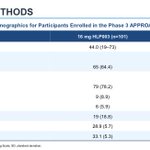
Baseline Demographics for Participants Enrolled in the Phase 3 APPROACH Trial
$HELP
Link: helus.com/wp-content/uploads…

Psychedelic Vantage retweeted

Lilly wants to study and improve the psychedelic ibogaine, its neuro leader says
@ky_lahucik and @maxonwifi for Endpoints.
endpoints.news/lilly-interes…

Helus Pharma Appoints Dr. Suresh Durgam to Board of Directors
$HELP
ir.helus.com/news-releases/n…
Compass Pathways Joins Forces with Leading Mental Health Organizations to Mark First-Ever U.S. Treatment-Resistant Depression (TRD) Awareness Day
$CMPS
ir.compasspathways.com/News-…
Psychedelic Vantage retweeted
$CMPS $DFTX $HELP $STIM
J&J's Spravato just had its best quarter ever: $624M in Q3, up 36% YoY. US sales were $559M (+38%), and it's at $1.68B YTD (+40%) [1].
With more patients hitting their deductibles and using leftover FSA dollars by year-end, I expect Q4 to continue higher. For reference, another 7% QoQ growth from Q3 to Q4 would translate to $668M in sales in Q4 and $2.34B in FY26.
In this scenario, to reach the $3B–3.5B in 2028 sales J&J has targeted, per Reuters [2], Spravato would need to grow 13–22% annually over the next two years, even as growth slows from 40%+. In a recent conference, Compass management said they see "no reason why they will not hit that number" [3].
On the call, CEO Joaquin Duato called it "impressive growth… reflecting strong demand in treatment-resistant depression," and J&J credited "strong physician adoption and increased patient demand" [4].
In addition to growing physician and patient adoption, certified treatment centers are increasing by roughly 500 per quarter, to about 8,500, per Compass [5]. Given all of the above, I expect Spravato to keep growing and meet its sales targets, even if COMP360 launches next year.
More importantly, a point worth emphasizing: even though people with TRD have few treatment options, Spravato reaches only about 100K of the 2.8–4.0M US adults with TRD, roughly 3% [6]. Perhaps that grows to 4–5% in a few years, but the vast majority of people with TRD still wouldn't be getting it.
Why that gap exists, and what it means for whether other psychedelic medicines will scale, is what my Beyond Approval series aims to answer.
As I will argue, whether psychedelic medicines reach patients depends on an interconnected healthcare ecosystem of patients, providers, treatment centers, payers/PBMs, specialty pharmacies, and regulators. Their decisions, shaped by clinical evidence, economics, and policy, influence access and how care is delivered. Which medicines ultimately scale will depend on how each product's profile fits within that ecosystem.
I'm writing the next part now, which uses the patient journey as a framework for deriving the seven drivers of psychedelic medicine adoption. With each chapter thereafter, going into more detail on each one.
Subscribe here: beyondapprovalpsychedelics.s…

Psychedelic Vantage retweeted

Very good:
Safe & Effective Psychedelic-Assisted Therapy is Always Psychotherapy: An Open Letter to the FDA
caseypaleosmd.substack.com/p…
Psychedelic Vantage retweeted
NIMH Grant Opportunity
The National Institute of Mental Health (NIMH) is set to share a grant opportunity to support the implementation of ‘rapid-acting psychotropic interventional drugs’, or RAPIDs, which includes ketamine and psychedelics.
The program is geared around real-world effectiveness and expects to award $20M across three projects.
It will be posted tomorrow, October 10th.
Read more on our website: psychedelicalpha.com/news/p%…

Psilera Greenlit to Initiate Phase 2 of NIH Grant for Alcohol Use Disorder
prnewswire.com/news-releases…

Helus Pharma to Host Investor Presentation on October 21, 2026
$HELP
ir.helus.com/news-releases/n…
Compass Pathways Celebrates Opening of New U.S. Office in Jersey City, New Jersey
$CMPS
ir.compasspathways.com/News-…
Helus Pharma Announces Completion of Legal Name Change
$HELP
ir.helus.com/news-releases/n…