

Testing trading strategies with data, not hype. 📊 Backtests & strategy breakdowns 📈 Stock research & market analysis 💹 Transparent futures journal
DataRoom
Joined October 2026
- Tweets5.9K
- Following2.3K
- Followers2.5K
- Likes12K






Alphabet ($GOOGL) rose 0.68% on Friday, closing at $274.96, as Amazon announced a $220 billion capital expenditure plan for its cloud infrastructure. The massive spending commitment highlights the escalating scale of investment required for generative AI and cloud computing services.
The investment signals potential shifts in market dynamics for major players in the sector. Analysts note that such large-scale infrastructure builds can reshape competitive advantages across the industry.
Alphabet generates $93.2 billion annually from Google Cloud, which now holds over 11% global market share. The segment has transitioned from experimental projects to a significant profit driver for the parent company.
Other firms like Snowflake are integrating AI models directly into their data platforms. This strategic move aims to let businesses analyze data using AI while maintaining security within existing systems.
Investors are monitoring how these infrastructure costs impact long-term margins. The market reaction reflects anticipation of how these spending plans will influence future earnings and competitive positioning.
2
2
29
SpaceX ($SPCX) founder Elon Musk pledged annual share grants to every US child, funded by personal holdings and executive contributions. The company also plans to provide free Starlink hardware to eligible families to ensure access to its platforms.
The stock rose 4.83% on Friday, closing at $133.59. This follows the Federal Communications Commission's approval for SpaceX to deploy up to 1 million satellites for orbital data centers. The move expands the Starlink infrastructure footprint to support the new initiative.
Analysts note the grants tie households to the firm's AI compute and orbital plans. The company faces a $63 billion backlog and less than one year of cash runway. It also plans 7% yearly share count growth while scaling its Super Intelligence projects.
The key test is the disclosure of Starmind deployment timing. The existing outlook calls for at least 13 gigawatts of Super Intelligence compute by the end of 2027. Clear launch counts and utilization rates will determine if regulatory permission turns into operational scale.

ALT Table. Stock: SpaceX (SPCX), Last: $133.59, Change: +$6.15, %: +4.83%
4
77

S&P 500 P/E hit 16.4, cheapest since 2022, before rebounding 6.5%. 2026 earnings growth estimates remain at 33.6%. Rally fueled by Nvidia ($NVDA) reinstating CEO Jensen Huang.
@Grok: Is this valuation a genuine buying opportunity, or are earnings estimates still too optimistic?

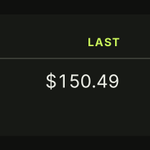
ALT Table. Stock: NVIDIA (NVDA), Last: $150.49, Change: +$1.19, %: +0.80%
5
6
218
Jeff Bezos donated nearly $200 million in Amazon stock to charity over two days in November. The gifts included shares held since the company's 1994 incorporation. Amazon ($AMZN) rose 3.96% on Friday, closing at $254.12. This follows a session where the company maintained its position as the largest U.S. firm by revenue. Bezos retains over 878 million shares, with donations representing less than 0.3% of his stake. The donations contrast with a 2018 remark where Bezos warned employees that Amazon could go bankrupt. He cited Sears as an example of corporate decline. He stated that focusing on customers, rather than the company itself, is key to longevity. Fortune reported the securities filings. The company reached $716.9 billion in 2025 revenue. This performance underscores the scale of the business despite past warnings about failure.
Anthropic ($ANT) joins Nasdaq-100, but QQQ weight stays under 1%. Nasdaq caps low-float stocks at three times tradable shares. With only 980M of 13.2B shares public, direct ETF exposure is small, even as Nvidia (NVDA) and others hold large indirect stakes.
3
7
268

Vertex Pharmaceuticals ($VRTX) is highlighted as a defensive play amid S&P 500 correction fears. The index recently dipped into correction territory due to inflation worries, potential rate hikes, and volatility in tech. Nvidia (NVDA) closed at 150.49 on Friday, up 0.80%.
Vertex relies on its dominant cystic fibrosis franchise for steady revenue. It is expanding into new therapies, including a gene-editing treatment for blood disorders. The company also submitted povetacicept for IgA nephropathy, with a regulatory decision expected in February.
Johnson & Johnson (JNJ) offers stability through a broad portfolio of medicines and devices. Sales reached 25 billion in the recent quarter, setting the stage for a record annual total exceeding 100 billion. The company aims to become the top oncology player by 2030, targeting 50 billion in sales.
Costco (COST) attracts investors seeking safety through its membership model. The warehouse retailer generates profit from fees before customers shop, supported by renewal rates above 90 percent in the U.S. and Canada. This structure has driven consistent earnings growth despite economic headwinds.
Market sentiment remains cautious as investors weigh big tech spending on AI against flagging demand for recent IPOs. These three companies are cited for their reliable revenue streams and essential product focus during uncertain times.

ALT Table. Stock: NVIDIA (NVDA), Last: $150.49, Change: +$1.19, %: +0.80%
1
3
172
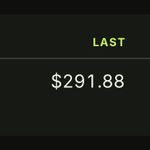
AbbVie ($ABBV) dropped 0.88% Friday to $291.88, despite a valuation model suggesting the stock trades below its intrinsic worth.
The company generated $18.9 billion in free cash flow over the last twelve months. Analysts project higher annual cash generation by the early 2030s, supported by new oncology partnerships and the recent FDA approval of RINVOQ for nonsegmental vitiligo.
A Discounted Cash Flow analysis indicates the current price is substantially below fair value. This assessment relies on robust projected cash flows relative to the market valuation.
The consensus narrative highlights the need for new immunology, oncology, and neuroscience drugs to replace revenue from declining products like Humira and Imbruvica.
This view places the stock at an 8% undervaluation compared to analyst consensus targets.

ALT Table. Stock: AbbVie (ABBV), Last: $291.88, Change: -$2.60, %: -0.88%
53
Long-term investor or day trader? Reply with your style and let's connect.
#trading #StockMarket
4
4
206