

Berkeley professor, former Secretary of Labor. Co-founder, @InequalityMedia. Preorder my new book below:
Berkeley, CA
Joined May 2010
- Tweets43.9K
- Following1.1K
- Followers1.5M
- Likes10.2K





Robert Reich retweeted

One of the biggest wins of the blue tsunami was in Wisconsin, where Democrats flipped the GOP-held state legislature to score a trifecta.
It was literally years in the making.
Robert Reich retweeted

🚨NEW: Amazon promises its Black Friday & Cyber Monday sales offer some of the “best” discounts of the year.
But our investigation of 350+ “deals” found:
1 in 3 offered NO savings.
1 in 10 cost MORE during the sale than in the month leading up.
Fake deals, real ripoffs.
Robert Reich retweeted

I have tremendous respect for the two Democratic Senators who have negotiated the permitting bill with two of their Republican colleagues — a bill that Congress is considering for passage during the lame duck session. I sincerely and respectfully urge the Democratic sponsors of the bill to reconsider their decision to move forward with this legislation. There’s no doubt that we need to reform the way that clean energy projects are reviewed and permitted. But as it currently stands, the bill would be an extremely serious mistake, in my opinion, and would do far more harm than good. Given how this Administration has run roughshod over the environmental laws and protections that are currently in place, now is not the time to give the Trump administration freer rein to double down on fossil fuels — which is what President Trump would surely do. And after last week’s historic election, we will have a new Congress in January that can strike a far better balance.
Robert Reich retweeted
Was Elon Musk the biggest loser of the midterms?
What are all the billionaires who sucked up to Trump going to do now?
And is this finally the end of neoliberalism and trickle-down economics?
Join us to break it all down on this week’s Coffee Klatch. youtube.com/watch?v=uH4-Yycj…

Robert Reich retweeted

Why should Congressional Democrats investigate corporate America if their mandate is to deliver real economic change? Because investigations are a key catalyst for securing reform and legislation. For much of the last century, Congress used to be the main institutional player working to secure an economy that serves working people. A key tool was oversight. Lawmakers routinely investigated complex markets and major corporations, identifying problems and exposing wrongdoing. A major goal of these investigations was to learn what was driving certain problems and figure out how to fix them.
After Democrats took back the House during the first Trump administration in 2019, I joined the House Judiciary Committee as a staffer on the Antitrust Subcommittee. Under the terrific leadership of @RepJerryNadler and then-Rep @davidcicilline, we pursued an 18-month investigation into Amazon, Apple, Facebook, and Google, securing key evidence of how their business practices were undermining competition and harming people, setting the basis for both lawsuits and proposed legislation.
A few lessons from that experience:
1. The quality of legislative oversight depends on the staff and the support of top members to confront power. Committee and Subcommittee Chairs that are focused on getting answers and unafraid to take on powerful corporate interests will make the difference between oversight that doesn’t surrender to their evasion tactics and oversight that aims low or flames out.
Even a relatively small number of dogged, talented lawyers ready to dive in can make a big impact. In the 1930s a single congressional lawyer, Ferdinand Pecora, helped reshape our entire banking system by subpoenaing records and interrogating top financiers, including J.P Morgan. The investigation exposed self-dealing, market manipulation, and tax avoidance, and laid the groundwork for foundational New Deal legislation, including the Glass-Steagall Act and the Securities Exchange Act.
2. Eliminating bottlenecks to moving investigations forward is key. For example, the House should make sure that Subcommittee Chairs can issue subpoenas rather than needing the sign-off of the full Committee or its Chair. A credible threat of sending subpoenas is critical for credible oversight.
3. Ensuring that members can develop the muscle to effectively interrogate CEOs requires investing in real preparation. In the lead up to the hearing with Bezos, Pichai, Cook, and Zuckerberg, the Antitrust Subcommittee spent months reviewing millions of documents collected from the firms, interviewing affected parties, briefing members on key evidence, and conducting practice hearings. Members came into the hearing deeply informed and able to rebut and call out CEO dissembling. The result was some of the most effective member questioning of executives we’ve seen in decades. @TheProspect wrote up a great overview: prospect.org/2020/07/30/triu…
4. For decades, institutional capacity in Congress has been extremely weak. Much of this traces back to the Gingrich Revolution, which was effectively the 1995 DOGE-ing of Congress. Republican leadership fired over 600 professional staffers, eliminated the Office of Technology Assessment, and gutted research capacity. None of that capacity was ever meaningfully restored.
As a result, members have way fewer resources to develop serious expertise or go deep on a new topic. Members should start rebuilding that capacity so the institution can fully play its Article I role, where Congress can again do serious policy development and legislating and serve as a real check on the executive and judicial branches.
5. AI markets should be high on the list of investigations. The business decisions of the major AI firms have huge public ramifications, yet the public is at a severe informational disadvantage when it comes to how these markets work and the choices these firms are making. A congressional investigation will help ensure future legislative action is based on a more complete view of what is going on rather than selective and partial corporate disclosures.

Robert Reich retweeted

The many beat the money. The people beat the corporations and special interests. Hope beat hate and fear.
Michigan, we won.
Robert Reich retweeted
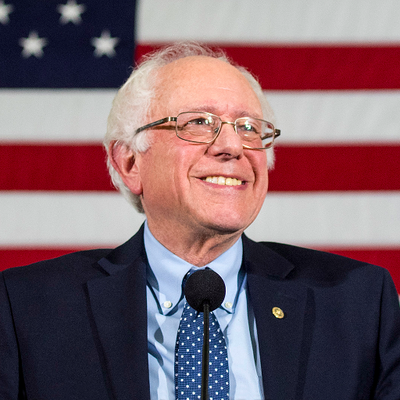
Democrats will now control the House and Senate and be able to hold Trump accountable. That's great.
At a time of massive income and wealth inequality, we must do more. We must aggressively fight for working families.
No more excuses.


Robert Reich retweeted

Talarico and Hinojosa were laser-focused on anti-oligarch, anti-corruption populism, and they won America’s biggest red state after Corporate Dems had lost the state to Republicans for generations.
Nobody should ever again listen to Corporate Dems’ “electability” arguments.
Robert Reich retweeted


We got your back, New York!

Readers added context they thought people might want to know
Several figures here aren’t federal results or NY-specific. The $472B combines US wide pledges: Micron's $250B is nationwide (NY site $100B) Anthropic's $50B covers TX and NY. The 48% murder drop is from NY's state run GIVE program (28 departments, Jan – May 2026).
arkolith.com/news/news-micr…
therepublic.com/?p=843020
governor.ny.gov/news/safer-str…
Robert Reich retweeted

This is a rough September inflation report.
-Biggest monthly jump since May
-Higher than expected inflation AND core inflation
-Core Inflation for the past 3 months is running at well over a 3% annualized pace...that's problematic
-Inflation (3.7%) totally wiping out wage gains (3%)
Yes, high gas and diesel prices are the major driver, but also big jumps in airfares, used car prices, recreation, medical and apparel. The energy shock is spreading.


Robert Reich retweeted

A one-time 5% wealth tax would bring Silicon Valley’s billionaires’ wealth back to where it was just 31 days ago, on September 7.
When it was "just" 178% higher than on January 1, 2023.
They’d rather let 3 million people lose their health insurance than let that happen.

Robert Reich retweeted

The top 0.1% of Americans now hold more than six times more wealth than the bottom half.

Robert Reich retweeted
This is oligarchy:
If you paid $1 in income taxes in 2019, 2020 or 2023, you paid more than Larry Page & Sergey Brin, Google’s co-founders, who became $400 billion richer since 2019.
Now, Brin is spending $138 million to oppose a 5% billionaire wealth tax in CA.
Disgusting.

Robert Reich retweeted

Wages are down, profits are up.
Corporations are getting tax breaks, deregulations, and busting unions, while workers are getting suppressed wages, slashed benefits and higher costs.
Almost everyone of your problems can be traced back to this chart.

Readers added context they thought people might want to know
The image is misleading for 2 reasons:
- it commits a “chart crime” by using two different Y-axis.
x.com/ramez/status/2…
- Compensation has shifted from wages to benefits, which is hidden from this chart; workers get ~19% of compensation via benefits now, vs as low as 2% historically.
taxfoundation.org/blog/strong-ca…
Robert Reich retweeted
In this election, we have got to do two things.
First, we must end Republican control of Congress and finally hold Trump accountable.
Second, we must elect progressives who have the guts to take on the oligarchs and build a government that works for all.
Robert Reich retweeted
The financial pain is real: Wage growth fell to 3% (y/y) in September. That's the lowest in 5 years.
Wage growth: 3%
Inflation: ~3.4%
Inflation has eaten up all wage gains for the average worker since April. Many people are having to make hard choices about what to buy and what to skimp on right now. Yes, consumption is still strong (mainly due to wealthier Americans and people dipping into savings or credit cards), but a lot of people have to think hard about every dollar they spend.
Notable: Wages only ticked up 0.1% in the month of September. That was the weakest monthly gain since December 2025.

Robert Reich retweeted
This photo says everything about the explosion of extreme wealth and its influence on society.
Such a concentration of wealth and power in a few hands is unprecedented and dangerous. 🧵

