

FO / HF, L/S securities, real estate, private equity. Behavioral finance. Joyologist. Eastern Shore. Mortimer is greedy. 🇺🇸 #BillsMafia Buffalo native
Joined October 2019
- Tweets19.2K
- Following2K
- Followers8.6K
- Likes18.7K




Randolph Duke 🇺🇸 retweeted

We'll be performing at the @BuffaloBills halftime show on Thanksgiving Night at Highmark Stadium 🏈🙌

Randolph Duke 🇺🇸 retweeted

$RBLX earnings revealed a business that appears to have caused long-term impairments to its viral growth engine as its YoY declines continue. Read our Oct. 27 report and disclaimers linked here. bleeckerstreetresearch.com/r… . Some thoughts on the quarter:

Randolph Duke 🇺🇸 retweeted
Bleecker Street Is Short Roblox $RBLX. Please see our full trading disclaimer below as well as on our report. Report Link: bleeckerstreetresearch.com/r…



Randolph Duke 🇺🇸 retweeted
Bleecker Street Research is short $LYFT. See the full disclaimer on our website, which covers our future trading plans.
We estimate $LYFT faces $1.3bn to $2.7bn of undisclosed liabilities from rideshare sexual assault litigation.
Report Link: bleeckerstreetresearch.com/r…

Randolph Duke 🇺🇸 retweeted

1/x: We are short $ALOY (REalloys Inc) because we believe that the company is built on science that hasn't worked in decades, and a study for which REalloys did not obtain permission to use. We are also skeptical of the cast of characters involved in $ALOY, which includes a sanctioned promoter and a character described as a “mob boss” by a reporter. For the full short thesis, including our very important disclaimer about our financial interests and how they work, please visit the Pelican Way Research website, which is linked in our bio.

Randolph Duke 🇺🇸 retweeted

Overheard someone saying Hikma is good but $LQDA still needs to prove obviousness.
DTX3 - On UTHR's May 2018 earnings call, Martine said, in response to a question about using Tyvaso for PH-ILD, that she was aware Dr. Waxman and other doctors used Tyvaso off-label to treat PH-ILD patients, and they told $UTHR that "this drug works" — even better in Group 3 PH (PH-ILD) than in PAH, specifically in improving exercise capacity.
This compounds actually. UTHR's own NEJM paper (the INCREASE publication) identifies Faria-Urbina and Agarwal as "pilot studies" that provided a reasonable expectation of success to run INCREASE.
UTHR's start witness also testified no company runs a Phase 3 trial like INCREASE without proof-of-concept pilot studies. So UTHR's own witness and own documents establish that the prior art gave both motivation and a reasonable expectation. Liquidia's opening brief opens with exactly this btw: "This drug works." — UTHR's CEO, 2018.
Thank you Dr. Rothblatt & Dr. Nathan for your service.
RT @TrungTPhan: DeepSeek is raising $7B at $50B valuation.
Here is a rare English-language interview with one of the AI startup’s co-found…
Randolph Duke 🇺🇸 retweeted

Cheer before the horn is great. But holy shh how bout the pop before Benny even touches the puck cause the fans see the 2 on 1
Randolph Duke 🇺🇸 retweeted
According to court allegations, Manning resigned rather than explain under oath, said he'd "burn Mawson to the ground", & filed a bad-faith bankruptcy petition. We think $SHAZ is Mawson with a new coat of paint: executives, related parties, & questionable promises all carry over.
Randolph Duke 🇺🇸 retweeted
We are short $SHAZ (SharonAI). The CEO allegedly siphoned millions, threatened to burn down his last public company. The $1.25bn anchor contract is with a small Indian data center operator whose newest major customer is sanctioned.
Link: bleeckerstreetresearch.com/r…

Randolph Duke 🇺🇸 retweeted

I don’t think it’s an exaggeration to call this the greatest piece of prediction market content created to date.
Randolph Duke 🇺🇸 retweeted

Paul Tudor Jones says the US is more dependent on equity prices than ever, and explains what a 35% correction would trigger in the economy:
"We're 252% of stock market cap to GDP. In 1929 we were 65%. In 1987 we got to ~85-90%. In 2000, 170%.
If you think about the periodicity of significant bear markets. Since 1970, we get a mean reversion about every 10 years.
Let's say mean revert to the past 25 or 30-year PE. That would be a 30, 35% decline. Well, 35% on 250% of GDP is 80, 90% of GDP.
10% of our tax revenues are capital gains, they go to zero. So you can see the budget deficit blowing up. You can see the bond market getting smoked. You can see this kind of negative self-reinforcing effect.
In the stock market, we're over-equitized as a country. We have the highest individual equity weightings in the history of the country.
And then the real problem is if you look at private equity in 2007-2008, that was about 7% of institutional portfolios. Now it's about 16% of the institutional portfolios. We're so much more illiquid than we were in 2008.
The problem is that if you buy the S&P at this current valuation, the 10-year forward return is negative when you buy the S&P with a PE of 22. That's what history shows.
So yes, the S&P is spectacular long-term, if you have a hundred-year view. But that's because that's an average of a hundred years, including times when the S&P 500 PE was 6, 7 and 8, or one third of what it is right now.
Valuation matters a lot, and the stock market's really high and it's gonna be really hard to make money from here with any kind of long-term view."

My guest today is Paul Tudor Jones (@ptj_official), one of the greatest macro traders of all time.
He correctly predicted the 1987 stock market crash and shorted the Japanese bubble in 1990. For over 40 years, his flagship fund has had a negative correlation to the S&P 500. 100% of his returns are alpha.
He says today's market has so many similarities to 2000, "the easiest bear market I've ever seen in my whole life."
He makes the case for going long dollar-yen, why Bitcoin beats gold as an inflation hedge, and why he was wrong about Warren Buffett.
But what I'll remember most from this conversation is Paul's zest for life. He's 71 and still wakes at 2:30 every morning to trade the London open. He works out for two hours a day. He walks with his wife every evening. He travels the country chasing peak spring and peak fall. He's so excited about the songs picked for his funeral that he wishes he could be there to hear them.
Paul has lived five lifetimes in one. He's one of the most entertaining and interesting people I've met, and the conversation will leave you searching to be as passionate about what you do as he is about what he does.
Enjoy!
Timestamps:
0:00 Intro
1:00 The Kindest Thing
13:19 Trading vs. Investing
17:33 Lessons from Warren Buffet
22:24 The Existential Risks of AI
29:54 The Nature of Trading
31:46 Bitcoin
35:55 Bubbles
42:08 A Day in the Life of PTJ
46:00 Information Overload
47:07 Passion for Markets
50:49 The Robin Hood Foundation
54:18 The Workless World
56:03 Journalism
1:00:00 Principal Components of a Great Life
1:05:06 Kill Them With Kindness


Randolph Duke 🇺🇸 retweeted

The vibes are turning against Dario. I expect this to accelerate until he changes his messaging
Why? Because AI broke the social contract of the internet.
For the last 20 years, people shared their data with tech companies as part of a *symbiotic* relationship. The services got better. Traffic went to your site. Network effects made transactions liquid and simple.
AI broke that contract. AI sucked in the collective IP of civilization and paid out nothing for the inputs. And now Dario goes on TV every day to tell us he is going to break the economy and our children will be poor. But he did that. It’s economic gaslighting.
Dario is the embodiment of the “We’re all trying to find the guy who did this” meme and people are not going to sit there and take it
AI needs a better, more inclusive message. I expect he will realize this eventually. The question is whether he will realize it before it’s too late.
Randolph Duke 🇺🇸 retweeted
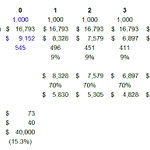
We have a new report out today on the concept of "competitive advantage period." A company’s anticipated value creation is measured by how much its return on invested capital (ROIC) exceeds its cost of capital as well as how long it can maintain a positive spread, a reflection of its sustainable competitive advantage. The report is about the “how long” part.
