
Sales & marketing @FinaloopTeam | Ecommerce CPA 🧮| Brand, content, & sales 🎯🚀| Oddly amused by dad jokes 🤣
Joined January 2022
- Tweets289
- Following248
- Followers189
- Likes942









Rayla Rappaport retweeted

10 out of 11 first-time Black Friday buyers didn't come back within 90 days last year. That's the typical brand.
The first order looked great, then nothing.
BFCM gets you an order. Whether it becomes a customer is decided in the weeks after.
Unless you want your BFCM customer to be a one-night stand, don’t forget to “call.” Write the follow-up before Friday, not after. The next product. A reason to come back that isn’t another 30% off.
Your best BFCM work happens the morning after.
Rayla Rappaport retweeted
Across 1,000 brands, median Meta CPMs are up 25% since Nov 1.
Last year they climbed another 68% from here into Black Friday.
Looks like she’s just getting warmed up…


Rayla Rappaport retweeted
From $1M to $10M in sales, the average brand spends 5.7% of sales on fulfillment (excluding last mile delivery). From $10M to $100M, it’s 3.8%.
You think what you pay your 3PL is “typical”. But do you really know what typical is?
And “typical” changes by industry.
A typical food & beverage brand pays over 8%.
Most founders never find out where they fall, because nobody shows them what brands their size pay. You can’t fix what you can’t compare.
And small changes add up.
My team teases me for asking about a $100-a-month subscription. But five of those is $6k a year.
I’ve seen brands save over $20K a year from changes they didn’t even feel, like cancelling unused tools.
The spend analysis dashboard: every vendor and category as a % of sales, next to brands your size, in your industry. So you know which costs are normal, and which you’re overpaying.
Profit isn’t only found in growth. A lot of it is sitting in invoices nobody rereads.


Rayla Rappaport retweeted
The most expensive ad decision is cutting the wrong campaign.
Your Meta prospecting looks like it's losing money: under $1 of profit per $1 spent. Easy cut.
But Meta can't see the customer who saw you on Instagram, then bought on Amazon two days later.
Attribution won't catch it either.
It follows pixels and clicks on your site, and Amazon is a closed box. So a campaign that makes money ends up looking like one that loses it.
Here’s this week’s Analyze. Act. Lock In. playbook:
1️⃣ Analyze: "When we spend more on Meta, does it boost our Amazon sales?"
2️⃣ Act: "Re-rank our campaigns with that boost included, and draft the budget changes."
3️⃣ Lock in: "Rerun this every month and post it to Slack."
The result: the "losing" campaign makes $1.19 per $1, and cutting it would have cost about $167K a year in Amazon profit. The email to the media buyer was already drafted.
No ad platform can show you this, because each one only sees part of the data. Finaloop has your Meta spend and Amazon sales in one place, reconciled to the books.
Rayla Rappaport retweeted
Clocks went back this weekend.
Me: finally, an extra hour of sleep. Also me: one quick thing in Claude.
3 hours later: deep in a building rabbit hole. The founder version of gaming.
The ask: a 12-month media plan that maximizes contribution profit.
Meta says it drove the sale. So does Google. So does Amazon. The books say otherwise.
So it:
→ rebuilt ROAS from actual sales
→ cut branded, retention and warm campaigns to isolate real acquisition
→ mapped CPMs by month to find when attention is cheap
→ used true LTV by acquisition month, after product and delivery costs
→ fit a CAC curve and funded each month until profit maxed out
Daylight saving: +1 hour. Sleep: −2. Worth it.
Credit: @_RafiGanz for the idea, @FinaloopTeam for the numbers, Claude for the build.

Rayla Rappaport retweeted
Your biggest retailer just paid you $286,412.
Which invoices was that for?
One deposit covers six invoices.
2% off for paying early.
A damaged-goods allowance.
A slotting fee.
Traditional AR is built around invoices. Every payment matched to the invoice it paid before the balance is right.
It's how AR was designed.
It's not how brands run.
So we built customer balances around the customer instead.
Every retailer and wholesale customer has a running balance.
- Invoices add to it, whether created in Finaloop or synced from your EDI provider, Shopify B2B, Stripe, PayPal and more.
- Payments bring it down as soon as they land.
- No linking needed.
The gap? Booked to deductions and broken down based on the remittance note, when this comes in.
And every invoice gets its COGS in real time, from your landed cost. So you see margin by invoice, by customer, and a full P&L for each retailer.
Want to match payments to invoices anyway? You can. Either way, your Finaloop accountant makes sure your books stay accurate and updated.
Rayla Rappaport retweeted
1/ "Let's stop all marketing."
That's what I presented to our investors at the Q4 2025 board meeting.
They reacted about how you'd expect.
Here's why we paused marketing for a year, why I went quiet here, and what came out of it for @FinaloopTeam 👇
Rayla Rappaport retweeted
@jackybh 💪
That's actually what AI has opened up for our customers.
We always had the best reconciled business and marketing dataset for consumer businesses. Not by choice. We do accounting and taxes and produce audited financials, so we have no option but to account for every penny.
That one order in Shopify that also went out as a Stripe invoice and got paid offline still has to land once, with revenue and cash each counted where they belong. With full ledger and audit trail.
What you could do with all of it was capped by whatever we built into the UI, and keeping up with customers feature requests was never easy.
Connect it to AI tools and the cap is gone. Customers build practically anything now, with no garbage in, garbage out. Reporting, and actual apps.
We've seen custom daily reporting into Slack. Teams talking to their data through Claude or Slack. CFO-grade dashboards. Stockout and overstocking alerts. 13-week cash flow models. One customer built a light order management system.
Every result is deterministic, not statistical, because the data is the source of truth. The AI just harnesses it and shapes it per our customers' needs.
We're turning these into skills and distributing them across customers.
Every finance team can build anything now, without touching data cleaning, reconciliation across many overlapping sources, data engineering, integrity tests, scale, or maintenance. We do all of it for you.

Rayla Rappaport retweeted

probably one of the more impressive product builds I've seen. you'd think getting the numbers right for ecomm is bread & butter of every store, but wow it's not. benchmarking against what other stores like yours is a total dark art. great stuff.

Today we launch Margins, a financial infra and analytics suite that feeds your and your agents’ day to day. Margins is the first fully-reconciled data layer built for consumer brands.
It connects to all your data sources, including Shopify, Amazon, Payments processors, Meta, 3PL, EDI, billing, and bank transactions.
Connect Claude and chat with your data, build your own dashboards and workflows, or use our sleek, designed ones built off our experience working with thousands of brands.
🎉 To celebrate the launch, we’re giving away free forever, unlimited access to the FULL Margins product for the first 200 brands to sign up, no matter your size from starter to 9 figures. No trial. No sales call. No stripped-down version.
RT+ comment “MARGINS” and I’ll send you your personal link.
The story 👇👇
Me to my kids in 10 years: Back in my day, we used to work with employees and not agents.
Kids: and you closed the books by hand? In the snow?
Margins launched Tuesday, and the response has been incredible.
🎉109 brands connected their stores, ad accounts, and banks.
They're already asking their data questions like:
"Which channel is profitable after returns and ad spend?"
"Why did my margin drop last month?"
"Which monthly cohort from the last 6 months has the best LTV?"
But the question I get most: how is Margins different from Finaloop, and which one do I need?
Short answer:
Already on Finaloop? You have everything Margins does, built in. Connect the MCP and start asking.
Not on Finaloop? Margins gives you the same live, reconciled data layer:
→ every store, marketplace, ad platform, bill tool and bank, connected
→ finance and marketing in one set of dashboards you can trust
→ Claude (or any AI tool) pointed at your data
→ your own workflows on top
But Margins isn't accounting. When you need books you can hand to the IRS, a lender or an investor, that's Finaloop:
→ full P&L, balance sheet, cash flow and general ledger that accounts for every dollar
→ a dedicated team of accountants reviewing and closing your books
→ an MCP that works as an accounting agent: add bills and invoices, run reports, compare periods, and see what changed
Margins shows you what's happening in your business.
Finaloop is your complete financial record.
Start wherever you are. We're shipping fast on both, and we'll be here when you need the books.
Full comparison in the image👇

4
105
A finance person and marketer can look at the same business and report two completely different realities. I've been both people.
That's a big part of why I'm so proud of what we launched today.
Today we launch Margins, a financial infra and analytics suite that feeds your and your agents’ day to day. Margins is the first fully-reconciled data layer built for consumer brands.
It connects to all your data sources, including Shopify, Amazon, Payments processors, Meta, 3PL, EDI, billing, and bank transactions.
Connect Claude and chat with your data, build your own dashboards and workflows, or use our sleek, designed ones built off our experience working with thousands of brands.
🎉 To celebrate the launch, we’re giving away free forever, unlimited access to the FULL Margins product for the first 200 brands to sign up, no matter your size from starter to 9 figures. No trial. No sales call. No stripped-down version.
RT+ comment “MARGINS” and I’ll send you your personal link.
The story 👇👇
Loved working with the legendary @AaronOrendorff on this.
It's value-packed, based on real data from real brands, and sprinkled with knowledge nuggets from some of the most experienced operators and financial gurus in the industry.

Is this the greatest data release for 7–8 figure brands in the history of ecommerce?
Yes. It is.
Two years of P&L analysis: $3.16B, line-by-line + broken down by vertical.
- Sales
- Net sales
- Gross profit
- Contribution margin
- OpEx
- EBITDA
You can download every chart 📊
But that’s not all. @FinaloopTeam and I asked three questions:
1️⃣ What is the single most significant financial struggle growing DTC brands are facing?
2️⃣ How can benchmark data be helpfully used (put to practical work) inside a business?
3️⃣ Where do you turn first in a P&L to find opportunities for more profit or better cashflow?
We got original insights from …
- @dave_stickland, Popsmith
- Kristin Swarek, Caden Lane
- Cameron Lee, Fractional CFO
- Jeff Lowenstein, Free to Grow
- @andrewjfaris, AJF Growth
- @MattMullenax, Huron
- @seanfrank, Ridge
- @mbertulli, Pela Case x Lomi
- @ChereneAubert, ILIA
- Mark Brown, &Collar
- Nate Littlewood, Future Ready
Did you have plans for the holiday? Cancel them!
Go. Get. This. Report.
It’s the last non-Operator’s thing I will publish. So consider this my farewell content banger.
Link below ↓
1
80
Rayla Rappaport retweeted

As July books close, you're gonna start to hear more about the tariff pain showing up for eCom brands.
Why now?
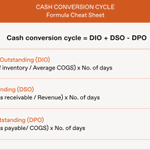
The median cash conversion cycle for an 8-figure eCommerce brand is 92.63 days (source: @FinaloopTeam). That means that brands generally have about 3 months of inventory on hand at any given moment.
As a result, July likely represents the first time most brands are selling inventory subject to increased duties.
And the reality is that brands are absorbing the bulk of these costs:
@GoldmanSachs latest estimates suggest:
-Foreign exporters absorbed 14% of US tariffs
-US companies ate 64%
-US consumers ate 22%
And the pain is just beginning...
Don't be surprised if the next few months the topic surges back into focus as the ire of angry store owners is reignited.

Rayla Rappaport retweeted
We pissed off a lot of customers.
For the past year, TikTok Shop exploded for ecommerce brands. Every week, we got the same question:
“When is your TikTok Shop integration coming?”
The truth is that for a long time, we couldn’t build it.
TikTok Shop was pure chaos. It was a new platform with confusing APIs and constantly changing logic.
Sure, we could’ve shipped something fast, but we refused to ship something broken.
Some companies rushed to market with half-baked solutions and called it an “integration,” but the numbers din’t match, and the orders didn’t reconcile.
Wrong data is worse than no data.
So we made the hard call: We’d take the heat, lose deals, and risk churn (my board was thrilled about this one).
Instead, we built it slowly and accurately – a real-time, order-level sync built together with the TikTok Shop team.
Every week, our support team fielded complaints but we still waited to ship until we were sure it was ready.
Now? It’s here. The first and only real accounting integration for TikTok Shop.
- Revenue: sales, discounts, refunds
- Fees: selling, affiliate, shipping
- COGS: matched at the SKU and warehouse level
- Fulfillment, taxes, samples: all synced, in real time
Every order and every detail, completely reconciled with your full financial picture.
Massive thanks to the TikTok Shop team for working with us to make this happen.
It was worth the wait and I’d make the same call again.
Rayla Rappaport retweeted
TikTok Shop is🔥
But behind the scenes?
Your numbers are a mess.
❌ Sales & fulfillment? Delayed.
❌ Discounts & subsidies? Hidden.
❌ Fees & commissions? Buried.
❌ COGS & samples? Disconnected.
Ecommerce founders need more.
We’ve been building the only integration that actually fixes it.
Big drop coming. Stay tuned.
The biggest tax handicap founders face? Not knowing what they don’t know.
That blind spot = missed cash.
Join me + @startupcpg to start asking the right questions — and stop leaving money on the table. 💸
🔥Tax mistakes can wreck CPG margins.
Join @FinaloopTeam + @startupcpg for a webinar on
tax optimization strategies.
💸 Missed deductions
⚠️ Costly sales tax errors
📉 Poor planning = lost profit
Don’t leave money on the table.
Register now 👇
eventbrite.com/e/tax-blind-s…

Rayla Rappaport retweeted

📷 Big news: We're launching the Finaloop Ecom Finance Academy — the 1st event built to help DTC brands win in 2025.
From surviving tariffs to smarter funding - it’s the financial edge your brand needs.
🎟️Free for qualified brands
📍Austin | June 5
👇
finaloop.com/academy/events/…

Rayla Rappaport retweeted
This isn't just another post about how the tariff virus will kill you. It's the vaccine.
⚡ INTRODUCING: FINALOOP'S SKU ANALYSIS DASHBOARD
Here’s how it works (a thread)
I couldn't be more proud to be part of this amazing company!
🚀 Big news! (and sorry for the cringe, but this one’s worth it).
In their annual tech conference in NYC, @Finaloopteam was named one of @Calcalistech's Top 10 Growth Companies for 2025!
Here is a quick context:
Calcalist is Israel’s largest financial publication—think of it as the Israeli version of Forbes. This isn’t a pay-to-play list. It’s a selection made by top US & Israeli VCs, founders, and tech leaders.
And if you’re not familiar with the Israeli tech ecosystem, this is a huge deal. Israel is at the cutting edge of technology, with some of the smartest engineers & product minds in fintech, cyber, and AI. It’s one of the most competitive tech hubs in the world. Just look at the giants that started here: Monday, Mobileye, Wix, Wiz, Waze, and Fiverr to name a few. If you can compete here, you’re building at a different level.
Now, why am I particularly excited?
Because before I was a SaaS founder, I was a DTC founder—and still am. I run DTC businesses alongside Finaloop, and I personally invest in ecom brands. That’s why, even though our tech could power other verticals, we’re 100% focused on ecom.
And the tech we’re building?
Building accounting and inventory services for inventory-based businesses is one of the hardest challenges in fintech. You’re not just tracking numbers—you’re building the single source of truth for brands that need absolute accuracy. A zero-fault, high-scale system. AI can only take you so far. These numbers go to the IRS, investors, and creditors. Mistakes aren’t an option.
Plenty of companies have tried—Scalefactor, Bench, and more—but they couldn’t scale the tech and had to rely on people who naturally make mistakes. Even the best accountants, using generic software or ERPs, can’t keep up with the scale and complexity of modern consumer brands.
In 2024, Finaloop closed books for thousands of brands—at scale—with minimal back office.
We’re building something fundamentally different—a system that automates, scales, and dominates business numbers from numerous channels in real time, with 100% accuracy.
That’s why we’re heads-down, building. Over 90% of our budget goes directly to R&D, no BS—because solving this is one of fintech’s toughest challenges. But if you solve it? You don’t just build a product—you change an industry.
We’re doing this for ecom founders. We help builders win. And there’s nowhere else I’d rather be.

3
146