

Founding CEO of @humanity4ward , #Activist
Los Angeles, CA
Joined October 2010
- Tweets19.9K
- Following978
- Followers82.4K
- Likes23.6K






Pinned Tweet
خطابي في الامم المتحدة الكامل هنا 👇🏻
My full speech at the United Nations – at Los Angeles, CA

UN Clash: When the pro-Tehran Iraqi regime (a member of the UNHRC) told lies about its record, Miss Iraq @RealSarahIdan called out their abuses—and they didn’t like it one bit.
"How could you elect a government that oppresses its own people as a world guardian of human rights?"
Sarai (Sarah Idan) Miss Iraq retweeted

Just a reminder, as your watching the Israeli Elections, that Mahmoud Abbas of the Palestinian Authority, is in the 21st year of his 4 year term. Just saying …

Sarai (Sarah Idan) Miss Iraq retweeted
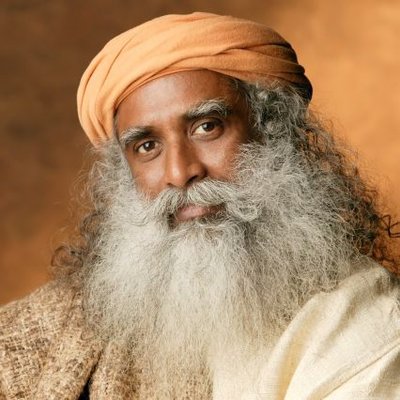
Do not ask your children to listen to you. Make yourself in such a way that they look at you and think, “Wow! I want to be like that.” If you become someone worth looking at, they will listen to you.
#SadhguruWisdom
My birthplace, Baghdad—the capital of history, art, and beauty. Still striving to restore its glory to every corner of the city. ❤️🇮🇶

Sarai (Sarah Idan) Miss Iraq retweeted

هذا هو العراقي الحر …
ايران لمي چلابج هذا الشعب ميهابج …
#ثورة_تشرين_العظيمة
Sarai (Sarah Idan) Miss Iraq retweeted

ساحة التحرير قبل قليل ...
#العراق
Millions of Iraqis gathered in Tahrir Square, tired of the mullah regime in Iran, and their radical Islamist laws they brought to Iraq. 🇮🇶 #OctoberRevolutionIsBack #iraqoctoberprotest


Literally what I said in my essay. These uprisings will continue because young people compare their lives with those of their parents, and they have legitimate grievances. If you keep dismissing their concerns and treating them as “ignorant,” you risk pushing many of them toward radical movements.


🧵 1/3 Sharing my first Substack essay from Beyond the Narrative. Subscribe for full future analyses.
The protests and riots across Europe are exposing a troubling failure in how some Western leaders and public commentators understand radicalization: they are so focused on identifying the enemy that they are overlooking what makes its ideology attractive in the first place.
We hear the same explanations: “It’s the red-green alliance!” “Remember the Iranian Revolution!” “This is suicidal empathy!”
Marxists, communists, Antifa, and Islamists are labeled enemies of Western civilization, while those drawn toward these movements are dismissed as ignorant, brainwashed, or dangerously naive.
But identifying radical ideologies is not the same as understanding what drives people toward them. And demonizing their followers without addressing their grievances may reinforce the very resentment that makes these movements appealing.
How can we effectively confront radicalization if we refuse to understand the psychology behind it?
Different movements, different motivations.
The so-called red-green alliance is frequently presented as a unified conspiracy between revolutionary leftists and Islamists. The Iranian Revolution is invoked as evidence of what inevitably follows.
Iran’s history certainly offers a warning about dangerous political alliances. But history is a lesson, not a predetermined script for every political movement today.
These groups have different motivations, sometimes united by a common enemy but not necessarily a common vision.
Student activists may be motivated by opposition to wars, perceived injustices, and a desire for purpose and belonging. Exploited campus activism and social media can reinforce narratives dividing the world into oppressors and oppressed.
Marxists and communists interpret economic inequality through the lens of class struggle, believing capitalism disproportionately benefits wealthy elites while exploiting ordinary workers.
Antifa-aligned members see themselves as resisting fascism and authoritarianism. Some embrace confrontational tactics they consider justified resistance.
Islamist movements find tactical common ground with revolutionary leftists through opposition to Western military interventions, Israel, or American influence, despite fundamentally different ideological objectives.
Foreign adversaries exploit these divisions to weaken Western influence and undermine public confidence in democratic institutions.
sarahidan.substack.com/p/the…

Sarai (Sarah Idan) Miss Iraq retweeted

Hi, are we allowed to point of that all these F2M detransitioners are all just literally insane, politically extremist lunatics?
Literally all of them are awful human beings.


They opened it to usher in a new chapter. I see many Iraqis online inviting the Iraqi Jewish community to visit or come back to Iraq, they express regret and keep apologizing for the Farhoud.
Things are changing in the Middle East. One of the biggest remaining obstacles is Israel’s image, and that can be repaired, too. But that’s the Israeli government’s responsibility.
To tell the truth, I’ve observed a shift in public sentiment across many Arab countries following the war with Iran. More people seem open to making peace with Israel, but not without the establishment of a Palestinian state.
From what I’ve seen, Muslim voices who are indifferent to the Palestinian cause remain a small minority.

🧵 1/3 Sharing my first Substack essay from Beyond the Narrative. Subscribe for full future analyses.
The protests and riots across Europe are exposing a troubling failure in how some Western leaders and public commentators understand radicalization: they are so focused on identifying the enemy that they are overlooking what makes its ideology attractive in the first place.
We hear the same explanations: “It’s the red-green alliance!” “Remember the Iranian Revolution!” “This is suicidal empathy!”
Marxists, communists, Antifa, and Islamists are labeled enemies of Western civilization, while those drawn toward these movements are dismissed as ignorant, brainwashed, or dangerously naive.
But identifying radical ideologies is not the same as understanding what drives people toward them. And demonizing their followers without addressing their grievances may reinforce the very resentment that makes these movements appealing.
How can we effectively confront radicalization if we refuse to understand the psychology behind it?
Different movements, different motivations.
The so-called red-green alliance is frequently presented as a unified conspiracy between revolutionary leftists and Islamists. The Iranian Revolution is invoked as evidence of what inevitably follows.
Iran’s history certainly offers a warning about dangerous political alliances. But history is a lesson, not a predetermined script for every political movement today.
These groups have different motivations, sometimes united by a common enemy but not necessarily a common vision.
Student activists may be motivated by opposition to wars, perceived injustices, and a desire for purpose and belonging. Exploited campus activism and social media can reinforce narratives dividing the world into oppressors and oppressed.
Marxists and communists interpret economic inequality through the lens of class struggle, believing capitalism disproportionately benefits wealthy elites while exploiting ordinary workers.
Antifa-aligned members see themselves as resisting fascism and authoritarianism. Some embrace confrontational tactics they consider justified resistance.
Islamist movements find tactical common ground with revolutionary leftists through opposition to Western military interventions, Israel, or American influence, despite fundamentally different ideological objectives.
Foreign adversaries exploit these divisions to weaken Western influence and undermine public confidence in democratic institutions.
sarahidan.substack.com/p/the…
🧵2/3
Foreign adversaries exploit these divisions to weaken Western influence and undermine public confidence in democratic institutions.
But identifying these motivations still leaves us with a more fundamental question: Why are some young people increasingly receptive to movements promising to overturn the existing order?
The psychology of a disillusioned generation.
Imagine struggling to afford housing, find stable employment, or achieve financial independence while watching wealthy politicians, political commentators and influencers that advocate for Conservative or Liberal policies, preach prosperity from positions of extraordinary privilege.
You see political and economic elites enjoying enormous wealth while the stability, homeownership, and comfortable life your parents’ generation aspired to seem increasingly beyond your reach.
Meanwhile, governments commit billions to foreign wars, and you begin questioning why money can be found for conflicts abroad while your own economic future remains uncertain.
Then, when you question the system, influential voices dismiss you as ignorant, dangerous, or an enemy of your own country.
What happens psychologically when people feel that the system has abandoned them, and those representing it respond to their frustration with contempt?
This is where Marxist class-struggle narratives can become especially persuasive.
They offer a seemingly straightforward explanation for complex hardships: society is divided between a privileged ruling class and an exploited population. Personal frustration becomes political resentment, and economic inequality becomes evidence of a fundamentally unjust system.
Psychologists describe a related phenomenon as relative deprivation: the perception that people are receiving less than they believe they deserve or were reasonably entitled to expect. Political scientist Ted Robert Gurr explored its relationship to rebellion in Why Men Rebel (1970).
Research on radicalization also emphasizes the search for significance, identity, and belonging. Arie Kruglanski and colleagues have examined how that search can contribute to pathways toward violent extremism, although it does not inevitably produce violence.
These insights help explain why ideological movements can offer more than political theories: an explanation for suffering, an enemy to blame, a community to belong to, and the conviction that one is fighting on the righteous side of history.
And when wealthy political figures ridicule or demonize disillusioned young people, they risk reinforcing the very narrative attracting them to these movements: that the establishment serves the powerful and has no interest in their struggles.
Of course, not every activist is economically disadvantaged, nor is every socialist or Marxist a radical. Genuine ideological convictions, moral outrage, religion, and social identity also matter.
But reducing all these motivations to stupidity, foreign manipulation, or “suicidal empathy” is a substitute for analysis, not an explanation.
Understanding someone’s frustration is not endorsing their ideology. Recognizing the psychology of radicalization is not surrendering to extremism.
Why condemnation alone will not work.
🧵3/3
Foreign adversaries can exploit economic grievances, anti-war sentiment, and distrust of institutions through propaganda and influence operations. But they do not need to manufacture frustrations that already exist.
Even if foreign interference disappeared tomorrow, even if Islamist organizations withdrew from these movements, unaffordable housing, economic insecurity, resentment toward wealthy elites, and declining institutional trust would remain.
And as long as those grievances persist, movements promising revolutionary change may continue finding an audience.
This is why blaming immigration, demonizing entire socialist movements, or invoking the Iranian Revolution cannot serve as a comprehensive response.
Peaceful political dissent is not terrorism. Losing faith in capitalism does not automatically make someone an enemy of Western civilization. And understanding the motives behind radical movements does not require excusing political violence.
As someone who believes in capitalism, individual liberty, and Western democracy, I believe genuine extremism and foreign interference must be confronted. But protecting democratic societies also requires addressing the conditions that weaken public confidence in them.
That means making housing more affordable by expanding supply, removing barriers to employment and entrepreneurship, strengthening economic mobility, confronting corruption, and demanding greater transparency in government spending.
Universities should encourage intellectual independence and the critical examination of competing ideologies rather than ideological conformity. Political leaders must demonstrate that meaningful change remains possible through democratic institutions.
Capitalism cannot be defended merely by preaching its virtues. Ordinary people must have a realistic opportunity to experience them.
We can learn from Iran without assuming history must repeat itself. We can expose extremist networks without treating entire political movements as terrorist organizations. And we can confront dangerous ideologies without dismissing every person drawn toward them as an enemy.
The question Western leaders should be asking.
If we genuinely want to preserve Western democracy, we must stop asking only WHO is radicalizing our youth and start asking WHY some young people are becoming receptive to radicalization in the first place.
Because identifying an enemy and understanding what produces new recruits are two fundamentally different tasks.
Our adversaries may exploit our failures, but only we can correct them.
And until we address the underlying grievances, we risk fighting the same battle with every new generation, while congratulating ourselves for identifying an enemy whose growing appeal we never truly understood.
Research references
● Ted Robert Gurr (1970), Why Men Rebel. Foundational research on relative deprivation and political violence.
● Arie W. Kruglanski and colleagues (2014), “The Psychology of Radicalization and Deradicalization: How Significance Quest Impacts Violent Extremism.” Research exploring the psychological search for significance in pathways toward extremism.
● Eurofound (2024), Becoming adults: Young people in a post-pandemic world. European research examining the challenges young people face in their transition to independent adulthood, including housing and economic insecurity.
Lmao literally almost every Iraqi Prime Minister and President, ministers and Parliament Members hold either British or American or German citizenships. Next…


F you @DaveEastmanM and F all those who carry hatred for an entire religion. Have a horrible day.

Elon Musk’s bot accounts don’t reflect reality. I’m an American citizen, and you’re openly threatening me with a gun. @FBI, take note.
I will stand up for my constitutional rights as an American Muslim against racist fascists who think they can intimidate us into silence.
If you’re trying to provoke civil conflict, understand this: I will not surrender my rights, my freedom, or my place in this country. I hope the DNC kicks your butt in this elections, they’re your only medicine.

I can see now why people don’t take the accusation of antisemitism seriously anymore, you throw it around at anyone who’s Muslim.

I swear, it’s as if God is personally proving to me how wrong and hateful these people are. 😂 Literally no one in my immediate family is named Mohammed, nor are any of my cousins. And I even have an uncle with five sons, not a single Mohammed among them!
