

Transformation & Change Leader| ex CxO at Pacmed(Clinical AI) and Incision | Founder https://xitter.gq/t.co/yzDQ5BujRf | Author of Riding Change
Joined February 2007
- Tweets25.2K
- Following2.7K
- Followers4.3K
- Likes2.5K








Pinned Tweet
A new view on the immune cycle. Updating Chen and Mellman's cycle #cancerimmunitycycle #cancer encounter.bio/article/comple…

Whooo. Big deal!

Big news: Fin is joining @Salesforce.
We built the #1 AI Customer Agent, and Salesforce has the reach to help us bring it to the world.
Read more from our CEO @eoghan here: linkedin.com/posts/eoghanmcc…


Most patients given a checkpoint inhibitor do not respond. By one estimate about an eighth benefit. The field reads the rest as immunologically cold and stops there. The response is not absent, it is stalled. encounter.bio/article/built-… @stefanispranger

If built and held back, the move is to release it. CD40 agonism supplies the licensing signal the parked cell waits for. The cleanest test enrols no new patient: score the baseline biopsies already in trial freezers and ask if the benefit concentrated in the sig-positive arm.
The whole analysis is public. Per-sample data, fixed thresholds, one command to reproduce every number. Built to be checked, not believed. Run it and tear it apart. github.com/raimovanderklein/…

Raimo retweeted

Biotech M&A is broken. The historical playbook was simple: a startup creates an incredible asset, and a multinational pharma company (MNC) swallows them whole to run the commercial launch. But the top-tier biotechs are now refusing to be acquired—and they are poaching Big Pharma's crown jewels to build their own global empires.
Earlier this year, Merck ($MRK) offered a massive $32B to acquire Revolution Medicines ($RVMD) for their pan-RAS oncology pipeline. Revolution flatly rejected the buyout.
Now, the story gets wild. Not only did Revolution refuse the acquisition, but they just poached Thomas Lampron—Merck’s Global VP of Oncology Marketing and one of the core architects behind Keytruda’s historic commercial scale-up.
The move signals that the pan-RAS field is officially transitioning from an early-stage science story into aggressive commercial execution. At ASCO 2026, Revolution's lead asset daraxonrasib demonstrated a median Overall Survival (mOS) of 13.2 months vs 6.7 months for chemotherapy in pancreatic cancer—effectively doubling survival in a historical regulatory graveyard.
Instead of passing the baton to an MNC, Revolution is keeping the economics and assembling a heavy-hitting commercial team to launch daraxonrasib independently. For Merck, losing the acquisition target was a strategic setback; losing their elite oncology marketing talent to that same target is a brutal validation of changing power dynamics.
This is the pipeline to watch. 🧵
$RVMD $MRK $AMGN $BMY $XBI $IBB
Raimo retweeted

Early biotech companies are running more clinical trials (phase 1, 2 and 3) than big pharma:

Raimo retweeted

A cost-effectiveness assessment of using AI in disease screening (modeling)
"Implementing an annual ‘copilot’ strategy in all ages would save US$1.32 million while gaining 14.73 quality-adjusted life years over a lifetime [per 100,000 people]"
"Our findings demonstrate the indispensable role of human involvement in maximizing clinical benefits and cost-effectiveness in AI-driven medical applications."
nature.com/articles/s44360-0…

Raimo retweeted

For readers wondering who raised this important question, @Rhymo is Raimo van der Klein, a former COO of Pacmed, a healthcare-AI company, and former COO/CPO of Incision, which develops digital systems for surgical teams. He now runs Encounter.bio and is the author of Riding Change. (Raimo van der Klein, personal website; Encounter.bio, About)
His background helps explain why he immediately recognized the next problem beyond discovering daraxonrasib’s molecular structure.
Seeing the KRAS–drug–cyclophilin A tri-complex can show researchers that a molecular “lever” exists and how it fits. But medicine must still determine which particular lesion, tumor, and patient that lever will actually move.
Van der Klein’s Encounter project asks whether biological processes can be read structurally well enough to predict which intervention a patient needs. He is unusually candid that this remains an experiment: he publishes predictions before trial results are known so that they can later be tested and potentially proved wrong. (Encounter.bio, “Can Structure Predict Which Drug Works?”)
That seems like the direction computerized medicine must now travel. Structural biology helped scientists design the lever. The next challenge is combining structure, tumor genomics, clinical history, and treatment outcomes to predict which patient will benefit from pulling it.
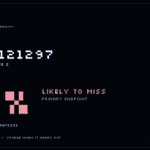
Added my prediction to it @buergelt_ @PheironAI NCT06121297: the board says 55% likely to miss its primary endpoint — anchored, and scored when it reads out. theory.encounter.bio/t/NCT06…

👏👏👏

“Immunotherapies are possible today only because thousands of scientists, for more than 40 years, followed their curiosity to probe the immune system’s deep processes.
Without basic scientific research, supported by the kind of farsighted public investment that allows large-scale, undirected, curiosity-driven inquiry, the scientific pipeline will run dry.” — MIT President Sally Kornbluth statnews.com/2026/05/27/scie…

Raimo retweeted

Let be clear: The best way to learn AI is NOT a course. It is building something real, pick a problem. Pick a tool. Ship something. You will learn more in 90 days of building than a year of reading.
Proposed #KLEOS arm: CD40 agonist plus anti-PD-1 in biomarker-selected MMR-proficient colorectal
encounter.bio/article/kleos-… @marshalj23 @stefanispranger #colorectalcancer

I think you want to read this @ClaireMazumdar

Ficerafusp alfa pairs deep and durable responses in HPV-negative head and neck. A read of why the two arrive together, a dated below-even call on the trial that decides @BicaraTx , and the stratification nobody has put on the table encounter.bio/article/the-pa… @adamfeuerstein

Does NCT06788990 (FORTIFI-HN01) meet its overall-survival co-primary endpoint — ficerafusp alfa + pembrolizumab vs placebo + pembrolizumab in first-line HPV-negative recurrent/metastatic HNSCC, PD-L1 CPS≥1 — at primary completion? encounter.bio/article/the-pa…