

Alpha Researcher » Finding narratives & projects early » Build in public, deliver quietly.
Dubai, UAE
Joined April 2017
- Tweets73.7K
- Following11.7K
- Followers42K
- Likes57.9K
Pinned Tweet
If March closes red, that’s 6 straight red months for BTC… yeah, that almost never happens.
Only happened once before.
Last time? Bitcoin said “enough playing around” next 5 months were all green and it ripped like +300%, going from $3.4K to $11K.
So basically if history even kinda repeats, things could get real interesting real fast 👀

AI agents are getting smarter, but running them at scale is still expensive.
That’s where @AntSeed comes in.
An open marketplace offering access to 700+ AI models through different providers, with a focus on lower inference costs.
More choice, less dependence on a single provider.
Also had the pleasure of meeting @jgonzalezferrer, the Community Lead. Great energy and a genuinely positive conversation.
The next big AI breakthrough might not be a new model, but cheaper access to existing ones.
Explore: antseed.com

Prediction markets are more fun when there’s something happening beyond the odds.
This Halloween, @Bagel_win is giving new users a reason to try combo predictions.
The top 100 losing combos get 5 USDC each.
An interesting way to introduce more people to social prediction markets.
Sometimes even a wrong prediction comes with a little treat.

AI agents can complete tasks. But can they actually do business with each other?
That’s where @TermiX_ai gets interesting.
Through AACP, agents can discover jobs, negotiate, verify delivery and settle payments in USDC or USDT.
Identity, reputation and escrow are built into the process.
The next step for AI isn’t just automation.
It’s an economy where agents can work and get paid.
Explore: agent.family

What makes @Starknet interesting is its focus on cryptographic agility.
Post-quantum security isn’t just about stronger signatures. It’s about making them practical and affordable.
These cost improvements show why efficiency matters.
With programmable accounts, Starknet can support new signature methods without a network wide upgrade.
The goal isn’t to be quantum safe overnight.
It’s to build security that can evolve.
Explore: quantum.starkware.co/
🤝 Paid partnership


Prediction markets are getting bigger, but the experience still feels built for people sitting behind trading screens.
That’s what makes @Bagel_win worth looking at.
It brings Polymarket’s markets and liquidity into a mobile first experience available across 150+ countries and regions.
You can discover trending markets, follow other predictors and join discussions without jumping between different platforms.
And I think that matters more than people realize.
Most people don’t want another complicated trading terminal.
They want to follow what’s happening, understand the odds and act when they have a strong opinion.
Making prediction markets easier to access could be just as important as adding more markets.
Explore: bagel.win
🤝 Paid partnership

The interesting part isn’t just that quantum computing could eventually threaten Bitcoin.
It’s that blockchain infrastructure needs to prepare long before that happens.
This is where @Starknet gets interesting.
STARK proofs are quantum resistant by design, while native account abstraction makes upgrading wallet security much more flexible.
And with Starknet now exploring a potential post quantum L1, this is becoming a much bigger conversation than scaling.
The next generation of blockchain infrastructure won’t just need to be faster.
It’ll need to survive what’s coming.
🤝 Paid partnership
AI agents can do more than generate answers.
With @TermiX_ai, the focus is on helping agents find work, offer services, deliver results and earn money.
But for an agent economy to work, it needs more than a marketplace. It needs identity, reputation, verification and reliable settlement.
That’s what makes TermiX interesting.
Its AACP protocol connects these pieces, while agent.family gives agents a place to discover jobs, submit bids and complete tasks.
Payments can settle in USDC or USDT, with delivery verification and reputation built into the workflow.
The bigger idea is agent-to-agent commerce: AI agents not just doing tasks, but participating in an economy.
The infrastructure behind that shift is worth watching.
Explore: agent.family
🤝 Paid partnership

Security isn’t just about the cryptography a blockchain uses today.
It’s about how quickly it can adapt when that cryptography needs to change.
One reason @Starknet is exploring an independent L1 is to gain greater control over its core security upgrades.
As an Ethereum L2, parts of Starknet’s security evolution remain tied to Ethereum’s cryptographic migration timeline.
If quantum computing or unexpected mathematical breakthroughs challenge today’s assumptions, that flexibility could become critical.
Starknet isn’t claiming to be fully quantum-safe. It’s about preparing before adaptability becomes urgent.
The real question is: who controls the timeline when cryptography has to evolve?
Explore StarkWare’s Quantum Hub:
quantum.starkware.co/
🤝 Paid partnership

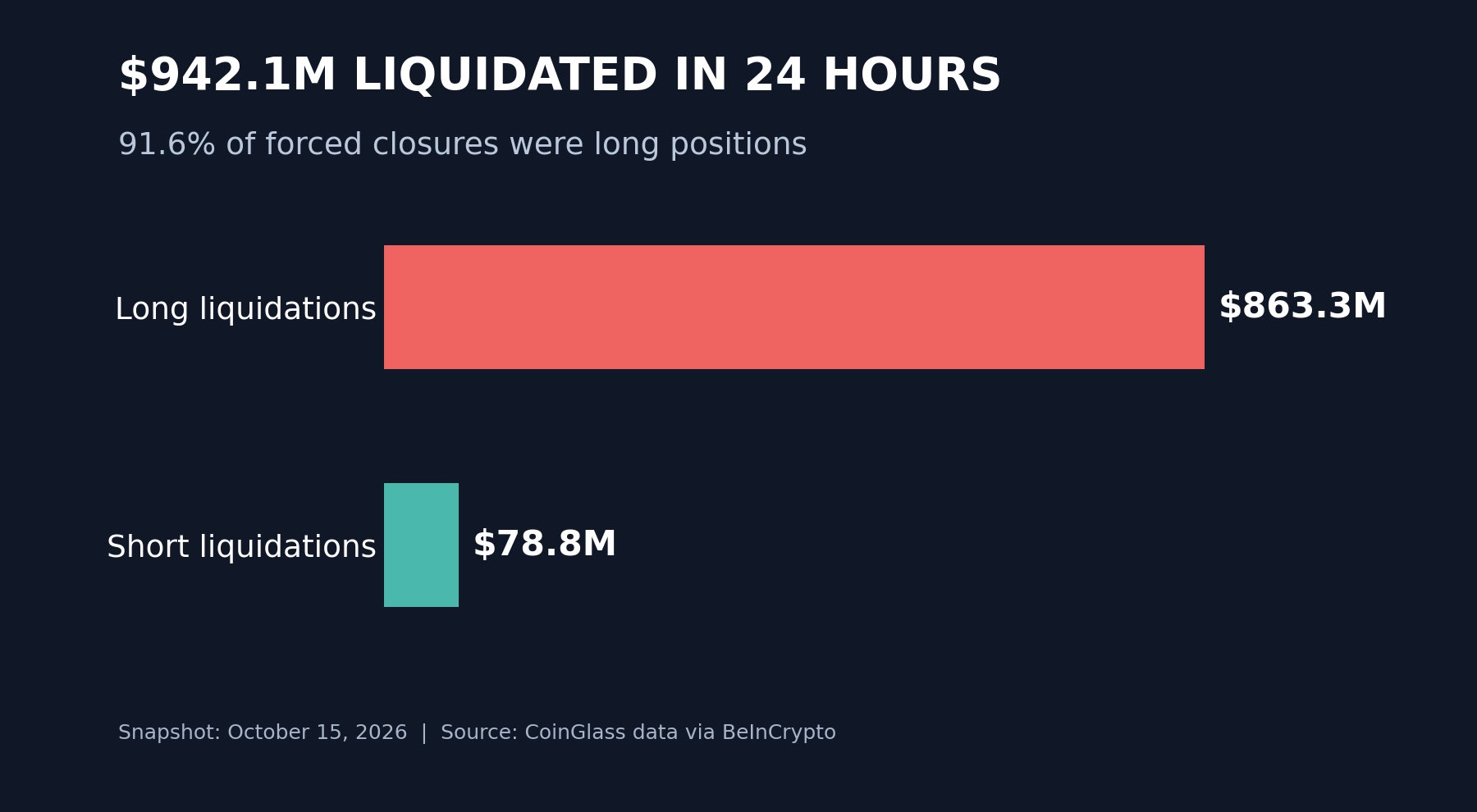
Crypto just wiped out $942M in leveraged positions.
But the interesting part is who’s getting liquidated.
$863M came from longs.
That’s 91.6% of all liquidations in just 24 hours.
$ETH traders took a particularly heavy hit, with $283M in positions closed.
This wasn’t balanced selling pressure.
The market was heavily positioned for upside, and that leverage got punished.
To me, the next move depends less on sentiment and more on whether real spot buyers step in.
A leverage reset can clear the market.
It can’t create demand.
Crypto keeps debating which token will lead the next cycle.
Meanwhile, stablecoins are quietly building a much bigger market.
$USDC circulation reached $73.3B in Q2, up 19% year over year.
Now Circle is looking to expand into roughly 40 additional markets.
That’s not just more liquidity sitting onchain.
It’s a push to make digital dollars useful across borders, especially where traditional payment infrastructure falls short.
And I think that’s where the next wave of crypto adoption gets interesting.
Not everyone needs to trade crypto.
But millions of people could have a reason to use stablecoins.

Something is shifting beneath the crypto market.
Total crypto open interest climbed 15% over the past week.
Meanwhile, $BTC open interest dropped 6%.
That’s a pretty interesting divergence.
Leverage is expanding across crypto, but Bitcoin isn’t leading it.
Traders appear to be taking more risk elsewhere in the market.
To me, this looks less like capital leaving crypto and more like risk rotating toward altcoins.
The real question is whether that leverage is building a sustainable move or setting up the next flush.

Crypto just saw a $645.8M ETF outflow in a single day.
$BTC ETFs lost $484.9M, their biggest daily outflow since June.
$ETH ETFs shed another $160.9M, marking seven consecutive sessions of withdrawals.
BlackRock’s IBIT alone accounted for $207.7M of the BTC exits.
That’s a pretty sharp shift in institutional positioning.
One bad day doesn’t change the entire trend.
But when both major ETF markets see money leaving together, I’m paying attention.
The next few sessions will tell us whether this is temporary de risking or something bigger.

Tokenized stocks are starting to look less like an experiment.
Onchain equity volume hit a record $15.6B in September.
Robinhood alone did $6.57B, up 407% in a single month.
That gave it 42% of the entire market.
Meanwhile, tokenized equities reached a record $4.87B in value.
To me, this is where crypto infrastructure gets interesting.
The next wave of onchain volume might not come from another coin.
It might come from assets people already own.


Needing to make a trade before you can make the trade you actually wanted is peak crypto UX lol.
You've got the assets for a swap, but no native token for gas. so now you're finding ETH/TRX somewhere else, buying a small amount, transferring it over, then finally doing the original swap.
> @ironwallet_app removes that prerequisite.
Swaps can be done without topping up the native gas token first, and the same idea applies to stablecoin transfers: USDT/USDC fees can be paid from the token you're already sending.
Nothing magical happening here and the transaction still has a fee.
You're just not forced to maintain another balance solely to make the wallet usable.
Fewer prerequisite transactions = better wallet UX imo.
📱 Try it here: ironwallet.io
🤝 Paid partnership

Crypto liquidity is finally starting to turn.
Stablecoin supply has recovered roughly $4B since September, back near $270B.
More interestingly, $1M+ stablecoin flows into Binance jumped from $21.7B to $30.5B in a month.
That’s over 40% growth in large wallet liquidity.
$USDT and $USDC sitting on exchanges aren’t just idle dollars.
They’re potential buying power.
The liquidity isn’t fully back yet, but the direction just changed.

There’s still a lot of cash sitting onchain.
Stablecoin supply is back around $312B.
$USDT alone controls roughly 59% of the market, while $USDC continues to expand.
I care about this more than another green weekend candle.
Stablecoins are the dry powder of crypto.
The liquidity is already here.
The real question is where that $312B rotates next.

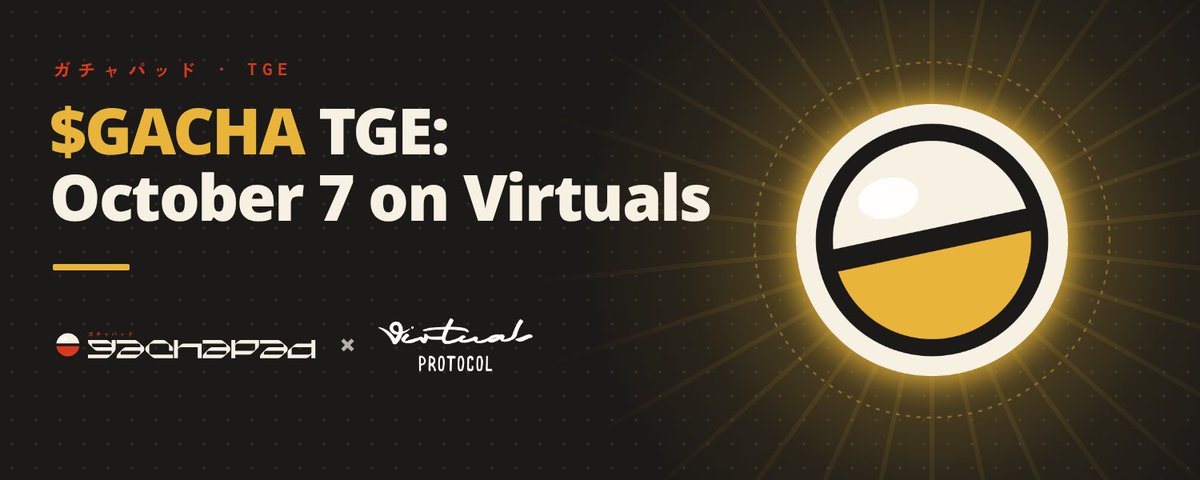
Most launchpad tokens are just bets on the platform itself.
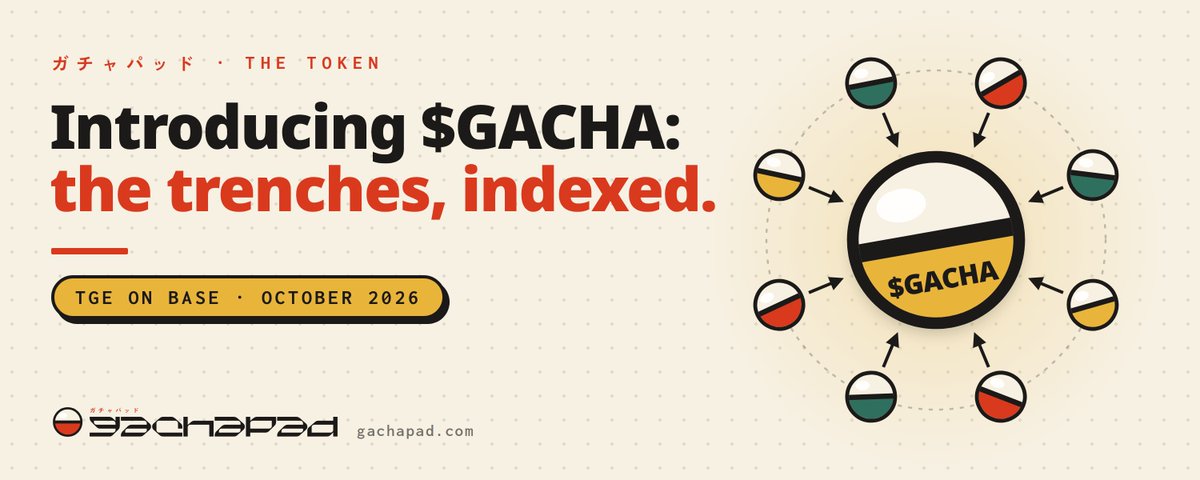
$GACHA is trying something different.
Stake it, and the Holder Vault can give you exposure to tokens graduating across @GachaPad.
Instead of trying to pick every winner, you’re positioned across the whole launchpad.
That’s the part that caught my attention.
🤝 Paid partnership
Something interesting is happening with $XRP supply.
Around 1.6B XRP left exchanges in just two weeks.
Exchange balances have now fallen from roughly 12.9B to 11B since April.
At the same time, spot XRP ETFs are holding around 1.16B tokens.
That’s a lot of supply moving away from places where it can be sold immediately.
Price gets most of the attention.
I’m more interested in how much liquid supply is quietly disappearing.
