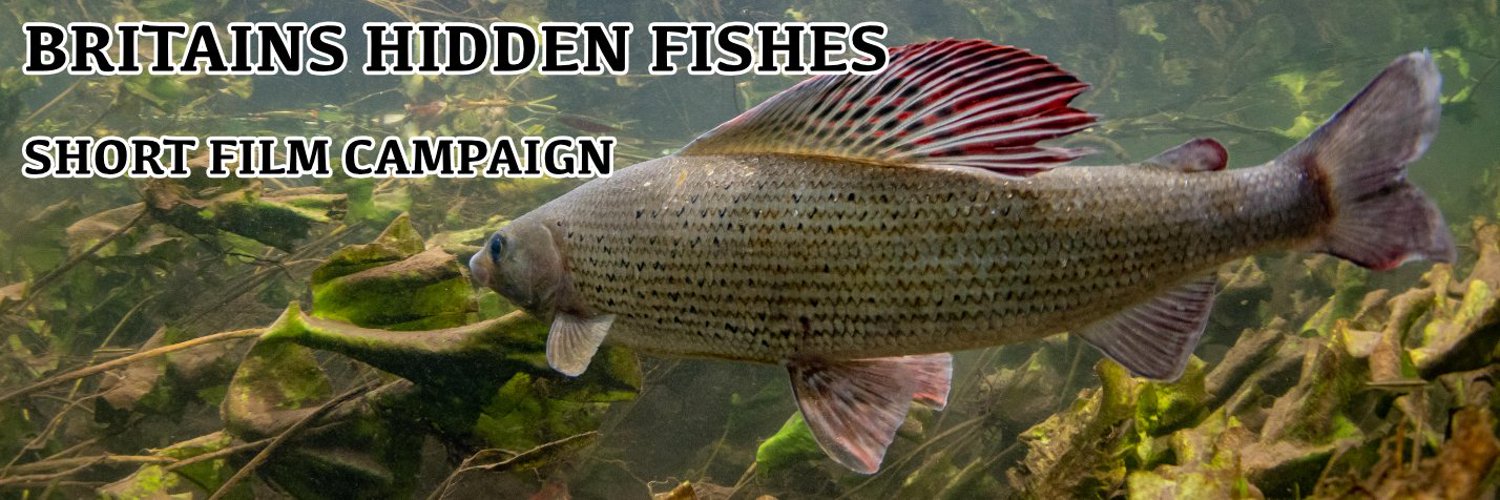

Crowd funding to make the first wildlife film solely on British marine & freshwater fish. Jeremy Wade is narrating.
East Midlands
Joined June 2012
- Tweets4.2K
- Following1.1K
- Followers2.6K
- Likes568






Britains Hidden Fishes retweeted

A Kingfisher’s eye view - incredible! Just to stay alive each adult must eat half their body weight in small fish each day. If they have chicks, a pair of kingfishers must catch a further 70 fish each day. We have a duty to protect our rare and fragile chalkstreams! #WildIsles – at Guildford, England
Britains Hidden Fishes retweeted

16 days after fertilisation these #dace eggs are coming along nicely! #CalvertonFishFarm #TeamEA #AnglingTrust #instafish #aquaculture #fishfarm #fishfarming #fish #fishes #fishing #angling #coarsefishing #freshwaterfish #rodlicence #Picoftheday #photooftheday #anglingtimes

Britains Hidden Fishes retweeted

#41 Ruffe - This small member of the perch family likes deep lakes and slow moving murky rivers.

Britains Hidden Fishes retweeted
#40 Pumpkinseed - An american species brought over for the pet trade they are a few established populations in the south of england.

Britains Hidden Fishes retweeted
#39 Spined Loach - A species confined to eastern flowing rivers it uses its gut as a primitive lung when oxygen is low and will rise to the surface for air. (also Merry Fishmas!)

Britains Hidden Fishes retweeted
#38 Stone Loach - These small river fish hide under rocks and stones during the day and are far more active at night.

Britains Hidden Fishes retweeted
#37 Bullhead - The other common name is millers thumb as in the past a miller would often prick there thumb making it look bulbous and ugly which the fish was named after which I think is a bit unfair on the fish!

Britains Hidden Fishes retweeted
#36 European Eel - Eels were once so common that preindustrial revolution they made 50% of all freshwater fish catches fast forward to now and they are crucially endangered.

Britains Hidden Fishes retweeted
#35 European Sturgeon - This fish can get truly colossal at weights of over 800lb and 20ft long! Can you imagine that swimming up the Thames or the Trent? Couple hundred years ago they would of! Poor water quality and barriers to migration put a stop to them.

Britains Hidden Fishes retweeted
#34 Burbot - Although almost certainly extinct in England I'll include burbot in this list as I love them! Only member of the cod family that lives in freshwater the last confirmed specimen was in 1969 but plans are afoot to reintroduce them in the near future!

Britains Hidden Fishes retweeted
#33 Sea Lamprey - The largest and most impressive lamprey species we have they have been around for the last 300 million years.

Britains Hidden Fishes retweeted
#32 River Lamprey - Less widespread than the other two species though can be locally abundant writhing in great balls in the spring when spawning. They enter rivers in November and wait until the spring to breed.

Britains Hidden Fishes retweeted
#31 Brook Lamprey - The smallest and only species of lamprey in the UK thats isn't parasitic and instead filter feeds in silt beds. It's also the one people are most likely to encounter being fairly widespread.

Britains Hidden Fishes retweeted
#30 European Whitefish - Depending on which country it's in it goes by many names. Wales its gwyniad, Scotland its powan and England its schelly with scientists also struggling to agree if indeed they are the same or separate species.

Britains Hidden Fishes retweeted
#29 Vendace - This is most likely the rarest fish and is also the most likely to go extinct. Found in a handful of lakes in the lake district and scotland warming waters and pollution are reducing numbers.

Britains Hidden Fishes retweeted
#27 Flounder - While you might not think of a flounder as being a freshwater fish these flatfish can run well inland reaching 40 miles or more. Smaller ones often use rivers as a nursery before heading back out to sea to breed and feed.

Britains Hidden Fishes retweeted
#25 Twaite Shad - Also known as the mayfish as it normally runs up into rivers in May. They are a member of the herring family and due to barriers like weirs are a rare find in most british rivers with the severn being a stronghold for them.

Britains Hidden Fishes retweeted
#24 Thin Lipped Mullet - Although all mullet can enter freshwater thin lips do it the most often. It can be for food but often its to remove marine parasites.

Britains Hidden Fishes retweeted
#23 Golden Grey Mullet - The rarest and smallest of the three species we have in the UK.
Britains Hidden Fishes retweeted
#22 Thick Lipped Mullet - The largest species of mullet in the UK they feed on the bottom sucking up the mud for food.
