

Here for the weird takes, wisdom, and waggery. Shorts: https://xitter.gq/t.co/je16R2O9NN Features: https://xitter.gq/t.co/qew4ULHdgG
Vancouver, Canada
Joined January 2013
- Tweets4.3K
- Following806
- Followers269
- Likes3.1K









Robert Alstead retweeted

This is a complicated but, at the same time, a very simple story that is frustratingly and rarely given in full. The reappearance of bluefin tuna in UK seas is a result of climate change, as was their prior disappearance. Current warmer conditions due to climate change have seen the northwards movement of bluefin tuna in the northeast Atlantic. (Cooler conditions after the turn of the 20th century saw the disappearance of tuna as they moved southwards.) The abundance of bluefin tuna is due to a stock recovery due to a combination of ICCAT fishing quotas and recent successive years of favourable conditions for tuna recruitment in the Mediterranean.
See: bbc.com/news/science-environ…
The above BBC article is a report on our science here: science.org/doi/10.1126/scia…
I have written a 'popular' article in Fishing News here: fishingnews.co.uk/news/why-a…
And a thread on X detailing many of the other changes occurring in UK seas here: xitter.gq/PlanktonPundit/status/…


Robert Alstead retweeted

Point of no return - Electric buses have gone from 12% to 56% of new city bus sales in Europe in just six years
Some nations are already at or close to 100%. Look at the Nordics, the Baltics, the Netherlands, Romania, Bulgaria and more.
In some cases the transition has been extremely rapid. Estonia went from 0% to 100% in two years.
At this rate, Europe's 2035 target of 100% zero emission bus sales could be reached as early as 2028.
High mileage and centralised operations mean electric buses are cheaper to operate than diesel.
Buses have fast fleet turnover so the shift will affect entire fleets far sooner than many expect, delivering quieter streets and cleaner city air.
Bravo Europe 🇪🇺!

Robert Alstead retweeted

“A US government map of Africa mislabeled every country during a state department presentation at a global conference in Brazil this week.”
lmao look at this crud theguardian.com/us-news/2026…

Robert Alstead retweeted

Skara Brae was buried under sand dunes for four thousand years.
In 1850, a storm uncovered it.
What emerged was a Stone Age village on the coast of Orkney — built around 3100 BC, making it older than Stonehenge and older than the pyramids of Egypt.
Inside the houses, the stone furniture is still there.
The beds. The shelving. The dressers where people kept their things. Hearths where fires burned five thousand years ago.
The people who lived here had no writing. No metal. They farmed, fished, and made jewelry from whale bone and animal teeth. We don't know what they called themselves. We don't know what language they spoke.
But we know the layout of their homes. We know where they slept. We know which wall they put the dresser on.
That's a strange kind of intimacy across five millennia.
Have you visited Skara Brae? 🏴⚔️🧬🔥💪✊
#ScottishHistory #SkaraBrae #AncientScotland #Orkney

Robert Alstead retweeted

Ladies and gentlemen, welcome to Chamonix, Mont Blanc, on the French side 🇫🇷
A “splendid” panoramic terrace overlooking the so-called Mer de Glace (Sea of Ice)
A stab to the heart…
Robert Alstead retweeted

Good morning, Asia. While you were sleeping, one of our most-read stories was about Google burning through cash for the first time since going public decades ago as it raised its spending forecast for AI infrastructure. ft.trib.al/aew0dAG


Robert Alstead retweeted
"At some point there will be a backlash against the backlash and the next one may be even bigger than the Greta Thunberg storm."
Look forward not backward, #cdnpoli #bcpoli.
uk.news.yahoo.com/brace-trum…
Robert Alstead retweeted

Breaking: New study using observational constraints projects that the Atlantic Ocean circulation #AMOC will weaken ~50% by 2100, even for medium emissions and without Greenland melting. Seriously bad news.
theguardian.com/environment/…

Robert Alstead retweeted

Pierre Poilievre: It's clear that he's learned all the wrong lessons--
Mark Carney: Oh dear, oh dear. Mr. Speaker, I feel like I'm in the presence of students. I don't think you would pass the exam with those answers.
Robert Alstead retweeted

Yes, the sun does't shine at night, but batteries produced electricity every minute last night (4/4) as California set a new discharge record of 57.17 GWh/day.
Batteries have met 8.01% of all main-grid demand in 2026 in the 4th-largest economy in the world.
The batteries cost (if bought today) only ~0.28 cents/kWh-grid-output, or 0.86% the cost of grid electricity in CA.

Robert Alstead retweeted
The solar revolution is driven not by green ambitions but by falling prices, says Simon Kuper: ft.trib.al/ZFTMi9e

Robert Alstead retweeted

NEW ANALYSIS: UK emissions fell 2.4% in 2025 as coal fell to a 400-year low. Incredibly, we used less coal last year than than in 1600, when Queen Elizabeth I was on the throne and Shakespeare was writing Hamlet.
All the details in our article: carbonbrief.org/analysis-uk-…


Robert Alstead retweeted

The EPA re-approved dicamba for use on genetically engineered soybeans and cotton, despite mounting evidence that this herbicide is undermining ecological, soil, and human health at landscape scale.
Dicamba is a synthetic auxin, meaning it mimics a plant's own growth hormones, triggering uncontrollable cell growth that kills sensitive broadleaf weeds.
The problem is that its effects don't stay where they're applied.
Dicamba vaporizes for up to 72 hours after application and drifts unpredictably for miles.
By 2017, 3.6 million acres of soybeans were damaged across 25 states from drift events.
Drift exposures reduce flowering in native plants, suppress pollinators, and shrink insect biomass which cascading through food webs that migratory birds in the depend on.
Proponents of dicamba claim it's a necessary tool due to its ability to eliminate "super weeds" that have developed resistance to glyphosate and other herbicides.
It turns out the same problem is repeating. Dicamba resistant waterhemp has already been confirmed in 4 states.
Weeds are evolving internal detoxification pathways broad enough to neutralize not just dicamba but also herbicides they've never even encountered.
Dicamba disrupts rhizosphere microbial communities and upregulates denitrification pathways, essentially draining plant-available nitrogen from the system while suppressing nitrogen fixation.
Dicamba increases antibiotic resistance genes in soil bacteria, linking its use to one of the major public health issues of our time.
And if that's not enough cause for concern, an NIH study linked the highest dicamba exposure to an 80% increased risk of liver and bile duct cancer, along with non-Hodgkin lymphoma, leukemia, and hypothyroidism.
Another biomonitoring study detected dicamba in every pregnant participant across three Midwestern states at four times the concentration measured a decade prior.
This is yet another example of the herbicide treadmill. Each chemical fix erodes the biological capital - soil microbiology, pollinators, native plant diversity and ultimately human health.

Robert Alstead retweeted
Dear Toronto “traffic czar”:
Your job is pointless.
Road tolls will fix Toronto’s traffic.
Nothing else will.
Your welcome.

Robert Alstead retweeted

Earlier in December we travelled to Inner Mongolia to witness the next phase of China’s green revolution: industrial chemicals and transport fuels. China now has 54 projects financed or already up and running -- three times as many as in the US ... via @ft ft.com/content/77283ccf-5a50…
Robert Alstead retweeted

Coastal First Nations-Great Bear Initiative respond to @MarkJCarney @ABDanielleSmith pipeline MOU:
“Today’s MOU does nothing to increase the chances of a pipeline project to the northwest coast ever becoming a reality. Coastal First Nations, along with the province of BC, will never allow our coast to be put at risk of a catastrophic oil spill."
Robert Alstead retweeted
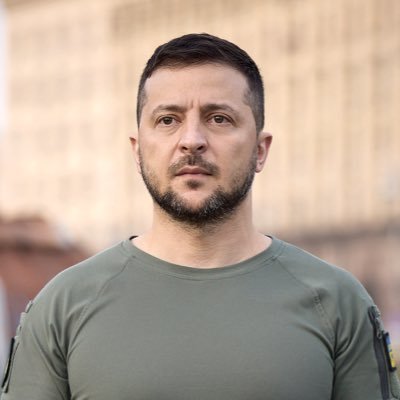
Right now in Zaporizhzhia, our first responders, medics, police officers are working to help after a strike by Russian bombs. Air-dropped bombs on the city, on residential buildings, on the bus station, on one of the clinics. Unfortunately, there are casualties.
Today, along the entire front line, in frontline communities, and in border towns and villages, the Russians once again continued to take lives. No deadlines, no expectations work on them – they do not want to stop the killings. The only thing they are looking for is a way to kill Ukraine.
We clearly understand the threats. All our partners just as clearly understand the threats. Everyone sees that there has been no real step from Russia toward peace, no action on the ground or in the air that could save lives.
That is why sanctions are needed, pressure is needed. Strength is needed – of the United States, of Europe, of all nations in the world that want peace and stability in international relations. If Russia does not want to stop the war, then its economy must be stopped.