

Industry Research | Companies - Sectors - Structural Growth | Educational Only, Not SEBI Registered
India
Joined July 2026
- Tweets3.2K
- Following378
- Followers3.1K
- Likes2.5K





Pinned Tweet
A fascinating pattern from 240+ years of US market history:
→ 1781: First company to reach $1M market cap
→ 1924: First company to reach $1B market cap
→ 2018: First company to reach $1T market cap
👉 Notice something?
→ $1M → $1B = 1,000x in ~150 years
→ $1B → $1T = 1,000x in ~100 years
👉 Not only has the market-cap ceiling expanded by 1,000x repeatedly, the time taken to reach the next 1,000x milestone has compressed.
👉 Every generation believes the current ceiling is the limit. History says otherwise.
→ In 1781, a $1B company would have sounded impossible.
→ In 1924, a $1T company would have sounded absurd.
→ Today, many believe $10T-$20T is the upper limit.
👉 Maybe. Or maybe we're making the same mistake investors have made for 240 years.
👉 If technological progress, productivity, AI, robotics, energy abundance and global GDP continue expanding, the next century could produce companies that make today's trillion-dollar giants look small.
👉 And the next waves could include:
→ Artificial Intelligence
→ Robotics
→ Physical AI
→ Energy abundance
→ Automation
→ Biotechnology
→ New computing architectures
👉 The lesson isn't that every company will become a $10T company. It's much more important: Don't confuse today's market-cap ceiling with a permanent limit.
👉 For more than two centuries, the ceiling has moved. The question is not whether it can move again. It's what technology and productivity breakthrough will push it higher next.

The Optical Communication supply chain is becoming a National Security Priority.
👉 The US is reportedly advancing plans to restrict imports of new Chinese optical transceivers used in data centres, citing concerns around data security, potential malware and national security.
👉 Interestingly, companies including Amazon, Google, Meta, Microsoft, Cisco and CoreWeave have reportedly pushed back against the proposal.
👉 Optical transceivers are critical components of modern data centres. They convert electrical signals into optical signals, enabling high-speed data transmission between servers, switches and computing infrastructure.
👉 The bigger implications:
→ Supply-chain realignment: Data-centre operators may increasingly look for trusted, alternative suppliers.
→ Strategic importance of photonics: Optical communication is becoming critical infrastructure for AI computing.
→ Technology sovereignty: Control over optical components is becoming part of the broader semiconductor and digital infrastructure debate.
→ New manufacturing opportunities: Optical transceivers, lasers, photodetectors, silicon photonics, optical fibres and advanced packaging could gain strategic importance.
👉 AI infrastructure is not just about GPUs and semiconductor manufacturing. It also depends on the ability to move enormous volumes of data efficiently.
👉 As geopolitical considerations enter the optical communication supply chain, the opportunity could extend beyond chipmakers to specialised photonics and component manufacturers.
Important: The report describes a proposal that is advancing, not a finalised import ban.
👉 What do you think which country can benefit from this?
Disclaimer: Not a buy/sell recommendation. Do your own due diligence.
@InvestmentBook1 @DhawalDoshi5 @mehul_n_trivedi

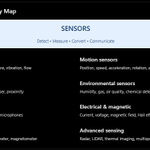
Sensors are the eyes and ears of modern industry - detecting, measuring and converting physical signals into actionable data.
👉 From industrial automation and robotics to defence, automotive, surveillance and space, the opportunity spans multiple technologies.
👉 Listed Indian Companies across the Sensor Ecosystem:
→ Temperature Sensing: Tempsens Instruments India
→ Industrial Instrumentation: Honeywell Automation India, Siemens, ABB India
→ Automotive Sensing & Electronics: Bosch Ltd
→ Defence Sensing Systems: Bharat Electronics, Data Patterns, Astra Microwave Products
→ Navigation & Communication: Avantel
→ Railway Sensing & Detection: HBL Engineering
→ Vision & Surveillance: Aditya Infotech - CCTV cameras, video surveillance and AI-enabled security solutions.
👉 The sensor opportunity is not limited to standalone sensor manufacturers. It extends across:
→ Temperature, pressure and flow measurement
→ Radar, LiDAR and optical sensing
→ Cameras and machine vision
→ Motion, position and navigation sensors
→ Industrial measurement and control
→ Defence electronics and surveillance systems
👉 As robotics, AI, smart manufacturing, EVs and defence systems advance, sensing becomes an increasingly critical layer.
👉 Note: These companies have different levels of exposure. Not all are pure-play sensor manufacturers.
Disclaimer: Not a buy/sell recommendation. Do your own due diligence.


Sensors are becoming increasingly important as machines move from basic automation towards autonomous and intelligent operations.
→ Robots need sensors to perceive their environment.
→ Electric vehicles need them for safety and control.
→ Defence systems need them for detection and targeting.
→ Industrial facilities need them for precision, monitoring and predictive maintenance.
👉 The growth of robotics, autonomous vehicles, smart manufacturing, defence electronics and AI-enabled infrastructure creates demand not just for complete systems, but for the specialised sensing technologies powering them.
👉 The opportunity extends across semiconductor fabrication, MEMS, optical components, precision electronics, signal processing and sensor manufacturing.
Disclaimer: Not a buy/sell recommendation. Do your own due diligence.

Types of Magnets: The hidden force powering Robotics, EVs & Advanced Manufacturing!
👉 Magnets are far more than simple magnetic materials. They are critical components in motors, actuators, sensors, generators and several advanced industrial systems.
👉 The magnet ecosystem can broadly be classified into four categories:
1. Permanent Magnets:
→ Retain their magnetism without external power.
→ Neodymium (NdFeB): High magnetic strength, widely used in compact motors and actuators.
→ Samarium Cobalt (SmCo): High-temperature stability and strength.
→ Alnico: Suitable for high-temperature applications.
→ Ferrite/Ceramic: Cost-effective and widely used.
2. Soft Magnetic Materials:
→ Easily magnetised and demagnetised.
→ Steel, ferrite and amorphous materials.
→ Used in motor stators, transformers and inductors.
3. Electromagnets:
→ Generate magnetism using electric current.
→ Used in solenoids, electromagnetic brakes, relays and actuators.
4. Specialised Configurations:
→ Ring magnets, arc segments, pot magnets, multipole magnets and Halbach arrays.
→ Engineered to achieve specific magnetic-field characteristics and performance.
👉 Where do magnets fit into a robot?
→ Motors & actuators: NdFeB and SmCo
→ Encoders & position sensors: Precision magnetic components
→ Electromagnetic brakes: Electromagnets
→ Motor stators & cores: Electrical steel and ferrite
→ Power electronics: Soft magnetic cores
👉 The growth of humanoid robotics, EVs, industrial automation, aerospace and defence is creating demand for specialised magnetic materials.
👉 The opportunity extends beyond magnet manufacturing into rare-earth processing, alloy development, precision machining, magnetic assemblies and specialised motor technologies.
👉 The real opportunity lies in understanding which magnet technology goes into which application, and who manufactures the critical materials and components.
Disclaimer: Not a buy/sell recommendation. Do your own due diligence.
@DhawalDoshi5 @mehul_n_trivedi

Sensors are becoming increasingly important as machines move from basic automation towards autonomous and intelligent operations.
→ Robots need sensors to perceive their environment.
→ Electric vehicles need them for safety and control.
→ Defence systems need them for detection and targeting.
→ Industrial facilities need them for precision, monitoring and predictive maintenance.
👉 The growth of robotics, autonomous vehicles, smart manufacturing, defence electronics and AI-enabled infrastructure creates demand not just for complete systems, but for the specialised sensing technologies powering them.
👉 The opportunity extends across semiconductor fabrication, MEMS, optical components, precision electronics, signal processing and sensor manufacturing.
Disclaimer: Not a buy/sell recommendation. Do your own due diligence.
NVIDIA just delivered another massive earnings report.
👉 5 numbers that explain the scale of the AI opportunity:
→ $115.8B - Quarterly revenue, up 103% YoY.
→ $107.6B - Data Center revenue, up 110% YoY.
→ $65.3B - Quarterly net profit.
→ 74.8% - GAAP gross margin.
→ $130B - Q4 FY27 revenue guidance, ±3%.
👉 AI is no longer just a technology story. It is becoming one of the largest infrastructure investment cycles in history. And NVIDIA sits at its centre. The opportunity extends far beyond GPUs:
→ HBM & advanced memory
→ Advanced semiconductor packaging
→ Optical communication & networking
→ Power infrastructure
→ Cooling systems
→ Semiconductor manufacturing equipment
👉 The real investment opportunity may lie in identifying the companies supplying the infrastructure behind this AI revolution.
Disclaimer: Not a buy/sell recommendation. Do your own due diligence.
#nvidiaearnings #Nasdaq
Inside the Tunnel Boring Machine (TBM) Ecosystem: The industrial supply chain behind underground infrastructure!
👉 India's push towards indigenous Tunnel Boring Machines is more than an opportunity for a single equipment manufacturer.
👉 A TBM is one of the most complex machines used in infrastructure construction. Its manufacturing ecosystem spans precision engineering, heavy fabrication, hydraulics, electrical systems, automation, specialised materials and industrial components.
👉 Let's break down the complete component universe:
1. Cutterhead & Excavation System:
→ Cutterhead structure and face plate
→ Disc cutters, centre cutters and gauge cutters
→ Cutting knives, scrapers and buckets
→ Cutter mounts, shafts, bearings and seals
→ Wear plates, hardfacing and flushing systems
2. Main Bearing & Drive System:
→ Large-diameter main bearings
→ Ring gears, pinions and gearboxes
→ Drive motors, couplings and brakes
→ Torque shafts and drive housings
→ Lubrication pumps, filters and coolers
3. Shield & Structural Body:
→ Front, middle and tail shields
→ Shield plates, diaphragms and bulkheads
→ Pressure bulkhead and excavation chamber
→ Articulation joints and cylinders
→ Tail seals and grease injection systems
4. Thrust, Articulation & Steering:
→ Main thrust cylinders and piston rods
→ Thrust shoes and shoe pads
→ Steering and articulation cylinders
→ Hydraulic power units, pumps and valves
→ Hoses, pipes, accumulators and filters
5. Muck Removal & Transportation:
→ Screw conveyors and screw gates
→ Belt conveyors and rollers
→ Slurry pumps, pipelines and valves
→ Separation plants and hydrocyclones
→ Transfer chutes, hoppers and crushers
6. Soil Conditioning & Ground Treatment:
→ Foam generation and injection systems
→ Polymer and bentonite mixing and dosing
→ Storage tanks and mixing units
→ Air compressors and regulators
→ Water injection pumps and pipelines
7. Tunnel Lining & Segment Erection:
→ Segment erectors and rotating rings
→ Vacuum lifting systems and grippers
→ Segment feeders and transport cranes
→ Precast tunnel segments
→ EPDM gaskets, bolts, dowels and grouting systems
8. Backup Gantries & Auxiliaries:
→ Gantry structures, frames and wheels
→ Transformers and switchgear
→ Compressors, air receivers and hose reels
→ Ventilation fans and ducts
→ Cooling water pumps and heat exchangers
9. Electrical Power & Distribution:
→ Power infeed and transformers
→ Distribution panels and motor control centres
→ Variable-frequency drives
→ Cables, cable trays and cable reels
→ UPS, battery backup and surge protection
10. Control, Guidance & Monitoring:
→ Operator cabins and control desks
→ PLC, SCADA and HMI systems
→ Laser guidance and navigation systems
→ Gyroscopes and total stations
→ Sensors, data logging and remote monitoring
Beyond the 10 major systems, there are three additional layers:
11. Safety, Ventilation & Fire Protection:
→ Gas and oxygen detectors
→ Fire detection and suppression
→ Emergency shutdown systems
→ Ventilation monitoring and refuge chambers
12. Consumables, Maintenance & Spares:
→ Replacement disc cutters and knives
→ Bearings, seals, O-rings and gaskets
→ Hydraulic oils, filters and hoses
→ Gearbox lubricants, fasteners and couplings
13. Cross-Cutting Manufacturing Inputs:
→ High-tensile and wear-resistant steel
→ Castings, forgings and precision machining
→ Gears, shafts and bearing rings
→ EPDM, polyurethane and other sealing materials
→ Welding, hardfacing and surface treatment
👉 The Industrial Supply Chain: Raw Materials → Primary Manufacturing → Precision Components → Sub-system Manufacturing → TBM Assembly & Integration → Operations & Maintenance.
👉 An important distinction: EPB vs Slurry TBMs
Earth Pressure Balance machines rely on screw conveyors, foam injection and chamber-pressure control.
👉 If India successfully develops indigenous TBM manufacturing capabilities, the opportunity could extend well beyond the final machine manufacturer. It could create demand across:
→ Heavy engineering and fabrication
→ Precision machining and castings
→ Bearings, gears and transmission systems
→ Industrial hydraulics and pumps
→ Motors, drives and electrical equipment
→ Sensors, automation and control systems
→ Specialised steel, carbide and wear-resistant materials
Disclaimer: Not a buy/sell recommendation. Do your own due diligence.

BEML: India’s next big push in Indigenous Heavy Engineering !!
👉 India is looking to reduce its dependence on imported Tunnel Boring Machines (TBMs), particularly from China.
👉 State-owned BEML plans to develop and manufacture indigenous TBMs, initially targeting machines with diameters of 3.5-6.5 metres.
👉 Where will these machines be used?
→ Metro rail projects
→ Hydropower infrastructure
→ Irrigation and water projects
👉 Why is this significant? TBMs are highly sophisticated engineering systems involving:
→ Precision-engineered cutterheads and cutting tools
→ Heavy-duty gearboxes, motors and large bearings
→ Hydraulic systems and power electronics
→ Sensors, automation and control systems
→ Advanced fabrication and structural engineering
👉 BEML's ambition goes beyond assembling imported machinery. It aims to develop proprietary technology and build domestic manufacturing capabilities.
👉 The company's Chairman, Shantanu Roy, estimates India's tunnelling machinery market could grow at approximately 12% annually.
👉 This is another example of India's infrastructure investment creating opportunities for domestic capital goods and precision engineering manufacturers.
👉 The real shift is from importing complete machines to developing the engineering ecosystem required to manufacture them.
👉 India needs infrastructure. But it also needs to manufacture the machines that build that infrastructure.
Disclaimer: Not a buy/sell recommendation. Do your own due diligence.

Samudra Manthan - India's ₹84,084 Cr Offshore Exploration Push
👉 The government has approved a major initiative to unlock India's offshore oil & gas potential. Key targets by FY2030-31:
→ ₹84,084 Cr total outlay
→ ~60 deepwater exploratory wells
→ 600+ MMTOE targeted reserve accretion
👉 The scheme focuses on 4 critical areas:
→ Seismic data acquisition - ₹28,534 Cr
→ Deepwater exploration & drilling - ₹43,200 Cr
→ Common offshore infrastructure - ₹10,000 Cr
→ Manufacturing & services zones - ₹2,000 Cr
👉 India is not just looking to discover more oil and gas. It is attempting to build an entire offshore exploration ecosystem - from geological mapping and deepwater drilling to subsea infrastructure and domestic manufacturing.
👉 The real opportunity lies in converting offshore discoveries into commercially viable production while strengthening India's energy security. A significant long-term initiative to watch.
Disclaimer: Not a buy/sell recommendation. Do your own due diligence.
@DhawalDoshi5 @mehul_n_trivedi @vishan_29

BEML: India’s next big push in Indigenous Heavy Engineering !!
👉 India is looking to reduce its dependence on imported Tunnel Boring Machines (TBMs), particularly from China.
👉 State-owned BEML plans to develop and manufacture indigenous TBMs, initially targeting machines with diameters of 3.5-6.5 metres.
👉 Where will these machines be used?
→ Metro rail projects
→ Hydropower infrastructure
→ Irrigation and water projects
👉 Why is this significant? TBMs are highly sophisticated engineering systems involving:
→ Precision-engineered cutterheads and cutting tools
→ Heavy-duty gearboxes, motors and large bearings
→ Hydraulic systems and power electronics
→ Sensors, automation and control systems
→ Advanced fabrication and structural engineering
👉 BEML's ambition goes beyond assembling imported machinery. It aims to develop proprietary technology and build domestic manufacturing capabilities.
👉 The company's Chairman, Shantanu Roy, estimates India's tunnelling machinery market could grow at approximately 12% annually.
👉 This is another example of India's infrastructure investment creating opportunities for domestic capital goods and precision engineering manufacturers.
👉 The real shift is from importing complete machines to developing the engineering ecosystem required to manufacture them.
👉 India needs infrastructure. But it also needs to manufacture the machines that build that infrastructure.
Disclaimer: Not a buy/sell recommendation. Do your own due diligence.
#SigmaAdvancedSystems - Moving up the Defence Manufacturing value chain !!
👉 Sigma has entered a strategic JV with Spain's EM&E Group (Escribano Mechanical & Engineering) to strengthen indigenous defence manufacturing capabilities in India.
👉 The partnership has commenced operations, combining EM&E's defence technologies with Sigma's Indian manufacturing, precision engineering and programme execution capabilities.
👉 What makes this partnership important?
→ Technology Access: EM&E brings expertise in remote-controlled weapon systems, ammunition guidance systems, artillery, rockets and mortar rounds.
→ Manufacturing Localisation: The JV aims to progressively localise manufacturing, integration and co-development of advanced defence systems in India.
→ Moving Up the Value Chain: The opportunity extends beyond components and sub-systems towards complete systems, engineering, testing and integration.
→ Technology Transfer: Joint engineering and R&D capabilities will help adapt international technologies to Indian operational requirements.
→ Global Supply Hub: The platform can eventually serve select international markets, including Europe and other friendly countries.
👉 This is strategically important for Sigma. The company is positioning itself beyond a conventional component manufacturer towards a broader aerospace and defence technology and systems platform.
👉 For India, it represents another step towards building domestic capabilities in advanced weapon systems while creating opportunities to participate in global defence supply chains.
👉 The real opportunity lies in capturing a larger share of the defence value chain - from precision components to complete systems.
Disclaimer: Not a buy/sell recommendation. Do your own due diligence.


India's Defence Story: The real opportunity may lie in the companies building the mission-critical systems, electronics and precision components that make every defence platform operational.
👉One such company is Sigma Advanced Systems Ltd. A company building capabilities across Defence Electronics, Missiles, Radar, Electronic Warfare, UAVs, Aerospace Manufacturing and Precision Engineering.
👉Sigma Is NOT Just a Defence Manufacturer, it is an integrated aerospace & defence company.
👉Unlike companies focused on a single product, Sigma operates across multiple layers of the defence value chain:
• Defence Electronics
• Missile Systems
• Radar & Electronic Warfare
• Counter-UAS
• UAVs
• Avionics
• Naval Systems
• Precision Aerospace Manufacturing
• System Integration
👉Global Aerospace Opportunity: Its aerospace capabilities support global OEMs through:
• Precision Machining
• Complex Assemblies
• Surface Treatments
• Aerospace Fabrication
• System Integration
👉Following the acquisition of UK's Nasmyth Group, Sigma gained access to long-standing relationships with global aerospace leaders such as Rolls-Royce, Airbus, Boeing, GE Aerospace, Safran and BAE Systems, significantly expanding its international manufacturing footprint.
👉If India's defence manufacturing ecosystem continues to evolve from component manufacturing to complete systems engineering, companies with deep design, electronics and integration capabilities could emerge as some of the biggest long-term beneficiaries.
👉Follow @RohanTResearch for more!! Bookmark for future reference.
Disclaimer: Not a buy/sell recommendation. Do your own due diligence.
#StocksToWatch #StocksInFocus #Investing

#Robotics - Understanding the entire Industrial Ecosystem
👉 Robotics is much bigger than manufacturing robots. It is an interconnected ecosystem spanning precision engineering, electronics, semiconductors, software, materials and advanced manufacturing.
👉 A robot is the result of several specialised technologies working together. The ecosystem can be understood through these layers:
1. Core Components & Sub-systems:
→ Motors, gearboxes, actuators and motion transmission systems.
→ Bearings, joints, couplings, shafts, fasteners and structural frames.
→ Cameras, LiDAR, IMUs and other sensing technologies.
→ Batteries, BMS and power-conversion systems.
2. Electronics & Computing:
→ CPUs, GPUs, microcontrollers and edge AI accelerators.
→ Sensors, controllers, PCBs, power electronics and connectivity.
3. Software & Intelligence:
→ AI and machine perception.
→ Motion planning, navigation and control systems.
→ Robot Operating Systems (ROS/ROS 2).
→ Simulation, digital twins and fleet-management software.
4. Engineering & Manufacturing:
→ Mechanical and electrical design.
→ Embedded systems and firmware.
→ Precision machining, component manufacturing and robot assembly.
→ System integration, testing and certification.
5. Deployment & Applications:
→ Industrial automation and manufacturing.
→ Logistics, warehousing and material handling.
→ Healthcare, agriculture and commercial services.
→ Defence, space and consumer robotics.
👉 The End-to-End Value Chain: R&D → Design & Prototyping → Component Manufacturing → Robot Assembly → Testing & Certification → Deployment → Operations & Maintenance → Upgrades.
👉 The robotics opportunity extends far beyond companies assembling complete robots.
👉 It creates demand for precision motors, gearboxes, bearings, fasteners, sensors, semiconductors, batteries, power electronics, specialised materials and advanced manufacturing equipment.
👉 India's opportunity lies in developing these underlying capabilities - not merely importing robotic platforms and integrating them.
👉 Platforms may capture the attention, but the depth of the robotics opportunity lies across the industrial supply chain.
Disclaimer: Not a buy/sell recommendation. Do your own due diligence.

The Optical Communication Ecosystem: The Infrastructure carrying the AI Data Revolution !!
👉 AI infrastructure is not just about GPUs, memory and data centres. It also depends on how efficiently data moves between chips, servers and networks. This is where Optical Communication becomes critical.
👉 Unlike conventional electrical signalling, optical communication uses light to transmit information at high speeds, over long distances and with lower signal loss.
👉 The ecosystem has four critical layers:
1. Lasers - Generate Light: Semiconductor lasers generate the optical signals used in data transmission.
Key technologies: Edge-emitting lasers, DFB lasers, VCSELs and tunable lasers.
2. Optical Modulators - Encode Data: Convert electrical information into optical signals by changing light intensity, phase or polarisation.
3. Photodetectors - Receive Light: Convert incoming optical signals back into electrical signals. Key technologies: PIN photodiodes, APDs and germanium-on-silicon photodetectors.
4. Waveguides, Multiplexers & Optical Fibres - Route Data: Guide, combine, separate and transport optical signals across chips, servers and networks.
👉 Lasers generate light → Modulators encode information → Optical fibres transmit it → Photodetectors receive it → Computing systems process the data.
👉 As AI clusters expand, demand for high-bandwidth, low-latency connectivity increases.
👉 This creates opportunities across optical transceivers, silicon photonics, InP-based components, fibre-optic infrastructure and advanced optical packaging.
👉 The next phase of AI infrastructure will not be defined by compute alone. It will also depend on how efficiently that compute is connected.
Disclaimer: Not a buy/sell recommendation. Do your own due diligence.
@mehul_n_trivedi @Dynamicinvstr @DhawalDoshi5

The railway technology and signalling company has reported a sharp jump in revenue and profitability.
👉 Q2 FY27:
→ Revenue: ₹542.63 Cr vs ₹47.12 Cr (+1,051% YoY)
→ PBT: ₹174.73 Cr vs ₹9.10 Cr
→ PAT: ₹129.01 Cr vs ₹6.52 Cr
👉 What stands out?
→ Revenue has scaled up dramatically.
→ Profitability has grown even faster than revenue.
→ Project execution expenses increased to ₹50.78 Cr in Q2, reflecting the scale of ongoing execution.
👉 Can Kernex sustain this growth through consistent order execution, cash-flow generation and profitability?
Disclaimer: Not a buy/sell recommendation. Do your own due diligence.

This company doesn't manufacture trains. It builds the Intelligent Signalling & Safety Systems that prevent railway accidents and power the future of smart rail networks.
👉As India modernizes one of the world's largest railway networks, the opportunity extends far beyond tracks and locomotives. One company positioned at the center of this transformation is Kernex Microsystems (India) Ltd.
👉What's Changing?
• Governments are prioritizing railway safety.
• Automatic train protection is becoming mandatory across major rail corridors.
• High-speed and semi-high-speed rail require advanced signalling systems.
• AI, IoT and real-time monitoring are transforming railway operations.
• Smart transportation is becoming a national infrastructure priority.
👉The future of railways isn't just faster trains, it's safer, smarter and more connected networks.
👉Kernex is a railway safety and signalling technology company focused on intelligent train protection systems. Its portfolio includes:
• Automatic Train Protection (ATP)
• Kavach (Train Collision Avoidance System)
• Railway Signalling
• Communication Systems
• Train Monitoring Solutions
• GPS-Based Tracking
• Electronic Interlocking
• Intelligent Railway Electronics
• Rail Software Solutions
👉As India upgrades its railway network into one of the safest and most technologically advanced systems in the world, companies providing mission-critical signalling, communication and train protection technologies could become some of the biggest beneficiaries.
👉Kernex Microsystems is positioning itself at the intersection of India's Railway Modernization, Smart Mobility and Digital Infrastructure supercycle.
👉Follow @RohanTResearch for more!! Bookmark for future reference.
Disclaimer: Not a buy/sell recommendation. Do your own due diligence.
#StocksToWatch #StocksInFocus #Investing

1
2
574
A sharp improvement in revenue and profitability, with earnings showing strong growth over the previous year.
👉 Q2 FY27:
→ Revenue from Operations: ₹41.8 Cr vs ₹26.6 Cr
→ PBT: ₹9.25 Cr
→ PAT: ₹7.44 Cr vs ₹0.29 Cr
👉 The bigger picture:
→ Strong improvement in both revenue and profitability.
→ H1 PAT increased more than fivefold over the previous year.
→ Q2 includes exceptional items, so underlying operating profitability deserves closer examination.
👉 The key monitorable: Whether the improved earnings trajectory can sustain itself through the coming quarters.
Disclaimer: Not a buy/sell recommendation. Do your own due diligence.

1
4
638
The IT infrastructure and digital transformation company reported healthy growth across revenue, EBITDA and profitability.
👉 Q2 FY27:
→ Revenue: ₹551.36 Cr (+56% YoY)
→ EBITDA: ₹54.58 Cr (+47% YoY)
→ PAT: ₹29.81 Cr (+31% YoY)
👉 Strategic Developments:
→ Secured a ₹137.15 Cr order from the Supreme Court of India.
→ Entered international markets through a USD 8.63 million Caribbean Digital Transformation Project.
→ Continued execution across BFSI, government, enterprises and data-centre infrastructure.
👉 The bigger picture:
→ Revenue growth remains strong.
→ EBITDA growth indicates expansion in operating earnings.
→ International projects could broaden its geographical footprint.
👉 The key monitorable: Order execution, working-capital requirements and conversion of revenue growth into cash flows.
Disclaimer: Not a buy/sell recommendation. Do your own due diligence.

1
177
Aarti Surfactants: Company delivered a significant improvement in its financial performance.
👉 Q2 FY27:
→ Revenue: ₹291.24 Cr (+62.4% YoY)
→ PBT: ₹21.46 Cr vs ₹2.20 Cr
→ PAT: ₹12.50 Cr vs ₹1.56 Cr
👉 What stands out?
→ Strong revenue momentum across the first half.
→ Profitability has improved substantially, with PAT growing faster than revenue.
👉 The key monitorable now is whether this improvement can be sustained through better operating margins and cost management.
👉 Revenue growth is encouraging, but sustained margin expansion and cash-flow conversion will be important to track in the coming quarters.
Disclaimer: Not a buy/sell recommendation. Do your own due diligence.
@DhawalDoshi5 @mehul_n_trivedi

2
6
159
The precision manufacturing company delivered healthy revenue growth and a sharp improvement in profitability.
👉 Q2 FY27:
→ Revenue: ₹127.18 Cr (+14.3% YoY)
→ PBT: ₹30.95 Cr (+28% YoY)
→ PAT: ₹21.52 Cr (+100% YoY)
👉 Strategic Development - Renewable Energy:
→ Indo-MIM is investing in Meena Solar Power Park Pvt. Ltd.
→ The investment is intended to meet statutory requirements under the Electricity Act through a Group Captive Scheme.
→ Objective: Increase the use of green power and reduce average energy costs.
→ Target completion: December 31, 2026.
👉 Indo-MIM operates in precision manufacturing, where energy costs, manufacturing efficiency and technological capabilities are important competitive factors.
👉 The combination of improving earnings and a move towards captive renewable energy is worth tracking.
👉 Key monitorables: Margin sustainability, capacity utilisation, order growth and the financial impact of renewable energy integration.
Disclaimer: Not a buy/sell recommendation. Do your own due diligence.


This company makes parts you can barely see, but they're inside Aircraft, EVs, Medical Devices, Firearms, Industrial Robots & Semiconductor Equipment.
👉While everyone is chasing chipmakers and EV manufacturers, one company is quietly building the precision components that power them. That company is Indo-MIM Ltd.
👉What's Changing?
• Products are becoming smaller, lighter and more complex.
• Industries need precision components with tight tolerances that are difficult or uneconomical to machine.
• Metal Injection Molding (MIM) combines the design flexibility of plastic injection molding with the strength of metal.
• This is creating a multi-billion-dollar opportunity across aerospace, medical devices, defence, EVs and semiconductors.
👉Indo-MIM has evolved into a diversified precision engineering company with capabilities in:
• Metal Injection Molding (MIM)
• Precision Machining
• Investment Casting
• Additive Manufacturing (3D Printing)
• Ceramic Injection Molding (CIM)
• Precision Assemblies
• Surface Treatments & Finishing
• Tool Design & Manufacturing
👉Indo-MIM isn't building the finished aircraft, EV, robot or semiconductor machine. It builds the precision-engineered components that make those systems possible. Its technologies are increasingly relevant across:
• Aerospace
• Defence
• Electric Vehicles
• Robotics & Automation
• Semiconductor Equipment
• Medical Devices
• Telecommunications
• Precision Engineering
👉As products become smaller, smarter and more complex, manufacturers capable of producing high-precision metal components at scale could become critical enablers of the next industrial revolution.
👉Indo-MIM is one of the strongest examples of this manufacturing transformation.
👉Follow @RohanTResearch for more!! Bookmark for future reference.
Disclaimer: Not a buy/sell recommendation. Do your own due diligence.
#StocksToWatch #StocksInFocus #Investing

A raw-material supply constraint impacted Q1, but the September quarter showed a sharp operational recovery.
👉 Q2 FY27 Performance:
→ Revenue: ₹63.9 Cr (+17% YoY)
→ EBITDA: ₹24.4 Cr (+70% YoY)
→ EBITDA Margin: 38.1% vs 26.1% YoY
→ PAT: ₹15.2 Cr (+91% YoY)
→ Revenue rebounded 2.4x sequentially from Q1.
👉 The bigger opportunity: Aluminium Fluoride (AlF₃)
→ NALCO, Hindalco and Vedanta have announced nearly 1.55 MTPA of new smelter capacity.
→ This could create additional demand of approximately 21,600–30,900 tonnes of AlF₃ annually.
→ India has fewer than five AlF₃ manufacturers, with qualification and consistent quality acting as entry barriers.
→ Alufluoride is pursuing backward integration, a potential second manufacturing site and fluorine-derivative opportunities.
👉 Key monitorables:
→ Raw-material availability and operational consistency.
→ Customer concentration and diversification.
→ Capacity expansion and capital allocation.
→ Sustainability of margins after the Q2 recovery.
👉 Alufluoride sits in a specialised chemical niche linked to India's aluminium capacity expansion. The opportunity is meaningful, but execution, supply security and customer diversification will determine how much of this demand translates into sustainable growth.
Disclaimer: Not a buy/sell recommendation. Do your own due diligence.


1
1
515
India’s automotive growth is translating into strong business momentum for precision aluminium casting manufacturers.
👉 Q2 FY27 Performance:
→ Total Income: ₹652 Cr (+50% YoY)
→ EBITDA: ₹65.3 Cr (+14% YoY)
→ PBT: ₹23.9 Cr (+26% YoY)
→ PAT: ₹17.6 Cr (+27% YoY)
👉 Operational & Business Developments:
→ Manufacturing facilities operating at approximately 86% utilisation.
→ 8 new parts secured from 3 customers during Q2.
→ 5 new parts for domestic business and 3 for global customers.
→ Focus on automation, lean manufacturing and cost optimisation.
→ Future opportunities across hybrid vehicles, EVs, fuel cells and hydrogen technologies.
👉 Alicon operates at the intersection of automotive lightweighting, precision aluminium castings and advanced manufacturing.
👉 With automotive demand remaining healthy and new business wins expanding, the key monitorables are capacity utilisation, margin improvement and conversion of new programmes into sustained revenue.
Disclaimer: Not a buy/sell recommendation. Do your own due diligence.


Precision Manufacturing: The Industrial Backbone of Advanced Industries !!
👉 Precision manufacturing is much more than machining metal. It is an integrated value chain that converts advanced materials into mission-critical components.
👉 The value chain:
1. Machine Tool Engineering: 5-axis CNC platforms, controllers, spindles and motion systems.
2. Advanced Precision Machining: Processing titanium, aluminium, Inconel, steel and exotic alloys.
3. Critical Industrial Components: Complex geometries, precision housings, fixtures and assemblies.
👉 Where do these capabilities find applications?
→ Semiconductors: Wafer-handling hardware and vacuum components.
→ Aerospace & Defence: Structural and propulsion components.
→ Electronics: RF housings, heat sinks and enclosures.
→ Medical: Surgical instruments and implant components.
👉 As industries demand tighter tolerances, complex geometries and advanced materials, precision manufacturing becomes a critical capability.
👉 The opportunity lies not just in owning machines, but in developing the engineering expertise to manufacture components that are difficult to design, machine and qualify.
Disclaimer: Not a buy/sell recommendation. Do your own due diligence.
@DhawalDoshi5 @mehul_n_trivedi
