

A leading journal in foreign affairs, founded in 1956.
Washington, DC
Joined October 2011
- Tweets1.1K
- Following2.5K
- Followers2.8K
- Likes270







Havana does not need to win its standoff with Washington. It only needs to outlast it. In our US Midterm Election Special Edition and our first non-English article, Luiz Campos argues that Cuba is betting on time.
🔗 (EN): saisreview.sais.jhu.edu/stra…
🔗 (ES): saisreview.sais.jhu.edu/proc…

A negotiated deal that leaves Cuban President Miguel Díaz-Canel, widely seen as the leader most resistant to negotiating with Washington, in power could weaken the Republican position with Cuban-American voters in Florida.
Havana is betting that Republicans lose Congress in November, giving a potential Democratic majority the tools to restrain President Trump’s Cuba policy. The midterms also constrain Washington before the vote.
Since 1776, America has been shaping the world, and the world has returned the favor.
On The Looking Glass, our authors sit down to unpack their articles, from the capture of Nicolás Maduro to the rise of middle powers. Here’s a behind-the-scenes moment with some of them.
✍️ Friedrich Conradi, “Chasing Hares: On the Failure of States in an Age of Transnational Crisis”
COVID-19 showed that states compete even when cooperation is the only way out. Conradi warns that climate change could follow the same pattern unless global civil society steps in.
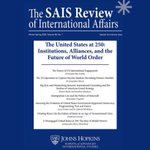
As the United States marks 250 years, the conversation about its place in the world has never been more urgent. Thank you to everyone who joined us to celebrate the launch of our Winter/Spring 2026 edition:
“The United States at 250: Institutions, Alliances, and the Future of World Order,” and to our authors for their thoughtful reflections. Read the full issue from @jhupress: muse.jhu.edu/issue/57583

