Interventional Cardiologist | Co-chair Healthcare @phdchamber | Senior Care | Chief 🫀 & Co-Med Director @delhihm_ | Improving health outcomes through education
New Delhi, Delhi
Joined December 2015
- Tweets7K
- Following1.4K
- Followers7.3K
- Likes12.7K
Pinned Tweet
Discussion with Health minister of Armenia 🇦🇲 @AnahitAvanesian at #AdvantageHealthcare to make India 🇮🇳 the preferred destination for #HealthTourism for its citizens.
Our infrastructure, doctors and facilities are at par with the best in the world 🌎
Dr. Sameer Gupta retweeted
Fifth year as Co-Medical Director and Chief Cardiologist ❤️ of India's largest Half Marathon #VDHM2026.
Around 450 doctors, nurses and paramedics across the course, and some great conversations with runners along the way.
Thank you Procam International and the Metro team.
Fifth year as Co-Medical Director and Chief Cardiologist ❤️ of India's largest Half Marathon #VDHM2026.
Around 450 doctors, nurses and paramedics across the course, and some great conversations with runners along the way.
Thank you Procam International and the Metro team.
**The future of healthcare won't be shaped inside hospitals alone.**
It will also be shaped by the policies we create, the partnerships we build, and the conversations we choose to have.
Over the last six years, serving as Co-Chair at the PHD Chamber of Commerce and Industry (PHDCCI) has reinforced this belief.
I've had the opportunity to see healthcare from a different perspective.
Not just as a doctor treating patients.
But as someone working with industry leaders, policymakers, and healthcare professionals to address challenges that affect millions.
I'm honoured to now take on the responsibility of **Chair, Hospitals, Diagnostics & Wellness Committee at PHDCCI for 2026–27.**
My priorities are simple:
→ **Prevention over reaction.** Make early detection and preventive healthcare central to how we deliver care.
→ **Collaboration over silos.** Bring hospitals, diagnostics, and wellness together around the needs of the patient.
→ **Opportunity beyond metros.** Help smaller hospitals and Tier-2/3 healthcare providers embrace technology, quality, and innovation.
→ **Credibility on the global stage.** Strengthen India's position as a healthcare destination built on clinical outcomes, transparency, and trust.
India has no shortage of exceptional doctors, hospitals, or medical expertise.
What we need is an ecosystem that allows all of them to deliver their full potential.
I'm grateful to the PHDCCI leadership for their continued confidence, to Dr. Nasir Jamal and Mr. Jatin Nagpal for their support, and to the many colleagues I've had the privilege of working with since 2020.
**The real measure of progress in healthcare isn't just how well we treat patients. It's how many more people we can reach, how early we can intervene, and how much better we can make the system for everyone.**
Looking forward to this next chapter.
#PHDCCI #HealthcareLeadership #IndianHealthcare #HealthcarePolicy
**Why do some people develop heavily calcified arteries and heart valves, while others don't? Could genetics be part of the answer?**
As an interventional cardiologist, I deal with calcified coronary arteries and heart valves regularly. While we have made tremendous advances in treating these conditions, I believe understanding *why they develop in the first place* is equally important.
I am pleased to share our latest research, published in **OBM Genetics**, in collaboration with **Amity University and Jamia Millia Islamia**.
Our study focuses on **Fetuin-A**, a protein produced by the liver that helps prevent abnormal calcium deposition in blood vessels and other tissues.
This protein is encoded by the AHSG gene, and we wanted to explore whether genetic variations could change its structure and how it interacts with signalling proteins involved in cardiovascular health.
Using advanced computational modelling, we examined **398 genetic variants**, identified seven potentially significant variants, and studied two additional variants previously associated with cardiovascular disease.
Our findings suggest that certain genetic variations may affect the structure of Fetuin-A and its predicted interactions with BMP-10, a protein involved in cardiovascular signalling.
These are early computational findings, not yet validated in laboratory experiments or patients. But they provide important leads for future research.
This work also builds on our earlier research in North Indian patients with rheumatic heart disease, where we observed an association between lower Fetuin-A levels and heart valve calcification.
My congratulations to Aishwarya Rani **Aishwarya Rani**, the lead author, and **Dr. Devinder Toor** from Amity University Amity University for driving this work, along with **Shalesh Gangwar, Neha Sharma and Dr. Khalid Raza**.
I believe the future of cardiology is not just about developing better techniques to treat cardiovascular disease. It is also about understanding the biological and genetic mechanisms that contribute to it.
**Because the more we understand why disease develops, the better our chances of preventing it.**
Read our research: doi.org/10.21926/obm.genet.2…
#Cardiology #CardiovascularResearch #Genetics #VascularCalcification #MedicalResearch
A normal report doesn't always mean a healthy heart.
Diabetes, obesity, lipids and BP build cardiovascular risk together, often before any single test flags it.
Discussed this at BEAT 2026, National Cardiovascular Summit by Voice of Healthcare, New Delhi.
#BEAT2026
Few physicians become textbooks.
Fewer become institutions.
Prof. Eugene Braunwald became both.
A giant of cardiology ❤️, and a legacy that will live on in every ward, clinic, and classroom
RIP 🙏
The European Society of Cardiology is deeply saddened by the passing of Professor Eugene Braunwald, one of the most influential figures in the history of cardiovascular medicine, who died on 22 April 2026, aged 96.
“Professor Braunwald was the leading cardiologist of his time. His vision and innovation changed the trajectory of cardiovascular medicine. He had a rare ability to see what the field needed next, and then to build the science and rigorous evidence leading to better care. He set a standard for intellectual honesty and mentorship, giving generations of clinicians and researchers the confidence to aim higher.” Professor Thomas F. Lüscher, @ESC_President
Professor Braunwald’s work helped define how cardiovascular disease is understood and treated. His legacy endures in the patients whose lives have been saved by evidence-based cardiovascular care, and in the people he inspired to pursue medicine with integrity and purpose ow.ly/EN0O50YP2EZ
Absolutely ridiculous experience with @letsblinkit.
Bought a hard drive that isn’t functioning properly, and instead of resolving it, support keeps chasing me for a video of my computer setup as “proof” — exposing personal files and connected drives 🤯
I’ve already told them this is a privacy risk , but they are refusing to listen. Forcing customers to reveal sensitive data to get support is worse.
Shameful service. Please help @blinkitcares @albinder
India can be the global hub for Medical Value Travel by 2030.
At the CEOs Roundtable (FICCI Advantage Healthcare India 2026), one point was clear: the gap isn’t capability—it’s coordination.
Visa facilitation • global protocols • digital continuity • seamless patient journeys = the infrastructure of leadership.
Opportunity is immense. Responsibility bigger.
Bridging Borders Through Digital Healthcare
It was enriching to share perspectives at the Digital Pathways session during Advantage Healthcare India 2026
Global patients don’t compare hospitals. They compare experiences.
At #AHCI2026 Digital Pathways, one thing was clear: AI + telemedicine + unified records + secure data exchange are now foundational. Tech isn’t replacing doctors—it’s amplifying trust.
#DigitalHealthcare #MedicalValueTravel
Your “Network” is not your “Net worth”.
In the end, it is hard work and discipline 💪
This quoted post is unavailable.
Building a resilient silver ecosystem is no longer a good-to-have for India — it’s a national priority.
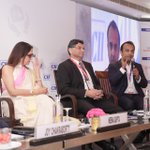
At the CII Senior Care Conclave 2025 in New Delhi, we explored how to make ageing in India healthier, safer and more inclusive under the theme “Zindagi Ek Blockbuster.”
What I underlined in the discussion:
- Two gaps we must close: the emotional gap (lonelier, smaller families, children abroad) and the care-delivery gap (unstructured, non-clinical senior care).
- Clinician-led models bring predictability — vitals, escalation pathways, documentation, and rehab don’t get left to chance.
- Technology must enable inclusion — simple, trustworthy tools for seniors and their families, not app fatigue.
- Age-friendly infrastructure & financing will decide whether we scale this beyond metros.
Partnerships between policy, providers, and civil society will unlock speed.
India is ageing fast, and seniors deserve more than custodial care — they deserve companionship, safety, purpose and medical assurance under one roof.
Thank you @FollowCII CII for convening policy, industry, healthcare, and even creative voices, with Ms. Neena Gupta as Ambassador, to put senior care at the centre of India’s social agenda.
It was a thoughtful discussion with fellow panellists — Ms. Neena Gupta, Mr Joy Chakraborty, Dr Ashutosh Shukla — and Dr. Shubnum Singh who steered the conversation towards real, workable models.
Onward to an age-inclusive India.
Dr. Sameer Gupta retweeted
A proud moment from #VDHM2025 -
Air Chief Marshal Amar Preet Singh, Lt. Gen. Rahul Singh, and Vice Admiral Lochan Pathania, the seniormost runners from the Indian Air Force, Army, and Navy, proudly donning their commemorative bibs after completing the run.
Snack choices can tip the balance: low GI + protein + fibre > empty calories.
Top picks: roasted chana, sprouts chaat, yogurt bowl, oats cheela, hummus + veggies, handful of nuts.
Read full list & tips via NDTV - zurl.co/IJXAg
#DiabetesCare #HeartHealth #HealthySnacks #SmartEating #NDTVHealth #LowGICarbs
Sudden cardiac arrests in gyms: Awareness > Anxiety.
Grateful to contribute to NDTV Health on why these rare events are being reported more—and how to train safely. Core points I shared:
• Baseline check-up first: BP, cholesterol, sugar; ECG/stress test if indicated—especially with family history.
• Progress gradually: avoid ego lifting; build capacity stepwise.
• Never ignore red flags: chest pain, breathlessness out of proportion, palpitations, dizziness.
• Lifestyle matters: hydrate, sleep, nutrition; avoid performance enhancers/steroids.
• Be prepared: gyms should have AEDs and CPR-trained staff.
Exercise protects the heart—safety and screening protect your exercise. Read the article here for the full context.
zurl.co/jlZf3
Hypertension in young Indians with a family history—genes aren’t destiny.
Grateful to contribute to NDTV Health on how we can delay or even prevent early-onset high BP—even if it runs in the family. Sharing key points here; screenshots below.
What actually helps:
- Know your numbers: check BP at least once a year from your 20s; sooner if overweight, stressed, or sedentary.
- Cut hidden salt: watch pickles, papad, packaged snacks, instant noodles, and restaurant food.
- Add potassium-rich foods: bananas, oranges, coconut water, dals, spinach, sweet potato.
- Move daily + build strength: 30 mins brisk activity, 5 days/week, and 2 days of resistance work.
- Manage stress on purpose: sleep 7–8 hrs; try pranayama, journaling, or a daily walk.
- Limit sugar & ultra-processed foods; avoid smoking and go easy on alcohol.
Simple, consistent habits—done early—change the trajectory.
zurl.co/5ZKkG
From “silver” to strength—ageing well must be India’s next systems goal.
Grateful to join FICCI HEAL 2025 in New Delhi for the panel “From Silver to Strength: Charting India’s Path to Active & Healthy Ageing.” We discussed how India can enable older adults to live healthier, independent, purposeful lives—at scale.
Highlights I leaned into:
- Shared Key Insights from running Aurum Senior Living
- Prevention-first: screening, falls risk, heart health, cognition—embedded in primary care and communities.
- Care where seniors live: social participation, mental well-being, and neighbourhood infrastructure—not just hospital beds.
- Digital inclusion that works: simple, trustworthy tools that reduce variability and support caregivers, not tech theatre.
- Workforce & policy: geriatric skills across the continuum, outcomes data, and payment models that reward function and quality of life.
I was privileged to share the stage with Shri Amit Yadav (Secretary, Department of Social Justice & Empowerment) and Ms Malti Jaswal (Convenor & Moderator), alongside fellow panellists Dr Arun Agarwal, Mr Jaydeep Biswas (UNFPA India), Dr Prasun Chatterjee, and Dr Suneela Garg—thank you for a grounded, solutions-first conversation.
Onward to an age-inclusive India where systems, data, and compassion align—so growing older means growing stronger.