

PV POWER & ES EXPO Dates: June 3-5, 2026; National Exhibition and Convention Center(Shanghai) Contact: [email protected]
San Jose
Joined January 2026
- Tweets408
- Following4.8K
- Followers3.1K
- Likes67




IRENA just released its World Energy Transition Outlook 2026, and the numbers are stark:
🔹 Electricity will go from 23% to 50%+ of global final energy by 2050. Renewables will supply 92% of electricity by mid-century — up from 30% today.
🔹 Renewable capacity must grow from 5.2 TW to 18.4 TW by 2035. That means adding 1.3 TW every year for the next decade — roughly triple today's pace.
🔹 Battery storage must expand 8x by 2035 and 22x by 2050. Grids, storage and flexibility are no longer "supporting elements" — they are the core infrastructure.
🔹 The price tag: USD 165 trillion in cumulative investment by 2050. But the payoff: 84 million renewable energy jobs by 2050, and electricity prices 15% lower than today by mid-century.
🔹 Efficiency is the missing fuel. Global energy intensity is improving at under 2% a year — half the 4% needed. AI and data centers are adding concentrated new load that makes the gap worse.
🔹 China makes 80% of PV modules and 45% of batteries. Supply chain concentration is now both a competitive advantage and a strategic risk.
⚡ SNEC's Insights
This report's central message is that the bottleneck has shifted.
Three takeaways:
1️⃣ The problem is no longer renewable technology cost — it's integration. Solar and wind are the cheapest new power in history. The binding constraints are now grids, storage, interconnections, permitting and grid-scale flexibility. Whoever solves grid integration first wins the next decade.
2️⃣ Electrification is the entire game. Transport, buildings, industry and now AI data centers all run on electrons. The report is right: electricity is the principal link between renewables and demand. Without end-use electrification, renewable capacity additions just become excess supply.
3️⃣ Industrial policy and supply chains are now energy policy. When 80% of solar modules come from one country, the energy transition becomes an industrial strategy question — not just a climate target. The coming decade will be defined by who builds resilient, diversified supply chains while keeping costs competitive.
The 1.5°C pathway is still technically feasible. But the window is closing — and the deciding factor is no longer how fast panels fall in price, but how fast grids, storage and electrification can scale alongside them.
📖 Source: IRENA
Find the full report:
lnkd.in/gJKi6X9K
#EnergyTransition #IRENA #RenewableEnergy #Electrification #GridModernization #EnergyStorage #SolarPower #WindEnergy #EnergyPolicy #CleanEnergy #1Point5Degrees #SNEC

The IEA just dropped its mid-year update on electric car markets, and the divergence is striking: global car sales are down 5% in H1 2026, but EV sales grew 4% year-on-year in Q2 — and are on track for 23 million units and a 29% market share for the full year.
Key signals:
🔹 90+ countries saw EV sales grow in H1 2026. Europe hit >30% EV share; the UK reached 38%. Latin America more than doubled (+130%). Southeast Asia +75%.
🔹 The energy crisis is accelerating adoption. Since the Middle East conflict began in February 2026, EV sales in Australia, Brazil, India and Viet Nam have roughly doubled. Australia's gasoline prices rose ~34% — and April EV sales nearly tripled y-o-y.
🔹 China's domestic market cooled (total car sales down >20%), but EV exports surged +120% — fully offsetting the domestic dip. Chinese EVs now make up 45% of China's car exports.
🔹 Chinese OEMs are winning emerging markets. They hold ~60% of EV sales in developing economies outside China, ~90% in Latin America and South Africa.
🔹 Incumbent OEMs are losing ground. ICE-focused manufacturers account for 90% of total car sales but only 55% of EV sales. Chinese battery cost advantage runs ~35% ahead of Western manufacturers.
⚡ SNEC's Insights
The IEA data confirms a structural shift, not a cyclical blip.
Three takeaways:
1️⃣ EVs are now the growth engine of the entire car industry. When global car sales contract 5% but EVs grow 10%, the market is telling you where the future lives. Every OEM's profitability over the next decade will depend on their EV pipeline, not their ICE backlog.
2️⃣ Energy security is now a demand driver, not just a policy argument. The 2026 Middle East crisis proved it: consumers in fuel-importing countries are voting with their wallets. Governments from Bangkok to Paris are responding with electrification packages — this cycle reinforces rather than reverses the trend.
3️⃣ The competitive center of gravity has shifted to China + emerging markets. Chinese OEMs building 60%+ of EV sales in the Global South, with a 35% cost gap, means Western manufacturers can't compete on price alone. The future belongs to players who can pair Chinese-scale supply chains with local manufacturing and brand differentiation.
The age of "EVs are a niche" is over. The question now is which incumbents survive the transition — and which become the next Nokia.
📖 Source: IEA
Find the full report:
iea.blob.core.windows.net/as…
#ElectricVehicles #EVMarkets #IEA #ChinaEV #EnergySecurity #TransportElectrification #BatterySupplyChain #CleanMobility #AutoIndustry #EnergyTransition #SNEC

The October 2026 IEA Oil Market Report is not just another supply update. It's a stress test of how fragile fossil fuel dependence really is:
🔹 Oil demand is collapsing. Global demand forecast down 2.6 mb/d for 2026 to 102.4 mb/d. Q4 alone: -2.5 mb/d y-o-y. Even after a partial 2 mb/d recovery in 2027, demand will still be 0.6% below 2025 levels — the first multi-year demand plateau of this century.
🔹 Diesel is the crisis within the crisis. Wholesale diesel hit all-time highs of ~$220/bbl in Europe and the US. Diesel accounts for 25% of the total demand drop. Middle East + Russian diesel exports fell 1.3 mb/d y-o-y in September. OECD diesel inventories are at their lowest since 2023.
🔹 Crude prices are disconnected from physical reality. Brent at ~$107/bbl, but North Sea Dated crude hit $134/bbl — some grades trading at $160/bbl. Record freight rates on top of crude costs are crushing refinery margins outside the US.
🔹 Inventories have been drained 509 mb below pre-war levels. On-land stocks are at their lowest since at least 2016. China accounted for 78% of the crude stock draw.
🔹 The market stays tight through 2027. Even with a supply rebound, diesel inventories won't be rebuilt before H2 2027. G7 leaders just committed to accelerate emergency diesel stock releases.
⚡ SNEC's Insights
This report is the strongest argument yet for electrification and renewable energy independence.
Three takeaways:
1️⃣ Diesel dependence is now a national security vulnerability. When a single pipeline attack (Saudi East-West, Sept 11) and Houthi tanker attacks can push diesel to $220/bbl, every economy still running on imported diesel for trucks, agriculture and backup power is exposed. Electrifying road transport and pairing renewables with battery storage is the fastest hedge.
2️⃣ Demand destruction is not a policy victory — it's a recession signal. The IEA is forecasting oil demand to stay below 2025 levels through 2027 not because of the energy transition, but because high prices and economic damage are destroying consumption. That's not decarbonization — that's stagflation. The clean energy transition's value is that it delivers energy access without this volatility.
3️⃣ The diesel crisis is an accelerant for electrification. Fleets, logistics, mining and agriculture — the diesel-dependent sectors — are now the fastest-adopting segments for battery-electric trucks, solar-plus-storage backup and on-site generation. Every month of $200+ diesel pushes another operator off fossil fuels permanently.
The oil market isn't telling us the energy transition is slowing. It's telling us the old system is breaking down — and every megawatt of renewable capacity and every MWh of storage installed is insurance against the next shock.
📖 Source: IEA
Find the full report:
iea.org/reports/oil-market-r…
#OilMarket #IEA #DieselCrisis #EnergySecurity #EnergyTransition #RenewableEnergy #BatteryStorage #Electrification #CrudeOil #Geopolitics #CleanEnergy #SNEC

The structure of PV litigation completely reshaped between 2025 and 2026. Here's what changed:
🔹 2025: Chinese makers suing each other. JinkoSolar, Trina and Canadian Solar fought across China, the US, Japan, Australia and Europe over copied production methods. Trina alone sought ~$134 million in damages. Most resolved via licensing by early 2026.
🔹 2026: the fight moved to the US — and shifted from "did you copy me?" to "is your patent even valid?" First Solar, which doesn't make TOPCon panels, emerged as the lead plaintiff using IP acquired via TetraSun (2013). It is now suing Jinko, Trina, T1 Energy, JA Solar and its own US distributor.
🔹 The goal has changed. It's not just market share — it's licensing revenue plus slowing TOPCon imports into the US. Defendants are fighting back by invalidating patents: the Chinese version of one key First Solar patent was cancelled in May 2026.
🔹 New front opened on manufacturing equipment. Linton Crystal is suing Jingsheng over furnace patents and NextPower over tracker hardware. Patent risk now covers the machines that make panels, not just the panels themselves.
🔹 Downstream buyers are exposed. Import bans can halt shipments mid-project, delay COD, trigger PPA penalties and leave the importer of record directly liable. 25–30 year warranties mean long-tail risk lives with project owners and EPCs.
⚡ SNEC's Insights
The patent war evolution tells you exactly where the industry's competitive center of gravity is.
Three takeaways:
1️⃣ First Solar's TOPCon strategy is industrial policy by other means. A US manufacturer that doesn't even produce TOPCon is now the primary enforcer of TOPCon patent rights in the US market. This isn't pure IP enforcement — it's a trade barrier disguised as litigation. Expect more "patent as trade tool" moves as the US, EU and India race to build domestic solar manufacturing.
2️⃣ Validity challenges are the new nuclear option. Canceling an opponent's patent doesn't just win a case — it resets the entire licensing playing field. The fact that Chinese versions of key patents are being invalidated means we're entering a phase where weak IP claims get pruned fast. Companies with genuine process innovation (BC heterojunction, perovskite tandem) will be the ones holding real defensive assets.
3️⃣ Procurement due diligence is now a board-level risk. Project developers and EPCs can no longer assume "our supplier handles patents." Importer-of-record liability, COD delays and warranty exposure make patent indemnity clauses and US market shipment scrutiny essential parts of every procurement contract. The $0.01/W savings from a cheaper module can be wiped out by a single ITC import ban.
The solar industry is maturing from a gold-rush growth phase into a contested market where IP, trade policy and supply chain geography are as important as efficiency and price.
📖 Source: pvtime
Read the full article:
lnkd.in/eseG7zFW
#SolarEnergy #PatentLaw #TOPCon #FirstSolar #SupplyChainRisk #SolarManufacturing #CleanTech #TradePolicy #RenewableEnergy #ITC #SNEC

EcoFlow’s new Titan residential storage series targets the US home‑backup market, with three models scaling 5 kWh‑30 kWh.
Starting from a smaller base capacity vs Delta Pro Ultra, the range is built around household real‑world load data: most homes only hit high‑power peaks for very short periods.
Highlights: 200V LFP platform, tabless 2C cells, SiC electronics, sub‑20ms transfer via Smart Home Panel 10, OASIS 3.0 energy management.
Pricing starts at $2,499, available for reservation from Oct 13.
#energystorage #residentialstorage #BESS #EcoFlow

Skeleton Technologies, the Estonian ultracapacitor maker, just closed a strategic investment round led by Siemens at a valuation above $1 billion. The strategic logic is sharp:
🔹 The product isn't multi-hour energy storage. It's microsecond-scale power smoothing for AI data centers. Curved graphene ultracapacitors and hybrid SuperBattery cells feed GPUs during compute bursts and recharge during idle cycles — responding in 10 microseconds, rated for 50,000 cycles, recharging in under 90 seconds.
🔹 The claimed numbers are eye-catching: up to 40% energy savings and double-digit GPU performance gains by flattening the load seen by the facility and the grid.
🔹 Siemens gets exclusive global rights to sell Skeleton's high-power storage products to data center customers — turning a component maker into Siemens' preferred storage layer for AI infrastructure.
🔹 The money is going to America. Skeleton plans >$200M for US manufacturing and Silicon Valley R&D, aiming to be the only player in its segment with a full US value chain from cells to systems. A US IPO is targeted for 2027.
🔹 Why now? As CEO Taavi Madiberk put it: "AI is scaling faster than the power infrastructure behind it." Hyperscalers don't need another 4-hour battery — they need millisecond response that prevents GPU throttling and grid stress.
⚡ SNEC's Insights
This deal signals a new storage category emerging between "battery" and "uninterruptible power supply."
Three takeaways:
1️⃣ AI workloads create a demand for storage that lithium-ion alone can't serve. GPUs draw massive, instantaneous power spikes. Grid-tied batteries respond in milliseconds and wear out under cycle abuse. Ultracapacitors — with 50,000 cycles and microsecond response — are purpose-built for exactly this waveform. Expect more investment in hybrid architectures: lithium-ion for energy, ultracapacitors for power.
2️⃣ The data center is becoming the new anchor load for the energy industry. When a $1B industrial conglomerate like Siemens is exclusively licensing ultracapacitors for AI facilities, it confirms that power quality, transient response and load smoothing are now multi-billion-dollar markets. This is adjacent to — but distinct from — the grid-scale storage narrative.
3️⃣ US supply chain strategy is writing checks. Skeleton's pivot to US cell manufacturing and a 2027 US listing is not organic growth — it's industrial policy alignment. Data center customers and their investors want supply chains they can audit, and Western industrial partners (Siemens) are positioning to capture that.
The energy transition just expanded from "how do we store solar overnight?" to "how do we keep a GPU cluster from melting down every time it runs inference?" — and the storage stack is getting more layered as a result.
Source: ESS News
Read the full article:
ess-news.com/2026/10/15/siem…
#Ultracapacitor #DataCenter #AIInfrastructure #EnergyStorage #SkeletonTechnologies #Siemens #Graphene #PowerElectronics #Hyperscaler #CleanTech #SNEC

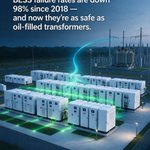
EPRI just published its latest analysis of lithium-ion battery energy storage failures. The numbers are striking:
🔹 98% reduction in failures per deployed GWh between 2018 and 2025. The 2025 rate sits at just 0.04 failures per GWh — and fell another 50% from 2024.
🔹 No reported injuries or fatalities from US BESS failures since 2019. That year's APS Surprise, Arizona explosion sent eight first responders to hospital — and effectively became the industry's wake-up call.
🔹 The safety gains came from three fronts: better cell and system design, stronger codes and standards, and improved battery management plus operating practices.
🔹 The chemistry shift from NMC to LFP coincided with the improvement, but EPRI is careful not to credit LFP alone — the learning curve ran in parallel.
🔹 Today's BESS safety profile is comparable to large oil-filled transformers — equipment utilities have trusted for a century. No BESS fire has ever been reported spreading beyond the facility boundary.
🔹 Two remaining gaps: indoor BESS facilities are overrepresented in incidents (recommend fire walls/segmentation), and early-vintage systems need retrofits to current codes. Transparency on non-public incidents remains incomplete.
⚡ SNEC's Insights
This report quietly resolves one of the longest-running objections to grid-scale storage.
Three takeaways:
1️⃣ Safety is no longer the bottleneck — deployment is. When a BESS failure rate becomes statistically comparable to oil-filled transformers, the conversation shifts from "are batteries safe?" to "how fast can we build them?" Insurers, grid operators and regulators should price storage risk accordingly.
2️⃣ LFP won, even if EPRI won't say it outright. The coincidence of NMC→LFP chemistry shift and a 98% failure rate decline is not accidental. LFP's higher thermal stability, longer cycle life and lower abuse sensitivity were always the practical safety advantage — now the data confirms it at fleet scale. NMC's premium energy density no longer justifies the safety risk for stationary storage.
3️⃣ The next safety frontier is not chemistry — it's integration. Indoor facilities, early-vintage retrofits, fire segmentation and transparent incident reporting are where the remaining risk lives. As 100+ GWh projects become normal, the marginal safety gains will come from system engineering, site design and emergency response protocols — not cell chemistry.
The battery industry spent the last decade earning its safety license. The EPRI data says it has — and the market should treat BESS as the mature, bankable asset class it now is.
Source: ESS News
Read the full article:
ess-news.com/2026/10/15/glob…
#BESS #EnergyStorage #LFP #BatterySafety #EPRI #GridScaleStorage #LithiumIon #RenewableEnergy #CleanEnergy #PowerSystems #SNEC

Visionpark launches Atlas: foundation-free solar carports, installable in one day
French solar infrastructure specialist Visionpark is expanding its concrete solar carport line into residential markets with the Atlas range — arriving January 2027.
Key details:
🔹 No foundations required — self-ballasting precast concrete design sits directly on existing pavement, no ground anchors or civil works needed.
🔹 Three models, 3–15 kW — PV capacity from 3 kW to 15 kW, heights up to 4 meters, fully Eurocode-compliant.
🔹 Installed in a single day — factory-prefabricated, deployed by two technicians with minimal site disruption.
🔹 Built-in energy hub options — configurable with EV charger, inverter, energy management system and battery storage (3–20 kWh).
🔹 Made in France — built with Voltec PV modules and French-engineered mounting systems; builds on Visionpark’s 2024 commercial carport portfolio.
⚡ SNEC's Insights
The residential solar carport is evolving from a niche add-on to a standard distributed energy node.
Three takeaways:
1️⃣ Parking space is the new rooftop. As rooftop solar saturates in mature markets, underused driveways and parking lots are the next frontier for distributed generation — especially when paired with EV charging and on-site storage.
2️⃣ Foundation-free design breaks the cost-and-timeline bottleneck. Civil works, permitting and ground disruption are often the longest, most expensive part of solar carport projects. Prefab self-ballasted structures collapse both cost and lead time.
3️⃣ Local manufacturing aligns with resilience policy. Made-in-France engineering and domestic component sourcing maps directly to EU supply chain resilience rules and public procurement preferences — a playbook other markets will increasingly follow.
📖 Source: pv magazine
Read the full article:
pv-magazine.com/2026/10/13/v…
#SolarCarport #ResidentialSolar #DistributedEnergy #EVCharging #EnergyStorage #Visionpark #RenewableEnergy #EnergyTransition #CleanEnergy #Prefabricated #SNEC

Brazil’s draft 10-year energy expansion plan (PDE 2036) maps out a massive decade for decentralized generation, with solar PV leading the charge.
Key takeaways:
🔹 41.4 GW of new distributed capacity over 2027–2036, taking the total segment to ~92 GW and serving 13.5 million consumers.
🔹 Solar PV drives nearly all growth, powered by surging self-generation adoption across residential, commercial and industrial users.
🔹 Flexibility resources are built into the plan: 7.2 GW battery storage, 2 GW pumped hydro and 4 GW demand response to balance variable generation.
🔹 Grid integration is the core challenge. The report flags the need for stronger monitoring, closer coordination between national grid operator ONS and distribution utilities, and better generation-demand alignment.
🔹 The PDE 2036 is an indicative planning framework, currently open for public consultation — not mandatory capacity targets.
⚡ SNEC's Insights
Brazil’s projection marks a coming-of-age moment for distributed solar in Latin America.
Three observations:
1️⃣ Behind-the-meter solar is graduating to system-critical. What was once a small residential segment is on track to become a double-digit gigawatt pillar of Brazil’s power mix. Grid planning can no longer treat it as an afterthought.
2️⃣ Storage and demand response are not optional — they’re enablers. 92 GW of distributed solar cannot land without parallel investment in distribution-level storage, smart grids and flexible demand. The flexibility roadmap in the PDE is the right starting point.
3️⃣ Indicative plans only go so far. For this pipeline to materialize, stable tariffs, clear net-metering rules and predictable grid connection processes will matter more than headline capacity targets.
📖 Source: pv magazine
Read the full article:
pv-magazine.com/2026/10/13/d…
#DistributedSolar #BrazilEnergy #SolarPV #EnergyStorage #GridIntegration #RenewableEnergy #EnergyTransition #PDE2036 #DistributedEnergy #CleanEnergy #SNEC

Researchers in Indonesia found that where you ground a PV system — and how many grounding points you use — matters more than the type of grounding.
The findings:
🔹 Adding a second grounding point cuts overvoltage by 47.5–54.8%
🔹 Placing grounding closest to the strike point minimizes peak voltage
🔹 High soil resistivity (30 → 3,000 Ωm) sharply increases overvoltage
🔹 Grounding through mounting structures outperforms frame grounding
🔹 Simulated peak current: 48.78 kA — within IEEE Std 80 safety limits
The takeaway: shorter discharge paths + multiple grounding points = dramatically better protection.
⚡ SNEC's Insights
As solar expands into high-risk lightning regions — Southeast Asia, Latin America, Africa — grounding design becomes a reliability issue, not a detail.
Three points:
1️⃣ Location beats configuration — Whether you ground through frames or mounting structures matters less than where you ground. Shorter paths to the strike point win.
2️⃣ Soil resistivity is an underrated variable — At 3,000 Ωm, voltage hotspots shift toward the grounding connection. Site surveys should include soil resistivity, not just irradiance and terrain.
3️⃣ Low-cost, high-impact — Adding a second grounding point is cheap compared to module replacement or downtime. This is one of the best ROI measures in utility-scale PV design.
As solar becomes critical infrastructure, lightning protection moves from afterthought to engineering priority.
📖 Source: pv magazine
Read the full article:
pv-magazine.com/2026/10/12/m…
#SolarEnergy #PVSystems #LightningProtection #CleanEnergy #Renewables #UtilityScale #EnergyTransition #SNEC #Grounding #SolarDesign

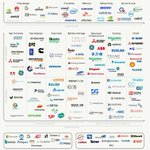
A data center is never built by one single company. It relies on a deeply interconnected ecosystem:
🔹 Inside the rack: semiconductors, memory, networking and servers deliver computing power
🔹 Outside the rack: power supply, battery storage, electrical infrastructure and cooling systems enable reliable operation at scale
This build-out ripples across the whole economy, driving demand for energy suppliers, EPC firms, cooling technology and construction partners.
And location matters more than ever: grid capacity, clean energy access, connectivity and local execution capability now dictate how fast new capacity comes online.
⚡ SNEC's Insights
Compute growth is increasingly an energy problem.
Three key takeaways:
1️⃣ Energy infrastructure is the real bottleneck of AI expansion. Chips can scale fast; power grids and energy storage cannot.
2️⃣ Sustainable AI needs end-to-end value chain collaboration — not just renewable power procurement, but deep integration with storage, grid and thermal systems.
3️⃣ Clean tech is becoming core digital infrastructure. Battery storage, efficient thermal management and renewables will define where the next generation of data centers gets built.
AI’s future won’t be won on chips alone. It will be won by connecting digital growth to resilient, clean energy systems.
Source: Delphidata / PVTIME
Link1: lnkd.in/p/gnDYGUqJ
Link2: lnkd.in/p/gmWmbSXc
#DataCenter #AIInfrastructure #DataCenterValueChain #EnergyTransition #RenewableEnergy #EnergyStorage #DigitalInfrastructure #SustainableComputing #CleanTech #SNEC

The IEA’s 2026 outlook makes one thing clear: the global push for clean energy, EVs and AI is reshaping mineral markets faster than supply chains can adapt.
Key takeaways:
🔹 Demand is accelerating — EVs, battery storage, solar, wind and nuclear expansion, plus AI data centers, are driving record mineral demand. Lithium demand could nearly quadruple by 2040; copper faces a persistent ~25% supply gap by 2035.
🔹 Supply concentration is still the core risk — China dominates refining of most key energy minerals (70–95% market share). Export controls and geopolitical shocks have turned this concentration from a theoretical vulnerability into real economic disruption.
🔹 Processing is the bottleneck — mining is slowly diversifying geographically, but refining and downstream manufacturing capacity outside dominant suppliers remains severely limited, creating structural N-1 supply risks.
🔹 Recycling is growing but not a silver bullet — secondary supply could double to ~20% of total demand by 2040. It helps resilience, but is too small to close primary supply gaps alone.
🔹 Strategic minor minerals are rising in risk — gallium, germanium, tungsten and rare earths have small market sizes but extreme supply concentration — and are critical to semiconductors, aerospace and clean tech.
⚡ SNEC's Insights
Energy security in the net-zero era is mineral security.
Three core observations:
1️⃣ The transition will be won or lost in midstream processing. Mines can be built around the world, but refining, cathode and magnet production requires expertise, equipment and scale that take decades to replicate. This is where supply chains are most vulnerable.
2️⃣ Policy matters more than markets now. Given the geopolitical stakes, mineral supply chains will not diversify on their own. Targeted public finance, offtake guarantees and industrial policy are needed to de-risk new capacity.
3️⃣ Demand-side efficiency deserves as much attention as supply. Silver thrifting in solar panels, LFP chemistry reducing cobalt use, and circular economy systems can materially ease pressure on tight markets — and improve the economics of the transition.
The energy transition doesn’t face a resource shortage. It faces a supply chain, infrastructure and strategy shortage.
Source: IEA
📖 Read the report: iea.li/4fGewtO
#CriticalMinerals #IEA #EnergyTransition #RenewableEnergy #BatteryStorage #Lithium #Copper #RareEarths #SupplyChainResilience #CleanEnergy #SNEC

39 Small Island Developing States (SIDS) hold 16% of the world’s exclusive economic zones — but face extreme energy vulnerability.
Key takeaways from the new GOWA & IRENA report:
🔹 Fossil fuel dependence is crippling — up to 90% of electricity relies on imported fuels, driving some of the world’s highest power prices. The 2026 Strait of Hormuz crisis and cyclones already triggered blackouts and national emergencies across Pacific islands.
🔹 Offshore wind is a natural fit — vast wind resources sit in ocean territories, require no scarce land, and can power desalination, strengthen grid resilience and cut import exposure.
🔹 Momentum is building — renewables in SIDS grew 230% from 2014–2025 (mostly solar). Now Pacific, Caribbean and Indian Ocean island groups are rolling out offshore wind roadmaps, marine spatial planning and regional cooperation frameworks.
🔹 Bottlenecks remain — weak grids, limited affordable finance, and the fact that ~70% of SIDS’ offshore wind potential needs floating foundations — a technology still maturing toward mainstream costs.
⚡ SNEC's Insights
For island nations, offshore wind is less an energy project than an energy sovereignty strategy.
Three core observations:
1️⃣ Land scarcity makes offshore wind irreplaceable. Unlike onshore solar and wind, ocean-based generation scales without crowding out housing, agriculture or tourism — the real economic lifelines of island economies.
2️⃣ Floating wind is the make-or-break technology. With 70% of SIDS’ wind potential in deep water, cost reductions in floating foundations will determine how fast this potential translates into actual energy security.
3️⃣ Regional coordination beats individual action. No single island is large enough to drive supply chain economies of scale. Shared planning, harmonized standards and pooled project pipelines will be the key to attracting capital and driving down costs.
Source: IRENA
📖 Read the report: lnkd.in/g4MQ-Xdw
#OffshoreWind #EnergySecurity #SIDS #RenewableEnergy #FloatingWind #EnergyTransition #BlueEconomy #CleanEnergy #SNEC

The European Commission has unveiled a package of measures, including a data center classification & labelling scheme, alongside a public consultation on energy performance rules.
Driven by surging AI workloads, EU data center power use is projected to jump from 68 TWh in 2024 to 114 TWh by 2030.
The new rules apply to facilities above 500kW IT load, assessing power consumption, water usage, clean energy adoption, waste heat recovery and grid demand flexibility.
Recovering half of data centers’ waste heat could heat around 4 million European households.
The delegated regulation faces a 2-month review, with first sustainability labels expected in 2027. A 12-week consultation runs until 14 Dec 2026, feeding into legislative proposals in Q2 2027.
#DataCenter #GreenComputing #AIInfrastructure #EnergyEfficiency #SNEC

Now in its 43rd year, the European Photovoltaic Solar Energy Conference opened this week in Rotterdam. The message from day one: solar's biggest challenges are no longer about cells — they're about connections.
⚡ The grid is the bottleneck:
🔹 The Netherlands has Europe's highest per-capita PV capacity — and with it, growing congestion and curtailment
🔹 TU Delft's Peter Palensky: the market alone isn't solving grid congestion fast enough
🔹 His warning: "Every billion not invested in grids adds up to €10 billion in lost investment"
🤝 Interfaces everywhere:
Becquerel Prize winner Delfina Muñoz (CEA Liten) described solar's many "interfaces" — between cell layers, and between industries — as the place "where competition stops and collaboration begins."
Key interfaces under discussion:
▪️ Solar + grid
▪️ Solar + agriculture
▪️ Solar + built environment
▪️ Solar + recycling & waste
▪️ Solar + public trust
🤖 AI has landed:
Sessions dedicated to AI in PV operations — from analyzing inverter data to spot faults, to identifying individual modules in drone imagery. The flip side: the infrastructure needed to power AI, and solar's role in it.
💡 SNEC's Insights:
▪️ The conversation has shifted — from module efficiency to system integration. That's a sign of a maturing industry.
▪️ Grid investment is the decisive variable — underinvest, and you lose 10x that in wasted clean energy investment.
▪️ Solar's future is cross-sector — agriculture, buildings, recycling, AI. The winners will be those who manage these interfaces well.
▪️ Bottom line: solar no longer stands alone. Its success now depends on collaboration beyond its own industry.
👇 Is grid investment the biggest barrier to Europe's solar ambitions?
📖 Source: pv magazine
Read the full article:
pv-magazine.com/2026/09/22/g…
#Solar #EUPVSEC #Grid #EnergyStorage #Renewables #CleanEnergy #EnergyTransition #SolarPower #AI #Sustainability #NetZero #Europe #SNEC

A Chinese research team has developed a high-performance perovskite-silicon tandem solar cell based on a newly designed polymer hole-transport layer. The technology enables device fabrication entirely under ambient air conditions, marking a key advance toward the scalable industrial production of perovskite photovoltaics.
🔹 Core breakthrough
The champion two-terminal perovskite-silicon tandem cell achieves a 33.3% power conversion efficiency (PCE), with an independently certified efficiency of 33.0%. Across 18 tandem devices, the team reported an average efficiency of 32.0%.
This performance is enabled by ambient-air blade coating — no inert atmosphere is required — which removes a major barrier to scaling perovskite manufacturing from lab-scale cells to large-area modules.
🔹 Key innovation: PNCC copolymer hole-transport layer
At the center of the breakthrough is PNCC, a co-polymer that integrates triarylamine and carbazole phosphonic acid (PACz) units. It was purpose-built to fix the inherent weaknesses of the two mainstream organic hole-transport materials:
- PTAA: strong charge transport but poor surface wettability, which hinders uniform perovskite deposition
- PACz-based self-assembled monolayers**: strong substrate adhesion but poor film uniformity, especially on textured silicon bottom cells
PNCC combines the high charge mobility of PTAA-like polymers with the strong substrate binding of PACz materials. It forms a highly uniform, void-free interface with the perovskite absorber, reduces non-radiative recombination and extends carrier lifetimes. The material is synthesized by copolymerizing PACz and triarylamine units at a 1:3 molar ratio.
🔹 Single-junction perovskite cell performance
Built with the same ambient blade-coating process, the single-junction p-i-n perovskite device delivers:
- 26.6% PCE (26.5% third-party certified)
- 1.21 V open-circuit voltage
- 26.1 mA/cm² short-circuit current density
- 84.1% fill factor
By comparison, reference cells based on conventional PTAA and Me-4PACz reached only 23.5% and 24.1% efficiency respectively.
🔹 Stability performance
- Single-junction cell: retains 99.8% of initial PCE after 1,200 hours of light soaking (~40 °C in air); 95.1% after 1,400 hours at 65 °C; 92.8% after 1,200 hours at 85 °C
- Encapsulated tandem cell: retains 85% of initial efficiency after 1,140 hours of 1-sun illumination at 65 °C in air

At the 2026 Global Low-Carbon Industry Forum (GLIF 2026), one consensus dominated the conversation: grid-forming technology + AI is the game-changing combination to unlock large-scale renewable deployment. Huawei Digital Power shared a field-proven, three-pillar playbook addressing the core barriers:
🛡️ Grid resilience
Grid-forming ESS delivers inertia and transient support even in ultra-weak grids (SCR < 1.5):
- RoCoF controlled within 0.5 Hz/s
- Fault voltage recovery in the hundred-millisecond range
- Outperforms conventional synchronous condensers
Deployed in ~100 benchmark projects globally, including the 30 MW PV + 6 MW/24 MWh Gertse project in China’s Ngari region.
💰 Project economics
AI-powered EMS optimizes generation forecasting, peak shaving and SOC management:
- Over 10% higher lifecycle project returns
- 10% revenue uplift at Germany’s AHS Business Park in 2 years
- ~40% lower electricity bills for a Carrefour supermarket in Spain (5-year payback)
🌍 Universal energy access
Pre-integrated microgrids deliver plug-and-play zero-carbon power for off-grid / weak-grid regions:
- >
> 90% of common faults resolved remotely via cloud-edge platform
- 40–60% lower LCOE vs. diesel generators
- Deployed across Africa, Southeast Asia and remote China
Momentum is building: the Global Joint Initiative on Grid Forming & AI was launched at GLIF to accelerate collaboration on standards, validation and global rollout.
💡 SNEC's Insights:
This is a paradigm shift: energy storage is evolving from a supporting grid asset into the foundation of dispatchable renewable power. AI is the operating system that makes this transition scalable and affordable.
What’s the biggest grid barrier to renewables in your region? Share your view in the comments.
📖 Source: pv magazine
Read the full article:
pv-magazine.com/2026/09/21/h…
#EnergyTransition #GridForming #EnergyStorage #AIinEnergy #RenewableEnergy #CleanTech #GLIF2026 #SNEC

BloombergNEF’s latest Tier 1 ranking, sorted by annual production capacity, paints a clear picture of the market:
🏭 Top 6 manufacturers dominate
- JinkoSolar & LONGi: tied for 1st place, 120 GW annual capacity each
- Trina Solar: 3rd at 100 GW
- JA Solar: 88 GW
- Tongwei: 85 GW
- Canadian Solar: 61 GW
This small group accounts for the lion’s share of global module output, built on full vertical integration and decades of capital investment.
📊 The rest of the field
- Second-tier players (24–56 GW): Chint Astronergy, Risen Energy, Aiko Solar, TCL Zhonghuan
- First Solar ranks 12th at 24.4 GW — the only major thin-film maker in the cohort
- India’s domestic rise is tangible: Waaree (22.3 GW, 13th), Vikram Solar, Tata Power Solar and Adani Mundra all make the list
- A broad mid-tier (~10 GW) is emerging globally, serving both utility and distributed solar markets
⚠️ Key distinction everyone should know
Tier 1 is a bankability rating, not a quality or efficiency award. It measures financial resilience, long-term warranty viability and ability to deliver at scale — the metric that utility-scale investors and lenders care about most.
💡 SNEC's Insights:
Capacity isn’t everything, but it defines market power.
The gap between the top integrated giants and everyone else keeps widening. Scale, supply chain depth and balance sheet strength are now the biggest competitive moats in solar manufacturing.
That said, the slow geographic diversification of bankable suppliers — India, Europe and the US building up domestic capacity — is a healthy long-term trend. It reduces single-region supply risk and gives developers more options.
But let’s be realistic: for large-scale solar projects that need bankable modules in volume, the shortlist still starts and ends with a handful of Asian integrated players. That concentration is the defining feature of this industry — and it’s not changing anytime soon.
What’s the most underrated shift in the global PV supply chain right now? Let’s discuss in the comments.
📖 Source: pvtime
Read the full article:
pvtime.org/mapping-global-pv…
#SolarEnergy #Photovoltaics #PVManufacturing #BloombergNEF #Tier1Solar #RenewableEnergy #EnergyTransition #SolarSupplyChain #JinkoSolar #LONGi #TrinaSolar #SNEC

On July 6, 2026, renewables briefly met 50.02% of India’s peak power demand of 221.5 GW—the second consecutive year this milestone was achieved. But the milestone masks a deepening structural crisis.
📈 The Boom
India’s renewable capacity has exploded from just 4 GW a decade ago to over 300 GW, now accounting for 54% of total installed capacity (552 GW). Solar alone stands at 164.59 GW, wind at 58.14 GW. Coal still supplies ~70% of electricity generation, but its share of installed capacity has fallen from 59% in 2014 to 40% in 2026.
🚧 The Bottleneck
India’s transmission infrastructure is not keeping pace. In Q1 2026, transmission constraints caused 300 GWh of renewable curtailment—nearly two-thirds of all curtailment nationally. About one in four inter-state transmission projects is delayed by more than a year, due to right-of-way disputes, land acquisition, and forest clearances. ICRA found only 12% of competitively bid transmission projects met their scheduled commissioning date; the rest were delayed by up to three years.
🏭 The Impact
ReNew Power CEO Sumant Sinha told the BBC: “This shows renewable energy is no longer a marginal energy source at the edge of the power system.” But he acknowledged the mismatch: “Generation projects can be built in 18–24 months, but transmission can take much longer—right-of-way, land acquisition, approvals, coordination across multiple agencies. It’s an execution problem, and it becomes more acute as the system scales.” ReNew itself sees up to 15% of its solar output wasted on some days because the grid cannot absorb peak generation.
🔋 The Storage Gap
The obvious fix—battery storage at renewable pooling stations—is stalled. Battery prices have surged, driven by the Middle East war disrupting raw material supply, China’s withdrawal of export incentives, and a ~10% rupee depreciation that raised BESS project costs by 9–10%. Around 260 GWh of planned storage projects are now at risk. Analyst Vibhuti Garg told the BBC: “Many storage projects that were supposed to come up have fallen through.”
⚠️ The Bottom Line
Ember calls the growing mismatch between fast-moving generation and slow-moving transmission “the most critical operational risk” to India’s 2030 target of 500 GW non-fossil capacity. India has built the capacity—now it must build the system to use it.
#India #RenewableEnergy #SolarPower #EnergyTransition #GridInfrastructure #BatteryStorage #Curtailment #ReNewPower #Ember #ICRA #Coal #CleanEnergy #IndiaEnergy #SNEC

☀️ Germany added 1.688 GW of solar in August 2026, down from 1.85 GW in July and significantly lower than the 2.04 GW recorded in August 2025.
📊 Cumulative additions for January–August 2026 reached 11.25 GW, bringing Germany's total installed solar capacity to 129.25 GW. To hit its 2030 target of 215 GW, Germany needs to add 1.65 GW per month—August fell short of that pace.
🏗️ All three segments slowed month-on-month:
• Ground-mounted: 977.2 MW (vs. 1.05 GW in July)
• Rooftop PV: 440.3 MW (vs. 757 MW)
• Balcony/plug-and-play PV: 57.8 MW (vs. 66.2 MW)
⚠️ But a bigger concern is looming. The German government has proposed replacing feed-in tariffs (FIT) with market-based direct marketing for all new renewable projects under the revised EEG (Renewable Energy Sources Act). All installations would gradually transition to selling electricity on the power exchange, with a temporary "direct marketing bonus" for a four-year transition period.
📢 BSW-Solar warns that if the proposed measures pass in their current form, generation costs for new solar parks could rise by more than €0.01/kWh. The current bid ceiling of 5.9 ct/kWh for ground-mounted auctions may need to rise to 7.5 ct/kWh for projects to remain financially viable. The association warns of de facto "solar exclusion zones" in parts of Germany if the reforms go through unamended.
📉 The proposed changes include cutting curtailment compensation in grid-congested regions, capping feed-in capacity, introducing grid fees for solar electricity injection, and adding municipal levies—multiple cost burdens hitting simultaneously.
💡 Meanwhile, an Enervis study commissioned by BSW-Solar found that solar PV reduced Germany's electricity procurement costs by €15.7 billion in 2025. Without solar, wholesale power prices would have been about 20% higher. The economic value of solar—including €13.1 billion in avoided procurement costs and €2.6 billion in export revenues—was 40% higher than EEG support costs (€10.9 billion). A typical household saved nearly €100; an industrial firm consuming 10 GWh annually saved roughly €235,000.
🔑 The bottom line: Germany's solar expansion is slowing just as it needs to accelerate—and the proposed EEG reform risks making new solar parks even harder to finance.
Source: TaiyangNews
#Germany #Solar #Energiewende #EEG #FeedInTariff #BSWSolar #SolarPower #RenewableEnergy #EnergyPolicy #ClimateAction
