

A collaborative platform for tracking the rise of Big Tech across all spheres of society. Part of the ERC "Digital Good" project. (PI @TamarSharon, @ihub_ru)
Nijmegen, Nederland
Joined June 2022
- Tweets32
- Following36
- Followers49
- Likes1



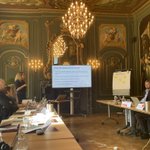

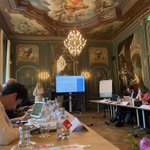


"The EHDS is an unprecedented opportunity to structurally include patient voices in forming health services and policy. Why was this opportunity not taken advantage of?" Important point brought up by @robinvankessel at the workshop on the #EHDS proposal, @iHub_RU @LSS_Lab_Leuven
"Will the increased secondary use of healthcare data not lead to more problems than it will solve?" Another critical question that is brought forward during the #EHDS workshop @iHub_RU and @LSS_Lab_Leuven, Klaus Hoeyer, Irene Schündler
"Who is able to set the standards and who will benefit from the EHDS?" One of the many crucial questions about the #EHDS proposal that urgently need to be addressed! @iHub_RU, @LSS_Lab_Leuven @BPrainsack @Mahsashabani @TamarSharon
Our main concern: “The current proposal will enable easy access of Big Tech to treasure trove of health data. See also 👇 @LSS_Lab_Leuven & @iHub_RU, #EHDS

Today the @LSS_Lab_Leuven & @iHub_RU
are hosting an interdisciplinary expert roundtable: Towards the European Health Data Space. #EHDS @mrllcu, @StevensMarthe, @hoyweghen_i, @TamarSharon
Sphere Transgression Watch retweeted

“Musk is geen publieke instelling maar een ondernemer wiens belang of luim van de dag zomaar kan botsen met het algemeen belang” @STW_iHub nrc.nl/nieuws/2022/10/20/voo…

Our next pitch session is happening now. Iris Wallenberg (@ESHPM_EUR) is tackling #spheretransgressions in health/medicine. Using several empirical cases, she wonders about the impact of digital tools on practical work. And what about the role of 'small tech' in the healthcare?

Pitches continue with @pietroortolani (@iHub_RU) on digitalization in the resolution of legal conflicts. Tech firms are moving into legal space, but also introducing new forms of dispute resolution. What does this mean for existing institutions? What about reverse-transgressions?

@empo11on discussing problematic #partnerships in the aid sector: World Food Program has 'moral imperative' to use Palantir's tools to make processes more efficient. This reshapes food problems as data problems, reshapes priorities in unaccountable ways, and misaligns values !

First up in this morning's research pitch session: Lieke Oldenhof (@ESHPM_EUR) on the state of the digital welfare state. Digital experiments are happening in a 'social void.' Social welfare less well regulated than other spheres. Does this make more room for transgressions?

Next up: @tpoell on platform power in the news industry. Lots to consider here: A shift from two-sided to multi-sided markets. Increasing dependencies, but also subject to power imbalances. Are transgressions inevitable? Or contingent upon actors' moves within the news ecosystem?

Our third and final pitch is from Jedrek Niklas (Data Justice Lab, @cardiffuni) on the politics of the digital welfare state, with a focus on the Polish case. Many pressures from many places to digitalize social welfare provision, but also many points of resistance/failure !
Off to a running start on day two of our #spheretransgressionwatch workshop! The first 15 minutes of reflection somehow touch on Ardorno & Horkheimer? On optimization -- is optimization only for market efficiency, or can you optimize for serendipity? Are all transgressions bad???
Our first research pitch of the day: @NKerssens and José van Dijk on the "Cloudroom" stack in Dutch primary education. What are the implications of platformization for institutional pedagogical autonomy in designing educational tools? And for the pedagogical autonomy of teachers?

Our second pitch is from @nhelberger on The Rise of TechnoCourts, where she asks how the digitalization of jurisprudence is challenging three key elements of law: authority, legal expertise, and materiality (courts as physical places)

One final research pitch from yesterday's proceedings: Marjolein Lanzing on Palantir's work in the domains of healthcare and policing and the "spherical problems" these collaborations pose: technological dependencies, #technosolutionism, and the confrontation of expertise/values

Many interesting questions during our first group discussion! (1) Is the term "Googlization of Health" too limiting for describing the phenomena we're observing? What about "platformization" or "infrastructuralization" instead? How do we take into account infrastructure power?
(2) Does considering the "digital" as its own sphere somehow miss the point? What is really *new* about the digital sphere? Where are the continuities and where are the ruptures with the past?
Next up: @StevensMarthe gives the group a brief history and tour of the #SphereTransgressionWatch website. Many discussions about what data to include? How to visualize sphere transgressions (e.g. by time or geography)? How to ensure the long-term relevance of the tool?
