







SWGS History retweeted

Hand belonging to an X-ray technician at the Royal London Hospital, which shows the damage from radiation exposure, 1900.
Every morning, they would calibrate the machines by taking an X-ray of their hands. So you might be wondering, why not just use something else to test the X-ray? Like a piece of meat or a chicken leg? Well back in 1900, people didn't know the dangers of radiation exposure so they thought it would be harmless to use their hands. During this time, people could even purchase and build their own X-ray at home for entertainment purposes. Those who did, however, often went on to develop cancer or suffer from amputations.
The X-ray had been discovered just a few years before in 1895 by a man name Wilhelm Conrad Röntgen, a German mechanical engineer and physicist. He named it X-ray because he actually didn't have a name for his invention and decided to use the mathematical designation "x" for something unknown. In some European countries, X-rays are actually called Röntgen rays.
Röntgen did not seek patents for his discoveries because he wanted society to benefit from the practical applications of X-rays. In 1901, Röntgen was awarded the first Nobel Prize in Physics.

SWGS History retweeted
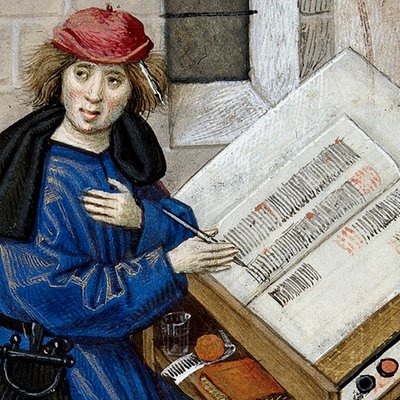
Getting you in the mood for Woden's-day
From The First Arrival of the Saxons and the Normans
bl.uk/collection-items/the-f…
#Wednesday #Wednesdayvibe🧔♂️👑

SWGS History retweeted

The small watch-house that stands next to the former Bluecoat School at Rotherhithe was built in 1821 and is now a cafe. It housed a watchman to guard against body snatchers from Guy's Hospital who stole corpses from the adjacent cemetery.

SWGS History retweeted

Historian Faisal Devi considers the large-scale violence on Direct Action Day, #OnThisDay in 1946, that put India firmly on the path to partition… bit.ly/3QKrV4F
SWGS History retweeted

This Friday Ravindra Rathee examines the global role played by Indian soldiers in the British Empire. Join us live and online here: bit.ly/3cr513t
SWGS History retweeted
“Hopefully no other parent will need to ask when their children will learn of the more than 1.3m Indian men who fought in the First World War” | @kavpuri bit.ly/3aKpC2f
SWGS History retweeted
The story of the American Civil War: 32 key moments in the landmark conflict bit.ly/3P40Nxl
SWGS History retweeted
“In periods of depression there have tended to be fewer but longer strikes, which have often been unsuccessful. Conversely, in prosperous periods there have tended to be more strikes which have been shorter but more successful” | Keith Laybourn
bit.ly/StrikesHistory
SWGS History retweeted
On this day in 1972, five burglars were discovered in the Democratic National Committee’s headquarters in the Watergate Hotel. On today’s podcast episode, @Cliffor14875011 charts the twists and turns of a conspiracy that sparked a constitutional crisis bit.ly/3Opaq99
SWGS History retweeted
The survivor, the "incurable" and the scapegoat: @Lucy_Worsley on the extraordinary lives of three ordinary women bit.ly/3MHEuvb
SWGS History retweeted
What was it about King John’s reign that provoked his subjects to demand such sweeping political reform through Magna Carta?
bit.ly/3LyYuj0
SWGS History retweeted
What are the three things a medieval dynasty needed to do in order to survive on the throne? bit.ly/3NLDaIy
SWGS History retweeted
On our latest podcast episode, @theAliceRoberts explores how cutting-edge developments in archaeology and genetic science can broaden our understanding of what happened in Britain between the first and tenth centuries AD… bit.ly/3lNproH
SWGS History retweeted
Doctors, playwrights and feminists: meet 6 trailblazing medieval women
bit.ly/3NuoxJU
SWGS History retweeted

Today marks the 20th Anniversary of the discovery of the Amesbury Archer by @wessexarch. The grave is believed to be one of the richest of any found from the early Bronze Age period. @SalisburyMuseum

SWGS History retweeted
Compassion, resilience and overcoming misogyny: 3 life lessons from powerful historical women bit.ly/3tbJku4
SWGS History retweeted
“During her own reign, Elizabeth I promoted Anne Boleyn’s relatives to prominent positions and wore a locket that contained images of herself and her mother facing each other...”
#MothersDay bit.ly/3iw4D3u
SWGS History retweeted
“The treatments applied to King George III reduced him to a childlike figure. If he became manic or overexcited, he was placed in a straitjacket (his ‘hated waistcoat’),” explains Amanda Foreman bit.ly/3tEhrLH
SWGS History retweeted
“We might be tempted to think of these Asian women as social climbers, aspiring to join the ranks of the elite and cultivated in England. Instead, we should recall that they were elite and educated in India” | @HistorianDurba
#Bridgerton bit.ly/3KoE4tZ
SWGS History retweeted
Bess of Hardwick married her way into great wealth and power. Historian @TracyBorman charts the astonishing rise of a courtier who was a thorn in the side of both Elizabeth I and Mary, Queen of Scots bit.ly/3LffnzN
