

Tuwāylib | Author | Researcher | Certified Translator by ʿUlamāʾ Ahl al-Sunnah | https://xitter.cf/t.co/TgnSldNXEB Support https://xitter.cf/t.co/Lq4c7a87mN
Earth
Joined April 2012
- Tweets4.5K
- Following437
- Followers5.8K
- Likes1.2K



Pinned Tweet
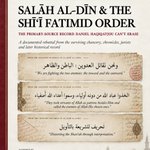
11 years of research. More than 1,000 pages. 100's of documentations: Leaked diplomatic cables. Foreign-funded opposition movements. Activist training. Color-revolution playbooks. Regime-change doctrine. CIA covert “democracy-promotion” NGO's. Zionist network. “Creative destruction.” Plans for a “New Middle East.” The fragmentation of the Arab world. Colonial warfare against Islamic governance. Secularization. Secret societies. Compromised religious figures. Sectarian infiltration. The weaponization of extremist movements. Intellectual invasion. The war for the Muslim mind, much more.
The questions began with the Arab Spring in 2011.
The documentary trail forced me centuries further back.
OPERATION ARAB SPRING: DIVIDE & CONQUER
The files are opening. 🧵

أَبُو إِسْلَامَ السَّلَفِيُّ الْمِصْرِيُّ retweeted
Yes akhī, the book will also be released in Arabic in shāʾ Allāh. Hopefully the fundraising campaign here launchgood.com/v4/campaign/s… will raise enough to cover the Arabic edition as well in shāʾ Allāh.
Unfortunately, it's still nowhere near the fundraising target, but by Allāh's permission, things will work out.
I place my trust in Allāh and will continue doing my part, despite the immense challenges I'm facing to financially give time and resources to complete this. May Allāh make it easy, grant us success, and place barakah in this endeavor.


أَبُو إِسْلَامَ السَّلَفِيُّ الْمِصْرِيُّ retweeted
Eleven years of independent research.
No institution commissioned this project.
No organization funded it.
And the publishers I approached rejected the manuscript because of its thesis, conclusions, and the language I refused to soften .. some labeling the work “anti-Semitic.”
So I continued independently.
Today, Operation Arab Spring: Divide & Conquer exceeds 1,000 pages with hundreds of documented images, and remains in its final stages of research, source verification, editing, design, and production.
The scale of this project is the kind of work that would normally require an entire research team .. researchers, editors, fact-checkers, designers, and production staff. Instead, I have spent more than a decade building it largely on my own, with extremely limited resources and without institutional funding.
The goal now is simple:
Finish the work. Bring the investigation into print. Put the evidence in the hands of readers.
If you believe this research is important and deserves to see the light of day, please consider supporting the project by pre-ordering the book or contributing directly through the LaunchGood campaign.
launchgood.com/v4/campaign/s…
Your support helps fund the final research, verification, editing, production, and publication of a project that has consumed more than eleven years of my life.
Help me finish what I started.
Help bring the investigation into print.

أَبُو إِسْلَامَ السَّلَفِيُّ الْمِصْرِيُّ retweeted
Malcolm X’s pilgrimage transition is famous. But do you know who taught him Islam afterward and became his official mentor and religious advisor? Salafi Scholar Shaykh Ahmad Hassoun of Sudan.
Malcolm wrote: “I am now striving to live the life of a true Sunni Muslim.” — Aug. 25, 1964
My newly published research:
FBI files. Arabic sources. 69 references.
academia.edu/179146129/MALCO…


أَبُو إِسْلَامَ السَّلَفِيُّ الْمِصْرِيُّ retweeted
This “mutabarrijah” has a sounder ʿaqīdah concerning the Lord she will meet who is established above His Throne, distinct and separate from His creation, in a manner befitting His majesty, bilā takyīf wa lā tamthīl, wa bilā tahrīf wa lā taʿtīl .. than you ever will with your full beard Haroun Cringe.
May Allāh continue to guide her, increase her in knowledge, and keep her steadfast upon the truth.
أَبُو إِسْلَامَ السَّلَفِيُّ الْمِصْرِيُّ retweeted
Houthis/Ansār Allāh are not simply traditional Zaydīs, rather their ideological roots are Jārūdiyyah, the extreme ghulāt current within Zaydism that takfir the Sahābah, among other kufri belifes. Their doctrines and political ideology differ considerably from those of more moderate Zaydīs.
And Shaykh Al-Fawzān himfself differentiates betwee Houthies and Zaydīs, he stated "Houthis are Rāfidah now. The Zaydīs fight the Houthis because the Houthis are Jaʿfarī Rāfidah"
Second, Saudi support for the Yemeni royalists during the 1962–1970 civil war was a geopolitical alliance against Nasserist revolutionary expansion, not a theological endorsement of Zaydī Shīʿism. Only someone who is low IQ and incapable of distinguishing political alliances from religious doctrine would present this as a contradiction. Again Zaydī's are the more moderate sect within Shīʿism who are still considered Muslims, unlike the Rāfidah.
P.S. You are not even worth a dust in the hair from Shaykh Sālih al-Fawzān’s nose when it comes to Islamic knowledge. You cannot even read the word shukran (thank you) in Arabic, yet you have the audacity to speak so arrogantly and disrespectfully about one of the greatest living scholars of Ahl al-Sunnah. Your ignorance is staggering, and your arrogance is an utter embarrassment.
xitter.cf/Salafization1/status/2…

The Ideological Roots of the Houthi Movement:
To understand the religious ideology that shaped the modern Houthi sect, it is necessary to begin with two figures: Badr al-Din al-Houthi and his son Hussein Badr al-Din al-Houthi.
Badr al-Din al-Houthi was a senior Zaydi Shiʿi scholar from Saʿdah and the patriarch of the al-Houthi family. He was not merely the father of later Houthi leaders; he was one of the principal religious and ideological figures from whom the movement developed, and the root of today’s Houthi movement.
His sons included Hussein Badr al-Din al-Houthi, who became the principal founder and first major leader of the modern Houthi movement, and ʿAbd al-Malik al-Houthi, who later became its leader.
The religious background of the al-Houthi family is important, they are Jarudi Zaydi's, not merley Zaydi's.
Zaydism is itself a milder branch of Shiʿasm, but it has historically contained several different tendencies. Among them, the Jarudiyya whom adopted one of the harshest extreme positions toward the first three caliphs.
More moderate Zaydis did not condemn Abu Bakr, ʿUmar and ʿUthman for failing to recognize ʿAli's claim, the historical Jarudi school condemned them far more severely.
Thus it is important to point out that Houthis are not synonymous with Zaydism, and the Houthi movement should not be treated as representing every Zaydi.
Zaydism is an old branch of Shiʿi Islam whose history extends more than a millennium before the emergence of the Houthi family.
Historically, Zaydi doctrine differed substantially from Twelver Shiism, the dominant form of current Shiism, primarily in Iran and Iraq. In numerous areas of jurisprudence and theology, Zaydism developed positions considerably closer to Sunni Islam than those of the Twelver tradition.
The following statements of the Houthi founders and leaders demonstrate how this hostility toward major Companions appears in material of Badr al-Din and, even more extensively, in the recorded teachings of Hussein al-Houthi.
Badr al-Din al-Houthi
1. Badr al-Din al-Houthi explicitly affirmed takfir (excommunication from Islam) of Companions whom he believed had opposed the Messenger peace be upon him.
Badr al-Din explicitly states:
“I personally believe in declaring them unbelievers because they opposed the Messenger of Allah.” [1]
2. Badr al-Din defended severe criticism of the Companions and rejected the proposition that companionship itself prevented attacking a Companion's reliability.
In his treatise, Badr al-Din argues that simply being a Companion does not prevent criticism of someone whom he believes has committed something damaging to his reliability. [2]
Badr al-Din's son Hussein al-Houthi transformed these ideas into the ideological teaching of the movement that would ultimately bear his family's name.
Hussein became the dominant figure within a faction of the Believing Youth (al-Shabāb al-Muʾmin) a Zaydi revivalist movement that had emerged in the 1990s.
Armed conflict began in Saʿdah in 2004 after the Yemeni government attempted to arrest Hussein, who was then leading the movement. He was killed by government forces on September 9, 2004, but his followers continued the rebellion and subsequently became widely known as the Houthis.
Hussein left behind a large collection of transcribed lectures known as his malāzim, or Durūs min Hady al-Qurʾān. These texts became central ideological material for the movement.
3. Hussein blamed the Caliphs of Islam; Abu Bakr, ʿUmar and ʿUthman (may Allah be pleased with them) for the suffering and corruption of the Muslim ummah.
In Durūs min Hady al-Qurʾān, Sūrat al-Māʾidah, lesson one, Hussein claims that Muʿawiyah (r.a) was among the consequences of ʿUmar's (r.a) actions and proceeds to place responsibility for the oppression and suffering of the Muslim community upon Abu Bakr, ʿUmar and ʿUthman, singling out ʿUmar in particular. [3]
This is significant because Hussein was not just simply saying that the first three caliphs had made isolated mistakes. He portrayed their accession to authority as the starting point of a historical disaster whose consequences continued throughout Islamic history.
4. Hussein described the bayʿah (formal oath or pledge of allegiance) of Abu Bakr as a calamity whose evil continued into his own time.
Discussing Abu Bakr's accession following the death of the Prophet peace be upon him, Hussein said that its “evil remains until now” and portrayed the Muslim world's subsequent decline as a continuing consequence of that event, he follows by stating that “The evil of that bayʿah .. We Muslims continue to suffer from its effects until today. It was an extraordinary calamity; it was the cause of the problem” [4]
5. Hussein stated that even a small amount of walāyah toward Abu Bakr and ʿUmar prevents a person from attaining guidance.
In Sūrat al-Māʾidah, Hussein states:
“Whoever has an atom of walāyah for Abu Bakr and ʿUmar cannot be guided.” [5]
6. Hussein claimed that allegiance to Abu Bakr and ʿUmar places a person in opposition to the Qurʾān.
Hussein stated that:
“Merely giving walāyah to Abu Bakr and ʿUmar makes you stand against the Qurʾān.” [6]
7. Hussein stated that Abu Bakr, ʿUmar and ʿUthman had “opposed the Messenger” and therefore could not receive religious walāyah.
Hussein states that walāyah cannot be given to the first three caliphs because, according to him, “they opposed the Messenger.” [7]
He further says:
“We do not give walāyah to Abu Bakr and ʿUmar.” [8]
8. Hussein commanded his followers to curse those Caliphs and companions whom he regarded as responsible for misleading the Muslim ummah.
“Curse those who misled us.” [9]
He instructs his followers to expose and disassociate themselves from such figures and asks Allah to disgrace those who follow their path.
In related lectures, Hussein discusses historical figures revered under labels such as “the Companions” and “the righteous Salaf,” arguing that religious reverence should not protect anyone whom he believed had misled the Muslim community.
9. Hussein directly attacked the Sunni conception of “al-Salaf al-Sālih.”
Hussein mocks the expression “the righteous Salaf” as applied to figures revered in Sunni historical memory.
He names:
Abu Bakr, ʿUmar, ʿUthman, Muʿawiyah, ʿĀʾishah (wife of the prophet), ʿAmr ibn al-ʿĀs and al-Mughīrah ibn Shuʿbah
and accuses those he identifies with this historical legacy of establishing oppression and dividing the Muslim community. [10]
This is particularly important when examining Hussein's attitude toward Ahl al-Sunnah, because reverence for the Sahābah and the early generations is foundational to Sunni religious identity. Hussein's criticism therefore directly not only confronts one of the central pillars of Sunni historical theology, but Islam itself.
10. Hussein criticized Sunni defenses of ʿUthman and questioned reports concerning his contribution to the expedition of Tabuk.
While discussing the expedition of Tabuk, Hussein complained that Sunni presentations emphasized ʿUthman's financial contribution to the campaign.
He then questioned whether the reported contribution had actually occurred, describing it as open to doubt. [11]
11. Hussein suggested that states spread false religious culture through scholars, including individuals among the Companions and Tābiʿīn.
In another lecture, Hussein asks rhetorically who enables false religious culture to spread and answers that states accomplish this through scholars serving them, including, in his formulation, people from among the Companions, Tābiʿīn and later generations. [12]
Hussein al-Houthi and the Formation of the Modern Houthi Movement
The movement that became known as the Houthis did not suddenly appear in 2004.
Its origins lie partly in the Zaydi revival of northern Yemen during the 1980s and 1990s.
The Believing Youth (al-Shabāb al-Muʾmin) emerged during the 1990s as a Zaydi revivalist network. It organized religious education and summer camps partly in response to the increasing influence of Salafi and so-called "Wahhabi" preaching in traditionally Zaydi areas of Yemen, and the rapid conversions of Zaydi's to Sunnism/Salafism.
One of the most important figures behind this expansion of Salafism was Imām Muqbil ibn Hadi al-Wadiʿi, himself originally a Zaydi religious teacher from the Zaydi religious environment of Saʿdah. who later converted to Sunnism and embraced Salafism after studying Islam more deeply, and becoming increasingly opposed to aspects of Zaydi doctrine.
In 1979, Imām Muqbil Al-Wadiʿi established Dar al-Hadith in Dammaj, directly in Saʿdah, the historic heartland of Zaydism. Al-Wadiʿi became one of the most influential callers to Salafi Sunni Islam in Yemen, openly challenging Zaydi religious doctrines and authority and becoming widely regarded as the founder of the modern Salafi movement in Yemen.
Imām Muqbil ibn Hādī al-Wādiʿī was praised and encouraged by numerous senior Salafī scholars, several of whom regarded him as a mujaddid (reviver) of Islam.
Imām Ibn ʿUthaymīn (rahimahullāh) said, “Tell him that I regard him as a reviver of Islam,” while Imām Rabīʿ ibn Hādī (rahimahullāh) described him as “a reviver of Islam in the land of Yemen” and said that since ʿAbd al-Razzāq al-Ṣanʿānī, no one had revived the daʿwah in Yemen like al-Wādiʿī. After his death, Shaykh Rabīʿ further said that he regarded him, inshāʾAllāh, “as a reviver in our time from the revivers of Islam,” praising his patience, zuhd, piety, and endurance in carrying the daʿwah.
Imām al-Albānī (rahimahullāh) likewise defended Imām Muqbil as a scholar calling to the Qurʾān, Sunnah, and the methodology of the Salaf, and stated “Allāh has blessed him with ability which is probably unparalleled when compared to some of the other callers to Islām on the face of the earth today.”
Dar al-Hadith grew far beyond a local religious school. Even Carnegie describes it as one of the most important religious centers in Yemen, attracting students not only from across the country but from Africa, the Americas, Indonesia, Western Europe, Egypt, Algeria and elsewhere in the Muslim world. Al-Wadiʿi's students subsequently established additional Salafi institutes throughout Yemen.
The growth of Dar al-Hadith inside the Zaydi stronghold of Saʿdah generated considerable concern among traditional Zaydi authorities; al-Wadiʿi even required tribal guarantees for the institute's protection because of the opposition it faced. Academic research explicitly describe Dar al-Hadith's expansion as a threat to traditional Zaydi religious influence in Saʿdah.
Shaykh Muqbil died in 2001, but Dar al-Hadith continued under his successors and students, and remained a major Salafi center. The growing conflict between the Houthis and the Salafis of Dammaj eventually became violent.
Human Rights Watch admittedly records that Houthi forces placed Dar al-Hadith under siege in 2011 and reports that on 27 November 2011, Houthi rebels killed and wounded thousands of students in an attack on the Salafi institute. HRW also records that an 18 year old student was shot while playing football in the institute's courtyard earlier that month.
The conflict intensified again in 2013. The Sanaʿa Center states that the Houthi military campaign in Dammaj specifically focused on Dar al-Hadith and its students, while the U.S. State Department reported that a Salafi mosque was bombed and that Houthi fighters besieged the institute.
Months of fighting and blockade eventually forced the evacuation of non-local students and many Salafi residents from Dammaj in January 2014, effectively ending Dar al-Hadith's role as the international Salafi center that Muqbil al-Wadiʿi had established there.
Hussein al-Houthi later entered into disagreement with some of the movement's earlier figures, and by approximately 2002 the organization divided between those following figures such as Muhammad ʿAzzan and those following Hussein. Hussein's faction increasingly used his own political-religious educational materials.
When armed conflict erupted between Hussein's followers and the Yemeni government in 2004, the movement entered an entirely new phase.
Hussein was killed in September 2004, but his death did not destroy the movement. Leadership eventually passed to his younger brother ʿAbd al-Malik Badr al-Din al-Houthi, and the organization developed into what is today officially known as Ansar Allah.
The teachings above establish considerable religious and polemical hostility toward foundational Sunni historical beliefs, particularly Sunni reverence for Abu Bakr, ʿUmar, ʿUthman, ʿĀʾishah and the early generations.
Badr al-Din himself wrote against "Wahhabi" and Salafi religious ideas. Hussein's lectures repeatedly attacked what he regarded as Sunni misrepresentation of early Islamic history and condemned Sunni religious attachment to the first caliphs.
The broader Zaydi revival from which the movement emerged also developed partly as a reaction against expanding Salafi and Sunni influence in traditionally Zaydi areas. This ideological competition later intersected with armed conflict.
There have been serious confrontations between the Houthi movement and Salafi communities in northern Yemen, most famously around Dammaj, where prominent Salafi institutes had operated in Saʿdah.
The Saʿdah conflicts also contained political, tribal, territorial and state-related dimensions in addition to their religious component.
12. The hostility toward foundational Sunni beliefs did not end with Hussein al-Houthi. His brother Yaḥyā Badr al-Dīn al-Ḥūthī later publicly refused to invoke Allah’s pleasure upon Abū Bakr and ʿUmar, stating: “I do not invoke Allah’s pleasure upon them.” When challenged further, he responded: “What do you think about the one who wronged Fāṭimah?” [13]
13. Yaḥyā also portrayed “Wahhabism” and its religious institutions as a threat to Yemen, declaring in one interview that “we must struggle, wage jihād and fight until our country is in our hands.” [14]
14. Under ʿAbd al-Malik al-Ḥūthī, this rhetoric increasingly accompanied military expansion. The movement routinely labeled Sunni opponents “takfīrīs,” and in 2015 Houthi forces called supporters to jihād in predominantly Shāfiʿī-Sunni areas such as Taiz and Aden. ʿAbd al-Malik himself described the ongoing fighting as a “sacred jihād.” [15]
Zaydism has never been monolithic. Among its historical currents was the Jarudiyya, named after Abu al-Jarud Ziyad ibn al-Mundhir.
The Jarudi current took a much harsher position concerning succession after Prophet Muhammad peacebe upon him.
More moderate Zaydi tendencies held that ʿAli ibn Abi Talib was more deserving of leadership while stopping short of declaring Abu Bakr, ʿUmar and ʿUthman unbelievers merely because they assumed the caliphate.
The Jarudiyya went significantly further. This is precisely why the Jarudi background of the al-Houthi family matters.
- Abu Islām al-Salafī al-Misrī
______
Footnotes:
[1] Abu Jaʿfar al-Mabkhut interview with Badr al-Din al-Houthi, originally published on the Shiʿi website al-Maʿṣūmūn al-Arbaʿat ʿAshar, as well as Shiʿi forum YaHosein.
More sources: ʿAli al-Sadiq, Mādhā Taʿrif ʿan Ḥizb Allāh? - ʿAbdullah al-Sanʿani's al-Ḥarb fī Ṣaʿdah min Awwal Sayhah ilā Ākhir Talqah, p. 19. - ʿAdil Muhammad ʿAbd al-Qadir ʿAli, al-Ḥarakah al-Ḥūthiyyah: al-Nashʾah, al-ʿAqīdah, al-Muwājahah — Annual Journal of the Faculty of Islamic Daʿwah in Cairo, Al-Azhar University, no. 28, part 1, 2015, p. 258. DOI: 10.21608/BFDC.2015.26825."
[2] Tahrīr al-Afkār by Badr al-Din al-Houthi, p. 480
[3] Durūs min Hady al-Qurʾān, Sūrat al-Māʾidah, lesson one, p. 2.
[4] Durūs min Hady al-Qurʾān, Sūrat al-Māʾidah, Lesson One, pp. 2–3
[5] Sūrat al-Māʾidah, lesson one, p. 16.
[6] al-Wahdah al-Īmāniyyah, p. 11.
[7] Sūrat al-Māʾidah, lesson three, pp. 25–26,
[8] Sūrat Āl ʿImrān, lesson two, p. 44.
[9] Maʿrifat Allāh — Waʿduhu wa-Waʿīduhu, lesson nine, p. 6.
[10] Durūs min Hady al-Qurʾān, Sūrat Āl ʿImrān, p. 14.
[11] Hussein's Yawm al-Quds al-ʿĀlamī 1, p. 17.
[12] Durūs min Hady al-Qurʾān — Sūrat Āl ʿImrān, p. 7.
13] Yaḥyā Badr al-Dīn al-Ḥūthī on Abū Bakr and ʿUmar
Nashwan News, “Transcript of Al-Mustaqillah Channel Episodes on the Houthis and Zaydism in Yemen (Episode Six, Part 2)”; the same episode is also cited in the Al-Azhar study. Nashwan News
Nashwan News transcript
[14] Yaḥyā al-Ḥūthī on “Wahhabism” and fighting
Burhan Ahmed, “Houthi Propaganda Discourse in the Media: A Study in Ideological and Intellectual Warfare,” Sana’a Center for Strategic Studies, June 10, 2024. Sana’a Center study
[15] Later Houthi sectarian/jihād rhetoric under ʿAbd al-Malik Abdulkareem Ghanem, “Addressing Social Fragmentation in Yemen,” Sana’a Center for Strategic Studies, March 1, 2019. The study states that the Houthi movement used “takfiri” as a derogatory term for Sunni Islamists and that in September 2015 Houthi forces called supporters to jihād in Taiz and Aden, framing the fighting as a holy war rather than a political battle. Sana’a Center study.

أَبُو إِسْلَامَ السَّلَفِيُّ الْمِصْرِيُّ retweeted
I've been facing continuous blatant takfīr for the past 15 years directed at me and the noble scholars whose knowledge I disseminate online, alongside outright declarations that our blood is permissible to spill. Yet I remind myself that such hostilities are among the ibtilāʾ one may encounter upon the path of daʿwah.
And these are not merely hostilities or occasional insults from anonymous individuals online.
I recall the immense pressure and threats I faced back in 2014, when the Zionist asset and US-propped Hamas .. a militant branch of the Muslim Brotherhood which was cultivated by British intelligence, issued an official bayān against me, signed by the anonymous coward Abū ʿUbaydah, whose true identity Allāh knows best, while facing takfīr and declarations that my blood was permissible to spill from the then platform of their ʿIzz al-Dīn al-Qassām Brigades.
And that was only one chapter in a much longer history of trials, intimidation, threats, and persecution I have endured at the hands of various extremist Khārijī groups and individuals over the years.
Whoever calls to the truth must expect opposition, slander, hatred, threats, and hardship. This is nothing new in the history of daʿwah, as witnessed in the lives of the Prophets and Messengers, and those who followed in their footsteps.
Yet, subhān Allāh, what appears outwardly to be an affliction may, by the mercy of Allāh, conceal an immense blessing.
I am nothing but a poor, sinful servant of Allāh, burdened with shortcomings, mistakes, and sins, both past and present. I make no claim to righteousness or purity, and I know better than anyone how desperately I need the forgiveness and mercy of my Lord.
So perhaps these insults, accusations, slanders, unjust takfīr, threats, declarations that my blood is permissible to spill, and the many injustices I have endured will, by Allāh's permission, become a means of expiation for my sins, elevation of my rank, and an addition to my scale of good deeds on the Day when I will desperately need every single good deed I can find.
And perhaps those who intended to harm me, humiliate me, silence me, or destroy my reputation have, without realizing it, become a means through which Allāh grants me something far greater than anything they could ever take away from me.
Saʿd ibn Abī Waqqās (may Allah be pleased with him) narrated:
I asked, "O Messenger of Allah, which people are subjected to the severest trials?"
The Messenger of Allah peace be upon him replied:
"The Prophets, then those nearest to them in righteousness, then those nearest to them. A man is tested according to the strength of his religion. If his religion is firm, his trials become more severe; and if there is weakness in his religion, he is tested according to the strength of his religion. Trials continue to afflict the servant until they leave him walking upon the earth without a single sin."
I ask Allāh to grant me and my dear brothers from Ahl al-Sunnah sincerity, patience, steadfastness, and forgiveness; to purify our intentions; and to make whatever harm we endure a means of reward, expiation, forgiveness, and drawing nearer to Him.
For what greater blessing could a sinful servant hope for than to meet Allāh with sins forgiven and a scale made heavier by His mercy?
Alhamdulillāh ʿalā kulli hāl.
O Allah, protect us from in front of us, from behind us, from our right, from our left, and from above us. And we seek refuge in Your greatness from being unexpectedly destroyed from beneath us.
O Allah, conceal our faults and protect us while we are above the earth, beneath the earth, and on the Day when we are presented before You.
- Abu Islām al-Salafī al-Misrī

unavailable
أَبُو إِسْلَامَ السَّلَفِيُّ الْمِصْرِيُّ retweeted
And you will find many āthar from the Salaf using such language .. Imām al-Dārimī (d. 280 AH) In his al-Naqd ʿalā al-Marīsī, while refuting those who likened Allāh's attributes to the attributes of creation, he wrote:
“You were not ashamed of this interpretation, to the point that you alleged that some among Ahl al-Sunnah explain Allāh's laughter according to what they understand of themselves. This is a lie you attribute to them, for we have never heard any of them liken anything of Allāh's actions to the actions of created beings. Rather, we say: it is truly laughter; He laughs as He wills and as befits Him.”
-Al-Dārimī, Naqd ʿUthmān ibn Saʿīd ʿalā al-Marīsī, 2/780
Imām al-Shāfiʿī (d. 204 AH) In the opening of his own book, al-Risālah, he states:
“Those who describe Him cannot encompass the reality of His greatness. He is as He has described Himself, and above whatever His creation describes Him to be.”
-al-Risālah, p. 8, edited by Ahmad Muhammad Shākir.
Imām Ahmad ibn Hanbal (d. 241 AH) said:
“We believe that Allāh is above the Throne, however He wills and as He wills, without any limit or description that a describer can encompass or anyone can define.”
-Al-Khallāl, al-Sunnah, through Hanbal ibn Ishāq; and cited in Ibn Taymiyyah's Darʾ Taʿārud al-ʿAql wa al-Naql, 2/30.
Imām Mālik (d. 179 AH) When questioned about istiwāʾ, he famously replied:
“Istiwāʾ is not unknown, its modality is beyond comprehension, belief in it is obligatory, and questioning its modality is an innovation.” -Al-Bayhaqī, al-Asmāʾ wa al-Sifāt
and so forth.. May Allāh guide us and you and protect us from wiswās.
أَبُو إِسْلَامَ السَّلَفِيُّ الْمِصْرِيُّ retweeted
“than you ever will” is a common English expression of hyperbole
(المبالغة - rhetorical exaggeration),
not necessarily a literal prediction concerning someone's future or ultimate fate.
When someone says, “He knows more than you ever will,” that isn't understood as a claim to possess knowledge of the unseen
..
There is a fundamental distinction between the literal implications of an expression and its intended rhetorical meaning, understood through conventional linguistic usage and context (العرف اللغوي والسياق).
My statement was
من باب المبالغة والتغليظ في الذم والإنكار، لا من باب الإخبار عن الغيب أو الجزم بالمآل ..
meaning, rhetorical emphasis and severity in condemning someone's present deviation, not a claim to knowledge of the unseen or a definitive judgment concerning his ultimate fate.
Furthermorethe Salaf explicitly warned about the particular danger of religious innovation and the difficulty of repentance for those who persistently defend and propagate it.
The Messenger of Allāh ﷺ said:
“Indeed, Allāh has withheld repentance from every adherent of religious innovation.”
And Imām Sufyān al-Thawrī said:
“Religious innovation is more beloved to Iblīs than disobedience, for disobedience is repented from, whereas innovation is not repented from.”
And the Prophet ﷺ said:
“Whoever commits a forbidden innovation or transgression therein incurs the curse of Allāh, the angels, and all people. Allāh will accept from him neither obligatory nor voluntary deeds.”
The point here isn't that the innovator can't repent, ofc he can, but it means that a sinner generally recognizes his disobedience as sinful, whereas an entrenched innovator may regard his deviation as guidance, his innovation as Sunnah, and his falsehood as righteousness. Consequently, he may see absolutely no reason to repent from it, thus there has been a veil between him and repentance.
And this is precisely my criticism of Haroun Cringe, a hard-core staunch deviant innovator who persistently defends, promotes, and calls others toward shirk and doctrinal innovations, rather than someone who has merely fallen into an isolated theological error.
Such obstinate adherence to one's innovations can become a tremendous impediment to recognizing and accepting the truth..
a commonplace rhetorical expression shouldnt be confused with a declaration concerning the unseen.
May Allāh guide him, us, and all the Muslims to the truth and keep us steadfast upon the Sunnah.
Yep. Allāh, the Most High, says: “Indeed, Allāh does not forgive association with Him, but He forgives what is less than that for whom He wills.” [al-Nisāʾ 4:48]
The Messenger of Allāh ﷺ said:
“Whoever meets Allāh without associating anything with Him will enter Paradise, and whoever meets Him associating partners with Him will enter the Fire.”
— Sahīh Muslim, 93b.
Imām al-Shāfiʿī (d. 204 AH) said:
“For a servant to meet Allāh with every sin except shirk is dearer to me than for him to meet Him with anything of the deviant religious inclinations.”
— al-Sābūnī, ʿAqīdat al-Salaf wa Ashāb al-Hadīth.
Yūnus ibn ʿUbayd may Allāh be pleased with him (d. 139/140 AH), when he discovered that his son had visited the Muʿtazilī innovator ʿAmr ibn ʿUbayd:
“I forbid you from fornication, theft, and drinking wine. Yet for you to meet Allāh having committed these sins is dearer to me than for you to meet Him holding the doctrines of ʿAmr and his companions.”
— Abū Nuʿaym, Hilyat al-Awliyāʾ, 3/21.
And Imām Ahmad ibn Hanbal (d. 241 AH) said:
“The graves of Ahl al-Sunnah who committed major sins are gardens, while the graves of the ascetics among Ahl al-Bidʿah are pits.”
He continued:
“The sinners of Ahl al-Sunnah are the allies of Allāh, while the ascetics of Ahl al-Bidʿah are the enemies of Allāh.”
— Ibn Abī Yaʿlā, Tabaqāt al-Hanābilah, 1/184.
And Imām Sufyān al-Thawrī (d. 161 AH) said:
“Religious innovation is more beloved to Iblīs than disobedience, for disobedience is repented from, whereas innovation is not repented from.”
— al-Lālakāʾī, Sharh Usūl Iʿtiqād Ahl al-Sunnah.
These statements and much more illustrate the tremendous importance the Salaf placed upon the soundness of one's ʿaqīdah.
We do not excuse tabarruj, diminish the gravity of major sins, or declare what Allāh has prohibited permissible.
But neither do we equate the shortcomings of a Muslim upon Tawhīd with the corruption of worship through shirk or the corruption of the religion through bidʿah.
Sound ʿaqīdah is not rendered insignificant by the sins of its adherents, nor is false doctrine transformed into truth by the outward piety of its proponents, especially those who combine both shirk and bidʿah together, may Allāh protect us!
May Allāh keep us and our brothers and sisters steadfast upon Tawhīd and the Sunnah, forgive our shortcomings, and protect us from shirk, bidʿah, and misguidance.

“And the people of the Sunnah, even when their deeds fall short, their sound beliefs elevate them.
And the people of religious innovation, even when their deeds are abundant, their corrupt beliefs bring them low.”
— Iʿlām al-Muwaqqiʿīn, 3/240.
Jazākum Allāh kheir @Resolute92653


أَبُو إِسْلَامَ السَّلَفِيُّ الْمِصْرِيُّ retweeted
The Ideological Roots of the Houthi Movement:
To understand the religious ideology that shaped the modern Houthi sect, it is necessary to begin with two figures: Badr al-Din al-Houthi and his son Hussein Badr al-Din al-Houthi.
Badr al-Din al-Houthi was a senior Zaydi Shiʿi scholar from Saʿdah and the patriarch of the al-Houthi family. He was not merely the father of later Houthi leaders; he was one of the principal religious and ideological figures from whom the movement developed, and the root of today’s Houthi movement.
His sons included Hussein Badr al-Din al-Houthi, who became the principal founder and first major leader of the modern Houthi movement, and ʿAbd al-Malik al-Houthi, who later became its leader.
The religious background of the al-Houthi family is important, they are Jarudi Zaydi's, not merley Zaydi's.
Zaydism is itself a milder branch of Shiʿasm, but it has historically contained several different tendencies. Among them, the Jarudiyya whom adopted one of the harshest extreme positions toward the first three caliphs.
More moderate Zaydis did not condemn Abu Bakr, ʿUmar and ʿUthman for failing to recognize ʿAli's claim, the historical Jarudi school condemned them far more severely.
Thus it is important to point out that Houthis are not synonymous with Zaydism, and the Houthi movement should not be treated as representing every Zaydi.
Zaydism is an old branch of Shiʿi Islam whose history extends more than a millennium before the emergence of the Houthi family.
Historically, Zaydi doctrine differed substantially from Twelver Shiism, the dominant form of current Shiism, primarily in Iran and Iraq. In numerous areas of jurisprudence and theology, Zaydism developed positions considerably closer to Sunni Islam than those of the Twelver tradition.
The following statements of the Houthi founders and leaders demonstrate how this hostility toward major Companions appears in material of Badr al-Din and, even more extensively, in the recorded teachings of Hussein al-Houthi.
Badr al-Din al-Houthi
1. Badr al-Din al-Houthi explicitly affirmed takfir (excommunication from Islam) of Companions whom he believed had opposed the Messenger peace be upon him.
Badr al-Din explicitly states:
“I personally believe in declaring them unbelievers because they opposed the Messenger of Allah.” [1]
2. Badr al-Din defended severe criticism of the Companions and rejected the proposition that companionship itself prevented attacking a Companion's reliability.
In his treatise, Badr al-Din argues that simply being a Companion does not prevent criticism of someone whom he believes has committed something damaging to his reliability. [2]
Badr al-Din's son Hussein al-Houthi transformed these ideas into the ideological teaching of the movement that would ultimately bear his family's name.
Hussein became the dominant figure within a faction of the Believing Youth (al-Shabāb al-Muʾmin) a Zaydi revivalist movement that had emerged in the 1990s.
Armed conflict began in Saʿdah in 2004 after the Yemeni government attempted to arrest Hussein, who was then leading the movement. He was killed by government forces on September 9, 2004, but his followers continued the rebellion and subsequently became widely known as the Houthis.
Hussein left behind a large collection of transcribed lectures known as his malāzim, or Durūs min Hady al-Qurʾān. These texts became central ideological material for the movement.
3. Hussein blamed the Caliphs of Islam; Abu Bakr, ʿUmar and ʿUthman (may Allah be pleased with them) for the suffering and corruption of the Muslim ummah.
In Durūs min Hady al-Qurʾān, Sūrat al-Māʾidah, lesson one, Hussein claims that Muʿawiyah (r.a) was among the consequences of ʿUmar's (r.a) actions and proceeds to place responsibility for the oppression and suffering of the Muslim community upon Abu Bakr, ʿUmar and ʿUthman, singling out ʿUmar in particular. [3]
This is significant because Hussein was not just simply saying that the first three caliphs had made isolated mistakes. He portrayed their accession to authority as the starting point of a historical disaster whose consequences continued throughout Islamic history.
4. Hussein described the bayʿah (formal oath or pledge of allegiance) of Abu Bakr as a calamity whose evil continued into his own time.
Discussing Abu Bakr's accession following the death of the Prophet peace be upon him, Hussein said that its “evil remains until now” and portrayed the Muslim world's subsequent decline as a continuing consequence of that event, he follows by stating that “The evil of that bayʿah .. We Muslims continue to suffer from its effects until today. It was an extraordinary calamity; it was the cause of the problem” [4]
5. Hussein stated that even a small amount of walāyah toward Abu Bakr and ʿUmar prevents a person from attaining guidance.
In Sūrat al-Māʾidah, Hussein states:
“Whoever has an atom of walāyah for Abu Bakr and ʿUmar cannot be guided.” [5]
6. Hussein claimed that allegiance to Abu Bakr and ʿUmar places a person in opposition to the Qurʾān.
Hussein stated that:
“Merely giving walāyah to Abu Bakr and ʿUmar makes you stand against the Qurʾān.” [6]
7. Hussein stated that Abu Bakr, ʿUmar and ʿUthman had “opposed the Messenger” and therefore could not receive religious walāyah.
Hussein states that walāyah cannot be given to the first three caliphs because, according to him, “they opposed the Messenger.” [7]
He further says:
“We do not give walāyah to Abu Bakr and ʿUmar.” [8]
8. Hussein commanded his followers to curse those Caliphs and companions whom he regarded as responsible for misleading the Muslim ummah.
“Curse those who misled us.” [9]
He instructs his followers to expose and disassociate themselves from such figures and asks Allah to disgrace those who follow their path.
In related lectures, Hussein discusses historical figures revered under labels such as “the Companions” and “the righteous Salaf,” arguing that religious reverence should not protect anyone whom he believed had misled the Muslim community.
9. Hussein directly attacked the Sunni conception of “al-Salaf al-Sālih.”
Hussein mocks the expression “the righteous Salaf” as applied to figures revered in Sunni historical memory.
He names:
Abu Bakr, ʿUmar, ʿUthman, Muʿawiyah, ʿĀʾishah (wife of the prophet), ʿAmr ibn al-ʿĀs and al-Mughīrah ibn Shuʿbah
and accuses those he identifies with this historical legacy of establishing oppression and dividing the Muslim community. [10]
This is particularly important when examining Hussein's attitude toward Ahl al-Sunnah, because reverence for the Sahābah and the early generations is foundational to Sunni religious identity. Hussein's criticism therefore directly not only confronts one of the central pillars of Sunni historical theology, but Islam itself.
10. Hussein criticized Sunni defenses of ʿUthman and questioned reports concerning his contribution to the expedition of Tabuk.
While discussing the expedition of Tabuk, Hussein complained that Sunni presentations emphasized ʿUthman's financial contribution to the campaign.
He then questioned whether the reported contribution had actually occurred, describing it as open to doubt. [11]
11. Hussein suggested that states spread false religious culture through scholars, including individuals among the Companions and Tābiʿīn.
In another lecture, Hussein asks rhetorically who enables false religious culture to spread and answers that states accomplish this through scholars serving them, including, in his formulation, people from among the Companions, Tābiʿīn and later generations. [12]
Hussein al-Houthi and the Formation of the Modern Houthi Movement
The movement that became known as the Houthis did not suddenly appear in 2004.
Its origins lie partly in the Zaydi revival of northern Yemen during the 1980s and 1990s.
The Believing Youth (al-Shabāb al-Muʾmin) emerged during the 1990s as a Zaydi revivalist network. It organized religious education and summer camps partly in response to the increasing influence of Salafi and so-called "Wahhabi" preaching in traditionally Zaydi areas of Yemen, and the rapid conversions of Zaydi's to Sunnism/Salafism.
One of the most important figures behind this expansion of Salafism was Imām Muqbil ibn Hadi al-Wadiʿi, himself originally a Zaydi religious teacher from the Zaydi religious environment of Saʿdah. who later converted to Sunnism and embraced Salafism after studying Islam more deeply, and becoming increasingly opposed to aspects of Zaydi doctrine.
In 1979, Imām Muqbil Al-Wadiʿi established Dar al-Hadith in Dammaj, directly in Saʿdah, the historic heartland of Zaydism. Al-Wadiʿi became one of the most influential callers to Salafi Sunni Islam in Yemen, openly challenging Zaydi religious doctrines and authority and becoming widely regarded as the founder of the modern Salafi movement in Yemen.
Imām Muqbil ibn Hādī al-Wādiʿī was praised and encouraged by numerous senior Salafī scholars, several of whom regarded him as a mujaddid (reviver) of Islam.
Imām Ibn ʿUthaymīn (rahimahullāh) said, “Tell him that I regard him as a reviver of Islam,” while Imām Rabīʿ ibn Hādī (rahimahullāh) described him as “a reviver of Islam in the land of Yemen” and said that since ʿAbd al-Razzāq al-Ṣanʿānī, no one had revived the daʿwah in Yemen like al-Wādiʿī. After his death, Shaykh Rabīʿ further said that he regarded him, inshāʾAllāh, “as a reviver in our time from the revivers of Islam,” praising his patience, zuhd, piety, and endurance in carrying the daʿwah.
Imām al-Albānī (rahimahullāh) likewise defended Imām Muqbil as a scholar calling to the Qurʾān, Sunnah, and the methodology of the Salaf, and stated “Allāh has blessed him with ability which is probably unparalleled when compared to some of the other callers to Islām on the face of the earth today.”
Dar al-Hadith grew far beyond a local religious school. Even Carnegie describes it as one of the most important religious centers in Yemen, attracting students not only from across the country but from Africa, the Americas, Indonesia, Western Europe, Egypt, Algeria and elsewhere in the Muslim world. Al-Wadiʿi's students subsequently established additional Salafi institutes throughout Yemen.
The growth of Dar al-Hadith inside the Zaydi stronghold of Saʿdah generated considerable concern among traditional Zaydi authorities; al-Wadiʿi even required tribal guarantees for the institute's protection because of the opposition it faced. Academic research explicitly describe Dar al-Hadith's expansion as a threat to traditional Zaydi religious influence in Saʿdah.
Shaykh Muqbil died in 2001, but Dar al-Hadith continued under his successors and students, and remained a major Salafi center. The growing conflict between the Houthis and the Salafis of Dammaj eventually became violent.
Human Rights Watch admittedly records that Houthi forces placed Dar al-Hadith under siege in 2011 and reports that on 27 November 2011, Houthi rebels killed and wounded thousands of students in an attack on the Salafi institute. HRW also records that an 18 year old student was shot while playing football in the institute's courtyard earlier that month.
The conflict intensified again in 2013. The Sanaʿa Center states that the Houthi military campaign in Dammaj specifically focused on Dar al-Hadith and its students, while the U.S. State Department reported that a Salafi mosque was bombed and that Houthi fighters besieged the institute.
Months of fighting and blockade eventually forced the evacuation of non-local students and many Salafi residents from Dammaj in January 2014, effectively ending Dar al-Hadith's role as the international Salafi center that Muqbil al-Wadiʿi had established there.
Hussein al-Houthi later entered into disagreement with some of the movement's earlier figures, and by approximately 2002 the organization divided between those following figures such as Muhammad ʿAzzan and those following Hussein. Hussein's faction increasingly used his own political-religious educational materials.
When armed conflict erupted between Hussein's followers and the Yemeni government in 2004, the movement entered an entirely new phase.
Hussein was killed in September 2004, but his death did not destroy the movement. Leadership eventually passed to his younger brother ʿAbd al-Malik Badr al-Din al-Houthi, and the organization developed into what is today officially known as Ansar Allah.
The teachings above establish considerable religious and polemical hostility toward foundational Sunni historical beliefs, particularly Sunni reverence for Abu Bakr, ʿUmar, ʿUthman, ʿĀʾishah and the early generations.
Badr al-Din himself wrote against "Wahhabi" and Salafi religious ideas. Hussein's lectures repeatedly attacked what he regarded as Sunni misrepresentation of early Islamic history and condemned Sunni religious attachment to the first caliphs.
The broader Zaydi revival from which the movement emerged also developed partly as a reaction against expanding Salafi and Sunni influence in traditionally Zaydi areas. This ideological competition later intersected with armed conflict.
There have been serious confrontations between the Houthi movement and Salafi communities in northern Yemen, most famously around Dammaj, where prominent Salafi institutes had operated in Saʿdah.
The Saʿdah conflicts also contained political, tribal, territorial and state-related dimensions in addition to their religious component.
12. The hostility toward foundational Sunni beliefs did not end with Hussein al-Houthi. His brother Yaḥyā Badr al-Dīn al-Ḥūthī later publicly refused to invoke Allah’s pleasure upon Abū Bakr and ʿUmar, stating: “I do not invoke Allah’s pleasure upon them.” When challenged further, he responded: “What do you think about the one who wronged Fāṭimah?” [13]
13. Yaḥyā also portrayed “Wahhabism” and its religious institutions as a threat to Yemen, declaring in one interview that “we must struggle, wage jihād and fight until our country is in our hands.” [14]
14. Under ʿAbd al-Malik al-Ḥūthī, this rhetoric increasingly accompanied military expansion. The movement routinely labeled Sunni opponents “takfīrīs,” and in 2015 Houthi forces called supporters to jihād in predominantly Shāfiʿī-Sunni areas such as Taiz and Aden. ʿAbd al-Malik himself described the ongoing fighting as a “sacred jihād.” [15]
Zaydism has never been monolithic. Among its historical currents was the Jarudiyya, named after Abu al-Jarud Ziyad ibn al-Mundhir.
The Jarudi current took a much harsher position concerning succession after Prophet Muhammad peacebe upon him.
More moderate Zaydi tendencies held that ʿAli ibn Abi Talib was more deserving of leadership while stopping short of declaring Abu Bakr, ʿUmar and ʿUthman unbelievers merely because they assumed the caliphate.
The Jarudiyya went significantly further. This is precisely why the Jarudi background of the al-Houthi family matters.
- Abu Islām al-Salafī al-Misrī
______
Footnotes:
[1] Abu Jaʿfar al-Mabkhut interview with Badr al-Din al-Houthi, originally published on the Shiʿi website al-Maʿṣūmūn al-Arbaʿat ʿAshar, as well as Shiʿi forum YaHosein.
More sources: ʿAli al-Sadiq, Mādhā Taʿrif ʿan Ḥizb Allāh? - ʿAbdullah al-Sanʿani's al-Ḥarb fī Ṣaʿdah min Awwal Sayhah ilā Ākhir Talqah, p. 19. - ʿAdil Muhammad ʿAbd al-Qadir ʿAli, al-Ḥarakah al-Ḥūthiyyah: al-Nashʾah, al-ʿAqīdah, al-Muwājahah — Annual Journal of the Faculty of Islamic Daʿwah in Cairo, Al-Azhar University, no. 28, part 1, 2015, p. 258. DOI: 10.21608/BFDC.2015.26825."
[2] Tahrīr al-Afkār by Badr al-Din al-Houthi, p. 480
[3] Durūs min Hady al-Qurʾān, Sūrat al-Māʾidah, lesson one, p. 2.
[4] Durūs min Hady al-Qurʾān, Sūrat al-Māʾidah, Lesson One, pp. 2–3
[5] Sūrat al-Māʾidah, lesson one, p. 16.
[6] al-Wahdah al-Īmāniyyah, p. 11.
[7] Sūrat al-Māʾidah, lesson three, pp. 25–26,
[8] Sūrat Āl ʿImrān, lesson two, p. 44.
[9] Maʿrifat Allāh — Waʿduhu wa-Waʿīduhu, lesson nine, p. 6.
[10] Durūs min Hady al-Qurʾān, Sūrat Āl ʿImrān, p. 14.
[11] Hussein's Yawm al-Quds al-ʿĀlamī 1, p. 17.
[12] Durūs min Hady al-Qurʾān — Sūrat Āl ʿImrān, p. 7.
13] Yaḥyā Badr al-Dīn al-Ḥūthī on Abū Bakr and ʿUmar
Nashwan News, “Transcript of Al-Mustaqillah Channel Episodes on the Houthis and Zaydism in Yemen (Episode Six, Part 2)”; the same episode is also cited in the Al-Azhar study. Nashwan News
Nashwan News transcript
[14] Yaḥyā al-Ḥūthī on “Wahhabism” and fighting
Burhan Ahmed, “Houthi Propaganda Discourse in the Media: A Study in Ideological and Intellectual Warfare,” Sana’a Center for Strategic Studies, June 10, 2024. Sana’a Center study
[15] Later Houthi sectarian/jihād rhetoric under ʿAbd al-Malik Abdulkareem Ghanem, “Addressing Social Fragmentation in Yemen,” Sana’a Center for Strategic Studies, March 1, 2019. The study states that the Houthi movement used “takfiri” as a derogatory term for Sunni Islamists and that in September 2015 Houthi forces called supporters to jihād in Taiz and Aden, framing the fighting as a holy war rather than a political battle. Sana’a Center study.
أَبُو إِسْلَامَ السَّلَفِيُّ الْمِصْرِيُّ retweeted
THE ARCHIVE REMAINS OPEN.
Over the coming weeks, I will continue adding:
Table of Contents previews.
Manuscript excerpts.
Declassified records & cable snippets.
Source trails. Updates..
All beneath this thread.
Bookmark it.
The next file opens soon.
Don't forget to contribute or pre-order here, it HELPS a lot during these final phases of the book.
launchgood.com/v4/campaign/s…

أَبُو إِسْلَامَ السَّلَفِيُّ الْمِصْرِيُّ retweeted
Every answer opened another historical layer.
Colonialism. Intelligence. Psychological warfare. Political engineering. Ideological movements. NGOs. Media. Foreign-policy doctrine. Competing visions of a “New Middle East.”
Eventually I stopped focusing only on:
“What happened in 2011?”
and began to extensively research and document:
“What historical machinery made 2011 possible?”

أَبُو إِسْلَامَ السَّلَفِيُّ الْمِصْرِيُّ retweeted
Inside this book:
How the Arab Spring spread across the region. Diplomatic cables and activist networks. Foreign funding. Regime change. Color revolutions. Political engineering. Media narratives. NGOs. Identity. Religion. Culture.
And the wider struggle over the future of the Muslim world.
Not merely what happened .. but what preceded it, shaped it, and followed it.

أَبُو إِسْلَامَ السَّلَفِيُّ الْمِصْرِيُّ retweeted
The investigation asks what was already being discussed, funded, organized and developed before 2011:
Governments. Opposition networks. Foreign institutions. Activist training. Funding channels. Think tanks. Media. Geopolitical projects.
The Arab Spring is the center of this book.
But the story does not begin with the Arab Spring.

أَبُو إِسْلَامَ السَّلَفِيُّ الْمِصْرِيُّ retweeted
Then I started following the documentary trail.
08CAIRO2572_A .. a December 2008 U.S. Embassy Cairo cable - one of MANY - concerning April 6 activist’s U.S. visit and “regime change in Egypt.”
Documents like this became part of the record behind the manuscript.
Read all the documents in the book first.
Then judge the argument.

أَبُو إِسْلَامَ السَّلَفِيُّ الْمِصْرِيُّ retweeted
Twenty-five countries. One cascading sequence.
The uprisings did not occur in isolation.
The book reconstructs the sequence across the region, and then asks a much larger question:
What was already happening before the first crowds entered the streets?

أَبُو إِسْلَامَ السَّلَفِيُّ الْمِصْرِيُّ retweeted
11 years of research. More than 1,000 pages. 100's of documentations: Leaked diplomatic cables. Foreign-funded opposition movements. Activist training. Color-revolution playbooks. Regime-change doctrine. CIA covert “democracy-promotion” NGO's. Zionist network. “Creative destruction.” Plans for a “New Middle East.” The fragmentation of the Arab world. Colonial warfare against Islamic governance. Secularization. Secret societies. Compromised religious figures. Sectarian infiltration. The weaponization of extremist movements. Intellectual invasion. The war for the Muslim mind, much more.
The questions began with the Arab Spring in 2011.
The documentary trail forced me centuries further back.
OPERATION ARAB SPRING: DIVIDE & CONQUER
The files are opening. 🧵