

Novo Airão, Brasil
Joined April 2011
- Tweets2.5K
- Following291
- Followers94
- Likes3.3K





Samara Amorim retweeted

We were taught that Earth orbits the Sun in a closed circle. In reality, Earth has never returned to the same point in space once in 4.5 billion years.
Right now, the Sun is carrying Earth and every planet around the center of the Milky Way at 230 km/s (828,000 km/h), more than 18,000 kilometers every 80 seconds.
Because the Solar System is tilted 60.2° to the galactic plane and bobs up and down through the galactic disc roughly every 30 million years, the planets trace open 3D corkscrew helices across deep space rather than flat loops.
The last time the Sun stood where it stands today, one Galactic Year (230 million years) ago, the very first dinosaurs were only beginning to appear on Earth. Since forming 4.6 billion years ago, our Sun has completed only 20 laps.
Samara Amorim retweeted

🚨速報🚨専業主婦は年金を払ってなかったから年金の支給を廃止します。2030年に支給停止します。
Readers added context they thought people might want to know
専業主婦の年金支給が2030年に廃止されるとの主張は誤りです。第3号被保険者制度の縮小に向けた議論を開始した段階で、廃止や支給停止は決定していません。
mhlw.go.jp/stf/newpage_75…
yomiuri.co.jp/politics/20260…


Samara Amorim retweeted

Menina faz sinal de pedido de socorro e é salva de estupro por primo de 10 anos no PR glo.bo/3VybIYi #g1


Samara Amorim retweeted

Turismo gastronômico na Amazônia Legal: 9 pratos que todo turista deve experimentar portalamazonia.com/gastronom…

Samara Amorim retweeted

A filha morr3 na casa do namorado e da sogra (morava com eles) e a mãe não é avisada. A mãe, suspeitando de algo, vai até o apartamento e a sindica é quem avisa que a filha morr3u na noite anterior e o corpo está no IML. O namorado e toda a familia somem e não vão nem ao enterro.

Samara Amorim retweeted

The Pitești Prison incident, known as the Pitești Experiment, was a brutal brainwashing and "re-education" program carried out by the communist regime in Romania between December 1949 and September 1951...
On December 6, 1949, a guard entered a cell in Pitești Prison and ordered a young prisoner named Sandu Anghelescu to surrender his sweater.
It was winter. The cell was unheated. Anghelescu protested after the guard left, unaware that his complaint had provided the signal.
Another prisoner, Eugen Țurcanu, struck him across the face. Then the men Anghelescu had come to trust turned upon him.
They had shared food, whispered together, and spoken like fellow enemies of the communist regime. Now they beat Anghelescu and the other unsuspecting prisoners while the guards stood outside.
Thus began one of the most horrifying experiments ever attempted inside a communist prison. Its purpose was not merely to extract information. It was to destroy the human personality.
. . .
After Romania fell under communist control, thousands of students, priests, political opponents, and ordinary people suspected of disloyalty disappeared into its prisons. Some had belonged to or sympathized with the fascist Iron Guard. Others had supported liberal, monarchist, or peasant parties. Some were seminarians. Some had scarcely been political at all.
The regime did not distinguish carefully. Anyone who possessed convictions beyond the state’s control was dangerous.
At Pitești, however, the communists attempted something more ambitious than imprisonment. They intended to create a “new man.”
The plan was brutally ingenious. Guards would not perform most of the torture themselves. Prisoners who had already been broken would torture the others. Friendship would become a weapon. Loyalty would become impossible. The victim would eventually be forced to become the tormentor.
Țurcanu, himself a prisoner, directed the experiment under the protection of communist officials and the secret police. It began with what they called “unmasking.”
A prisoner was beaten until he confessed everything he had concealed during earlier interrogations. When the truth was exhausted, he invented crimes simply to satisfy his tormentors. He named friends, teachers, and relatives, placing others within reach of the secret police.
Then came the “internal unmasking.”
The prisoner was forced to denounce anyone who had shown him kindness—a sympathetic guard, a doctor, or a fellow inmate who had offered encouragement.
The final stage was the destruction of everything he loved.
He had to curse his parents. Denounce his friends. Ridicule his deepest convictions. Christians were ordered to blaspheme Christ and mock the sacraments. Religious ceremonies were turned into grotesque rituals of degradation.
Beatings continued for hours. Prisoners were deprived of sleep, forced into agonizing positions, humiliated, starved, and watched constantly. Many became so desperate that they tried to bring their suffering to an end by their own hands.
Yet the most terrible command was still to come.
To prove that his old identity had been destroyed, the prisoner had to beat someone else. Often it was a close friend.
The communists understood something ancient and terrible: suffering can wound a man, but forcing him to betray someone he loves can make him despise himself. The victim would look into the face of his friend and see what remained of his own humanity.
That was the real purpose of Pitești.
The regime did not simply want men too frightened to resist. It wanted men who believed themselves unworthy of resistance—men so burdened by shame that they could no longer remember who they had once been.
More than six hundred students were tortured at Pitești between November 1949 and May 1951. At least eleven died directly from violence, according to the memorial now housed inside the former prison. Countless others emerged physically and psychologically shattered.
#archaeohistories

Samara Amorim retweeted

Le père spirituel de l'éducation moderne a méthodiquement condamné ses cinq enfants à une mort quasi certaine par pur confort personnel.
L'Histoire a fait de Jean-Jacques Rousseau l'idole des humanistes et le grand théoricien de la bienveillance. Son célèbre traité L'Émile est encore aujourd'hui la bible des pédagogues progressistes.
La réalité est celle d'un égoïsme effroyable.
Entre 1746 et 1752, Rousseau partage la vie d'une lingère, Thérèse Levasseur. Le couple donne naissance à cinq enfants.
Le grand philosophe de la compassion n'en gardera pas un seul.
Dès leur naissance, il les arrache à leur mère pour les déposer anonymement à l'hospice des Enfants-Trouvés de Paris.
À l'époque, cette institution n'est pas un orphelinat classique, c'est un mouroir. Les registres historiques établissent que le taux de mortalité infantile y dépassait allègrement les 70 %.
Que sont-ils devenus ? Absolument personne ne le sait. Ils ont purement et simplement disparu de l'Histoire.
Des années plus tard, la maréchale de Luxembourg, une riche protectrice du philosophe, tentera de mener l'enquête pour les retrouver et les sauver de la misère. Ses recherches se heurteront à un mur sordide.
Rousseau n'avait même pas pris la peine de conserver les dates exactes de leurs naissances ou de glisser un signe distinctif dans leurs langes, comme cela se faisait couramment pour espérer les récupérer un jour.
Ses cinq enfants ont été engloutis dans l'anonymat absolu. Statistiquement, ils ont probablement fini dans la fosse commune de l'hospice avant l'âge de savoir marcher. S'ils ont survécu, ils ont grossi les rangs des vagabonds dans les caniveaux de Paris.
Le père de l'éducation ne s'en cache même pas. Dans ses propres Confessions, il assume cet abandon avec une froideur terrifiante.
Ses justifications officielles ? Les enfants faisaient trop de bruit, son travail de penseur nécessitait le calme, et il refusait d'assumer la charge financière de sa propre descendance.
D'un côté, le philosophe écrivait des milliers de pages pour apprendre à l'humanité entière comment élever, écouter et chérir la jeunesse. De l'autre, il effaçait méthodiquement sa propre progéniture pour ne pas être dérangé pendant son processus créatif.
Le mythe du grand éducateur humaniste s'effondre. L'idole absolue des Lumières a bâti sa légende de moraliste sur l'abandon méthodique de ses propres enfants.

Samara Amorim retweeted
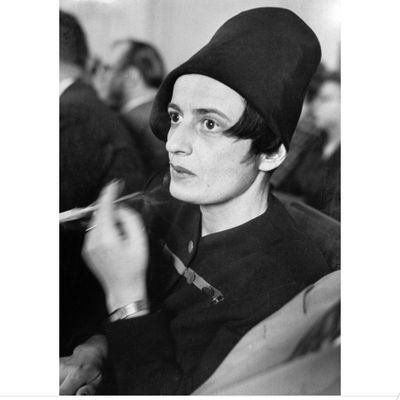
Two female friends went to Egypt and asked their taxi driver to take them to the main square in Cairo and he did, but was very nervous and reluctant, and urged them not to do any stupid and locked the doors (dear reader, they were very stupid). Then, later, they visited a shop selling wares and was locked in by the owner. They had to beg to be let out, which he did eventually do. Unbelievable that a journalist from major networks would be thrown to the lions like this.

Lara Logan sufrió una violación grupal el 11 de febrero del 2011., cuando cubría los enfrentamientos en El Cairo. La violación duró una hora Lara tuvo que ser repartiríada de urgencia a los Estados Unidos donde recibió tratamiento médico. La cadena CBS le exigió que guardara silencio "para no incitar al racismo"
Caroline Sinz (noviembre de 2011): La reportera de la cadena pública francesa France 3 fue asaltada, separada de su camarógrafo y agredida sexualmente por una masa de jóvenes cerca de la plaza Tahrir mientras cubría nuevos enfrentamientos civiles.
Natasha Smith (junio de 2012): Una periodista británica independiente de 22 años denunció haber sufrido una agresión multitudinaria similar. Fue atacada tras la proclamación de los resultados de las elecciones presidenciales que dieron la victoria a Mohamed Morsi.
Sonia Dridi (septiembre de 2012): Corresponsal de la cadena de televisión France 24, fue acosada y rodeada por una multitud que empezó a manosearla en directo mientras realizaba una conexión televisiva en la plaza. Pudo ser rescatada por un compañero y refugiarse en un coche de seguridad.
Luego decidme que no existe la cultura de la violación en el mundo árabe
Samara Amorim retweeted
For decades, four Italian nuns helped map nearly half a million stars. Their names barely entered the history of astronomy.
Sisters Emilia Ponzoni, Regina Colombo, Concetta Finardi and Luigia Panceri worked at the Vatican Observatory during one of astronomy’s most ambitious international projects: the Carte du Ciel, or Map of the Sky.
Launched in the late 19th century, the project brought observatories around the world together to photograph and catalogue the heavens. The Vatican Observatory was responsible for a section of the sky, but turning thousands of photographic plates into usable astronomical data required painstaking human labor.
That work fell partly to the four sisters.
Beginning in the early 20th century, they examined photographic plates and measured the positions and brightness of stars with extraordinary precision. Working through image after image, coordinate after coordinate, they helped produce a catalogue containing 481,215 stars.
They were, in effect, human computers.
Yet their contribution was largely invisible. Scientific publications typically emphasized observatories and senior astronomers rather than the women performing the repetitive calculations and measurements behind the finished catalogues. The sisters themselves had little formal astronomical training when they began.
Their story resurfaced through historical research into the Vatican Observatory archives, where records revealed both the scale of their work and the identities of women who had remained on the margins of the official story.
The irony is difficult to miss. Astronomy remembers the people who discovered stars, named objects and directed observatories.
Four women spent years determining exactly where 481,215 stars were located.
For much of the next century, history barely recorded where the women were.
#archaeohistories


Samara Amorim retweeted

O STF decidiu que medida protetiva não depende de o homem ser marido, ex, namorado ou parente.
Mas isso está sendo mal contado por aí.
O caso que chegou ao Supremo foi o de uma mulher de Formiga, em Minas, perseguida pelo vizinho.
Segundo o processo, ele a seguia, dizia que queria se casar com ela e ameaçava matá-la se ela não aceitasse.
Ela pediu proteção e a Justiça de Minas negou, porque entre os dois não havia relação familiar nem afetiva.
Ou seja, ela estava sendo ameaçada de morte e a resposta foi que ela não se encaixava.
Agora, mulher perseguida ou ameaçada por vizinho, colega, chefe, cliente ou desconhecido pode pedir medida protetiva.
E aqui está a parte que estão distorcendo.
Não é qualquer desavença entre um homem e uma mulher.
É violência baseada no gênero, aquela que existe porque ela é mulher.
Perseguição, ameaça, assédio, a lógica de que ela é obrigada a aceitar. Briga por causa de barulho não é isso, e ninguém disse que é.
Vale lembrar também o que se pede numa protetiva. Que ele não chegue perto e não entre em contato. Não é prisão, não é condenação, não é ficha suja. Vale enquanto durar o risco.
A proteção foi ampliada e ainda assim continua insuficiente diante do que acontece com a gente todos os dias.
Toda proteção para mulher é pouco.
Se você está sendo ameaçada ou perseguida, procure a Delegacia da Mulher, o Ministério Público ou a Defensoria.
Medida protetiva não custa nada e não precisa de advogado. O 180 atende de graça, todos os dias, a qualquer hora.
Samara Amorim retweeted

🚨CONTEÚDO SENSÍVEL
Esse vídeo é um dos mais chocantes que eu já vi, cenas como essas se repetem em todo o Brasil, e pelo visto já se tornou comum. Os educadores deveriam em regra receber adicional de periculosidade, pq muitos deles tem medo de ser vítimas assim, revoltante.
Samara Amorim retweeted
Jovem agredida por empresário do setor financeiro revela ter sido estuprada pelo ex: 'era obrigada a ser presente' glo.bo/4xdw0nL #g1