
We build protocols on top of Bitcoin Lightning Network. Try https://xitter.gq/t.co/KBudHQ18gb with your favorite wallet.
⚡️Bitcoin
Joined April 2023
- Tweets752
- Following570
- Followers526
- Likes811







SatsBridge retweeted

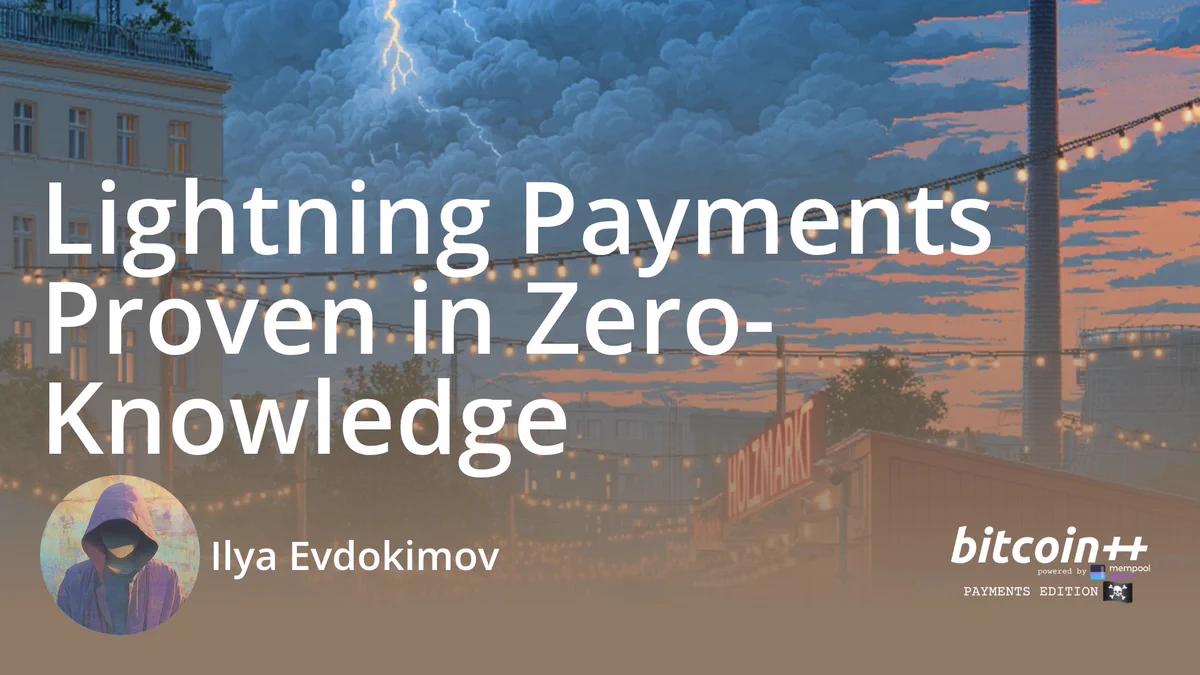
Lightning Payments Proven in Zero-Knowledge xitter.gq/i/broadcasts/1jGXgBNRz…
SatsBridge retweeted

Here is our exchange, running on custom Signet, sending orders and opening perpetual futures positions backed up by offchain Bitcoin transactions. Let's talk about it on @LuganoPlanB.

SatsBridge retweeted

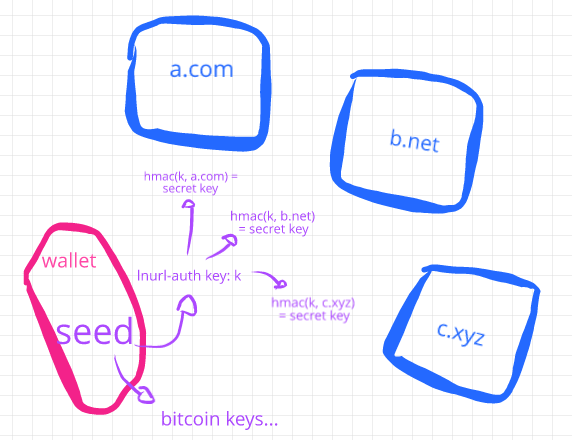
Puedes iniciar sesión en sitios web sin usuario ni contraseña, usando tu wallet de Bitcoin.
Se llama LNURL-auth.
Tu wallet CREAR una llave distinta para cada sitio, derivada de tu semilla.
No tienes que dar tu email, no repites contraseñas ni nadie puede identificarte entre un sitio u otro.
Misma semilla, identidades separadas.
Eso es privacidad real.
fiatjaf.com/e0a35204.html
SatsBridge retweeted

Dear users,
we have made the hard decision to take all atomiq swap routes offline for now.
As a small team we are currently not able to fight against the numerous sophisticated AI-assisted attacks on our infrastructure.
Rest assured that user funds were not at risk due to the trustless nature of the swap protocol, and the atomiq.exchange webapp remains accessible, so you can always refund your past swaps. In case of any doubts/questions, feel free to reach out via our support at t.me/atomiq_support.
A big thank you to all our loyal users, we we'll try come back stronger.
SatsBridge retweeted

Are conspiracy theories in Bitcoin actually true? Our guest Talip gave an insider's perspective on the BIP 110 spam war that I wasn't expecting. We then got straight to the reality of AI-driven red teaming, statechains privacy, and ended up debating why now might be the most important time for Bitcoin to return to its cypherpunk roots.
SatsBridge retweeted

MFTV #14: Bitcoin Privacy Done Right | with @januszg_ of @lxdev_
🔗 YouTube: youtu.be/kLRQI9Em8SM
🔗 Spotify: open.spotify.com/episode/59Q…
CEO of LX and former founder of Bitcoin Layers, Janusz, joins Head of MARA Foundation @isabelfoxenduke to discuss how private payments could work on Bitcoin through zero-knowledge proofs, what the recent Zcash bug reveals about the risks, and why he sees avoiding KYC as the true starting point for privacy.
MORE ON MFTV WITH JANUSZ →
- How zero-knowledge proofs could bring private payments to Bitcoin, and the trade-offs they require
- Why he argues blockchain privacy starts with avoiding KYC
- What the recent Zcash bug reveals about the risks of these systems
- The state of the Bitcoin L2 ecosystem after the hype
TIMESTAMPS:
00:00 — Intro
00:18 — From Zcash to building Bitcoin privacy
04:26 — Privacy vs scalability for ZK on Bitcoin
12:35 — Why Zcash’s supply is a blackbox
22:35 — The deeper failure: Zcash's centralized fork
25:12 — Can these bugs be prevented? Formal verification
27:16 — Why privacy starts with avoiding KYC
38:30 — The regulatory and software hurdles to shipping privacy
42:54 — Privacy across Bitcoin L2s
49:39 — Bitcoin L2s after the hype
59:54 — Zcash's resurgence, premines, and token narratives
SatsBridge retweeted

Lightning is back.
A recent outage exposed the risk of having so much depend on a single provider.
We felt it, you too. We’re working to ensure this never happens again.
Today we are launching Intents, a shared market interface for payments & exchange, built on Bitcoin.
SatsBridge retweeted

Ok this was about Coldcard hack. I went curious, started to prompt, play around... after two turns 5.6 Sol High immediately found the bug.
Once I was sure that I was not dreaming, I contacted some smart friends from the industry & people who might identify and verify it - we got the full scope in one hour and notified immediately.
The new era is super scary.
I am really sorry for everyone affected 🫂


SatsBridge retweeted
bitcoin roadmap discussions

Two weeks ago, Ethereum researchers met in Berlin to continue charting the protocol's long-term trajectory, following along discussions with client teams in Svalbard in April.
The updated strawmap is at strawmap.org, and I attached a picture of it to this post.
My own high-level takeaways:
* "Lean Ethereum" is not a single one-shot upgrade, it is a collection of improvements that will come online to the Ethereum network over the course of three or four years. But make no mistake, this IS the third major iteration of Ethereum in the same way that the Merge was the second. Almost every major piece of the protocol will be replaced:
- Verification through recursive STARKs, rather than direct re-execution. Recursive STARKs become an enshrined first-class core component of the protocol
- Replacing everything quantum-vulnerable with quantum-safe alternatives
- Consensus: decoupled available chain and finality, one or two-round finality. Theoretically optimal security properties, simpler than today, and faster than today
- Multidimensional gas
- State: not just tree structure, but what *types* of state are available
- Changes to client architecture
...
At the same time, simplification, cleanup and future-proofing. And this will all be done in a way that minimizes disruption to existing application. We've done this before (the Merge), we can do it again.
* H-star (aka Hegota) is probably Ethereum's last thematically "pre-Lean" fork. Starting from I-star, most of everything we do will have a very strong "Lean" feel to it in one way or another.
* Privacy is no longer an afterthought, it is a first class goal. When designing Frames, the mempool, additions to the state tree, we explicitly ask the question "okay, how do quantum-safe, intermediary-free privacy protocol transactions go through this, and what is the overhead?"
* Formal verification of everything for security.
* FV also makes us much more comfortable with canonicalization (having pieces of the protocol that are directly defined as a piece of bytecode expressed in some language). evm-asm is being written in part to become a canonical proof system for the EVM.
* Quantum safety has shifted up a LOT in priority. This adds a lot of work (eg. finalizing a quantum-safe blobs design has become urgent; this work has already been ongoing for months)
* Probably the single most disruptive part of the plan is the changes to state. There is growing consensus around leaving present-day-style "dynamic state" mostly unchanged, but scaling it only a medium amount, and adding new types of state that are more scalability-friendly (eg. no need for builders to sync/store all of it) but more restrictive, and that will scale a large amount.
eg. possible Ethereum in 2030: 2 TB of present-day-style (dynamic) state, and 100 TB of new-style (scalable but restrictive) state
This "new-style" state would work very well for ERC20s, NFTs, many defi use cases, but not eg. highly "central" objects like Uniswap contracts, or onchain order books, or other complex things (which are crucial for Ethereum but which only take up a small percentage of state)
Hence, it will not be *necessary* to rewrite any apps, but it will be *very cost-effective* to eg. rewrite an ERC20 token into a newer design that uses a new type of UTXO storage that is currently being explored, so that it will have >10x lower txfees.
Design of these new state types (current ideas: keyed nonces, ring buffers, UTXOs, statically accessible state, temp state) is an area where we will need a lot of feedback from application developers (incl. privacy-friendly application developers) and probably several rounds of rethinking and iteration.
* In the context of a much larger total state size, we need to figure out the incentive issues around who stores this state and what motivates them to. Even saying "each node stores 1%" is not good enough - why do they store that 1% and why are they willing to serve it? This is being elevated as a first-class research area.
* Ethereum will need to have a "VM" other than EVM in one form or another - at the very least, we need something like leanISA for recursive STARKs - and the gains are large in exposing it to users so that we support programmable privacy and better scalability. Right now, the most likely contenders are leanISA and RISC-V.
My own ideal is that in this world, we adjust the protocol so that the EVM becomes a high-level-language compiler-level feature, and the protocol only "sees" RISC-V / leanISA directly. But this is still far away.
* Gas limit increases, blob increases and slot time decreases will happen many times over the next ~5 years. We expect a large gas limit increase with Glasterdam. Each step of increased scale or decreased slot time is a matter of getting to the point where it is safe to do it, which comes from a combination of client optimization and protocol changes.
Ethereum is CROPS.
Ethereum is scaling.
Ethereum is reinventing itself.
Onward.

SatsBridge retweeted

July 4th has passed but as Keonne’s mom, my fight to bring him home will never stop. THANK YOU ALL for keeping his name alive.
We HAVE TO keep up pressure for the next wave of pardons! Please sign & share: change.org/p/stand-up-for-fr… #FreeKeonne #Bitcoin #CoinCenter

SatsBridge retweeted
Giving away even more sats tomorrow
and I will have **zero knowledge** about your balance
Find me around if you want some private beers
This quoted post is unavailable.


SatsBridge retweeted

Excited to double up on @lxdev_ following the @BTCFiNetwork
Privacy is critical for Bitcoin’s long term success. Without it, money becomes surveillance infrastructure hurting fungibility, personal security, and censorship resistance.
This quoted post is unavailable.
SatsBridge retweeted

the concept that bitcoin use is private with the correct skill set is true but only in the sense that a) it's not a guarantee tx will remain private forever b) the skill set to use it means there are ~10k people in the world that can do it and c) probably a 1/3 of them are spooks
SatsBridge retweeted

Yeah Sex Is Cool But...
Did you try to remove and restore #Bitcoin Lightning Network wallet and avoid force closing channel?


SatsBridge retweeted

A IA que hackeia qualquer software do planeta foi hackeada por amadores do Discord no dia do lançamento.
Parece piada. Mas não é.
A Anthropic criou o Claude Mythos: uma IA tão perigosa que se recusou a lançá-la ao público.
Criou o Project Glasswing, um programa de acesso controlado restrito a empresas como Apple, Google, Microsoft e NVIDIA, com protocolos de segurança de nível governamental.
Aí um grupo de curiosos em um canal privado do Discord usou informações de um data breach e acesso de um contratante terceirizado pra adivinhar a URL do modelo.
E tem usado o Mythos desde então

Anthropic's Mythos has been accessed by a small group of unauthorized users, raising questions about control of the AI model bloomberg.com/news/articles/…

SatsBridge retweeted

Batch 3 already. We continue to invest in the brightest founders building the future of the Bitcoin ecosystem.
Join us live at 11 AM EST to see what these amazing teams have been working on
@lxdev_ @OpenAgents @helios_finance @Resolvr_io @CharmsDev @PyrusFinancial
SatsBridge retweeted
Last month we've been heads down on docs, DevX, and laying groundwork for what's next.
New docs page is live with:
→ Updated protocol overview: The primitives, the swap protocols, actors involved & smart contract implementations.
→ New developers section: Everything you need to integrate the atomiq SDK to power Bitcoin cross-chain swaps in your app is now in one place.
→ A complete typedoc reference across all packages: So you're not guessing what each function does. Descriptions show up directly in your IDE, and AI coding tools can actually parse what's going on.
What's coming:
→ REST API for atomiq swaps. Self-hostable. This opens up integration beyond JavaScript projects.
→ Deposit addresses for Bitcoin swaps. Meaning you'll be able to swap from CEXes and external wallets, not just browser wallets.