

I dwell in the darkness…but not in a creepy way! 🤣 Astrophotography adventures from the UK, USA & Spain 🔭📸🇬🇧🇺🇸🇪🇸
United Kingdom
Joined December 2021
- Tweets3.1K
- Following1.2K
- Followers2.7K
- Likes1.9K




Pinned Tweet
I’ve just officially launched my new YouTube Channel and hope you can join me on my Astrophotography adventures here in the UK! 🔭🇬🇧 Link to my welcome video here 👉🏻 youtu.be/ZINgwmOp2ks Thanks! #Astrophotography #Space #UK #Telescope #Astrophotographer

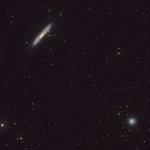
My remote scope in South Africa presented me with an opportunity to frame two distinct objects in the same field of view.
The Sculptor Galaxy (NGC253) which is located in the upper left of the image, is a densely packed spiral galaxy which is bursting with new star formation.
This galaxy contains a supermassive black hole in its centre and several super star clusters have also been observed near this central region.
Although I lacked some resolution with a 300m scope, I managed to pickup some hints of Hydrogen Alpha emissions throughout this galaxy and their glowing red colour blends nicely within it.
In stark contrast, NGC288, which is located on the bottom right of the image, is a globular cluster is characterised by stars which are more loosely bound together. Over time it’s believed that gravity will not be able to hold this family of stars together, therefore it will likely disperse, forever changing its appearance from our perspective.
Although these two wonderful objects appear as ‘neighbours’, as far as my image goes, they are in actual fact located at vastly different distances from Earth.
NGC253 is located around 10 million light years away, while NGC288 is a mere 30,000 light years distant.
It was nice to get two distinct objects in the same image, but I’d really like to get another go at the Sculptor Galaxy with a larger scope here at home!
Clear skies to you all! 🔭📸✨
📍 Kagga Kamma Remote Observatory
⏱️ 11h 54’
🎯 NGC253 & NGC288
🔭 Askar FRA300 Pro
📸 ZWO 533MM Pro
🔭 ZWO AM5
⭕️ Antlia 31mm RGB
🔴 Antlia 31mm H-Alpha
💻 ZWO ASIAIR Plus


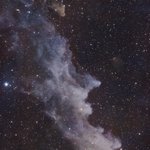
I recently put in a good amount of imaging time on the wispy Witch Head Nebula, with my remote SeeStar S30 Pro in southern Australia.
This target is pretty faint, but as the exposures build over time, more and more of this beautiful object reveals itself amongst a sea of glowing stars.
The reflection nebula is illuminated by the nearby supergiant star, Rigel, which is one of the brightest in the sky. The blueish tint of the gas cloud is due to the fact that the dust particles which form it reflect blue light better than red.
The Witch Head is located around 900 light years from Earth and you can find it in the constellation of Eridanus.
Hope you’re all getting some time at your scopes and clear skies to you all! 🔭📸✨
⏱️ 910 x 30s
🎯 IC 2118 ‘The Witch Head Nebula’
🔭 SeeStar S30 Pro

Here’s what 72 hours of exposure buys you in the constellation of Cygnus! 🦢
I spent several weeks capturing the famous Cygnus Loop with my remote scope in southern Spain. 🔭
This stunning region is the result of a cataclysmic cosmic supernova, which occurred over 15,000 years ago! ✨
⏱️ 72h 40’
🎯 The Cygnus Loop
🔭 StellaMira 90 ED Triplet
📸 ZWO 2600MM Pro
🔭 iOptron CEM40
⭕️ Antlia 36mm 3nm Ha
🔵 Antlia 36mm 3nm OIII
🔴 Antlia 36mm RGB
💻 Beelink GK Mini PC

SUPER excited to be joining the MLAstro club! 🙌🏻
Full review coming soon to my YouTube Channel and other Socials, once I’ve had a chance to have a play with the lovely SAL-33! 🔭📸✨

1
4
188
I’m slowly working my way through the treasure trove of data that I’ve collected with my remote SeeStar S30 Pro in southern Australia.
From my location ‘up here’ at 56 degrees north, I can’t really put a great deal of time on the Rho Ophiuchi and Antares regions, so I took advantage of my southern scope and have been framing targets across this vast swathe of the night sky.
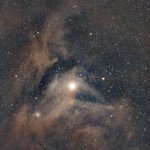
This section puts Antares or Alpha Scorpii front and centre.
Located right in the heart of the constellation of Scorpius, Antares is the brightest star in the ‘Scorpion’ and one of the brightest in the night sky. It sits just over 500 light years from Earth, so is a very close neighbour in cosmic terms.
With the naked eye (and through my wee SeeStar), Antares appears as a lone beacon, but it’s actually accompanied by a fainter companion star, designated as Antares B. So, Antares is in actual fact a binary system and not a single star.
As a Red Supergiant, Antares A will be going supernova at some point in the future and what a sight that will be!
Thanks for looking and wishing you all clear skies!
⏱️ 157 x 30s
🎯 Antares
🔭 SeeStar S30 Pro

My Helix Project continues at the fabulous Kagga Kamma Remote Observatory in South Africa…🔭📸🇿🇦
Final results coming soon! 👨🏻💻
🔭 Askar FRA300 Pro
📸 ZWO 533MM Pro
🔭 ZWO AM5
⭕️ Antlia 31mm 7nm SHO
🔴 Antlia 31mm LRGB
💻 ZWO ASIAIR Plus


Hey @nameless6021 look what just arrived! We’re scope twins now!! 😂🔭👍🏻
Excited to get first light on my new Sightron D50L 50mmm f/16 Refractor!


New Astro gear arrived this afternoon…just need some clear skies for testing!! 🤣🔭📸
Results coming soon to my YouTube Channel…stay tuned! 🎥

1
5
185
Scotia Astro retweeted

I've made an introductory video about The Lunartric. This is an interactive lunar atlas and exploration tool. I'm pretty pleased with the realism I've managed to achieve on a mobile device. Check it out! #TheLunartic #Moon
youtu.be/gntlxRJiXO4

A cool case of ‘Two Birds With One Scope’ in my latest image from southern Australia! 🤣
I managed to capture the beautiful Eagle and Swan Nebulae in one frame, thanks to the wide field view of the awesome wee SeeStar S30 Pro, which I’m running remotely at Martin Pugh’s excellent facility.
The Eagle Nebula, classified as M16, lies around 7,000 light years from Earth in the constellation of Serpens. It contains a feature known as the Pillars of Creation, which is famous from the image taken of it by the Hubble Space Telescope.
The Swan Nebula (sometimes referred to as The Omega Nebula) is classified as M17 and is located in the constellation of Sagittarius, some 5,500 light years away. It’s a massive star factory, where new stars are formed within the mass of gas and dust of this stunning deep sky object.
Hope you’re all getting some time at your scopes and clear skies to you all…🔭📸🦅🦢
⏱️ 276 x 30s
🎯 M16 ‘The Eagle Nebula’ & M17 ‘The Swan Nebula’
🔭 SeeStar S30 Pro – at Yass, New South Wales

After a recent house move, I’m glad to be back in the ‘Astro Zone’ and processing some images again!
Here’s the latest offering from my remote setup in South Africa, featuring the stunning Small Magellanic Cloud with a nice dose of H-alpha signal in the mix.
As a far northerner up here in Scotland, I have no chance of seeing these wonderful targets from my own backyard, so remote imaging is my outlet to the southern skies!
With a wide field refractor and the awesome square sensor of the IMX533 chip, I was able to frame this massive deep sky collective quite nicely.
The Small Magellanic Cloud is an irregular dwarf galaxy, containing several hundred million stars and countless regions of bright emissions.
It’s located around 200,000 light years from Earth and sits (from our perspective) in the constellation of Tucana.
I have been very fortunate to have a great wee rental setup at the excellent Kagga Kamma Observatory and I’ve got loads more data incoming, so stay tuned!
Thanks for looking and clear skies to you all! 🔭📸✨
📍 Kagga Kamma Remote Observatory
⏱️ 3h 24’
🎯 Small Magellanic Cloud
🔭 Askar FRA300 Pro
📸 ZWO 533MM Pro
🔭 ZWO AM5
⭕️ Antlia 31mm RGB
🔴 Antlia 31mm H-Alpha
💻 ZWO ASIAIR Plus

The Eye of Sauron, The Eye of God, The Helix Nebula or just plain ol’ NGC7293…whatever you choose to call it, this deep sky object is a beauty!
Located around 650 light years from Earth, in the constellation of Aquarius, the Helix is a planetary nebula (named from their disc like appearance).
Its shape was formed in the distant past when a star ended its days and exploded in spectacular fashion, into the cosmos. The resulting cataclysm spewed enormous amounts of energy and the outer layers of the star were expelled at tremendous speed. This left the bright glowing gases that we see today (or more correctly from 650 years ago!) which shape this fantastic deep sky object.
I shot this with a remote SeeStar S30 Pro, sited under the pristine skies of southern Australia at Martin Pugh’s excellent observatory.
I can’t image the Helix from my backyard up here in Scotland, so it was a real treat to see this stack going on live on my iPhone.
Wishing you all a great weekend and clear skies! 🔭📸
⏱️ 396 x 30s
🎯 NGC7293 ‘The Helix Nebula’
🔭 SeeStar S30 Pro


My tour of the southern skies continues with a short study of the truly massive Large Magellanic Cloud.
Located around 200,000 light years from Earth, it straddles the constellations of Dorado and Mensa in the southern hemisphere.
The Large Magellanic Cloud is a highly active region which is teeming with new stars being born amongst its many brilliant objects, including the large Tarantula Nebula in the upper section of the image.
The constant activity of this deep sky region, collapses dense gas clouds, which erupt in powerful emissions and a collection of bright vivid colours (when viewed with astro filters).
The awesome wide field capabilities of the SeeStar S30 Pro means that I’m able to take in a huge swathe of this gargantuan target.
I took this image with a remote scope located in southern Australia, at Martin Pugh’s excellent facility.
⏱️ 210 x 30s
🎯 Large Magellanic Cloud
🔭 SeeStar S30 Pro

I’ve recently taken on another remote rental scope to continue my quest to cover as much of the night sky as I can!
I’m super excited to be operating an awesome SeeStar S30 Pro at Martin Pugh’s excellent observatory in Yass, Australia.
For my first light image, I wanted to make the most of this wee smart scope’s field of view and opted for a quick study of the Small Magellanic Cloud.
I’ve got no chance to see this wonderful dwarf galaxy from my backyard here in Scotland, so the benefits of remote imaging are a no brainer for me.
Located around 200,000 light years from Earth, in the constellation of Tucana (with a bit peaking into nearby Hydrus), the Small Magellanic Cloud contains hundreds of millions of stars!
Stay tuned for more southern objects coming soon and thanks for looking! Clear skies to you all! 🔭📸✨
⏱️ 67 mins
🎯 Small Magellanic Cloud
🔭 SeeStar S30 Pro

Horrific news! 😭🔭🤬
UK's iconic Jodrell Bank telescope faces axe in science cuts bbc.co.uk/news/articles/c5y6…
