

Helping young pros, engineers & scientists 🚀crush their first 10 years—from college to corporate climbs. Yale MBA | CEO | ex-GE/BP/Exxon | Founder. Open to DM
Whitefish, MT
Joined August 2022
- Tweets6.1K
- Following247
- Followers350
- Likes3.2K





Left @Yale yesterday morning. Still not home in Montana.
On the last leg now. I think.
New Haven was sunny, Yale about to take on the Tigers. The Princeton band was already out front of Davenport, waking up the Yale students in a very Ivy League way.
Unfortunately for him, I believe Mr. Claus in the band photo was turned into a percussion instrument.
(28-0 Bulldogs. I missed every minute of it.)
Drove to Hartford, flight left on time around noon. Landed in Detroit around 2 with a 6 PM connection. Everything was looking great.
Detroit was fine until it wasn't.
We had a plane at the gate. Fueled, cleared to fly. We even had 80% of a crew - which was the problem. One flight attendant short.
@Delta went looking. Took about an hour and a half and they found one. The attendant got on board, and then the math said a different flight attendant was about to time out. Too many hours in a row, needs a break. So off they went.
That cycle ran until after midnight. Find one, lose one.
The pilot and first officer were amazing. I mean really amazing. They came out into the terminal over and over to tell us what was going on. It’s really awesome when the pilot herself makes announcements to her passengers. She said - This plane WOULD fly today. She didn't know when, but she'd be the pilot and she'd take us to Salt Lake.
Supposed to leave at 6:06 PM. Airborne around 2 AM. Landed in Salt Lake around 3 - you pick up two hours flying west, magic time machine.
Two and a half hours of sleep at a hotel and I'm back at the airport for the last one.
When somebody decides to close the airspace, the butterfly effect goes on for a very long time.


76
Back in New Haven this week for my first Yale Alumni Assembly as Montana's delegate. About 365 Yale alumni live in Montana, spread across a lot of miles. Packed schedule, great talks, and I'm bringing good ideas home.

24
In every job at BP and ExxonMobil, I had to document a formal Management of Change to hand off my work. What I did, where I was, for the person coming after me.
When an engineer on your team moves on, what do they leave for the next person?
My file names follow one pattern: Project, file purpose, 2025-10-31, SRI.
The base name never changes. The date goes year-month-day so versions sort themselves. My initials go on when I edit someone else's file.
Give your team one habit like this. The folder stays readable.
15
Not just a majority. The vast majority.
Even a group of 4 to 6 will call two or three Cybercabs instead of buying a car and driving themselves.
The engineer in me sees a utilization problem. A personal car sits parked most of the day. A Cybercab only stops to charge.
The cost per mile is extremely cheap. It's far safer than a human driver. And it knows every road better than you do.
xitter.gq/elonmusk/status/212009…

Cybercab will do a majority of all passenger miles in any jurisdiction where it is not prohibited by law.
Obvious to anyone with eyes and a brain.
15
In March 2008 I signed the launching pig at Prudhoe Bay before BP's new OT-21 line started up.
I led Phase 1 of that 3.1-mile replacement through startup on its 18-month schedule.
This photo is that day. I'm in the navy coveralls left of the yellow pig.

ALT March 2008 OT-21 pipeline startup at Prudhoe Bay. Shawn Isakson just signed the yellow launching pig.
12
My first job was at ABC TV.
The producer had the Avid on weekdays. I cut promos nights and weekends, often until 2am, and recorded my own voiceovers in the booth.
It was the most fun job I ever had. It never felt like work.
6
Hiring managers at a career fair, what one question about the work would show both sides a real fit?
GPA alone rarely settles it. Getting a phone screen or interview is a huge win.
10
Engineering managers, give junior engineers a Friday reporting habit.
1. Keep a daily log of small achievements.
2. Summarize it for the manager on Friday.
I used a Word document on my desktop. The weekly summary kept the work visible.
7
Engineering managers.. the loudest manager can get the biggest compensation improvements for their team.
Quiet engineers need to learn to market their achievements. As engineers, we dislike marketing, but it's a skill we need to learn.
8
Engineering managers, I'd build a new engineer's depth in a few areas before broadening their assignments.
7
At 24 I was a drilling engineer and company man for ExxonMobil on a rig in East Texas. AI may speed up the calcs and reports, but I suspect the judgment you build on site is harder to automate. I'd keep field time in a new engineer's job even as their desk work gets faster.
17
My title at ExxonMobil was Project Engineer. What I was known for was moving among contractors and explaining priorities plainly.
As a manager, I saw it from the other side. The people with modest titles everyone trusted got tapped for the important work.
10
Moving from ExxonMobil to BP, I didn't change my tone. ExxonMobil was serious and direct. BP was more patient.
Look at the tone of the peers and leadership.
Once I changed tone, I became a much bigger part of the culture. New opportunities came and I had a seat at the table.
13
At 24 I was company man on a rig, stuck downhole.
I waited too long to call up the chain.. didn't know I could until the superintendent told me.
At 1am I called a manager I'd never met. I'd done the math, and she said yes.
Cement by 7am.
Tell new engineers who they can call.
19
A week ago 160 employers came to a small school in the Rocky Mountains. I'd bet a lot of those students have signed offers by now.
It's Thursday morning here in Whitefish. Fall is trying hard to make an appearance but the summer sun will keep winning for a few more days. I filmed this on my last day at Montana Tech and finally sat down with the photos and video. Always fun going back through them.
These companies weren't just looking. They were hiring and they move fast. Offers go out within days of the fair. The smart companies don't wait around, they lock up their talent while everybody else is still reading resumes.
So why come all the way to Butte? A mile high, 126 years old, not exactly easy to get to.
I spent my career at ExxonMobil, BP and GE and worked next to Tech grads the whole way. They show up ready. They don't wait to be told what to do. They take the initiative to go one step further. The companies know it.
I wasn't that student at first. Got my first D ever in Calc 1 as a freshman. Retook it, got an A, ended up student body president. The place changes you. It bends your mind to think through how to solve problems. Halfway through your four years it's impossible to see the world the same way.
This was my second year spending the fair with students. Resumes, LinkedIn profiles, handshakes, eye contact, how to actually talk to the person who might hire you. Getting students to figure out their personal story, how to tell it, and what they want in a career to keep the adventure going. I love it.
After filming I got in the car, grabbed a Pork Chop John's sandwich (loaded, of course, if you know Butte you know) and made it home just before 10.
Back on campus in two weeks for homecoming.
If your company wasn't at this career fair, it absolutely should be. Every year Career Services is scrambling to find more space for companies to set up. DM me and I'll connect you with the right people at Tech.
Go Diggers.
@montana_tech
@NucorCorp
@conocophillips
@RioTinto
@Chevron
@ContinentalOil
@SkanskaUSA @SkanskaGroup
@HDRarchitecture
@NevadaGoldMines
1
3
162
Where did your first job out of Montana Tech land you?
Mine was ExxonMobil, Houston, summer of 2002. My first taste of Texas heat. I walked out of Butte with a mechanical engineering degree and into a job I would never have been ready for. Tech made sure I was.
Twenty-four years later, every job, every move, every board seat traces back to those four years at Montana Tech.
DayOne, Tech's 48-hour giving day, started at noon today. Orediggers, if your answer to that question was a good one and you have never given before, it is time. Even start with just $25... click the link below will take you 90 seconds.
Tech built me. Now we build Tech.
dayone.mtech.edu/amb/techbui…

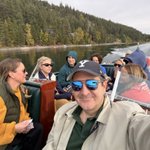
ALT Shawn Isakson cruising on a wooden yacht on Whitefish Lake, Whitefish Montana, wearing a Montana Tech Hat.

2
76
One thing I understood differently once I became CEO: sometimes someone brings you a great idea, and you have to say no.
And I mean a genuinely good idea. They’ve done their homework. It would absolutely make a difference... and there might even be budget for it.
Take an IT system. The current supplier contract is ending. Someone in-house finds a better product, with more functionality, crazy great features, at a lower cost, and they already met the new vendor and love them. On paper, why wouldn’t we do it?
Well, the people who will use that system have to learn it. Someone has to help implement it. Maybe a data migration (always a nightmare!). Finance may need to change a process. And the IT people who would handle the transition are already working on another project we also need that we signed off on three months ago.
The people closest to the work, the ones you really need involved in getting this right, usually already have a full-time job doing that work. So whose work do we pull them away from? What gets put on hold?
An organization can only absorb so much change at once. Even changing the coffee in the break room will get you a few conversations you weren’t expecting. A new system is a much bigger ask.
That was something I came to appreciate from the CEO seat. You’re considering the idea alongside everything else you’ve already asked people to do.
If you’re early in your career and pitching an improvement, spend some time on that part too. Who would need to help? What else are they carrying? Could this wait until another project is finished? You don’t have to know everything going on across the business. Asking those questions will help you understand the decision.
And if you’re the person saying no, explain it. Someone put thought and effort into that idea. It’s demotivating to bring forward something genuinely great and have it turned down, especially if nobody tells you why. It's incredibly confusing and demotivating. I’d want them to understand what we couldn’t take on and why. I’d also want them to bring me their next idea.
6
226
Shawn Isakson retweeted

10 years ago, the Internet caught on fire. A Notre Dame professor posted an article he didn’t expect would gain much attention. A decade everyone is still talking about what @PatrickDeneen wrote.
Here it is
My students are know-nothings. They are exceedingly nice, pleasant, trustworthy, mostly honest, well-intentioned, and utterly decent. But their brains are largely empty, devoid of any substantial knowledge that might be the fruits of an education in an inheritance and a gift of a previous generation. They are the culmination of western civilization, a civilization that has forgotten nearly everything about itself, and as a result, has achieved near-perfect indifference to its own culture.
It’s difficult to gain admissions to the schools where I’ve taught – Princeton, Georgetown, and now Notre Dame. Students at these institutions have done what has been demanded of them: they are superb test-takers, they know exactly what is needed to get an A in every class (meaning that they rarely allow themselves to become passionate and invested in any one subject); they build superb resumes. They are respectful and cordial to their elders, though easy-going if crude with their peers. They respect diversity (without having the slightest clue what diversity is) and they are experts in the arts of non-judgmentalism (at least publically). They are the cream of their generation, the masters of the universe, a generation-in-waiting to run America and the world.