

Christian ☦ happily married 😊. Telling the truth about the Bible and Christian history ⛪ Church Fathers, Saints, etc.
United States
Joined May 2011
- Tweets1.2K
- Following627
- Followers1.4K
- Likes15.6K






Pinned Tweet
My heart is filled with gratitude for our King and God, Jesus Christ. He is the eternal Logos, the Alpha and the Omega, the Physician of our souls and bodies.
He who held the cosmos in being before the foundation of the world chose to enter our brokenness, conquer death by His death, and grant us eternal life.
Let us not live for the fleeting things of this earth, but fix our eyes on the Kingdom that cannot be shaken. To Him, with His unoriginate Father and His all holy, good, and life creating Spirit, be all honor, glory, and worship, now and ever, and unto ages of ages. Amen.
Glory to Jesus Christ! Glory forever! 🤍☦️


✟ proxy 🇺🇸 retweeted

ELITE THEORY: Narratives, Operatives & Meta Level Insanity xitter.gq/i/broadcasts/2dKYmEBbY…


✟ proxy 🇺🇸 retweeted
The Protestant response to my post about the Canon captures the historical dilemma facing Protestantism.
It's a psychological mechanism driven by a structural necessity. Because their entire theological system rests on Sola Scriptura, any challenge to the history, origin, or contents of the Bible threatens the very foundation of their faith, forcing a defensive retreat into historical revisionism.
If the collection of books they rely on is historically proven to be a 16th century subtraction rather than the original apostolic standard, their foundational rule of faith cracks. To prevent that crack, they have no choice but to rely on alternative historical narratives like the "added at Trent" myth or the "Hebrew truth" narrative.. Even when those claims are flatly contradicted by primary historical documents.
The Irony of the "Hebrew Superiority" Argument.. Lol. The Hebrew canon they defend was preserved, edited, and finalized centuries after the Resurrection by the Masoretes, rabbis who explicitly rejected Christ.
In contrast, the Greek Septuagint was translated by pre-Christian Jews centuries before Christ, meaning its translators had zero anti-Christian bias when translating messianic prophecies, such as Isaiah 7:14 rendering "virgin" instead of just "young woman," or the explicit crucifixion imagery in Wisdom 2.
By choosing the post-Christian rabbinical canon, they are unknowingly trusting the textual curation of a community that actively sought to define itself against the early Christian Church.
When they mock my view of scripture, call me illiterate, or tell me that I don't know how to read, they are implicitly projecting that onto the baseline of the ancient Church.
They are calling St. Athanasius, St. Cyril of Jerusalem, and St. John Damascene illiterate.
They are claiming that the Holy Apostles who penned the New Testament in Greek while heavily quoting the Septuagint text did not understand scripture.
They are dismissing the Ecumenical Councils that codified the liturgical use of these books.
As an Orthodox Christian, I don't have to carry the burden of inventing a novel historical theory to justify my Bible. I simply stand in the shade of an unbroken, 2,000 year old tree. It requires a massive amount of historical gymnastics to bridge the gap between 1st century Jerusalem and 16th century Germany while bypassing everything in between.. It requires zero gymnastics to trace the liturgy of the Orthodox Church straight back to the upper room ☦️🤍
✟ proxy 🇺🇸 retweeted

PROTESTANTS are LITERALLY reading a Bible edited by the very people who CRUCIFIED CHRIST .
By adopting the Masoretic text and rejecting the Deuterocanon, Luther and his followers chose the authority of 16th-century Christ-hating rabbis over the infallible authority of the Apostles and the early Church. They gutted the Word of God to hide clear prophecies like Wisdom 2, which exposes the exact mindset of the Pharisees who condemned Jesus.
The 66-book canon is a hollowed-out shell of the true Christian Scripture. Protestantism is built on the arrogant assumption that they could "purify" the Bible by aligning it with the traditions of men who explicitly denied the Messiah. If you are using a Bible that omits Wisdom, Sirach, and Maccabees, you are participating in a Jewish subversion of the Christian faith.
There is no salvation in novelties. The only grace found in Protestantism is the vestigial Catholicity they haven't managed to strip away yet. Schism does not lead to truth; it only leads to further fragmentation and eventual damnation. If you want the whole truth, you must return to the one true faith that protected the complete Canon for 1,500 years before the reformers decided to play God with the text.

The 66 book Protestant Canon was compiled by Pharisees and rabbis who rejected Christ and wanted to get away from the Christian Church's canon.
Those "extra books" are the true Christian Canon that the Apostles believed.
Wisdom 2:12-22 is a prophecy of Jesus.
OF COURSE they didn't want this in there!


✟ proxy 🇺🇸 retweeted

Hila Klein has filed for divorce from Ethan Klein after 14 years of marriage after accusing him of cheating.
She is asking for joint custody of their 3 kids and spousal support. She is also requesting that Ethan pay her legal fees and that her maiden name be restored, TMZ reports.


The 66 book Protestant Canon was compiled by Pharisees and rabbis who rejected Christ and wanted to get away from the Christian Church's canon.
Those "extra books" are the true Christian Canon that the Apostles believed.
Wisdom 2:12-22 is a prophecy of Jesus.
OF COURSE they didn't want this in there!


✟ proxy 🇺🇸 retweeted
☦️📖 The Unapologetic History of the Biblical Canon.. My final update on this post.
Let's look directly at documented history, the historical reality of the Christian Canon is firmly rooted in the ancient Church.
Long before Christ was born, the Hebrew Scriptures were translated into Greek in Alexandria (around 250–100 BC). This translation is called the Septuagint.
The Septuagint was the Bible of the Early Church. When the Apostles and New Testament writers quoted the Old Testament, roughly 80% of their direct quotes came straight from the Greek Septuagint, not the Hebrew text.
The Septuagint included the Deuterocanonical books (such as Wisdom, Sirach, Tobit, and Maccabees). These books were never "added" by the Church later, they were inherited directly from the apostolic era.
For the first 1,500 years of Christian history, every major historic standard, from the early Church Fathers to the regional Councils of Hippo and Carthage affirmed this larger canon.
If the Apostles used the Septuagint, why do Protestant Bibles lack these books today?
After the destruction of the Jerusalem Temple in 70 AD, the Pharisaic leaders who rejected Jesus Christ began consolidating Rabbinic Judaism. Over the following generations, rabbinic authorities gradually restricted their recognized scriptures exclusively to books originally written in Hebrew, thereby discarding the Greek texts used by the rapidly growing Christian movement.
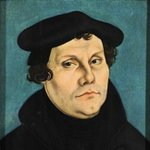
In the 16th century, Martin Luther chose to reject the historic Christian Old Testament canon. Instead of relying on the continuous 1,500 year Tradition of the Church, he altered the Protestant Old Testament to align with the narrower canon of the post-temple Rabbinic Jewish community.
When you understand this timeline, it becomes clear why Wisdom 2 reads like a play-by-play of Christ's crucifixion. The text describes wicked men plotting against a righteous man who calls God his Father, testing him with "insult and torture," and condemning him to a "shameful death".
When the religious leaders stood at the foot of the Cross and mocked Jesus, they used the exact phrasing found in Wisdom 2:18: "If the righteous man is God's child, he will help him.." The early Church recognized this as a brilliant, divinely inspired messianic prophecy. The community that rejected Christ also rejected the book that explicitly predicted their actions.
The "extra" books are NOT EXTRA AT ALL, they are the original Christian Old Testament. Removing them means separating oneself from the historical reality of the Apostolic Church.
History does not bend to modern preferences. If you want the Bible of the Apostles, the Martyr Church, and the historic Orthodox Faith, you use the full, uncut Canon..
The seed of truth is planted, do with it what you will.. 🤍☦️
✟ proxy 🇺🇸 retweeted
"He can no longer have God for his Father, who has not the Church for his mother"
- St. Cyprian of Carthage


✟ proxy 🇺🇸 retweeted
While Jerome initially hesitated because those books weren't in the Hebrew texts of his day, he ultimately submitted to the Church and translated them into his Vulgate anyway.
More importantly, the 'Hebrew truth' Jerome was chasing was the post-Christian text finalized by Jewish rabbis who had already rejected Jesus as the Messiah. The historic Church wasn't going to let a 4th-century Jewish community, which explicitly deleted books to counter Christian teachings, dictate the Christian Old Testament.
The Church completely bypassed Jerome's private opinions because we kept the ancient Septuagint, the exact pre-Christian text used, quoted, and authorized by Christ and the Apostles themselves. Luther choosing the text of post-Christian rabbis over the 1,500-year consensus of the Apostolic Church is exactly the problem.
Actually, the Old Testament canon wasn't officially finalized by Judaism until decades after the death of Jesus, and early Christians overwhelmingly used the Greek Septuagint, which included Wisdom. Furthermore, the Council of Rome and the Ecumenical Council of Florence explicitly listed the Deuterocanon as Holy Scripture centuries before Trent. Trent simply re-affirmed it infallible dogma to counter the Reformers removing books.
The New Testament writers directly quote or echo the Septuagint in about 80% of their Old Testament references. Look at Matthew 27:43, the chief priests mock Jesus using the exact theological framing, taunts, and vocabulary prophesied in Wisdom 2:18-20 "If the righteous man is God's child, he will help him". Matthew purposefully shows Jesus directly fulfilling Wisdom 2.
The "Added at Trent" myth is the most common historical error Protestants make. The identical 73-book canon was put to ink over a millennium before Trent. Trent only issued an anathema because the canon was being actively challenged for the first time by the Reformation.
More on the Protestant Canon in my post here:
Martin Luther Judaized the faith when he prioritized the canon of the post-temple Jewish community over the ancient, inherited canon of the Christian Church.
Literally a textbook form of Judaizing. He made a non-Christian religious group the ultimate gatekeepers of Christian Scripture.
A "Judaizer" is someone who insists that Christians must adopt Jewish legal customs, boundaries, or standards to be fully right with God. By adopting the Jewish canon, Luther fell into this trap in a massive way:
He slighted the Apostles. The Apostles themselves primarily quoted the Greek Septuagint, which included the Anagignoskomena (Deuterocanon). To drop these books is to say that the 1st-century Pharisees and later rabbis had a better grasp of the proper boundaries of Scripture than Christ's own Apostles.
He submitted to an outside authority. For 1,500 years, the global Church confidently used its full library. Luther bypassed the living, historical, Spirit-guided Church and submitted himself to the authority of a Jewish council that had explicitly closed its canon to combat the spread of Christian texts.
There is a massive historical irony in how Protestantism developed because of this decision.
Protestants pride themselves on being purely "Scriptural" and avoiding "human traditions" (Sola Scriptura). Yet, the only reason a Protestant Bible has exactly 66 books is because Protestants chose to obey a human tradition established by post-Christian Jewish rabbis.
