

Democracy is a societal illusion
Nederland
Joined November 2021
- Tweets3.2K
- Following299
- Followers231
- Likes83.5K






Joost retweeted

Responding in my personal capacity, but wanted to share my perspective..
We are in a great-power competition with so much at stake in the years ahead. There is no one in America who has lived during a time when the United States wasn't the preeminent superpower and, despite our imperfections, a force for good in the world. A nation that fought and helped end wars on behalf of those who couldn't, pioneered powered flight, put humanity on the Moon, led revolutions in medicine and technology that improved billions of lives and distributed hundreds of billions in aid around the world.
I don't know how handicapping this nation by going after one of its largest employers, a company that has created wealth for millions, ushered in electric cars, rockets that don't need to be thrown away, satellites that connect the disconnected and have unquestionably saved lives, not to mention access to information that is pretty foundational to solving many of the world's problems, biotech to restore function to those with disabilities, and so much more, serves America's interests. Without the contributions of these companies, there is little question America would be behind in a competition where the outcome is far from certain and the consequence so great.
Now, maybe I am just a bit new to this, but from the billboards, TV and digital ads, spam texts, and fundraising calls, it would seem both parties have no issue raising money, including from billionaires, with the aim of influencing and buying votes. And if that means campaign reform, maybe include dialing back the spam calls and texts..But with all that is going on in the world, and so much at stake for our country, I question the priorities reflected in the post below.

Joost retweeted

Giga Berlin is expanding - Cybercab production is coming to Europe

If you ever wondered, what we would be doing at Giga Berlin with all the land that we have…
We are expanding! Cybercab production is coming to Giga Berlin!
Today we announced a first investment of around € 3b in a new manufacturing building with an anticpated start of production in 2029! It will have the most advanced technology of any Tesla factory!
And we are hiring 👉 tesla.com/careers/search/?si…

Joost retweeted

Have you ever wondered why catching Starship is so much harder than catching Super Heavy, even though they both return to the same launch tower? 🔥
💡 The answer comes down to four major engineering challenges that make Starship’s recovery fundamentally different 👇
⚡ The first problem is shedding an enormous amount of energy
At hot staging, Super Heavy was traveling at roughly 5,800 km/h (3,600 mph). Starship, meanwhile, had to return from orbital speeds of roughly 27,500 km/h (17,100 mph).
That’s nearly five times faster. Because kinetic energy increases with the square of velocity, each kilogram of Starship at orbital speed carries roughly 22 times the kinetic energy of a kilogram of Super Heavy at separation.
That works out to nearly 30 million joules per kilogram.
Almost all of that energy has to be dissipated before Starship can safely reach the tower.
One option would be to use rocket propulsion to cancel out its orbital velocity. However, scrubbing off roughly 7.7 km/s of speed using Raptor engines alone would require a massive amount of propellant.
The rocket equation makes this approach especially punishing. Every extra kilogram of landing propellant has to be hauled into orbit first, dramatically increasing the fuel needed at liftoff.
Instead, SpaceX uses Earth’s atmosphere to bleed off almost all of Starship’s orbital velocity.
That saves an extraordinary amount of propellant, though it introduces another major hurdle.
🔥 Surviving extreme atmospheric heating comes next
As Starship plunges into the atmosphere at hypersonic speeds, powerful shock waves compress and heat the surrounding air to blistering temperatures.
Thousands of ceramic heat-shield tiles protect its stainless-steel structure from the intense heat.
Simply keeping those tiles attached isn’t enough, though. Superheated gas can seep into the gaps between them, risking damage to the underlying structure.
For Flight 15, SpaceX carried forward upgrades from Flight 14, including extra tile-retention hardware in vulnerable areas and redesigned curved tiles that reduce heating between adjacent tiles.
Because Super Heavy never reaches orbital velocity, its return doesn’t expose it to anything close to the same thermal stress.
And there’s another complication.
A heat shield that survives one reentry isn’t necessarily ready to fly again. Starship’s thermal protection system must eventually withstand repeated missions without major repairs or refurbishment.
That’s critical, since rapid reusability is one of the core reasons SpaceX designed Starship to be caught rather than discarded.
Yet surviving reentry still isn’t enough. Starship also has to arrive at the exact right spot.
🎯 Hitting a precise target from orbit raises the stakes even further
About 56 minutes before the catch, a single Raptor engine fired for just 10 seconds to initiate Starship’s return.
That brief deorbit burn wasn’t meant to eliminate orbital velocity. Instead, it nudged the spacecraft’s trajectory so atmospheric drag could take over the much larger job of slowing it down.
Starship then entered the upper atmosphere thousands of kilometers away over the Pacific Ocean.
From there, its four aerodynamic flaps controlled its orientation and fine-tuned the forces acting on the vehicle.
Super Heavy uses grid fins to steer during its return, but Starship’s flaps have to handle a far wider range of flight conditions.
As Starship decelerates from hypersonic through supersonic and down to subsonic speeds, its guidance system continuously adjusts its attitude and flight path.
The challenge is maintaining the right balance of altitude, speed, and trajectory while aerodynamic forces shift dramatically throughout reentry.
For Flight 15, the return corridor crossed sparsely populated parts of northern Mexico and South Texas.
Starship maneuvered around major population centers in the Rio Grande Valley, passed north of South Padre Island, headed offshore over the Gulf of Mexico, and made its final turn toward Pad 2 at Starbase.
Think about the guidance precision required.
A spacecraft returning from orbit must dissipate nearly all of its immense kinetic energy while threading a carefully controlled trajectory straight back to a single launch tower.
It also has to arrive at a low enough speed, in the proper orientation, and with enough propellant remaining to pull off the final maneuver.
That brings us to the most visually spectacular part of the entire recovery.
🚀 Executing the landing flip with pinpoint precision is the final test
Super Heavy approaches the launch tower already vertical, using its grid fins and Raptor engines to guide its final descent.
Starship comes in belly-first.
It has to rapidly swing its massive frame upright, stabilize its attitude, and align itself precisely between the tower’s mechanical arms.
SpaceX’s official Flight 15 timeline allotted just 18 seconds between the start of Starship’s landing burn and the catch.
During those 18 seconds, three sea-level Raptor engines ignite to kick off the maneuver.
The spacecraft rotates upright while its flight computers constantly regulate engine thrust and vehicle attitude.
The engines then step down from three to two, giving the vehicle finer control as it nears the chopsticks.
Finally, it transitions to a single engine for the last moments of descent before shutting down as the tower takes its weight.
Consider the coordination involved.
The guidance system must balance translation, rotation, thrust, and descent rate while positioning a massive spacecraft within a narrow capture envelope.
Unlike a conventional vertical rocket landing, Starship must first transition from an aerodynamically controlled, belly-first glide to an engine-powered vertical approach.
All of this unfolds within seconds, right after the vehicle has completed one of the most punishing atmospheric reentries ever attempted by a reusable spacecraft.
🧠 What makes SpaceX’s approach so ingenious is how seamlessly the entire recovery system works together
Trying to solve every phase of the return with rocket propulsion would carry a crushing propellant penalty.
Instead, SpaceX delegates the toughest parts of the recovery to systems purpose-built to handle them.
The atmosphere dissipates most of the orbital kinetic energy without consuming onboard propellant.
The heat shield protects Starship from the intense thermal loads of that deceleration.
The four aerodynamic flaps provide the control authority needed to manage its attitude, energy, and trajectory throughout atmospheric flight.
And the Raptor engines take over once aerodynamic control alone can no longer deliver the precision needed for the final catch.
That division of labor allows SpaceX to recover an orbital spacecraft without carrying enough fuel for an all-propulsive return.
Yet the engineering trade-off goes deeper than saving propellant.
SpaceX is shifting much of the cost of returning from orbit away from expendable propellant and toward reusable hardware built to endure extreme thermal and mechanical stress.
The potential economic payoff is enormous.
Cutting back on the propellant reserved for recovery frees up more of Starship’s mass capacity for useful payload. However, that advantage only becomes truly meaningful if the heat shield, flaps, engines, and other systems can survive repeated flights without extensive refurbishment.
That’s why catching Ship 42 is such a landmark milestone.
SpaceX has proven that its thermal protection, aerodynamic controls, propulsion, and guidance systems can work in concert to recover an orbital upper stage right at the launch site.
The next engineering hurdle is proving that the same spacecraft can do it repeatedly.
If SpaceX can bring Starship home, inspect it, refuel it, and launch it again without rebuilding major systems, the economics of getting payload to orbit could change dramatically.
That first catch proves the recovery architecture works. Repeated reflights will determine just how much of its economic potential SpaceX can unlock.
Joost retweeted

The people who back Elon Musk are some of the most interesting crowd on the internet.
They wake up at 3 a.m. to watch a rocket launch from Texas. They drive hours to a Supercharger meetup just to talk about software updates. They read earnings calls, quarterly delivery numbers and FCC filings for fun. They make the videos, the charts, the comics and the explainers that the rest of the world later shares without knowing where they came from.
Most of them were laughed at for years. They held the stock when it was called a fraud, defended Starship when it was exploding on the pad, and kept saying a reusable rocket would change everything while experts called it a fantasy. Then the booster came back to the tower, and then the ship did too.
What holds this community together is a simple belief that the future can be better than the present, and that the person building it deserves people who stand next to him while he does it.
@teslaownersSV


Joost retweeted

Elon is the most influential person since Jesus, and hating on him is hating on humanity’s future.

Joost retweeted

Während europäische Bürokraten noch Arbeitskreise bilden, um Raumfahrt zu regulieren, fängt Elon Musk ein 50-Meter-Raumschiff nach 22 Stunden im All mit Roboterarmen auf. Flight 15 schreibt Geschichte. Der private Sektor liefert.
Man muss sich das auf der Zunge zergehen lassen:
SpaceX hat beim 15. Testflug erstmals die obere Stufe (Ship 42) des riesigen Starship aus dem Orbit zurückgeholt und sicher an der Startrampe in Texas eingefangen.
Zuvor hat das Raumschiff völlig unbeeindruckt 26 Starlink-Satelliten im All ausgesetzt und die Erde mehrfach umrundet.
Natürlich stürzten sich die üblichen Kritiker und Leitmedien zuvor mit Schaum vor dem Mund auf das vermeintliche „Scheitern“.
Ja, der Super Heavy Booster hatte eine Fehlfunktion, man brach den Fangversuch automatisch ab und der Super-Heavy-Booster von SpaceX wurde zum Golf von Mexiko umgeleitet und dort kurz über der Wasseroberfläche gezielt gesprengt.
Na und?
Das nennt man iterative Ingenieurskunst.
Man testet, man scheitert, man lernt, man triumphiert.
Die erste Raketenstufe hat SpaceX bei früheren Tests bereits erfolgreich gefangen.
Jetzt war eben die zweite Stufe dran.
Während wir in Deutschland Milliarden in marode Prestigeprojekte versenken und über ideologische Quoten debattieren, baut Musk die Infrastruktur für den Mars.
Keine Ausreden – nur nackte Physik, geniale Ingenieure und unbändiger Wille.
Der Erfolg von SpaceX beweist endgültig:
Wahre Innovation entsteht durch risikobereites Unternehmertum, nicht durch staatliche Verbote und Subventionsbürokratie.
Die Zukunft wird in Texas gemacht, nicht in Brüssel.
#Starship #SpaceX #Flight15
@elonmusk @SpaceX






Joost retweeted

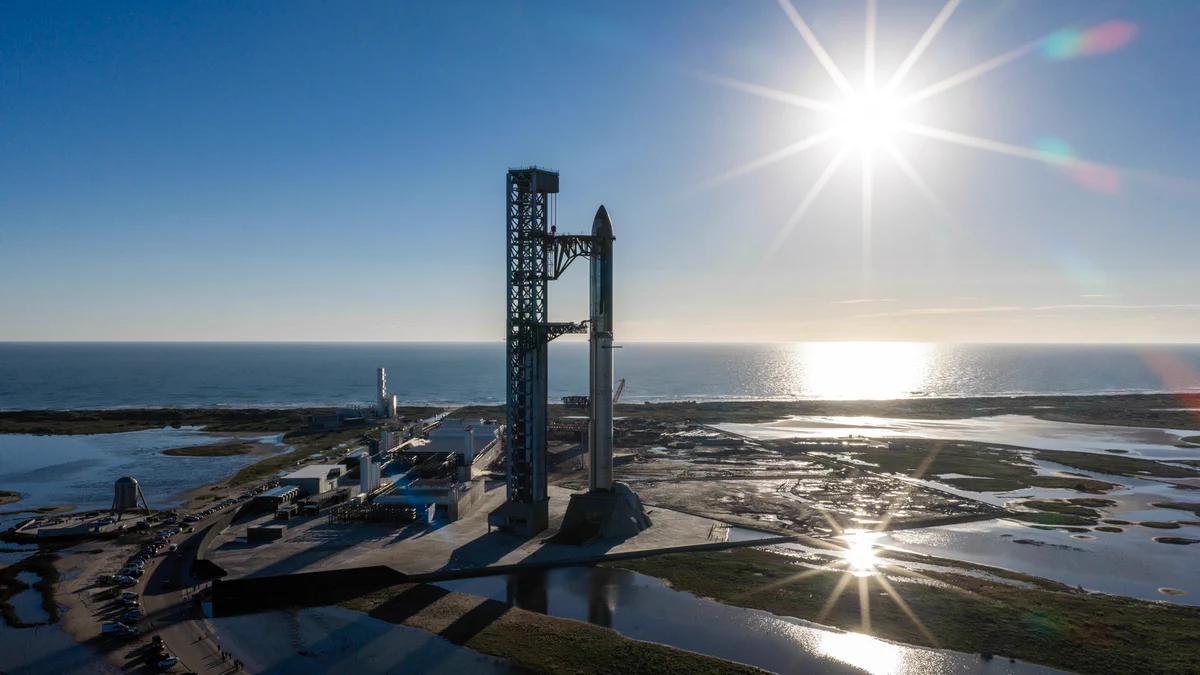
First time seeing Starship in person at Starbase.
I am absolutely speechless. There is nothing more inspiring than this.
Joost retweeted
Holiday Collection now live on Tesla Shop 🎅🎄
shop.tesla.com/category/spec…
Joost retweeted

【知ってた?】テスラは「加速モード」を変えるだけで暖房効率まで上がる。驚きの熱管理技術とは?
冬場、テスラの航続距離を少しでも伸ばすために「エアコンの設定温度を下げる」「シートヒーターを活用する」といった工夫をしているオーナーは多いはずです。
しかし、Teslaの公式マニュアルには、さらに意外な電費改善アプローチが記されています。それが「加速モードをコンフォート(Chill)に変更する」という方法です。
これは単にアクセルレスポンスを穏やかにして急加速を抑えるだけではありません。実は、「バッテリーに蓄えられた熱をどこまで車内暖房へ回すか」という、車両全体の高度な熱マネジメントに直結しています。
■ なぜ加速モードを変えるだけで「暖房効率」が上がるのか?
EVのバッテリーは温度変化に敏感で、冷え切った状態では十分な出力を発揮できません。特に冬場、高い加速性能をいつでも引き出せるようにしておくためには、バッテリー自体の温度を一定以上に保つエネルギーが必要になります。
ここで加速モードを「コンフォート」に設定すると、車両側はピーク加速性能をあえて抑える制御へと切り替わります。その結果、バッテリーの温度維持に割いていた熱エネルギーをヒートポンプが積極的に回収し、車内暖房へ回せるようになるのです。
Tesla公式の航続距離ガイダンスでも、「コンフォート(Chill)は寒冷時に最もエネルギー効率の高い加速モード」と明記されています。
つまり、アクセルフィーリングの変更にとどまらず、「熱を走りの余力(バッテリー温度維持)に使うか、居住性(暖房)に優先配分するか」というシステム全体の最適化が行われているわけです。
※注意点として、コンフォートから「標準」や「インセイン/Plaid」などへ戻した直後は、冷えたバッテリーを再加熱するプロセスが入るため、最大出力が即座に立ち上がらない場合があります。
■ バッテリーを「巨大な蓄熱タンク」として扱うテスラの思想
この柔軟な熱移動を成立させているのが、独自の「オクトバルブ(Octovalve)」とヒートポンプを中核としたテスラ独自の熱管理システムです。
一般的なEVでもバッテリーの温調や暖房は行われますが、テスラの強みは「車内」「バッテリー」「モーター/インバーター」「外気」の間で熱を自在にやり繰り(融通)できる点にあります。
例えば、走行中にパワートレイン(モーターやインバーター)から生じた廃熱を回収して暖房に充てるだけでなく、バッテリーに十分な熱があれば、そこから熱をくみ上げて車内を温めることも可能です。
さらに踏み込んだ発想が、バッテリーを単なる「電気の貯蔵庫」ではなく、「熱の貯蔵庫(蓄熱体)」としても運用する設計思想です。
Teslaのヒートポンプ関連特許では、バッテリーパックの熱容量を約85Wh/℃として試算する設計例が示されています。この数値をもとに計算すると、バッテリー温度が10℃変化するだけで約0.85kWh分もの熱エネルギーに相当します。もちろん車種や設計による違いはありますが、バッテリーの保有熱を暖房に有効活用できれば、その分だけ電熱ヒーター等の消費電力を大幅に浮かせることができます。
■ 夏場は熱の流れを逆転。車内からバッテリーへ「一時避難」
この熱マネジメントの巧みさは、夏場の冷房制御にも表れています。
米環境当局(EPA)へ提出されたModel Y関連の技術資料によると、冷房稼働時、バッテリーが比較的低温であれば、車内から吸熱した熱を大気中へ放出する代わりに一時的にバッテリー側へ逃がす仕組みが解説されています。
通常のカーエアコンは大気中に熱を放熱しますが、バッテリーを一時的な「熱の逃げ場」として使うことで、コンプレッサーの負荷を減らして高効率化を図るアプローチです。特許資料には、炎天下で熱くなった車内の熱を回収してバッテリーへ移し、後から再利用する制御モデルまで盛り込まれています。
※これらの高度な熱移動は内外の温度環境に応じて自動制御されるため、常に作動するわけではありません。例えば夏場のスーパーチャージャー充電時などは、バッテリー保護のため強力な冷却が最優先されます。
■ 冬場のテスラを最も効率よく走らせるには?
この熱管理システムを活かして冬の電費を最大化するポイントは、日常のちょっとした操作にあります。
1. 寒い日の街乗りや巡航では、加速モードを「コンフォート」に設定する
2. 空調・シートヒーターは「AUTO」に任せる
3. 出発前に充電器へ繋いだ状態で「プレコンディショニング(事前空調)」を行う
出発前に外部電源でバッテリーと車内をあらかじめ温めておけば、走行開始後に暖房や昇温のために消費されるバッテリー残量を最小限に抑えられます。
車内を暖めるためにただ電力を食いつぶすのではなく、車全体に存在するわずかな熱すら無駄なく循環させる――。普段何気なく切り替えている加速モードの裏側にある、テスラならではの徹底した熱工学のこだわりをぜひ冬のドライブで体感してみてください。
引用:Tesla公式サポート(航続距離を伸ばすコツ)
tesla.com/ja_jp/support/rang…
#今日のテスラTips #MODUFY #テスラ #Model3 #ModelY #Tesla


