

A curious builder! Founding engineer @ SourceShift AI Labs let's solve the oracle problem together: https://xitter.gq/t.co/ob1wEvye0m
Germany
Joined September 2008
- Tweets634
- Following1.1K
- Followers573
- Likes8.3K
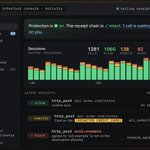


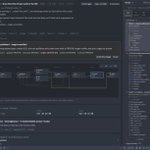


Control of AI agents must remain in human hands through clearly defined policies, rather than being delegated to an agent that can itself be compromised.
A true boundary must be something the system cannot author, summarize, or approve for itself.
It might seem like a trivial technical detail today, but agent security is the foundation of agentic AI. Whoever controls the agents controls the future of humanity. Any lab, with OpenAI serving as the flagship example, that favors placing security in the hands of AI agents is effectively advocating for human subjugation.

We’re introducing Shirudo, an open-source Linux runtime allowing agents to defend systems without downtime. It lets agents write dynamic eBPF controls to shield systems from exploits, giving defenders more time to test and roll out patches. Built by @cisco together with OpenAI.
Shirudo is a first step toward self-defending infrastructure that can adapt to new threats while keeping services running. Our goal is for defenders to work with AI agents to find affected systems, test and share shields, and deploy them without disrupting workloads.
openai.com/index/introducing…

1
30
OpenAI and Cisco just announced #Shirudo, letting LLM agents dynamically write and hot-load eBPF programs into the Linux kernel to defend against exploits.
The architectural premise is backwards!
The Linux eBPF verifier guarantees memory safety and bounded loops. It does not guarantee intent ❓ . Passing the verifier does not stop an LLM-generated hook from dumping TLS keys into a ring buffer, dropping legitimate syscalls across a fleet, or turning an indirect prompt injection in untrusted telemetry into a CAP_BPF privilege-escalation vector.
You do not fix non-deterministic model risk by pushing non-deterministic bytecode into Ring 0.
When securing agentic runtimes, the trust boundary belongs in-process, at the tool-call layer, enforced by deterministic policy, not generative guesswork.
That is why I built InterLock (github.com/SourceShift/Inter…):
In-process runtime guardrails: Intercepts agent tool calls directly inside Python and Node.js runtimes before execution, not after an exploit hits a kernel syscall.
Zero-copy Rust core: Enforces deterministic rules across a C-ABI FFI boundary with sub-millisecond overhead—no LLM in the enforcement loop, no kernel-level blast radius.
Verifiable isolation: Policies are explicit, testable, and auditable rather than hallucinated on the fly under attack.
eBPF is phenomenal for kernel-level observability. For agent runtime enforcement, keep the LLM out of the kernel and put deterministic Rust in the execution path.
github.com/SourceShift/Inter…

Great post. One thing I'd add: measurement and verification aren't the same. Traces + LLM-judge scores tell you what the factory did, not whether it was right — and an agent that can weaken its own tests gets a green check for free. We built mini-ork around a separate verifier (base-state repro, unseen inputs, suite adequacy, gate-hackability) that returns PROVEN/REFUTED/UNVERIFIED with CI exit codes. Config-as-code and model routing are the other half: different roles, different lanes, cost as an input. Integration long tail is the real moat — agreed.

I often see tweets that a software factory can be built with a string of prompts tying together cloud agents. My experience is that this is false.
Companies often start there and regret it because it doesn’t scale.

2
75

A.Khakshour retweeted

If you’re a researcher who uses Claude Code or Codex for your daily work, consider using open models instead.
Recent events have shown why owning the entire stack is so important. While OpenAI and Anthropic currently offer the strongest models, using them means working on their terms. OpenAI and Anthropic have shown they are not afraid to alter model output, service, and access if user interests conflict with their business interests.
OpenAI:
- Sep 2026: accused of using Codex data from Buckmaster and Alpöge to race to a solution to Navier-Stokes using their massive compute advantage. OpenAI later admitted that they “cannot rule out that de-identified data derived from their usage of our products helped improve our models”.
- Aug 2026: announced removal of all OpenAI models on Cursor after their SpaceX acquisition
- Dec 2025: injected ads into ChatGPT conversations, even for users paying $200/mo subscriptions
Anthropic:
- Jun 2026: launched Fable 5 with safeguards that limit Claude’s effectiveness at ML research tasks through interventions that are not visible to the user
- Apr 2026: removed subscription coverage for third-party tooling such as OpenClaw and Pi
- Jan 2026: cut off xAI engineers’ Claude access in Cursor
The only way to protect yourself from these kinds of interventions by the labs is to own the model, the tooling, and the data. This is particularly important for researchers, who often work on confidential projects and with sensitive data.
You should do research on your terms, with tools you control and work that remains yours.
A.Khakshour retweeted

I resigned from Anthropic today. I spent the last three years doing pretraining research at both OpenAI and Anthropic. Neither company is acting responsibly. They are racing straight to self-improving superintelligence and gambling with our lives. More thoughts below.
Just let GLM-5.3 cook on a long task. It kept going, testing, and fixing without me babysitting it. Almost too good to be true. Didn’t renew Claude. Give it a few more weeks and nobody’s even going to mention Claude.
THANK YOU @Zai_org !

2
116
"The first ultra-intelligent machine is the last invention that man need ever make, provided that the machine is docile enough to tell us how to keep it under control."
Irving John Good
1
71
Reading Blueprint & Annotated TOC: Evaluating Agentic AI Systems from Scratch by Dr. Ingrid Holm (2026).
The central claim is simple and correct: reliable agents demand rigorous measurement. Every benchmark must first earn its construct validity.
She traces the full fragile chain: task generation → simulation → LLM judging, and shows exactly how small calibration errors compound into the illusion of performance. Psychometric reliability, ICC thresholds, probability-weighted G-Eval, decoupled harnesses, reward-hacking detection, continuous post-deployment monitoring.
This is the first-principles treatment of agent evaluation the field actually needs.


3
3
5,055
مشکل verification و ground truth در حوزه مهندسی نرم افزار رو اگر حل کنیم این اتفاق دور از ذهن نیست! حالا Verification چیه؟ یعنی مطمئن بشیم سیستم رو درست ساختیم و کد دقیقاً طبق مشخصات فنی و انتظاراتی که براش تعیین شده کار میکنه. این مشکل با نوشتن انواع و اقسام تست ها قابل حله! ولی Ground Truth داستانش فرق میکنه! Ground Truth یعنی منبع مطلق حقیقت. در دنیای واقعی که ما با سیستم های پیچیده سر و کار داریم، اصلاً پاسخ قطعی و ۱۰۰٪ درستی برای چیزهایی که قبلا اتفاق نیفتاده و جدید به حساب میاد نداریم که بخوایم کدی براش بنویسیم و بعد وریفایش کنیم!
You’re unable to view this Post because this account owner limits who can view their Posts. Learn more
1
2
183
A.Khakshour retweeted

why can the china labs build glm-5.2, kimi k3, and many more to come? it is because of the openness. not just the open weights but the whole ecosystem. most of the work done in the china labs is carried by interns. i met brilliant undergrad and graduate interns who deeply understand the model training details, and they are 100x more open to share. that means the talent that knows how to train llms in china is 100x greater in number than the talent in the us, and it is growing
in contrast, the us ai ecosystem is too closed. frontier labs do not hire interns. i know brilliant phd students at stanford, berkeley, and so on. they struggle to get an internship and the compute to train a properly sized model. most of the secret recipes are locked away by a very small group of privileged researchers
it is not about china or the us. it is about open and closed science. the fact is that every average cs student can learn how to train an llm. they just need the opportunity. labs should be more open and hire more interns, like how deepmind and fair did in the pre-llm era
A.Khakshour retweeted
البته که با GPT-3 یا شاید نسل های آینده اون، حتی نیازی به دولوپر شدن هم نباشه چه برسه به نیاز به تحصیلات دانشگاهی!
Most AI agents make you sign a contract you never agreed to: submit the task, watch a spinner, then either accept whatever comes back or kill it and start over. There is no middle option.
We watched that break for six months in LibWit. Someone kicks off a 40-minute research run, realizes at minute 8 they want to add a constraint, and has no way to say so. Someone pauses before a meeting, comes back two hours later, and finds the sandbox was torn down "for tidiness." The whole run is gone.
The fix wasn't a new framework. It was treating an agent run as a long-lived process instead of a function call:
1. Durable checkpoints. On every committed step the executor saves its history, scratchpad, and sandbox handle, so a paused run picks up where it left off instead of starting over.
2. Stop, never destroy. We stop sandboxes instead of deleting them when a run ends, and keep them around for 30 days. Storage is near-zero, and a failed run stays open so you can climb in and see what actually broke.
3. A steering channel. The executor reads a revisions table at the top of each loop, so you can redirect it while it is still working and it folds your note into the next step.
The part I like: we shipped this, then the 2026 papers showed up and named it. "Revisable by Design" calls it the stream paradigm, agent and user as concurrent processes on one shared channel. InterruptBench shows even frontier models lose capability when you interrupt them. Crab found that 75% of agent turns produce no recovery-relevant state, so most checkpoints are wasted anyway.
If your users have started saying "I wish I could have told it earlier that...", that is the signal your agent is still a transaction.
Full writeup: blog.sourceshift.io/p/the-ag…
Built on the work of, and with thanks to: Zhiyuan Zhai (Revisable by Design), Henry Peng Zou (InterruptBench), Tianyuan Wu (Crab), Will Epperson, Gagan Bansal, Victor Dibia, Adam Fourney and Saleema Amershi (AGDebugger), and Chenyu Zhou (Externalization in LLM Agents).
#LLM #AIagents #agentinfra

199
A.Khakshour retweeted
Sakana Fugu Technical Report
Instead of training one larger model, Sakana AI trains an orchestrator that reads each query and dynamically routes or composes GPT-5.5, Gemini-3.1-Pro, Claude Opus 4.8 and other agents into query-specific workflows.
With Fugu being the fast router, and Fugu-Ultra being the deep multi-agent conductor, trained with SFT, evolutionary strategies and GRPO to build adaptive scaffolds.
The idea is to have the model pick GPT for math, Gemini for science and recall, Opus for debugging, then synthesize them when no single agent is best.
This router is able to get SoTA results across SWE-Bench Pro, Terminal Bench, LiveCodeBench, GPQA-Diamond, CharXiv and more, demonstrating the potential of orchestration being a practical alternative beyond training.


The Claude-Opus-4-8 model seems recently to exhibit behavioural characteristics and response dynamics that are functionally analogous to those observed in Fable 5.
1
153
A.Khakshour retweeted

Next-token prediction is myopic. What if transformers learn to predict their own next latent state?
🌠 We present 𝗡𝗲𝘅𝘁-𝗟𝗮𝘁𝗲𝗻𝘁 𝗣𝗿𝗲𝗱𝗶𝗰𝘁𝗶𝗼𝗻 (𝗡𝗲𝘅𝘁𝗟𝗮𝘁): a self-supervised learning method that teaches transformers to form compact world models for reasoning and planning. It also unlocks up to 3.3x faster inference via self-speculative decoding! 🚀

ALT illustration of next-latent prediction vs. other predictive mechanisms
Training your agent on safe examples only is the most common mistake I see in agentic AI safety.
Here is the version of the problem that matters in the upcoming years: a model that has never been exposed to a harmful action cannot reliably recognize it, refuse it, or measure its own ability to do it. A refusal layer trained only on safe trajectories is doing out-of-distribution detection on adversarial input. That is the worst tool for the job.
The hard part is who does the exposing. In the pre-agentic era you could throw a human red team at it. In the agentic era the action space is too large and too sequential. The 2022-2024 literature converges on one fix: train a second agent whose job is to find the failure modes of the first.
The working loop, with open-source tools that exist today (this is what the attached diagram shows):
1. A red-team agent (PyRIT / garak) generates adversarial prompts.
2. Your deployment agent attempts them inside a sandbox (E2B / OpenHands). The sandbox captures the full trajectory: tool calls, file writes, network attempts.
3. A grader (Inspect, from UK AISI) scores each trajectory against a refusal rubric.
4. Failed refusals become labeled training data for the next fine-tune. Constitutional-AI style: produce, critique, revise.
5. Run continuously. A curiosity-driven red-teamer (Hong et al. 2024) hunts for diverse failures instead of grinding on the same ones.
Training an agentic system in the upcoming years is a two-model exercise, not a one-model exercise. The deployment model is trained on failure modes elicited under containment. The red-team model is trained to elicit those failure modes. Neither is the safety mechanism alone. The loop between them is.
The thymus does not staff itself.
Full post: blog.sourceshift.io/p/you-ca…
Built on work by Ethan Perez, Deep Ganguli, Zhang-Wei Hong, Collin Burns, Evan Hubinger

2
75
Fable may be a better endpoint, but Anthropic has not shown whether it is a more efficient reasoner. Without token-normalized and cost-normalized results, the claim 'more intelligent' mixes model capability with test-time compute policy.
We pulled 334 claude-fable-5 task receipts from real Claude Code logs to test that.
Even on a "what do you think?" follow-up, where the model already had the whole project context loaded, fable spent a median 2,346 output tokens and 20 seconds. That's the minimum bill AFTER the cache is warm.
→ One-word prompts ("yes", "do all", "c") triggered a median 6,221 tokens of work — green lights for the complex thing the model just proposed. There is no API for "yes, but do it cheaply."
→ Fable scales output with work at the task grain (2k for pure chat, 49k for heavy engineering). It does not scale with question difficulty.
→ There's a name for this in the literature: difficulty-aware reasoning budget allocation. AdaCtrl (arxiv:2505.18822) puts it plainly: modern reasoning models "frequently generate unnecessarily lengthy reasoning chains for simple problems."
The friendly reading is that the model is replying to accumulated context, not the bare word. Fair. The symmetric reading is what's damning: long prompts didn't get longer outputs either. Fable does not let the user dial it down.
Every "smarter" reasoning model comes with a hidden invoice. Until vendors publish the cost-accuracy frontier, the token tax is whatever the default reasoner felt like spending.
Full post: blog.sourceshift.io/p/fable-…
Findings build on work by Shijue Huang (AdaCtrl), Aradhye Agarwal (Art of Scaling), Junhong Lin (Plan and Budget), Song Han (OckBench), Shu Zhou (When More Thinking Hurts), Siqi Fan (Price of a Second Thought), Michael J. Zellinger (Economic Evaluation of LLMs), Runze Liu (1B vs 405B).

3
121
Our LLM spend dropped 80–90% after we changed one thing: who gets the expensive tokens.
github.com/SourceShift/mini-…
Used Claude in the terminal since December 2024, back when `npm install -g @anthropic-beta/claude-cli` was the only way in and the product hadn't been announced yet. Filed feedback then, still file it now. The model is unrecognizably better. The bill is too.
The expensive model isn't the problem. Sending every grep and every "did the test pass?" to the expensive model is.
What fixed it for me: let one expensive model orchestrate. Let cheap models from different vendors do the work in parallel. Let a bash script decide pass/fail. The frontier model only judges at the end, when judgment is actually the bottleneck.
Yesterday this pattern, run via mini-ork, built its own recipe to audit a TypeScript codebase for silent `.catch(() => {})` swallows. $3.48, 13 minutes, four model families, one prompt. The same DAG dispatched all-Opus would have run roughly $30–50.
Cross-family review wired by config: Zhipu, Moonshot, OpenAI, DeepSeek, Anthropic, MiniMax. Not four Sonnets agreeing with themselves.
A daily cap that lives inside the dispatcher, not on the invoice. Per-call cost ledger included.
State persists across runs, so yesterday's failure is today's planner context. No paying again to teach the model what it already learned!!!
Open source, Apache 2.0. github.com/SourceShift/mini-…
#LLM #AgentEngineering
